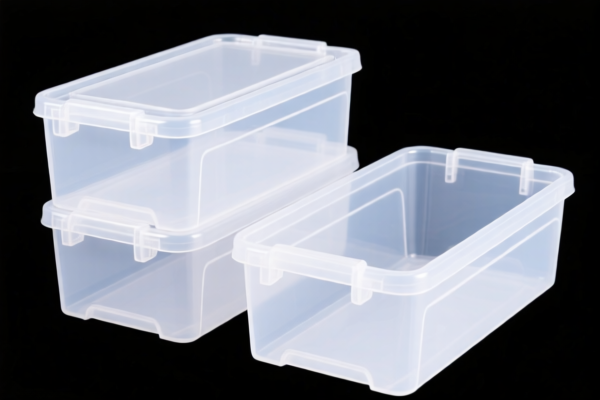
Transparent Plastic Transport Box
CN → US| HS Code | Tariff Rate | Origin | Destination | Doc |
|---|---|---|---|---|
| 3923102000 | 35.0% | CN | US | Official Doc |
| 3923109000 | 38.0% | CN | US | Official Doc |
Product Images



AI Analysis
📦 Transparent Plastic Transport Box (For Goods Conveyance)
🌐 HS Code Reference & Customs Clearance Guide | 2026 Latest Tariff Analysis | Professional Level Strategy
📌 I. Product Definition & Classification: Do You Really Understand "Plastic Transport Boxes"?
"Transparent Plastic Transport Box" is a generic commercial term that lacks precision in international trade. In the Harmonized System (HS), plastic articles for conveyance or packing are primarily governed by Heading 3923. However, the specific HS code depends entirely on what is inside or the specialized design of the box.
There are two critical classifications for plastic boxes under HS 3923.10:
1. Specially Shaped/Fitted Boxes (Subheading 3923.10.20)
Specifically designed or fitted for the conveyance/packing of semiconductor wafers, masks, or reticles (HS 3923.10 or 8486.90). These are high-precision, often transparent, anti-static, or cleanroom-compatible containers used in the semiconductor industry.
2. Other Boxes, Cases, Crates (Subheading 3923.10.90)
General-purpose plastic boxes, crates, or cases not specially shaped for semiconductors. This includes standard transparent storage boxes, logistics totes, or shipping containers for general goods.
⚠️ Key Distinction Point:
- If the box is specifically engineered/fitted for semiconductor wafers/masks/reticles → Go to 3923.10.20.00
- If it is a general-purpose plastic box (even if transparent) → Go to 3923.10.90.00
📊 II. HS Code Classification Details (2026 Latest Tariff Authority对照)
| HS Code | Product Description | Application Scenario | Semiconductor Specific? |
|---|---|---|---|
3923.10.20.00 |
Specially shaped/fitted boxes for semiconductor wafers, masks, or reticles | Semiconductor manufacturing, photolithography, cleanroom logistics | ✅ Yes |
3923.10.90.00 |
Other boxes, cases, crates, and similar articles | General logistics, retail packaging, storage, industrial parts transport | ❌ No |
🔍 Important Reminder:
- "Transparent" does not automatically determine the HS code. Transparency is a material property, not a functional classification under HS 3923.
- If the box is used for semiconductor components, it must be classified under 3923.10.20.00, regardless of whether it looks like a "transparent box."
- If the box is used for general goods (e.g., hardware, cosmetics, food), it falls under 3923.10.90.00.
💰 III. 2026 Latest Tariff Rate Details (Including Additional Taxes)
✅ Applicable Country: United States (US)
✅ Country of Origin: China (CN)
✅ Effective Date: 2025–2026 (Current Trade War Tariffs Apply)
🎯 1. 3923.10.20.00 —— Specially Shaped Boxes for Semiconductors
| Item | Content |
|---|---|
| Base Tariff | 0% (ad valorem) |
| Section 301 Additional Tariff | +25% |
| Total Tariff Rate | 25.0% |
| Tax Calculation | CIF Value × 25% |
| De Minimis Exemption | ❌ Not Eligible (High-risk category for enforcement) |
| Legal Basis | USITC HTSUS 3923.10.20.00 → Section 301 Footnote |
📌 Explanation:
- Although the base tariff is 0%, the 25% Section 301 tariff applies to all Chinese-origin plastic packaging articles in this subheading.
- This category is strictly controlled due to its link to semiconductor supply chains. Customs may scrutinize whether the box is indeed "specially shaped" for semiconductors. Misclassification can lead to severe penalties.
🎯 2. 3923.10.90.00 —— Other Plastic Boxes (General Purpose)
| Item | Content |
|---|---|
| Base Tariff | 3.0% (ad valorem) |
| Section 301 Additional Tariff | +25% |
| Total Tariff Rate | 28.0% |
| Tax Calculation | CIF Value × 28% |
| De Minimis Exemption | ❌ Not Eligible |
| Legal Basis | USITC HTSUS 3923.10.90.00 → Section 301 Footnote |
📌 Explanation:
- The base tariff is 3%, but the 25% Section 301 tariff is added, resulting in a 28% total tax.
- This is the default classification for most "plastic transport boxes" unless they can be proven to be specially fitted for semiconductors.
🛠️ IV. Customs Clearance Practical Advice (Avoid Pitfalls)
✅ 1. Required Documentation Checklist
| Document | Mandatory | Description |
|---|---|---|
| ✅ Product Specification Sheet | ✔️ | Must clearly state: Material (e.g., PP, PE, PET), Dimensions, Intended Use. |
| ✅ Design/Fitting Diagram | ✔️ | For 3923.10.20.00: Provide evidence of special shaping/fitting for wafers/masks. |
| ✅ Product Photos | ✔️ | Clear images showing the box structure, labels, and any special features. |
| ✅ Commercial Invoice | ✔️ | Description must match HS code. Use precise terms like "Plastic Box for Semiconductor Wafer Conveyance" or "General Plastic Storage Box." |
| ✅ Packing List | ✔️ | Detail contents, weight, volume. |
| ✅ Certificate of Origin | ✔️ | Required for tariff verification. |
✅ 2. Declaration Tips (Key Mantras)
🔥 "Special Shape for Semiconductor, Low Base Tax; General Box, Higher Base Tax. Both Carry 25% Penalty!"
| Scenario | Correct Declaration | Incorrect Approach |
|---|---|---|
| Box for Semiconductor Wafers/Masks | 3923.10.20.00Description: "Specially fitted plastic box for semiconductor reticles" |
Misdeclare as general box → Risk of penalty for false classification |
| Box for General Goods (e.g., electronics, hardware) | 3923.10.90.00Description: "Transparent plastic transport box for general goods" |
Declare as semiconductor box → Customs will reject due to lack of special fitting proof |
| Mixed Shipment (Some special, some general) | Split Declaration Classify each item separately |
Mix in one line item → Customs may apply highest rate or reject |
✅ 3. Special Considerations
| Scenario | Handling Advice |
|---|---|
| Transparent but Not for Semiconductors | Still use 3923.10.90.00. Transparency is irrelevant to HS classification here. |
| Reusable Plastic Containers | Same rules apply. If reusable and fitted for semiconductors → 3923.10.20.00. |
| Custom-Fitted for Other High-Tech Items | If not for semiconductors (wafers/masks/reticles), use 3923.10.90.00. |
| Anti-Static or Cleanroom Grade | Does not change HS code. Depends on purpose (semiconductor vs. general). |
🌍 V. Global Market Comparison (2026 Latest)
| Country/Region | Recommended HS Code | Total Tariff (China Origin) | Notes |
|---|---|---|---|
| 🇺🇸 USA | 3923.10.20.00 or 3923.10.90.00 |
25.0% or 28.0% | Section 301 tariffs apply to both. |
| 🇨🇳 China | 3923.10.20.00 or 3923.10.90.00 |
3.0%~6.5% | Lower import tariffs; no Section 301. |
| 🇪🇺 EU | 3923.10.90 |
4.0% | Standard EU tariff. No Section 301. |
| 🇬🇧 UK | 3923.10.90 |
4.0% | Post-Brexit tariff structure. |
📌 Conclusion:
- The US market is the most expensive due to the 25% Section 301 tariff on both subheadings.
- The only difference between the two HS codes in the US is the base tariff (0% vs. 3%).
- Strategic Advice: If your product is not for semiconductors, do not try to classify it under3923.10.20.00to save 3%. The risk of customs audits and penalties far outweighs the 3% savings.
📌 VI. Common Errors & Pitfalls (Lessons Learned)
❌ Error 1: Using "Transparent Plastic Box" as the HS code description without specifying use.
👉 Consequence: Customs may misclassify or delay shipment for further review.
❌ Error 2: Claiming a general plastic box is "for semiconductors" to get 0% base tax.
👉 Consequence: If customs verify it’s not specially shaped for wafers/masks/reticles, you will be fined for misclassification. The 3% base tax difference is not worth the risk.
❌ Error 3: Ignoring the "Specially Shaped or Fitted" requirement for 3923.10.20.00.
👉 Consequence: The box must be dedicated to semiconductor conveyance. Generic trays or boxes that can hold wafers but are not specifically designed for them must use 3923.10.90.00.
✅ Correct Approach:
"Plastic Box, Transparent, PP Material, 12x12x12 inches, General Purpose Storage" →
3923.10.90.00
"Plastic Wafer Box, Specially Fitted for 300mm Semiconductors, Cleanroom Grade" →3923.10.20.00
🎯 VII. Conclusion: Precision in Classification Saves Money and Time
🎯 Remember the Mantra:
🔹 "Semiconductor Fit? Low Base Tax (0%). General Use? Higher Base Tax (3%). Both Pay 25% Penalty!"
🔹 "Don't Gamble on Classification. If it’s not for semiconductors, use 3923.10.90.00."
📌 Pro Tip:
If you are shipping reusable plastic boxes for semiconductor wafers, ensure you have technical drawings proving the "special fitting" to support 3923.10.20.00. Without proof, customs will default to 3923.10.90.00.
📣 Immediate Action:
📞 Consult with a licensed customs broker.
📄 Provide product specs and intended use.
🚀 Ensure accurate HS code declaration to avoid delays and penalties.
✨ Professional Clearance Starts with Accurate Classification!
💼 Every Percent of Tariff Counts, But Every Dollar of Fine Costs More!
Customer Reviews
About HS Code Classification
The Harmonized System (HS) is an internationally standardized nomenclature developed by the World Customs Organization (WCO) to classify traded products. Over 200 countries use the HS system as the basis for customs tariffs, trade statistics, and import/export regulations.
Each HS code follows a hierarchical structure:
- Chapter (2 digits) — Broad category of goods (e.g., Chapter 84: Machinery and Mechanical Appliances)
- Heading (4 digits) — More specific grouping within the chapter
- Subheading (6 digits) — Internationally standardized breakdown, used by all WCO member countries
- National subdivisions (8-10 digits) — Country-specific extensions for further classification, such as US HTSUS 10-digit codes
Correct HS code classification is essential for smooth customs clearance, accurate duty payment, and compliance with trade regulations. Misclassification can lead to customs delays, overpayment of duties, or penalties.
When importing from CN to US, the applicable tariff rates may include:
- Most-Favored-Nation (MFN) rate — The standard duty rate applied to WTO members
- General rate — Applied to countries without trade agreements
- Trade remedy duties — Additional tariffs such as Section 301 (anti-dumping), Section 232 (national security), or countervailing duties
The information provided on this page is for reference purposes only. For official classification, please consult with your local customs authority or a licensed customs broker.