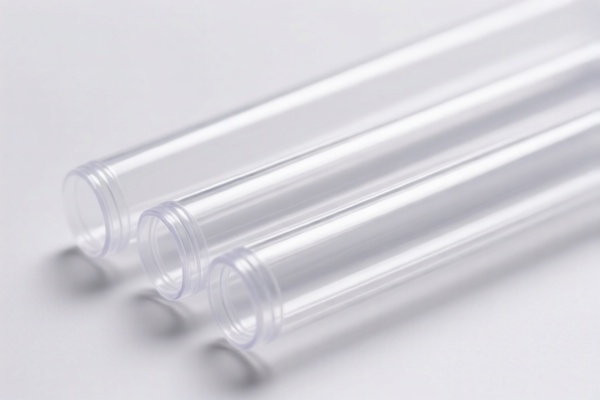
Transparent Plastic Tube
CN → US| HS Code | Tariff Rate | Origin | Destination | Doc |
|---|---|---|---|---|
| 3917400095 | 40.3% | CN | US | Official Doc |
| 3926305000 | 22.8% | CN | US | Official Doc |
| 3917400060 | 40.3% | CN | US | Official Doc |
| 3926909987 | 22.8% | CN | US | Official Doc |
| 3917210000 | 38.1% | CN | US | Official Doc |
Product Images



AI Analysis
🧪 Transparent Plastic Tube (Plastic Piping & Fittings)
🌐 HS Code Reference & Customs Clearance Guide | 2026 Latest Tariff Breakdown | Professional Entry Strategy
📌 I. Product Definition & Classification: Do You Truly Understand "Transparent Plastic Tubes"?
Transparent plastic tubes are versatile components used in fluid transfer, medical applications, industrial automation, and laboratory settings. In international trade, they are broadly categorized into two main groups:
- Rigid Pipes/Tubes (Chapter 3917): Specifically designed for plumbing, irrigation, or industrial piping systems. These are typically rigid or semi-rigid "pipes" with standardized diameters.
- General Plastic Articles/Fittings (Chapter 3926/3924): Includes flexible hoses, non-pipe plastic articles, or fittings that don't strictly fit the "pipe" definition under 3917 but are still essential accessories.
⚠️ Key Distinction Point:
- If the item is a rigid pipe or a specific pipe fitting (connector/elbow) made of plastic, it generally falls under Chapter 3917.
- If the item is a general plastic article, flexible hose, or accessory not strictly defined as a "pipe," it may fall under Chapter 3926 or 3924.
- Material Matter: Most transparent tubes are PVC, PE, or PP. The classification heavily depends on whether the Customs authority views it as a "pipe" (3917) or a "general plastic article" (3926).
📦 II. HS Code Classification Details (2026 Latest Tariff Authority Comparison)
| HS Code | Product Description | Applicable Scenario | Tax Rate (Total) |
|---|---|---|---|
3917.40.00.95 |
Plastic fittings, transparent tube, plastic material, form: fittings, use: pipe accessories | Rigid/Standard Pipe Fittings (e.g., connectors for plumbing) | 40.3% |
3926.30.50.00 |
Plastic fittings, transparent tube, plastic material, belongs to plastic products category, no obvious material conflict | General Plastic Fittings (non-pipe specific, e.g., industrial hose connectors) | 22.8% |
3917.40.00.60 |
Plastic fittings, transparent tube, plastic material, form: fittings/accessories, meets PVC pipe accessory category | PVC Pipe Accessories (specifically for PVC piping systems) | 40.3% |
3926.90.99.87 |
Plastic fittings, transparent tube, plastic material, form: fittings/transparent tube, meets description of tubes/hard tubes | Hard Tubes/General Plastic Tubes (non-pipe rigid plastic tubes) | 22.8% |
3917.21.00.00 |
Plastic pipe, plastic material, form: pipe, match success | Basic Plastic Pipes (straight tubes/pipes, not fittings) | 38.1% |
🔍 Key Reminder:
- Fittings vs. Pipes: If the item is a connector, elbow, or joint, it is likely3917.40(40.3%) or3926.30(22.8%).
- Straight Tubes: If it is a straight tube, it may be3917.21(38.1%) or3926.90(22.8%).
- Material Conflict: Ensure the summary explicitly states "plastic" to avoid misclassification into rubber or other materials.
💰 III. 2026 Latest Tariff Rate Breakdown (Including Surtaxes & Policy Add-ons)
✅ Applicable Country: United States (US)
✅ Origin: China (CN)
✅ Effective Date: From November 10, 2025 (for subsequent imports)
🎯 1. 3917.40.00.95 —— Plastic Fittings (Pipe Accessories)
| Item | Content |
|---|---|
| Base Tariff | 5.3% (ad valorem) |
| Section 301 Surtax | +25.0% (China-specific tariffs under USITC Footnote 9903.39.17) |
| Section 122 Tariff | +10.0% (Additional tariff under IEEPA/Section 122) |
| Total Tariff | 40.3% |
| Tax Calculation | CIF Value × 40.3% |
| De Minimis Exemption? | ❌ NO (High tariff items are excluded from de minimis) |
| Legal Path | Base: 5.3% → Section 301: 25.0% → Section 122: 10.0% |
📌 Explanation:
- This code applies to standard pipe fittings (elbows, tees, couplings) made of plastic.
- The 25% Section 301 tariff is the primary burden for Chinese-origin goods.
- The 10% Section 122 tariff adds further cost, bringing the total to 40.3%.
🎯 2. 3926.30.50.00 —— Plastic Articles (Fittings/Accessories)
| Item | Content |
|---|---|
| Base Tariff | 5.3% (ad valorem) |
| Section 301 Surtax | +7.5% (Reduced Section 301 rate for certain plastic articles) |
| Section 122 Tariff | +10.0% (Additional tariff under IEEPA/Section 122) |
| Total Tariff | 22.8% |
| Tax Calculation | CIF Value × 22.8% |
| De Minimis Exemption? | ❌ NO (Tariff > 10% generally excludes de minimis) |
| Legal Path | Base: 5.3% → Section 301: 7.5% → Section 122: 10.0% |
📌 Note:
- This code is for plastic fittings or accessories that do not strictly qualify as "pipe fittings" under 3917.
- The 301 surtax is lower (7.5%) compared to pipe fittings (25%), making this a preferred classification if legally defensible.
- Use this for industrial hose connectors, non-plumbing plastic accessories, or general plastic components.
🎯 3. 3917.40.00.60 —— PVC Pipe Fittings
| Item | Content |
|---|---|
| Base Tariff | 5.3% (ad valorem) |
| Section 301 Surtax | +25.0% (China-specific tariffs) |
| Section 122 Tariff | +10.0% (Additional tariff) |
| Total Tariff | 40.3% |
| Tax Calculation | CIF Value × 40.3% |
| De Minimis Exemption? | ❌ NO |
| Legal Path | Base: 5.3% → Section 301: 25.0% → Section 122: 10.0% |
📌 Explanation:
- Specifically for PVC pipe fittings.
- Same high tariff as3917.40.00.95due to Section 301 classification for plastic pipes/fittings.
🎯 4. 3926.90.99.87 —— Other Plastic Articles (Hard Tubes/Fittings)
| Item | Content |
|---|---|
| Base Tariff | 5.3% (ad valorem) |
| Section 301 Surtax | +7.5% (Reduced Section 301 rate) |
| Section 122 Tariff | +10.0% (Additional tariff) |
| Total Tariff | 22.8% |
| Tax Calculation | CIF Value × 22.8% |
| De Minimis Exemption? | ❌ NO |
| Legal Path | Base: 5.3% → Section 301: 7.5% → Section 122: 10.0% |
📌 Note:
- Applies to transparent tubes that are hard tubes but not classified as "pipes" under 3917.
- Also applies to general plastic fittings not covered by 3926.30.
- Advantage: Lower Section 301 rate (7.5%) compared to pipe fittings (25%).
🎯 5. 3917.21.00.00 —— Plastic Pipes (Straight Tubes)
| Item | Content |
|---|---|
| Base Tariff | 3.1% (ad valorem) |
| Section 301 Surtax | +25.0% (China-specific tariffs) |
| Section 122 Tariff | +10.0% (Additional tariff) |
| Total Tariff | 38.1% |
| Tax Calculation | CIF Value × 38.1% |
| De Minimis Exemption? | ❌ NO |
| Legal Path | Base: 3.1% → Section 301: 25.0% → Section 122: 10.0% |
📌 Explanation:
- For straight plastic pipes/tubes (not fittings).
- Base tariff is lower (3.1%) than fittings (5.3%), but the 301 surtax is still 25%, leading to a total of 38.1%.
- Suitable for industrial piping, irrigation tubes, or plumbing pipes.
🛠️ IV. Customs Clearance Practical Advice (Field Pitfall Avoidance Guide)
✅ 1. Document Checklist (No Exceptions)
| Document | Mandatory | Description |
|---|---|---|
| ✅ Product Specification Sheet | ✔️ | Material (PVC/PE/PP), dimensions, wall thickness, transparency level |
| ✅ Product Photos (Clear) | ✔️ | Show ends, connections, and any markings. Highlight "transparent" nature |
| ✅ Commercial Invoice | ✔️ | Clearly state: "Plastic Pipe Fittings" or "Transparent Plastic Tubes" – avoid vague terms |
| ✅ Packing List | ✔️ | Detail quantities and weights. Separate fittings from pipes if shipped together |
| ✅ Third-Party Test Report | ✔️ | FDA (if food/medical grade), RoHS, REACH compliance |
| ✅ Declaration of Non-Conformance | ✔️ | If applicable, state if not used for plumbing |
✅ 2. Declaration Tips (Key Mantras)
🔥 “Fit or Pipe? Know the Difference! Fittings 40%, General 22%!”
| Scenario | Correct Declaration | Wrong Practice |
|---|---|---|
| Elbows, Tees, Connectors | 3917.40.00.95 or 3926.30.50.00 |
Mislabel as "Pipes" → Higher base rate |
| Straight Tubes/Pipes | 3917.21.00.00 |
Mislabel as "Fittings" → Incorrect duty |
| General Plastic Tubes (Hard) | 3926.90.99.87 |
Mislabel as "Plumbing Pipes" → 40.3% vs 22.8% |
| Medical/Lab Tubing | 3926.90.99.87 or 3926.30.50.00 |
Mislabel as "Plumbing Fittings" → 40.3% vs 22.8% |
📌 Crucial Note:
- If the tube is flexible, it may not qualify as a "pipe" under 3917. Use 3926 codes (22.8%) to save on Section 301 tariffs.
- If the tube is rigid and for plumbing, it must go under 3917 (38.1%-40.3%).
✅ 3. Special Cases
| Scenario | Handling Advice |
|---|---|
| Medical Grade Transparent Tubes | Ensure FDA compliance docs. May qualify for 3926.90.99.87 (22.8%) if not for plumbing. |
| Industrial Hose Connectors | Use 3926.30.50.00 (22.8%) if not strictly "pipe fittings." |
| Mixed Shipment (Pipes + Fittings) | Declare Separately! Combine duties will be calculated per code. Splitting avoids errors. |
| Clear Labeling | Always label as "Transparent Plastic Tube" or "Plastic Pipe Fitting" to avoid "General Plastic Article" ambiguity. |
🌍 V. Global Market Clearance Comparison (2026 Latest)
| Country/Region | Recommended HS Code | Tariff (China Origin) | Certification | Notes |
|---|---|---|---|---|
| 🇺🇸 USA | 3926.30.50.00 |
22.8% | RoHS, FDA (if applicable) | Best for non-plumbing fittings. Avoid 3917 if possible. |
| 🇺🇸 USA | 3917.40.00.95 |
40.3% | RoHS, UL | High tariff for plumbing fittings. |
| 🇨🇳 China | 3917.40.00.95 |
5.3% | CCC (if applicable) | No surtaxes. |
| 🇪🇺 EU | 3917.40.00.95 |
0% (if eligible) | CE, REACH | No Section 301/122. |
| 🇦🇺 Australia | 3926.90.99.87 |
5% | RCM | No surtaxes. |
📌 Conclusion:
- USA is the only major market with high surtaxes.
- Strategy: If the product is not strictly for plumbing, classify under 3926 (22.8%) to save 17.5% compared to 3917 (40.3%).
- China, EU, Australia have significantly lower or zero tariffs, making them easier markets for these goods.
📌 VI. Common Errors & Pitfalls (Blood & Tears Lessons)
❌ Error 1: Classifying flexible hoses as rigid pipes (3917)
👉 Consequence: Incorrect classification → Potential penalty + 40.3% tariff instead of 22.8%.
❌ Error 2: Declaring medical tubes as plumbing fittings
👉 Consequence: 40.3% tariff vs 22.8%. Medical/lab tubes are often not "pipes" for plumbing.
❌ Error 3: Failing to separate pipes and fittings in a mixed shipment
👉 Consequence: Customs may assess the entire shipment under the highest applicable rate or require re-declaration.
❌ Error 4: Using vague terms like "Plastic Accessories" without specifying
👉 Consequence: Customs delay → 40.3% assessed pending clarification.
✅ Correct Practice:
“Transparent PVC Pipe Fitting, Elbow, 1/2 inch, For Plumbing Use” →
3917.40.00.95
“Transparent PE Hose Connector, Industrial Use” →3926.30.50.00
🎯 VII. Conclusion: Precise Classification Saves Money!
🎯 Remember the Mantra:
🔹 “Fittings or Pipe? Know the Use! Plumbing 40%, General 22%!”
🔹 “Flexible Hoses? Not Pipes! Use 3926 for Savings!”
📌 Pro Tip:
If your transparent plastic tubes are for medical, laboratory, or industrial hose use (not plumbing), always argue for 3926.30.50.00 or 3926.90.99.87 to benefit from the lower Section 301 rate (7.5%) and achieve a 22.8% total tariff.
📣 Immediate Action:
📞 Consult a customs broker + Provide product specs + Request Pre-classification Ruling
🚀 Ensure your transparent plastic tubes clear customs smoothly, reduce costs, and boost profits!
✨ Professional Clearance Starts with Accurate Classification!
💼 Every Percent Saved is Profit Gained!
Customer Reviews
About HS Code Classification
The Harmonized System (HS) is an internationally standardized nomenclature developed by the World Customs Organization (WCO) to classify traded products. Over 200 countries use the HS system as the basis for customs tariffs, trade statistics, and import/export regulations.
Each HS code follows a hierarchical structure:
- Chapter (2 digits) — Broad category of goods (e.g., Chapter 84: Machinery and Mechanical Appliances)
- Heading (4 digits) — More specific grouping within the chapter
- Subheading (6 digits) — Internationally standardized breakdown, used by all WCO member countries
- National subdivisions (8-10 digits) — Country-specific extensions for further classification, such as US HTSUS 10-digit codes
Correct HS code classification is essential for smooth customs clearance, accurate duty payment, and compliance with trade regulations. Misclassification can lead to customs delays, overpayment of duties, or penalties.
When importing from CN to US, the applicable tariff rates may include:
- Most-Favored-Nation (MFN) rate — The standard duty rate applied to WTO members
- General rate — Applied to countries without trade agreements
- Trade remedy duties — Additional tariffs such as Section 301 (anti-dumping), Section 232 (national security), or countervailing duties
The information provided on this page is for reference purposes only. For official classification, please consult with your local customs authority or a licensed customs broker.