Transparent Polyethylene Resealable Bag with Slider Seal
CN → US| HS Code | Tariff Rate | Origin | Destination | Doc |
|---|---|---|---|---|
| 3923210020 | 38.0% | CN | US | Official Doc |
| 3923210030 | 38.0% | CN | US | Official Doc |
Product Images
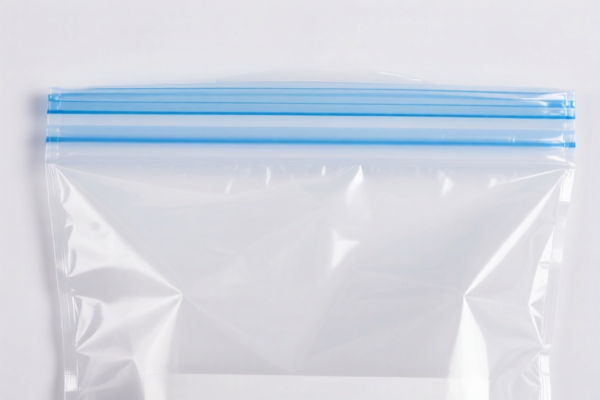
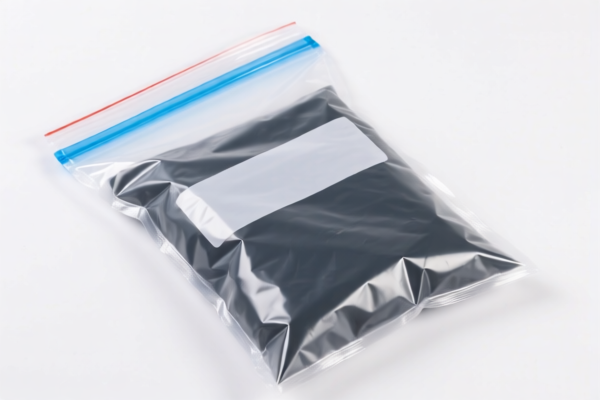
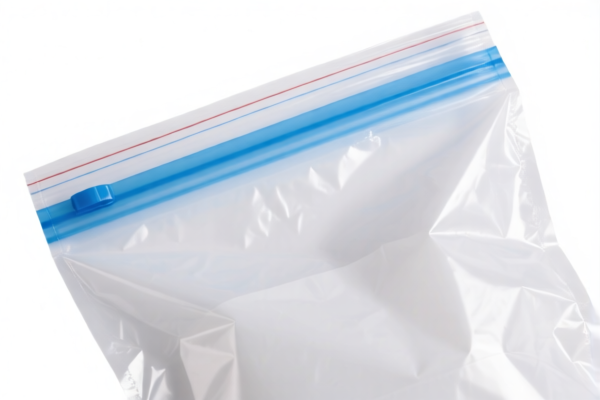

AI Analysis
🛍️ Transparent Polyethylene Resealable Bag with Slider Seal
🌐 HS Code Reference & Customs Clearance Guide | 2026 Latest Tariff Analysis | Professional Customs Strategy
📌 I. Product Definition & Classification: What Exactly Is This Product?
Transparent Polyethylene Resealable Bags with Slider Seals are high-performance packaging solutions widely used in food storage, retail display, apparel packaging, and industrial parts organization. In international trade, these products fall under the broad category of "Articles for the conveyance or packing of goods, of plastics."
Specifically, they are classified based on two critical factors: 1. Material: Polyethylene (PE), a polymer of ethylene. 2. Closure Type: Resealable with an integral extruded closure (the "slider").
⚠️ Critical Distinction Point:
- If the bag features sliders that open or close the seal, it is classified specifically under 3923.21.00.20.
- If it is a reclosable PE bag without sliders (e.g., zipper track only, heat seal, or other mechanisms), it falls under 3923.21.00.30.
📦 II. HS Code Classification Details (2026 Latest Tariff Authority Comparison)
| HS Code | Product Description | Application Scenario | Closure Type | Total Tax Rate |
|---|---|---|---|---|
3923.21.00.20 |
Sacks and bags (including cones), of polymers of ethylene; Reclosable, with integral extruded closure; Other, with sliders that open or close the seal | Ziploc-style bags, slider snack bags, premium retail packaging, freezer bags with sliders | ✅ With Slider | 3.0% |
3923.21.00.30 |
Sacks and bags (including cones), of polymers of ethylene; Reclosable, with integral extruded closure; Other | Zipper-lock bags (non-slider), heat-seal reclosable bags, standard PE reclosable bags | ❌ No Slider | 28.0% |
🔍 Key Reminder:
- The presence of the slider mechanism is the decisive factor for tax efficiency.
- Bags with sliders enjoy a significantly lower total tax rate (3.0%) compared to other reclosable PE bags (28.0%).
- Do not misclassify slider bags as "other reclosable bags" to avoid paying an extra 25% punitive tariff.
💰 III. 2026 Latest Tariff Rate Breakdown (Including Additional Taxes & Policy Surcharges)
✅ Applicable Country: United States (US)
✅ Country of Origin: China (CN)
✅ Effective Date: From November 10, 2025 (including subsequent imports)
🎯 1. 3923.21.00.20 —— Reclosable Bags With Sliders
| Item | Content |
|---|---|
| Base Tariff Rate | 3.0% (Ad Valorem) |
| USITC Additional Tariff | 0.0% |
| IEEPA Additional Tariff | 0.0% |
| Total Tax Rate | 3.0% |
| Tax Calculation | CIF Value × 3.0% |
| De Minimis Exemption Eligible? | ❌ No (deny_de_minimis applies) |
| Legal Basis Path | HTSUS:3923.21.00.20 |
📌 Explanation:
- The base tariff for PE sacks/bags is 3%.
- This specific subheading (3923.21.00.20) is NOT subject to the 25% Section 301 tariff or the 10% IEEPA surcharge.
- Total cost impact is minimal (3%), making this a highly favorable classification for cost-effective logistics.
🎯 2. 3923.21.00.30 —— Reclosable Bags Without Sliders (Other)
| Item | Content |
|---|---|
| Base Tariff Rate | 3.0% |
| USITC Additional Tariff | +25.0% |
| IEEPA Additional Tariff | 0.0% |
| Total Tax Rate | 28.0% |
| Tax Calculation | CIF Value × 28.0% |
| De Minimis Exemption Eligible? | ❌ No (deny_de_minimis applies) |
| Legal Basis Path | HTSUS:3923.21.00.30 → USITC Footnote 9903.88.01 (Section 301) |
📌 Note:
- This category includes standard zipper bags (non-slider) or other reclosable PE bags.
- It is subject to the 25% additional tariff under Section 301 of the Trade Act.
- Total cost impact is high (28%), significantly eroding profit margins.
🛠️ IV. Customs Clearance Practical Advice (Real-World Pitfall Avoidance Guide)
✅ 1. Required Documentation Checklist (Nothing Less)
| Document | Mandatory? | Description |
|---|---|---|
| ✅ Product Specifications | ✔️ | Must clearly state "Slider Seal" or "Zipper Seal". |
| ✅ Product Photos | ✔️ | Clear images showing the slider mechanism vs. simple zipper track. |
| ✅ Commercial Invoice | ✔️ | Description should read: "Reclosable Polyethylene Bags with Slider Closure" for HS 3923.21.00.20. |
| ✅ Packing List | ✔️ | Detail quantity, weight, and dimensions. |
| ✅ Certificate of Origin | ✔️ | Essential for verifying origin (China) and assessing additional tariffs. |
✅ 2. Declaration Tips (Key Mantra)
🔥 "Slider means Low Tax, No Slider means High Tax!"
"Be Specific: 'Slider Seal' vs. 'Zipper Lock'!"
| Scenario | Correct Declaration | Incorrect Practice |
|---|---|---|
| Bag has a slider that moves | 3923.21.00.20 ("With sliders") |
Mislabel as "Zipper Bag" → 28% |
| Bag has a zipper track only | 3923.21.00.30 ("Other") |
Claim it has sliders → Audit Risk |
| Mixed Shipment (Slider + Non-Slider) | Split Declaration | Combine under one code → Rejection/Fine |
✅ 3. Special Cases Handling
| Situation | Handling Advice |
|---|---|
| OEM Custom Bags | Provide design files showing the slider structure. Ensure the slider is integral (extruded) and not attached separately. |
| Slider + Zipper Hybrid | If the bag has both, classify based on the primary reclosable feature. Usually, if a slider is present, it falls under 3923.21.00.20. |
| Non-PE Materials | If made of PP, PVC, etc., HS Code changes entirely (e.g., to 3923.30 or 3923.40). Do not use these codes for non-PE bags. |
| De Minimis (Section 321) | ❌ Not Eligible. Both codes are subject to deny_de_minimis, meaning all shipments, regardless of value, must clear formal customs. |
🌍 V. Global Market Customs Comparison (2026 Latest)
| Country/Region | Recommended HS Code | Tariff Rate (China Origin) | Certification Requirements | Notes |
|---|---|---|---|---|
| 🇺🇸 USA | 3923.21.00.20 |
3.0% (with Slider) | FDA Food Contact (if for food) | Critical: Avoid 3923.21.00.30 (28%) |
| 🇺🇸 USA | 3923.21.00.30 |
28.0% (no Slider) | FDA Food Contact (if for food) | High tax burden for non-slider bags |
| 🇪🇺 EU | 3923.21.00 (varies) |
~0-2% (depending on subheading) | REACH, LFGB | No Section 301 equivalent |
| 🇨🇳 China | 3923.21.00 |
3.0% (Import Duty) | None for general use | Symmetric to US base rate |
| 🇬🇧 UK | 3923.21.00 |
~0-2% | UKCA (if applicable) | Post-Brexit rules apply |
📌 Conclusion:
- The US market is highly sensitive to the "Slider" distinction.
- 3.0% vs. 28.0% is a massive difference. Always ensure product descriptions and physical samples match the HS Code declared.
📌 VI. Common Errors & Pitfall Guide (Lessons from Blood & Tears)
❌ Error 1: Declaring Slider Bags as "Other Reclosable Bags" (3923.21.00.30)
👉 Consequence: You pay 28% tax instead of 3%. Overpayment of 25%!
❌ Error 2: Declaring Non-Slider Zipper Bags as "Slider Bags" (3923.21.00.20)
👉 Consequence: Customs audit reveals no slider. Penalties, fines, and possible seizure.
❌ Error 3: Using generic terms like "Plastic Bags" or "PE Bags"
👉 Consequence: Customs may assign a default code with higher duties or delay clearance for classification review.
✅ Correct Practice:
"Transparent Polyethylene Resealable Bag with Integral Slider Closure, 100% PE, for Food Storage, Model XYZ"
🎯 VII. Conclusion: Professional Declaration Saves Money!
🎯 Remember the Mantra:
🔹 "Slider = 3%, No Slider = 28%!"
🔹 "Be Specific: 'Slider' is the Golden Word!"
🔹 "HS Code 3923.21.00.20 is your Best Friend for Slider Bags!"
📌 Pro Tip:
- If you are importing non-slider zipper bags from China, the 25% additional tariff is unavoidable. Consider supply chain diversification (e.g., Vietnam, Thailand) if volume is high, as some countries may have FTAs or avoid Section 301 tariffs.
- Always request pre-classification rulings if unsure about the "slider" mechanism's legal definition in your specific shipment.
📣 Immediate Action:
📞 Contact your customs broker with clear photos of the closure mechanism.
🚀 Ensure your invoice description matches the physical product exactly.
💰 Save 25% on every shipment by declaring the correct HS Code!
✨ Professional Customs Clearance Starts with Accurate Classification!
💼 Every Cent Saved in Tariffs is Pure Profit!
Customer Reviews
About HS Code Classification
The Harmonized System (HS) is an internationally standardized nomenclature developed by the World Customs Organization (WCO) to classify traded products. Over 200 countries use the HS system as the basis for customs tariffs, trade statistics, and import/export regulations.
Each HS code follows a hierarchical structure:
- Chapter (2 digits) — Broad category of goods (e.g., Chapter 84: Machinery and Mechanical Appliances)
- Heading (4 digits) — More specific grouping within the chapter
- Subheading (6 digits) — Internationally standardized breakdown, used by all WCO member countries
- National subdivisions (8-10 digits) — Country-specific extensions for further classification, such as US HTSUS 10-digit codes
Correct HS code classification is essential for smooth customs clearance, accurate duty payment, and compliance with trade regulations. Misclassification can lead to customs delays, overpayment of duties, or penalties.
When importing from CN to US, the applicable tariff rates may include:
- Most-Favored-Nation (MFN) rate — The standard duty rate applied to WTO members
- General rate — Applied to countries without trade agreements
- Trade remedy duties — Additional tariffs such as Section 301 (anti-dumping), Section 232 (national security), or countervailing duties
The information provided on this page is for reference purposes only. For official classification, please consult with your local customs authority or a licensed customs broker.