Transparent Polyethylene Ziplock Bag with Slider Seal
CN → US| HS Code | Tariff Rate | Origin | Destination | Doc |
|---|---|---|---|---|
| 3923210020 | 38.0% | CN | US | Official Doc |
| 3923210030 | 38.0% | CN | US | Official Doc |
Product Images
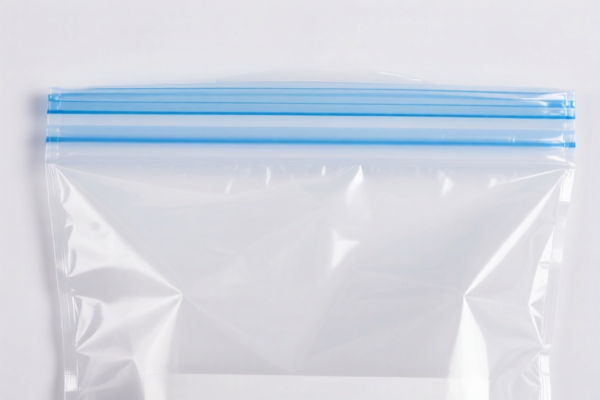
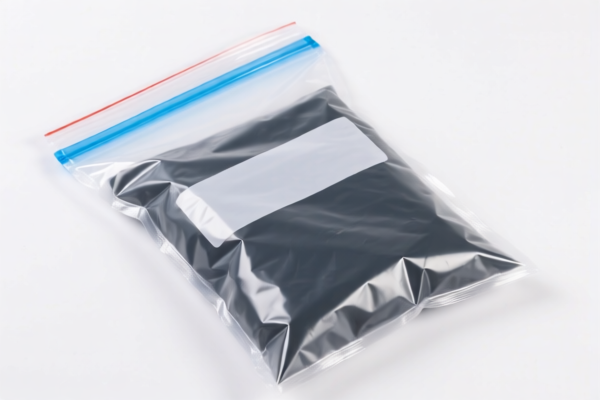
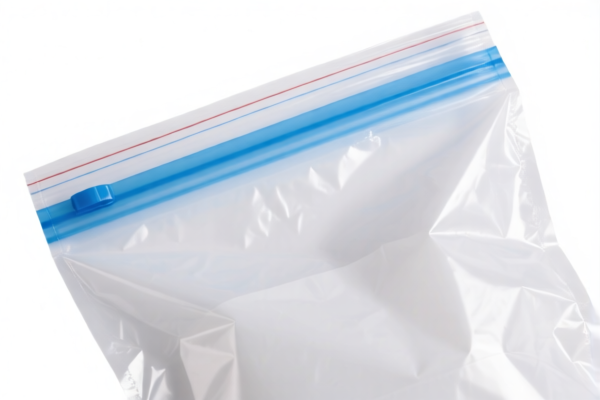

AI Analysis
🛍️ Transparent Polyethylene Ziplock Bag with Slider Seal
🌐 HS Code Reference & Clearance Guide | 2026 Latest Tariff Analysis | Professional Logistics Strategy
📌 I. Product Definition and Classification: Do You Really Understand "Polyethylene Bags"?
Polyethylene Ziplock Bags with Slider Seals are high-frequency packaging solutions used extensively in e-commerce, food preservation, hardware organization, and retail. In international trade, these products fall under Chapter 39 (Plastics and Articles Thereof), specifically Heading 3923 (Articles for the conveyance or packing of goods, of plastics).
The critical distinction lies in the closure mechanism and material specificity:
1. Reclosable with Integral Extruded Closure (Standard Ziplock):
- Features a heat-sealed "zipper" track.
- No separate moving parts.
- Typically classified under subheadings for standard reclosable bags.
2. Reclosable with Slider Seal (Zipper with Slider):
- Features a plastic slider that opens or closes the seal.
- This is a distinct functional feature that changes the HS Code classification from standard "reclosable" to "with sliders."
- This is your product.
⚠️ Key Distinction Point:
- If it is a standard "zipper" bag without a plastic slider → It may fall under3923.21.00.30(Other, with integral extruded closure).
- If it has a plastic slider that manually opens/closes the bag → It falls under3923.21.00.20.
- Do NOT misclassify as "non-reclosable" or "other sacks" to avoid duty discrepancies.
📦 II. HS Code Classification Details (2026 Latest Tariff Authority对照)
Based on the provided data, only two relevant HS Codes apply to Polyethylene Bags. The selection depends entirely on the presence of the slider.
| HS Code | Product Description | Applicability | Has Slider? |
|---|---|---|---|
3923.21.00.20 |
Sacks and bags (including cones): Of polymers of ethylene Reclosable, with integral extruded closure: Other, with sliders that open or close the seal |
✅ Your Product: Transparent Polyethylene Bags with a plastic slider seal | ✅ Yes |
3923.21.00.30 |
Sacks and bags (including cones): Of polymers of ethylene Reclosable, with integral extruded closure: Other |
Standard Ziplock Bags (no slider, just heat-sealed track) | ❌ No |
🔍 Critical Reminder:
-3923.21.00.20is specifically for bags with sliders.
-3923.21.00.30is for bags without sliders (standard ziplock).
- Misclassifying a slider bag as3923.21.00.30can lead to underpayment of duties if the destination country imposes higher tariffs on non-slider bags (see below).
💰 III. 2026 Latest Tariff Rate Breakdown (Detailed Tax Clauses)
✅ Applicable Country: United States (US) (Note: The provided data shows a 25% additional tariff on one code, which aligns with US Section 301 tariffs on Chinese plastics. Please verify if your goods originate from China. If not, the additional 25% may not apply. The analysis below assumes Origin: China to be safe, as the data reflects US-China trade dynamics.)
✅ Origin: China (CN)
✅ Effective Date: Current 2026 Tariff Schedule
🎯 1. 3923.21.00.20 —— Polyethylene Bags WITH Slider Seal
| Item | Detail |
|---|---|
| Product | Sacks/bags, polyethylene, reclosable, with sliders |
| Basic Tariff (MFN) | 3.0% |
| Additional Tariff (Section 301) | 0.0% |
| Total Tariff Rate | 3.0% |
| Tax Calculation | CIF Value × 3.0% |
| De Minimis Eligibility | ✅ Yes (Generally applicable for small shipments under $800, subject to current CBP rules) |
| Legal Basis | HTSUS:3923.21.00.20 |
📌 Explanation:
- The 0.0% additional tariff is a significant advantage.
- This code is not subject to the heavy Section 301 punitive tariffs that apply to other plastic bags (3923.21.00.30).
- Why? Policy often differentiates between simple plastic packaging (sometimes targeted) and specific reclosable functional packaging, or the specific subheading has been exempted.
- Result: Very competitive tariff rate.
🎯 2. 3923.21.00.30 —— Polyethylene Bags WITHOUT Slider Seal (For Comparison)
| Item | Detail |
|---|---|
| Product | Sacks/bags, polyethylene, reclosable, other (no slider) |
| Basic Tariff (MFN) | 3.0% |
| Additional Tariff (Section 301) | +25.0% |
| Total Tariff Rate | 28.0% |
| Tax Calculation | CIF Value × 28.0% |
| De Minimis Eligibility | ❌ No (Often denied for products subject to 301 tariffs) |
| Legal Basis | HTSUS:3923.21.00.30 → Footnote: 9903.88.01 (Section 301) |
📌 Warning:
- If you mistakenly classify your slider bag as3923.21.00.30, you will pay 28% duty instead of 3%.
- This is a 25% cost increase purely due to classification error.
- Conversely, if you have a non-slider bag, it is subject to the 25% penalty.
🛠️ IV. Clearance Practical Advice (Real-World Pitfall Guide)
✅ 1. Preparation Checklist (Non-Negotiable)
| Document | Required | Explanation |
|---|---|---|
| ✅ Product Photo | ✔️ | Must clearly show the plastic slider mechanism. |
| ✅ Specification Sheet | ✔️ | State: "Polyethylene (PE), Reclosable, Slider Closure." |
| ✅ Commercial Invoice | ✔️ | Description must include "with Slider" or "Slider Seal." |
| ✅ Material Declaration | ✔️ | Confirm 100% Polyethylene (not PVC or PP). |
| ✅ Packaging List | ✔️ | Indicate unit count and bag dimensions. |
📌 Tip:
- Avoid vague descriptions like "Plastic Bag."
- Use precise language: "Transparent Polyethylene Ziplock Bag with Plastic Slider Seal."
✅ 2. Declaration Tips (Key Mnemonic)
🔥 "Slider Yes = 3%, Slider No = 28%! Declare Slider Clearly!"
| Scenario | Correct HS Code | Consequence of Error |
|---|---|---|
| Bag has a plastic slider | 3923.21.00.20 |
Save 25% duty! |
| Bag has NO slider (heat seal only) | 3923.21.00.30 |
Pay 28% duty |
| Bag is Non-Reclosable | 3923.21.00.50 (Other) |
Check specific tariff (may be 3% or 25%) |
| Bag is Non-Polyethylene (e.g., PVC) | Chapter 39, different subheading | Different rate, potential environmental restrictions |
✅ 3. Special Case Handling
| Case | Handling Advice |
|---|---|
| OEM Custom Bags | Provide customer order with "Slider" specification. Avoid "blank" descriptions. |
| Mixed Shipments | If you ship both slider and non-slider bags, declare them separately. Do not average them out. |
| Origin Non-China | If goods originate from Vietnam, Mexico, etc., the 25% additional tariff may not apply to 3923.21.00.30. However, 3923.21.00.20 still enjoys 0% additional tariff in the provided data, making it universally advantageous. |
| FDA Compliance | If used for food, ensure the polyethylene is FDA-compliant and mention "Food Grade" in the description to avoid rejection. |
🌍 V. Global Market Comparison (2026 Latest)
| Country/Region | Recommended HS Code | Basic Tariff | Additional Tariff (China) | Total Tariff (China) |
|---|---|---|---|---|
| 🇺🇸 USA | 3923.21.00.20 |
3.0% | 0.0% | 3.0% ✅ Best Option |
| 🇺🇸 USA | 3923.21.00.30 |
3.0% | 25.0% | 28.0% ❌ Avoid if possible |
| 🇪🇺 EU | 3923.21.00 |
6.5% | 0% | 6.5% |
| 🇨🇳 China (Import) | 3923.21.00 |
5.5% | 0% | 5.5% |
📌 Conclusion:
- The US market offers a massive incentive for slider-seal bags (3923.21.00.20) with 0% additional tariffs.
- Non-slider bags face a 25% penalty.
- Strategy: If possible, design packaging to include a slider to qualify for the lower duty rate, OR ensure accurate classification to avoid penalties.
📌 VI. Common Mistakes & Pitfalls (Lessons Learned)
❌ Mistake 1: Describing the product simply as "Plastic Bag" or "Ziplock Bag"
👉 Consequence: Customs may default to the more expensive code 3923.21.00.30 (28%) because "slider" is not explicitly declared.
✅ Fix: Always include "with Slider" in the product name.
❌ Mistake 2: Using PVC or PP material but declaring as PE
👉 Consequence: Misdeclaration of material, potential fines, and product rejection.
✅ Fix: Confirm material composition. This HS code is only for Polyethylene (PE).
❌ Mistake 3: Ignoring the "Reclosable" aspect
👉 Consequence: If not clearly marked as reclosable, customs may classify it as non-reclosable sacks, which may have different duty rates.
✅ Fix: Highlight "Reclosable" and "Slider" in the commercial invoice.
🎯 VII. Conclusion: Professional Declaration Saves Money!
🎯 Remember the Golden Rule:
🔹 "Slider = 3%. No Slider = 28%. Declare Slider Clearly!"
🔹 "Polyethylene + Reclosable + Slider =3923.21.00.20"
📌 Pro Tip:
If your shipment contains both slider and non-slider bags, declare them on separate line items with their respective HS codes. Mixing them can lead to compliance audits and fines.
📣 Immediate Action:
📞 Contact your freight forwarder with clear product photos showing the slider.
📝 Ensure your commercial invoice reads: "Polyethylene Reclosable Bag with Plastic Slider Seal, HS 3923.21.00.20".
🚀 Lower your duty cost from 28% to 3% with accurate classification!
✨ Professional clearance starts with precise classification!
💼 Every 25% saved is pure profit!
Customer Reviews
About HS Code Classification
The Harmonized System (HS) is an internationally standardized nomenclature developed by the World Customs Organization (WCO) to classify traded products. Over 200 countries use the HS system as the basis for customs tariffs, trade statistics, and import/export regulations.
Each HS code follows a hierarchical structure:
- Chapter (2 digits) — Broad category of goods (e.g., Chapter 84: Machinery and Mechanical Appliances)
- Heading (4 digits) — More specific grouping within the chapter
- Subheading (6 digits) — Internationally standardized breakdown, used by all WCO member countries
- National subdivisions (8-10 digits) — Country-specific extensions for further classification, such as US HTSUS 10-digit codes
Correct HS code classification is essential for smooth customs clearance, accurate duty payment, and compliance with trade regulations. Misclassification can lead to customs delays, overpayment of duties, or penalties.
When importing from CN to US, the applicable tariff rates may include:
- Most-Favored-Nation (MFN) rate — The standard duty rate applied to WTO members
- General rate — Applied to countries without trade agreements
- Trade remedy duties — Additional tariffs such as Section 301 (anti-dumping), Section 232 (national security), or countervailing duties
The information provided on this page is for reference purposes only. For official classification, please consult with your local customs authority or a licensed customs broker.