Transparent Sheet
CN → USProduct Images
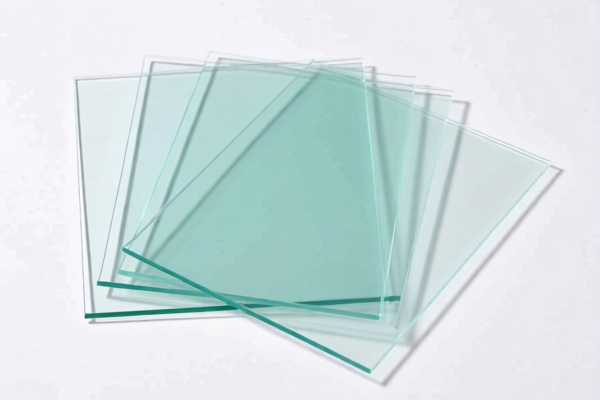
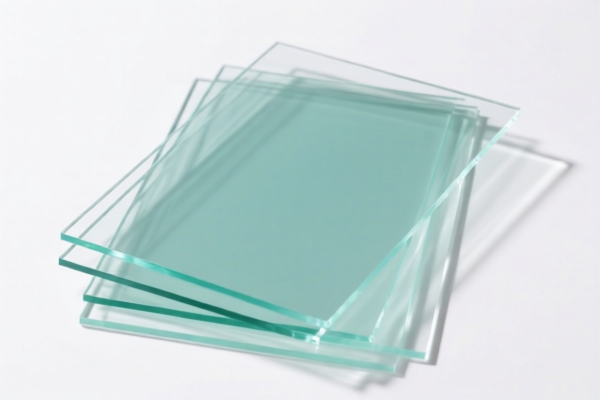
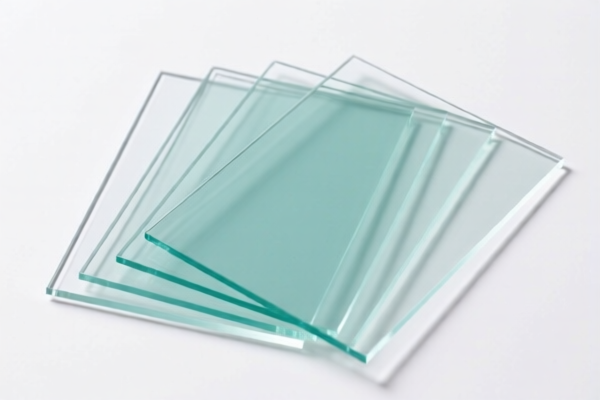
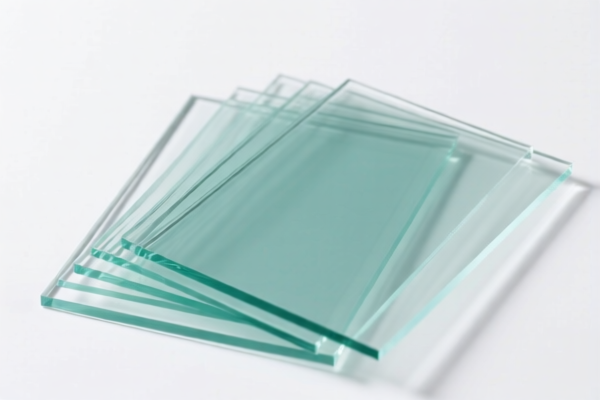
AI Analysis
🌟 Transparent Sheet (Clear Plastic/Polymers)
🌐 HS Code Reference & Clearance Guide | 2026 Latest Tariff Analysis | Professional Customs Strategy
📌 1. Product Definition & Classification: What Exactly is a "Transparent Sheet"?
In international trade, the term "Transparent Sheet" is too broad. The correct HS Code depends entirely on the material composition (Plastic vs. Glass) and the processing state (Raw vs. Finished Product).
Key Distinction: * Plastic Sheets (Polymers): Most common in trade. Covered under Chapter 39. * Glass Sheets: Covered under Chapter 70. * Finished Goods: If the sheet is cut, drilled, or assembled into a specific item (e.g., a sign, a display case, a window frame), it may no longer be classified as a "sheet" but as the "finished article."
⚠️ Critical Alert:
- If it is plastic, look at Chapter 39.
- If it is glass, look at Chapter 70.
- If it has optical coatings (anti-reflective, tinted), it may fall under Chapter 90 (optical goods) or have higher tariffs.
📦 2. HS Code Classification Details (2026 Latest Tariff Reference)
Assumption: Based on the most common trade scenario, Plastic Transparent Sheets (Polymers), which are heavily impacted by US-China trade tensions. If your product is Glass, see the "Glass Exception" note below.
| HS Code | Product Description | Material | Typical Application | US Tariff Status (China Origin) |
|---|---|---|---|---|
3920.10.90.00 |
Other plates, sheets, film, foil and strip, of polymers of ethylene | Polyethylene (PE) | Food packaging, protective films | 25% (Section 301) + 10% (IEEPA) = 35% |
3920.49.00.00 |
Other plates, sheets, film, foil and strip, of polymers of propylene | Polypropylene (PP) | Transparent lids, packaging | 25% (Section 301) + 10% (IEEPA) = 35% |
3920.62.00.00 |
Plates, sheets, film, foil and strip, of polymers of vinyl chloride (PVC) | PVC | Construction sheets, signage | 25% (Section 301) + 10% (IEEPA) = 35% |
3920.73.00.00 |
Plates, sheets, film, foil and strip, of polystyrene (PS) | Polystyrene (PS) | Disposable cutlery, CD cases | 25% (Section 301) + 10% (IEEPA) = 35% |
3920.91.00.00 |
Of polymers of ethylene | PE (Specific) | Specialty films | 25% (Section 301) + 10% (IEEPA) = 35% |
3920.99.60.00 |
Other plates, sheets, etc. (e.g., Acrylic/PMMA, Polycarbonate) | PMMA/PC | Display cases, windows | 25% (Section 301) + 10% (IEEPA) = 35% |
7005.29.00.00 |
Sheet glass, coloured or coated (Glass) | Glass | Windows, mirrors | 0% (No Section 301 on Glass) |
🔍 Important Note on "Acrylic" (PMMA) & "Polycarbonate" (PC):
These are often marketed as "Transparent Sheets." They fall under 3920.99 or 3920.49. They are NOT exempt from the 301 tariffs.
💰 3. 2026 Latest Tariff Rate Breakdown (US Market Focus)
✅ Applicable Country: United States (US)
✅ Origin: China (CN)
✅ Effective Time: Ongoing (2025-2026)
🎯 1. Plastic Transparent Sheets (Most Common)
| Item | Details |
|---|---|
| Base MFN Rate | 0% - 5.3% (Depending on specific subheading) |
| USITC Section 301 Surcharge | +25% (Footnote 9903.88.01) |
| IEEPA Additional Surcharge | +10% (Against China/HK products, effective Nov 2025) |
| Total Effective Rate | 35% - 40.3% |
| De Minimis Exemption? | ❌ NO (Section 321 De Minimis does NOT apply to Section 301 goods from China) |
| Legal Path | IEEPA:9903.01.24 → USITC:3920.xx.xx.xx → FOOTNOTE:9903.88.01 |
📌 Explanation:
- The 25% is due to the ongoing Section 301 Trade War.
- The 10% is the new IEEPA tariff on Chinese plastics.
- Combined ~35-40%. This is a high-cost item for US importers.
🎯 2. Glass Transparent Sheets (Exception)
| Item | Details |
|---|---|
| Base MFN Rate | 0% |
| USITC Section 301 Surcharge | 0% (Glass is largely exempt or has low codes) |
| IEEPA Surcharge | 0% (Glass is not always targeted, check specific 10-digit code) |
| Total Effective Rate | 0% - 5% |
| De Minimis Exemption? | ✅ YES (If < $800, per-shipment) |
📌 Strategy: If possible, consider glass instead of plastic if the application allows, as it avoids the heavy plastic tariffs.
🛠️ 4. Customs Clearance Practical Advice (Avoid Pitfalls)
✅ 1. Documentation Checklist (Essential)
| Document | Requirement | Reason |
|---|---|---|
| Commercial Invoice | Must clearly state: "Transparent Plastic Sheets" + Material (e.g., "Acrylic PMMA") | Avoids vague descriptions like "Clear Plastic" |
| Material Safety Data Sheet (MSDS) | Required for chemical compliance | Proves composition |
| Certificate of Origin | Must show Country of Origin: China | Triggers Section 301/IEEPA tariffs |
| FCC Declaration (If applicable) | If sheets have electronic components attached | Not needed for raw sheets |
| Packaging List | Detail net/gross weight | Critical for duty calculation |
✅ 2. Declaration Tips (Critical for Accuracy)
🔥 Rule: "Material First, Function Second"
| Scenario | Correct HS Code | Risk if Wrong |
|---|---|---|
| Raw Acrylic Sheet (PMMA) | 3920.73.00.00 (or 3920.99.60.00) |
Misclassification → Penalty + Back Duties |
| Cut-to-Size Signage Backing | Still 3920.xx if just cut |
If assembled into a "Sign," may change to 3926.90 (Higher risk) |
| Self-Adhesive Transparent Film | 3919.10.00.00 (Rolled, Adhesive) |
25% Surcharge still applies! |
| Laminated Glass | 7005.xx |
Lower tariffs, but higher complexity |
📌 Warning:
- Do NOT declare as "Accessories for Furniture" or "Packaging Materials" if they are sold as raw sheets.
- If the sheet is printed with images, it may be classified as a printed product (4911.xx), which has different tariffs.
✅ 3. Special Cases
| Case | Advice |
|---|---|
| Recycled Plastic Sheets | May qualify for different HTS, but Section 301 still applies. |
| Anti-Static Sheets | If functional, may still be 3920.xx. Do not claim exemption without proof. |
| Bisphenol A (BPA) Free | Mention in invoice, but no tariff benefit. |
| Thick vs. Thin | Thickness (<1mm vs >1mm) changes the 10-digit code, but 301 tariff rate remains 25% for most. |
🌍 5. Global Market Comparison (2026)
| Country/Region | Recommended HS Code | Tariff (China Origin) | Key Certification | Notes |
|---|---|---|---|---|
| 🇺🇸 USA | 3920.xx |
~35-40% | None specific | Highest barrier due to 301+IEEPA |
| 🇨🇳 China | 3920.xx |
5-8% | CCC (if electrical) | Low export duty, high import tariff for others |
| 🇪🇺 EU | 3920.xx |
6.5% | REACH, RoHS | No trade war tariffs, but strict chemical regs |
| 🇯🇵 Japan | 3920.xx |
5-6% | PSE (if electrical) | Stable market, high quality standards |
| 🇮🇳 India | 3920.xx |
10-15% | BIS | High tariffs, non-tariff barriers |
📌 Conclusion:
- USA is the most challenging market for Chinese transparent plastic sheets.
- EU and Japan are more accessible with standard tariffs.
- Supplier Diversification: Consider sourcing from Vietnam, Thailand, or Mexico to avoid US Section 301 tariffs (verify origin rules).
📌 6. Common Errors & Pitfalls (Learn from Others)
❌ Error 1: Declaring "Plastic Sheet" without specifying material.
👉 Result: CBP requests clarification, delays shipment, or assigns worst-case rate.
❌ Error 2: Assuming "Thinner" sheets have lower tariffs.
👉 Result: False. Tariff is ad valorem (% of value), regardless of thickness.
❌ Error 3: Using "De Minimis" for small packages of acrylic sheets.
👉 Result: Seizure! Section 301 goods are excluded from Section 321 de minimis.
❌ Error 4: Misidentifying "Acrylic" as "Glass."
👉 Result: If caught, back taxes + penalties. Acrylic is plastic (3920), Glass is 7005.
✅ Correct Approach:
"Clear Acrylic (PMMA) Sheets, 3mm Thickness, Unprinted, Roll/Flat, Country of Origin: China"
🎯 7. Conclusion: Smart Sourcing, Smart Tariffs
🎯 Key Takeaway:
🔹 Plastic Transparent Sheets from China to USA = ~35-40% Total Tariff.
🔹 Glass Sheets from China to USA = ~0-5% Total Tariff.
🔹 De Minimis Does NOT Apply.
📌 Pro Tip:
If you are importing small quantities for testing, consider shifting origin to a non-China country (e.g., Vietnam) with genuine value-add, or use a bonded warehouse if available.
For large volumes, negotiate FOB prices to account for the 35% tariff burden.
📣 Immediate Action:
📞 Confirm Material: Is it PE, PP, PVC, PS, or PMMA?
📞 Check Origin: Is it 100% China?
📞 Calculate Landed Cost: Add 35% to your product cost before pricing.
✨ Clear Products, Clear Costs!
💼 Precision in Classification Saves Thousands!
Customer Reviews
About HS Code Classification
The Harmonized System (HS) is an internationally standardized nomenclature developed by the World Customs Organization (WCO) to classify traded products. Over 200 countries use the HS system as the basis for customs tariffs, trade statistics, and import/export regulations.
Each HS code follows a hierarchical structure:
- Chapter (2 digits) — Broad category of goods (e.g., Chapter 84: Machinery and Mechanical Appliances)
- Heading (4 digits) — More specific grouping within the chapter
- Subheading (6 digits) — Internationally standardized breakdown, used by all WCO member countries
- National subdivisions (8-10 digits) — Country-specific extensions for further classification, such as US HTSUS 10-digit codes
Correct HS code classification is essential for smooth customs clearance, accurate duty payment, and compliance with trade regulations. Misclassification can lead to customs delays, overpayment of duties, or penalties.
When importing from CN to US, the applicable tariff rates may include:
- Most-Favored-Nation (MFN) rate — The standard duty rate applied to WTO members
- General rate — Applied to countries without trade agreements
- Trade remedy duties — Additional tariffs such as Section 301 (anti-dumping), Section 232 (national security), or countervailing duties
The information provided on this page is for reference purposes only. For official classification, please consult with your local customs authority or a licensed customs broker.