Transparent Silicone Nail Art Stamp
CN → US| HS Code | Tariff Rate | Origin | Destination | Doc |
|---|---|---|---|---|
| 3926400090 | 15.3% | CN | US | Official Doc |
| 9602005080 | 20.2% | CN | US | Official Doc |
| 3919102040 | 40.8% | CN | US | Official Doc |
| 3919905040 | 40.8% | CN | US | Official Doc |
| 3926909989 | 22.8% | CN | US | Official Doc |
Product Images
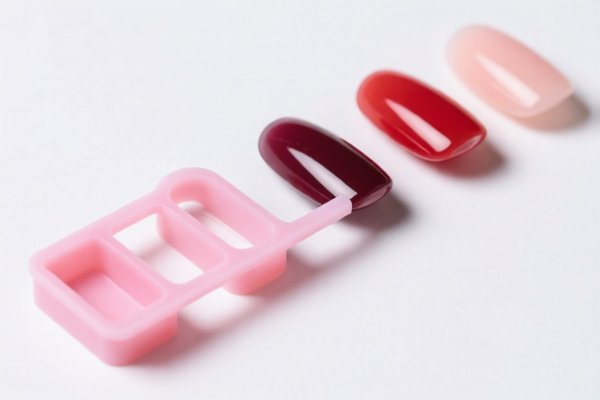
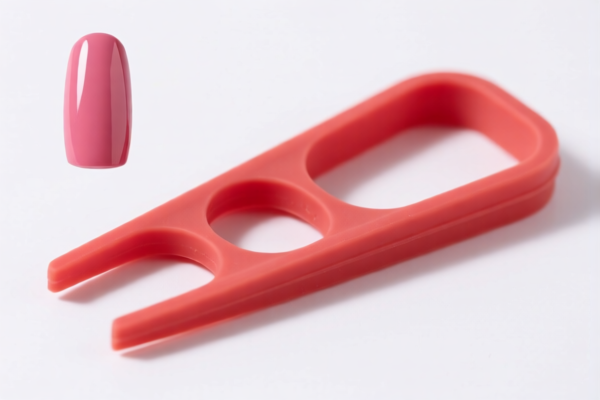
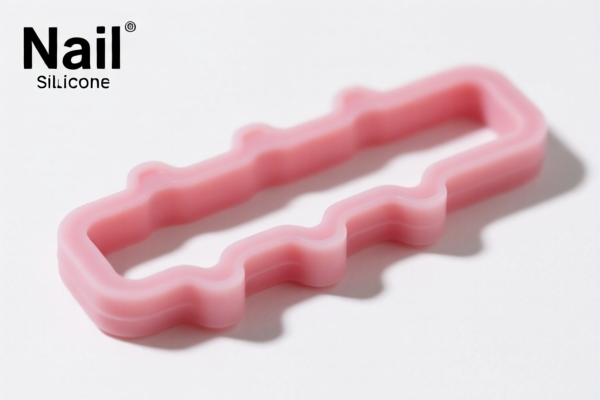

AI Analysis
🖌️ Transparent Silicone Nail Art Stamp (Nail Stamping Plates/polymer tips)
🌐 HS Code Reference & Customs Clearance Guide | 2024-2026 Tariff Analysis | Professional Entry Strategies
📌 I. Product Definition & Classification: Do You Really Know What a "Nail Stamp" Is?
A Transparent Silicone Nail Art Stamp is a key tool in nail art, used to transfer intricate designs from a stamping plate to the fingernails. In international trade, its classification depends heavily on its physical structure and intended use.
It is generally divided into two main categories based on Customs interpretations:
1. Decorative/Auxiliary Accessory (Article 3926): Considered a "small article of plastic for office or decorative purposes." If the stamp is viewed as a simple tool for applying beauty products without complex mechanical parts, it falls under "other articles of plastics."
2. Molded/Flat Plastic Sheet or Plate (Article 3919): If the stamp is made of a flat sheet of silicone/plastic material, often cut into specific shapes (rectangular, square, or round) for stamping, it may be classified as a "flat product" or "sheet/plate" of self-adhesive or non-self-adhesive plastic.
⚠️ Key Distinction Point:
- If viewed as a finished tool/accessory for beauty application → Chapter 96 (Man-made flowers, articles, etc.) or Chapter 39 (Other plastic articles) depending on specific design complexity.
- If viewed as a raw material form (flat silicone sheet cut to shape) → Chapter 39 (Plastics and articles thereof).
- Crucial Note: Many importers mistakenly classify these under Chapter 96 (Beauty tools). However, since they are primarily silicone/plastic molded items, US Customs often prefers Chapter 39 unless they have specific handle attachments that change the fundamental character.
📦 II. HS Code Classification Details (Latest Tariff Schedule)
| HS Code | Product Description | Application Scenario | Structural Characteristic |
|---|---|---|---|
3926.40.00.90 |
Other articles of plastics: Decorative or auxiliary small items | Simple silicone stamps used for nail art; considered "accessories" | ✅ Finished accessory, simple mold |
9602.00.50.80 |
Moulded or processed vegetable matter or other materials: Artificial flowers, foliage, fruit or parts thereof; articles of artificial flowers or parts thereof | Misclassification Risk: Some brokers try to put beauty tools here, but silicone stamps are often rejected unless defined strictly as "man-made articles" | ✅ Beauty Tool (Less common for pure silicone) |
3919.10.20.40 |
Self-adhesive plates, sheets, film, foil, tape, strip and other flat shapes, of plastics, whether or not in rolls: Of polymers of ethylene or propylene or of other plastics | Flat/Block structure silicone stamps; viewed as "flat plastic products" | ✅ Flat/Block form |
3919.90.50.40 |
Other plates, sheets, film, foil, tape, strip and other flat shapes, of plastics: Other | Other flat/Stamp-shaped silicone items; non-self-adhesive | ✅ Flat/Stamp shape |
3926.90.99.89 |
Other articles of plastics: Other | General "Other plastic articles" fallback | ✅ General Plastic Article |
🔍 Key Reminder:
-3926.40.00.90is often the most accurate for "finished small tools" if not clearly defined as a raw material.
-3919codes are used when the stamp is essentially a flat sheet of silicone cut to shape, emphasizing the material form over the function.
-9602.00.50.80is risky; while it covers "artificial articles," beauty tools are sometimes categorized under 9603 (Brooms, brushes) or 9608 (Pens). However, since it's a stamping tool made of silicone, 3926 or 3919 are more technically defensible as "plastic articles."
💰 III. Detailed 2024-2026 Tariff Rates (Including Surtaxes & Policy Add-ons)
✅ Applicable Country: United States (US)
✅ Origin: China (CN)
✅ Effective Time: Post-2025 (Includes Section 301 & IEEPA surcharges)
🎯 1. 3926.40.00.90 — Plastic Articles: Decorative/Auxiliary Small Items
| Item | Content |
|---|---|
| Basic Tariff Rate | 5.3% (ad valorem) |
| Section 301 Surtax | 0.0% (Note: Some plastic accessories may be exempt from the 25% 301 tariff depending on the specific exclusion list, but this HS code often has 0% additional duty if not in the restricted list) |
| IEEPA / Section 122 Surtax | +10% (Targeting Chinese products under IEEPA authorities) |
| Total Tariff Rate | 15.3% |
| Tax Calculation | CIF Value × 15.3% |
| De Minimis Eligibility | ❌ No (Denied) |
| Legal Authority Path | IEEPA:9903.01.25 → USITC:3926.40.00.90 |
📌 Explanation:
- This classification benefits from 0% Section 301 surcharge (if applicable under current exclusions), making it significantly cheaper than other plastic categories.
- The 10% IEEPA tariff is the main additional cost.
- Total 15.3% is relatively moderate compared to high-tech goods.
🎯 2. 9602.00.50.80 — Other Moulded/Processed Articles (Beauty Tool Category)
| Item | Content |
|---|---|
| Basic Tariff Rate | 2.7% (ad valorem) |
| Section 301 Surtax | +7.5% (Partial Section 301 surcharge) |
| IEEPA / Section 122 Surtax | +10% |
| Total Tariff Rate | 20.2% |
| Tax Calculation | CIF Value × 20.2% |
| De Minimis Eligibility | ❌ No (Denied) |
| Legal Authority Path | IEEPA:9903.01.24 → USITC:9602.00.50.80 → FOOTNOTE:9903.88.01 |
📌 Note:
- While the basic rate is low (2.7%), the 7.5% Section 301 surcharge applies.
- This is a mid-range tariff option.
- Risk: Customs may challenge this code if the item is not clearly an "artificial flower" or "man-made article" in the traditional sense of 9602.
🎯 3. 3919.10.20.40 & 3919.90.50.40 — Flat/Block Plastic Products
| Item | Content |
|---|---|
| Basic Tariff Rate | 5.8% (ad valorem) |
| Section 301 Surtax | +25.0% (Full Section 301 surcharge) |
| IEEPA / Section 122 Surtax | +10% |
| Total Tariff Rate | 40.8% |
| Tax Calculation | CIF Value × 40.8% |
| De Minimis Eligibility | ❌ No (Denied) |
| Legal Authority Path | IEEPA:9901.25 → IEEPA:9903.01.24 → USITC:3919.10.20.40 → FOOTNOTE:9903.88.01 |
📌 Warning:
- High Tariff Alert: This is the most expensive classification.
- The 25% Section 301 surcharge applies to most flat plastic products from China.
- Only choose this if the product is strictly defined as a raw plastic sheet/plate and not a finished tool.
- Do not use for finished nail art stamps if a lower HS code is available.
🎯 4. 3926.90.99.89 — Other Plastic Articles (General Fallback)
| Item | Content |
|---|---|
| Basic Tariff Rate | 5.3% (ad valorem) |
| Section 301 Surtax | +7.5% (Partial Section 301 surcharge) |
| IEEPA / Section 122 Surtax | +10% |
| Total Tariff Rate | 22.8% |
| Tax Calculation | CIF Value × 22.8% |
| De Minimis Eligibility | ❌ No (Denied) |
| Legal Authority Path | IEEPA:9903.01.24 → USITC:3926.90.99.89 |
📌 Note:
- A fallback option if the specific "decorative" code (3926.40) is rejected.
- 22.8% is higher than 3926.40 (15.3%) due to the 7.5% Section 301 surcharge.
- Use only when 3926.40 is not applicable.
🛠️ IV. Customs Clearance Practical Advice (Real-World Pitfall Guide)
✅ 1. Document Checklist (Must-Have)
| Document | Required | Explanation |
|---|---|---|
| ✅ Product Specifications | ✔️ | Include dimensions, material composition (100% Silicone), and usage (nail art stamping). |
| ✅ Photos | ✔️ | Clear images of the stamp, showing it is silicone, not metal or wood. |
| ✅ Commercial Invoice | ✔️ | Describe as "Silicone Nail Art Stamp, For Decoration, Not for Industrial Use." |
| ✅ Material Safety Data Sheet (MSDS) | ✔️ | Proves non-hazardous silicone content. |
| ✅ Packaging List | ✔️ | Detail if stamps are sold individually or in sets. |
✅ 2. Declaration Tips (Key Mantra)
🔥 "Material First, Function Second, Avoid 'Raw Sheet' Trap!"
| Scenario | Correct Declaration | Wrong Practice |
|---|---|---|
| Finished Silicone Stamp | 3926.40.00.90 (15.3%) |
Declare as 3919... (40.8%) → Overpay! |
| Flat Silicone Sheet (Unfinished) | 3919.10.20.40 (40.8%) |
Declare as "Nail Stamp" → Misclassification Risk |
| Beauty Tool Kit (with Scraper) | 3926.90.99.89 (22.8%) |
Split into separate lines → Complexity + Higher Risk |
📌 Strategy:
- Always emphasize that the item is a "Finished Small Article of Plastic" for decorative/aesthetic use.
- Avoid terms like "Raw Plastic Sheet" unless you are actually importing bulk rolls.
- Use3926.40.00.90as your primary target for the lowest tariff (15.3%).
✅ 3. Special Circumstances Handling
| Situation | Handling Advice |
|---|---|
| OEM Custom Shapes | Provide design proofs. Ensure they are still "small decorative articles" to keep 3926.40. |
| Silicone + Handle | If the stamp has a non-plastic handle (e.g., wood), it may move to Chapter 96 or 44. Re-evaluate HS Code. |
| Set with Nail Polish | Do NOT combine. Declare nail polish separately (Chapter 32) and stamps separately (Chapter 39). Mixed shipments cause delays. |
| Dropshipping | Ensure the seller declares the correct HS Code. Many dropshipping platforms use incorrect codes (e.g., 9603) leading to 7.5%-25% extra tariffs. |
🌍 V. Global Market Comparison (2024-2026)
| Country/Region | Recommended HS Code | Tariff (China Origin) | Certification Required | Notes |
|---|---|---|---|---|
| 🇺🇸 USA | 3926.40.00.90 |
15.3% | None (Non-hazardous) | Lowest US Tariff for this product |
| 🇨🇳 China | 3926.40.00.90 |
5.0% | CCC (if applicable) | No surcharges |
| 🇪🇺 EU | 3926.90.99 |
0% - 6% | REACH, CPSR (Cosmetic) | Low tariff, but strict cosmetic safety |
| 🇬🇧 UK | 3926.90.99 |
0% - 6% | UKCA, CPSR | Post-Brexit rules apply |
| 🇦🇺 Australia | 3926.90.99 |
5% | None | Simple clearance |
📌 Conclusion:
- USA has the highest effective tax burden due to IEEPA/Section 301, but3926.40.00.90minimizes this to 15.3%.
- EU/UK have lower base tariffs but strict cosmetic safety regulations (CPSR) if the product is considered a "cosmetic tool" touching the skin.
- China has no surcharges, making it the cheapest market for these goods.
📌 VI. Common Errors & Pitfalls (Lessons Learned)
❌ Error 1: Declaring as 3919.90... (Flat Sheet)
👉 Consequence: 40.8% Tariff. If it’s a finished stamp, this is a misclassification.
👉 Result: Overpayment of 25.5% compared to 3926.40.
❌ Error 2: Using 9602.00.50.80 without justification
👉 Consequence: 20.2% Tariff + potential Customs audit for incorrect product description.
👉 Result: Delay in clearance and possible penalties.
❌ Error 3: Combining with Nail Polish in one box
👉 Consequence: Customs may classify the entire box under the highest tariff item or require separate HS codes, leading to confusion.
👉 Result: Shipment held at port.
✅ Correct Approach:
"Silicone Nail Art Stamp, Transparent, Used for Transferring Nail Polish Designs, Finished Plastic Accessory, HS Code 3926.40.00.90"
🎯 VII. Conclusion: Professional Declaration, Save Cost, Ensure Clearance!
🎯 Remember the Mantra:
🔹 "Silicone Stamp, Not a Sheet, Use 3926.40, Save 25%!"
🔹 "HS Code Determines Tax, 15% vs 40%, Choose Wisely!"
📌 Pro Tip:
If you are importing large volumes, consider applying for an HTSUS Exclusion under Section 301, if available for plastic accessories. However, 3926.40.00.90 currently has 0% Section 301 surcharge, so it’s already optimized.
For EU markets, ensure you have a CPSR (Cosmetic Product Safety Report) ready, as customs may ask for it under cosmetic tool regulations.
📣 Immediate Action:
📞 Contact your customs broker with product photos and specify "Silicone, Flat, Decorative Tool"
🚀 Declare under3926.40.00.90to secure the 15.3% total tariff.
✨ Professional Clearance Starts with Accurate Classification!
💼 Every Percentage Point Matters in Cross-Border E-Commerce!
Customer Reviews
About HS Code Classification
The Harmonized System (HS) is an internationally standardized nomenclature developed by the World Customs Organization (WCO) to classify traded products. Over 200 countries use the HS system as the basis for customs tariffs, trade statistics, and import/export regulations.
Each HS code follows a hierarchical structure:
- Chapter (2 digits) — Broad category of goods (e.g., Chapter 84: Machinery and Mechanical Appliances)
- Heading (4 digits) — More specific grouping within the chapter
- Subheading (6 digits) — Internationally standardized breakdown, used by all WCO member countries
- National subdivisions (8-10 digits) — Country-specific extensions for further classification, such as US HTSUS 10-digit codes
Correct HS code classification is essential for smooth customs clearance, accurate duty payment, and compliance with trade regulations. Misclassification can lead to customs delays, overpayment of duties, or penalties.
When importing from CN to US, the applicable tariff rates may include:
- Most-Favored-Nation (MFN) rate — The standard duty rate applied to WTO members
- General rate — Applied to countries without trade agreements
- Trade remedy duties — Additional tariffs such as Section 301 (anti-dumping), Section 232 (national security), or countervailing duties
The information provided on this page is for reference purposes only. For official classification, please consult with your local customs authority or a licensed customs broker.