Transparent Stamp
CN → US| HS Code | Tariff Rate | Origin | Destination | Doc |
|---|---|---|---|---|
| 3926909989 | 22.8% | CN | US | Official Doc |
| 9611000000 | 20.2% | CN | US | Official Doc |
| 3926904800 | 13.4% | CN | US | Official Doc |
| 4421919880 | 38.3% | CN | US | Official Doc |
| 3926909989 | 22.8% | CN | US | Official Doc |
Product Images
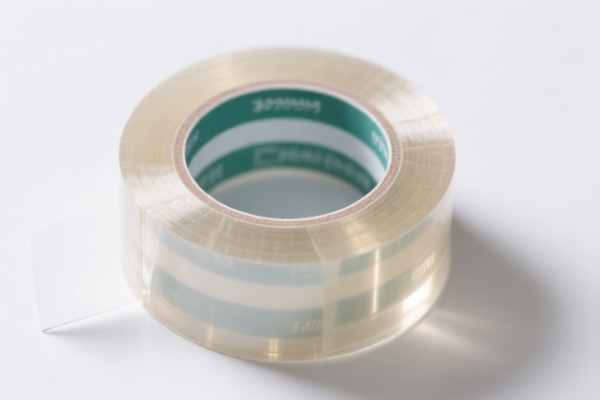

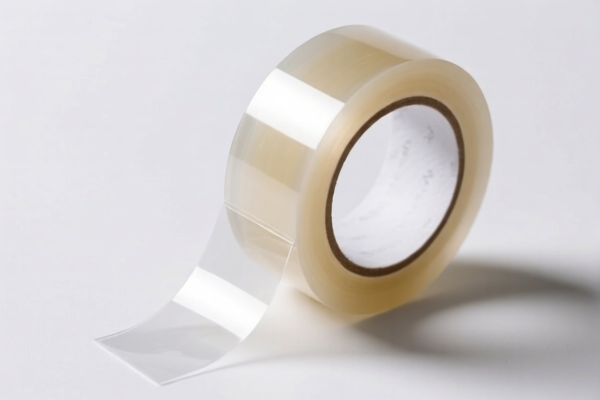
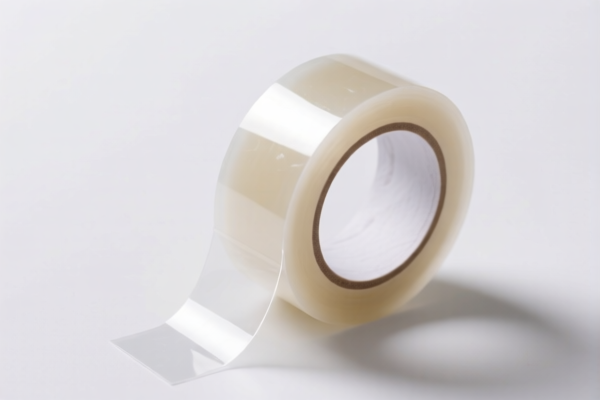
AI Analysis
🖋️ Transparent Stamp (Seal/Chop)
🌐 HS Code Reference & Customs Clearance Guide | 2026 Latest Tariff Analysis | Professional Entry Strategy
📌 I. Product Definition & Classification: Do You Truly Understand "Transparent Stamps"?
Transparent stamps are self-inking or pre-inked stamping tools featuring a clear polymer or acrylic base, allowing precise alignment during imprinting. They are widely used in administrative offices, legal documentation, education, and craft projects. In international trade, they are classified based on material composition and functional purpose:
Plastic/Material-Based Classification:
- If the stamp body is made of plastic/resin (common for "transparent" stamps) → falls under Chapter 39 (Plastics) or Chapter 96 (Miscellaneous Articles).
Functional Classification:
- If primarily used for marking, sealing, or numbering (as opposed to decorative/artistic use) → aligns with 9611.00 (Date stamps, seal stamps, etc.).
⚠️ Critical Distinction:
- "Transparent" refers to the material property, not a separate category.
- If made of plastic/resin, it may qualify for 3926.90 (Other plastic articles) or 9611.00 (Stamping tools).
- If mistakenly classified as wood-based (HS 4421), tax liability doubles due to higher duties.
📦 II. HS Code Classification Details (2026 Tariff Reference)
| HS Code | Product Description | Applicable Scenario | Material Basis |
|---|---|---|---|
| 4421.91.98.80 | Other wood articles (incl. "transparent" misclassification) | Rarely applicable; only if wood core with plastic overlay | ❌ Not Recommended |
| 3926.90.99.89 | Other plastic articles (unspecified) | Standard transparent stamps made of acrylic/resin | ✅ Primary Candidate |
| 9611.00.00.00 | Date/seal/numbering stamps & similar articles | Stamps specifically for marking/sealing documents | ✅ Functional Match |
| 3926.90.48.00 | Other plastic articles (lower duty tier) | Plastic stamps with minimal additional features | ✅ Lowest Duty Option |
| 3926.90.99.89 | Duplicate entry (same as above) | Same as above; ensure consistency in申报 | ✅ Redundant |
🔍 Key Insight:
- 9611.00.00.00 is the most precise classification for functional stamps, regardless of material.
- 3926.90.99.89 and 3926.90.48.00 apply if the stamp is not primarily for sealing/marking but sold as a general plastic item.
- 4421.91.98.80 is incorrect unless the stamp has a wooden core (unlikely for "transparent" stamps).
💰 III. 2026 Tariff Breakdown (Including Additional Duties & Policy Surcharges)
✅ Target Market: United States (US)
✅ Origin: China (CN)
✅ Effective Date: November 10, 2025 (for all imports)
🎯 1. 3926.90.48.00 – Low-Duty Plastic Articles (Best Option)
| Item | Detail |
|---|---|
| Base Tariff | 3.4% (ad valorem) |
| Section 232 Tariff | 0.0% (Not applicable to China) |
| Section 301 Tariff | 7.5% (Section 232-related surcharge) |
| IEEPA Surcharge | 10% (China-specific under International Emergency Economic Powers Act) |
| Total Duty Rate | 13.4% |
| Tax Calculation | CIF Value × 13.4% |
| De Minimis Exemption | ❌ No (Deny de minimis) |
| Legal Path | IEEPA:9903.01.25 → USITC:3926.90.48.00 → FOOTNOTE:9903.88.01 |
📌 Explanation:
- 13.4% is the lowest possible rate for transparent stamps if classified under 3926.90.48.00.
- Requires proof of material (plastic) and non-decorative use.
🎯 2. 3926.90.99.89 – High-Duty Plastic Articles (Common Mistake)
| Item | Detail |
|---|---|
| Base Tariff | 5.3% |
| Section 232 Tariff | 7.5% |
| IEEPA Surcharge | 10% |
| Total Duty Rate | 22.8% |
| Tax Calculation | CIF × 22.8% |
| De Minimis Exemption | ❌ No |
| Legal Path | IEEPA:9903.01.24 → USITC:3926.90.99.89 → FOOTNOTE:9903.88.01 |
📌 Warning:
- This is a catch-all category for plastic articles not specified elsewhere.
- Avoid unless no functional stamping purpose can be proven.
🎯 3. 9611.00.00.00 – Functional Stamps (Recommended for Sealing/Marking)
| Item | Detail |
|---|---|
| Base Tariff | 2.7% |
| Section 232 Tariff | 7.5% |
| IEEPA Surcharge | 10% |
| Total Duty Rate | 20.2% |
| Tax Calculation | CIF × 20.2% |
| De Minimis Exemption | ❌ No |
| Legal Path | IEEPA:9903.01.24 → USITC:9611.00.00.00 → FOOTNOTE:9903.88.01 |
📌 Advantage:
- 20.2% is lower than 3926.90.99.89 (22.8%) and 4421.91.98.80 (38.3%).
- Must prove functional use (e.g., date stamp, seal, numbering).
🎯 4. 4421.91.98.80 – Wood-Based (Incorrect for Transparent Stamps)
| Item | Detail |
|---|---|
| Base Tariff | 3.3% |
| Section 232 Tariff | 25.0% |
| Section 122 Tariff | 10% |
| Total Duty Rate | 38.3% |
| Tax Calculation | CIF × 38.3% |
| De Minimis Exemption | ❌ No |
| Legal Path | IEEPA:9903.01.24 → USITC:4421.91.98.80 → FOOTNOTE:9903.88.01 |
📌 Critical Warning:
- 38.3% is extremely high and applies only if wood is the primary material.
- Transparent stamps are almost always plastic/resin, making this classification erroneous.
🛠️ IV. Customs Clearance Practical Tips (Avoid Pitfalls)
✅ 1. Required Documentation Checklist
| Document | Mandatory | Purpose |
|---|---|---|
| ✅ Product Specifications | ✔️ | Confirm material (plastic/resin) and function (sealing/marking) |
| ✅ Technical Diagrams | ✔️ | Show internal structure (e.g., ink pad, clear base) |
| ✅ Product Photos (Clear Image) | ✔️ | Highlight transparency and use case |
| ✅ Third-Party Test Reports | ✔️ | FCC, CE, RoHS (if applicable) |
| ✅ Commercial Invoice | ✔️ | State "Transparent Stamp for Office/Sealing" |
| ✅ Certificate of Origin (CO) | ✔️ | Prove Chinese origin for IEEPA surcharge |
| ✅ Packing List | ✔️ | Clarify if stamp is sold with ink pad or separately |
✅ 2. Declaration Strategy (Golden Rule)
🔥 "Functional > Material, Precision = Savings!"
| Scenario | Correct Declaration | Wrong Declaration | Consequence |
|---|---|---|---|
| Transparent stamp for sealing documents | 9611.00.00.00 | 3926.90.99.89 | 20.2% vs 22.8% |
| Plastic stamp with no functional purpose | 3926.90.48.00 | 9611.00.00.00 | 13.4% vs 20.2% |
| Stamp with wooden base (rare) | 4421.91.98.80 | 9611.00.00.00 | 38.3% vs 20.2% |
| "Clear stamp" without function proof | 3926.90.99.89 | 9611.00.00.00 | 22.8% vs 20.2% |
✅ 3. Special Cases Handling
| Situation | Recommendation |
|---|---|
| OEM Custom Stamps | Provide client order + design to prove functional use |
| Stamps with Metal Base | Still qualify for 9611.00.00.00 if function is primary |
| Decorative Transparent Stamps | May fall under 3926.90.48.00 if no sealing purpose |
| Multi-Purpose Stamps (Seal + Art) | Declare as 9611.00.00.00 if sealing is primary |
🌍 V. Global Market Comparison (2026 Tariff Overview)
| Country/Region | Recommended HS Code | Duty Rate | Certification | Notes |
|---|---|---|---|---|
| 🇺🇸 USA | 9611.00.00.00 |
20.2% (China) | FCC + RoHS | 38.3% if misclassified as wood |
| 🇨🇳 China | 9611.00.00.00 |
5% | CCC + RoHS | No extra surcharges |
| 🇪🇺 EU | 9611.00.00.00 |
0% (CE) | CE + RoHS | No surcharges |
| 🇦🇺 Australia | 9611.00.00.00 |
5% | RCM | No surcharges |
| 🇯🇵 Japan | 9611.00.00.00 |
0% | PSE | No surcharges |
📌 Conclusion:
- USA is the only market with high IEEPA surcharges (10% + 7.5% + 2.7%).
- Misclassification as wood (4421) doubles costs.
- Functionality is key to avoiding 3926.90.99.89.
📌 VI. Common Errors & Pitfalls (Learn from Others’ Mistakes)
❌ Mistake 1: Classifying as 4421.91.98.80 (wood)
👉 Result: 38.3% duty → Double the cost of correct classification!
❌ Mistake 2: Using 3926.90.99.89 for functional stamps
👉 Result: 22.8% vs 20.2% → Unnecessary 2.6% loss per shipment.
❌ Mistake 3: No proof of function → 9611.00.00.00 denied
👉 Result: Delayed clearance or reclassification → 38.3% penalty.
✅ Correct Approach:
"Transparent Self-Inking Stamp, Acrylic Base, Date/Seal Function, Model XYZ, RoHS Certified"
🎯 VII. Final Advice: Precision Pays Off!
🎯 Golden Rules:
🔹 "Function First, Material Second" → 9611.00.00.00 is best for sealing.
🔹 "Plastic + No Function" → 3926.90.48.00 (13.4% is lowest!)
🔹 "Avoid 4421.91.98.80" → 38.3% is catastrophic.
📌 Pro Tip:
If your transparent stamps are originating from Vietnam, Mexico, or Thailand, you may qualify for IEEPA exemptions → 0%~5% duty!
Request Advance Rulings to lock in favorable classification.
📣 Take Action Now:
📞 Contact a licensed customs broker + provide product photos + function proof → Pre-clearance Ruling.
🚀 Ensure accurate HS Code, minimize duties, and accelerate global trade!
✨ Professional Classification = Cost Savings + Faster Clearance
💼 Every Percentage Point Matters in Customs!
Customer Reviews
About HS Code Classification
The Harmonized System (HS) is an internationally standardized nomenclature developed by the World Customs Organization (WCO) to classify traded products. Over 200 countries use the HS system as the basis for customs tariffs, trade statistics, and import/export regulations.
Each HS code follows a hierarchical structure:
- Chapter (2 digits) — Broad category of goods (e.g., Chapter 84: Machinery and Mechanical Appliances)
- Heading (4 digits) — More specific grouping within the chapter
- Subheading (6 digits) — Internationally standardized breakdown, used by all WCO member countries
- National subdivisions (8-10 digits) — Country-specific extensions for further classification, such as US HTSUS 10-digit codes
Correct HS code classification is essential for smooth customs clearance, accurate duty payment, and compliance with trade regulations. Misclassification can lead to customs delays, overpayment of duties, or penalties.
When importing from CN to US, the applicable tariff rates may include:
- Most-Favored-Nation (MFN) rate — The standard duty rate applied to WTO members
- General rate — Applied to countries without trade agreements
- Trade remedy duties — Additional tariffs such as Section 301 (anti-dumping), Section 232 (national security), or countervailing duties
The information provided on this page is for reference purposes only. For official classification, please consult with your local customs authority or a licensed customs broker.