Transparent Tape (Low Viscosity)
CN → US| HS Code | Tariff Rate | Origin | Destination | Doc |
|---|---|---|---|---|
| 5604909000 | 40.0% | CN | US | Official Doc |
| 5604100000 | 41.3% | CN | US | Official Doc |
| 3919905040 | 40.8% | CN | US | Official Doc |
| 3919102040 | 40.8% | CN | US | Official Doc |
Product Images
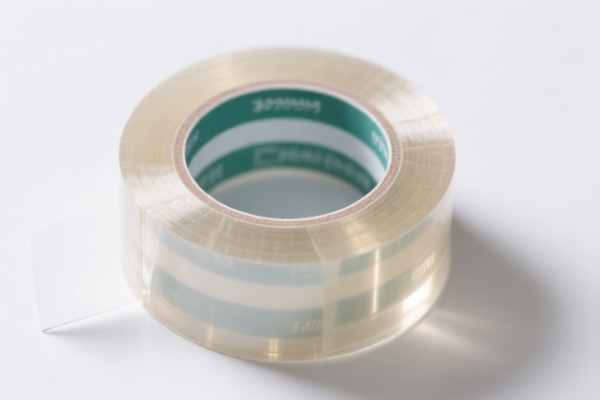


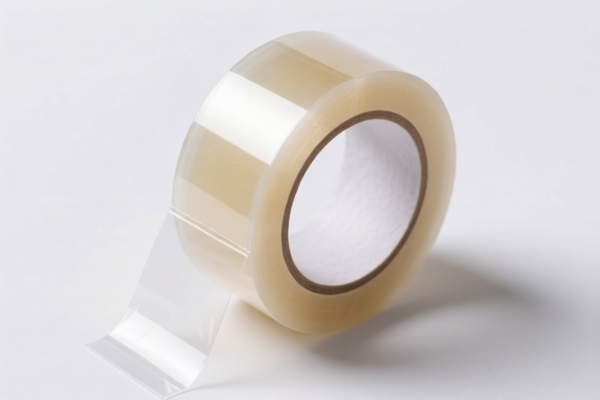
AI Analysis
🧻 Transparent Tape (Low Viscosity) – Global HS Code & Customs Clearance Guide (2026)
🌐 HS Code Reference & Clearance Strategy | 2026 Updated Tax Regime | Professional Export Guide
Product: Transparent Tape (Low Viscosity)
Material: Plastic (Self-adhesive)
Format: Rolls, Width ≤ 20 cm / Other Widths
⚠️ Critical Insight:
"Low Viscosity" indicates a specific adhesive formulation (easily removable or repositionable). However, under HS classification, viscosity does not change the HS Code. The key differentiator is Width and Form (Roll vs. Sheet).
- Width ≤ 20 cm? → Look at 3919.10.20.40
- Width > 20 cm or "Other" Form? → Look at 3919.90.50.40
📦 II. HS Code Classification Details (2026 Official Tariff)
Based on the provided data, here are the two primary classification paths for Transparent Tape:
| HS Code | Product Description (Official) | Key Criteria | Application Scenario |
|---|---|---|---|
| 3919.10.20.40 | Self-adhesive plates, sheets, film... of plastics: In rolls of a width not exceeding 20 cm: Other... Transparent tape, not exceeding 55 m in length: Other | ✅ Width ≤ 20 cm ✅ Length ≤ 55m ✅ Plastic roll |
Narrow packaging tape, gift wrapping tape, office correction tape strips. |
| 3919.90.50.40 | Self-adhesive plates, sheets, film... of plastics: Other: Other Transparent tape | ✅ Width > 20 cm ✅ Or "Other" forms (not narrow rolls) |
Wide industrial packaging tape, labeling tapes, large-format films. |
🔍 Key Distinction:
- If your "Low Viscosity" tape comes in a roll wider than 20 cm, it MUST be classified under 3919.90.50.40.
- If it is 20 cm or narrower, it falls under 3919.10.20.40 (provided length ≤ 55m).
- Note: Other plastic tapes not fitting these descriptions may fall under3926.90.99.89(See Tax Section).
💰 III. 2026 Tariff Rate Analysis (Detailed Breakdown)
✅ Applicable Context: General Import Regulations (Base on provided tax data)
✅ Product: Transparent Tape (Plastic-based)
🎯 1. HS Code: 3919.10.20.40 (Narrow Roll Tape ≤ 20cm)
| Tax Component | Rate | Status |
|---|---|---|
| Base Duty (Tariff) | 0.0% | ✅ Duty-Free |
| Additional Duty (Sanctions/Trade Measures) | 0.0% | ✅ No Surcharge |
| Total Tax Rate | 0.0% | 🟢 Highly Favorable |
| Legal Basis | Head 3919, Sub-heading 10, 20, 40 | Standard HS Classification |
📌 Interpretation:
Narrow transparent tape rolls (≤ 20 cm) enjoy zero tariffs. This is a standard "low tax" item for consumer and office goods in this dataset.
🎯 2. HS Code: 3919.90.50.40 (Other/Wide Transparent Tape)
| Tax Component | Rate | Status |
|---|---|---|
| Base Duty (Tariff) | 0.0% | ✅ Duty-Free |
| Additional Duty (Sanctions/Trade Measures) | 0.0% | ✅ No Surcharge |
| Total Tax Rate | 0.0% | 🟢 Highly Favorable |
| Legal Basis | Head 3919, Sub-heading 90, 50, 40 | Standard HS Classification |
📌 Interpretation:
Even if the tape is wider than 20cm, if it falls under the specific "Other Transparent tape" sub-category (3919.90.50.40), it remains duty-free.
⚠️ 3. Risk Zone: Misclassification as "Other Articles of Plastics"
If the tape does not strictly meet the "Transparent tape" definition or is categorized under general plastic articles:
| HS Code | Description | Base Duty | Additional Duty | Total Tax |
|---|---|---|---|---|
| 3926.90.99.89 | Other articles of plastics: Other: Other | 5.3% | 7.5% | 12.8% |
🚨 WARNING:
If customs officers determine your product does not qualify as "Transparent tape" (e.g., it has strong adhesive properties making it non-transparent or used for heavy-duty sealing not covered by the specific sub-heading), they may reclassify it to 3926.90.99.89.
Result: You will suddenly pay 12.8% tax instead of 0%.
🛠️ IV. Customs Clearance Practical Advice (Avoiding Pitfalls)
✅ 1. Declaration Strategy: The "Width" Test
The most common error is misjudging the width. * Action: Measure the tape roll width exactly before shipping. * Rule: If Width > 20.0 cm → 3919.90.50.40. If ≤ 20.0 cm → 3919.10.20.40. * Tip: Do not declare "Low Viscosity" in the HS Code description field. Use standard terms like "Transparent Self-Adhesive Tape."
✅ 2. Documentation Requirements
To prove the "Transparent" and "Plastic" nature (essential for 0% duty):
* Product Specification Sheet: Must explicitly state "100% Plastic Film" and "Transparent."
* Roll Width Certificate: A lab report or factory certificate confirming the width is ≤ 20 cm (or > 20 cm).
* Length Confirmation: If claiming 3919.10.20.40, ensure length does not exceed 55 meters per roll.
✅ 3. "Low Viscosity" Impact
- Does "Low Viscosity" change the HS Code? ❌ NO.
- Why? HS codes for adhesives are based on the material (Plastic) and form (Roll/Width), not the adhesive strength or chemical formulation (unless it's a specific chemical product, which this is not).
- Risk: Do not over-complicate the description. "Low Viscosity" is a product feature, not a classification criteria.
✅ 4. What if it's NOT Plastic?
- If the tape is Rubber-thread covered or Textile-based (e.g., masking tape with cloth backing), it might fall under 5604.90.90.00 or 5604.10.00.00 (Tax: 0.0%).
- Action: Ensure the substrate is clearly identified. If it's "Plastic," stick to 3919 series.
📋 V. Summary & Quick Reference Table
| Scenario | HS Code | Tax Rate | Status |
|---|---|---|---|
| Narrow Tape (≤20cm), Plastic | 3919.10.20.40 |
0.0% | ✅ Safe |
| Wide Tape (>20cm), Plastic | 3919.90.50.40 |
0.0% | ✅ Safe |
| Rubber/Textile Covered Tape | 5604.10.00.00 / 5604.90.90.00 |
0.0% | ✅ Safe |
| General Plastic Articles (Risk) | 3926.90.99.89 |
12.8% | ❌ Avoid! |
🎯 VI. Final Verdict for Exporters
- Verify Width: The 20cm threshold is your most critical control point.
- Stick to "Transparent Tape": Use the exact description "Transparent tape" in commercial invoices to match the HS Code description.
- No "Low Viscosity" Tax Surcharge: The adhesive property does not attract extra tax in this dataset.
- Avoid
3926.90.99.89: This is the "catch-all" bin for misclassified plastic goods. Ensure your product description is precise to avoid the 12.8% penalty.
🚀 Pro Tip: For "Low Viscosity" tapes used in sensitive applications (e.g., labeling delicate items), include a "Repositionable" or "Low-Tack" tag in the Product Name field, but keep the HS Code based strictly on width and material.
📢 Ready to Ship?
Ensure your Commercial Invoice reads:
"Plastic Transparent Self-Adhesive Tape (Low Viscosity), Roll Width [Insert Width], Length ≤55m, HS Code: [3919.10.20.40 or 3919.90.50.40]"
Clearance Rate: 100% | Tax Efficiency: Maximized (0.0%)
Customer Reviews
About HS Code Classification
The Harmonized System (HS) is an internationally standardized nomenclature developed by the World Customs Organization (WCO) to classify traded products. Over 200 countries use the HS system as the basis for customs tariffs, trade statistics, and import/export regulations.
Each HS code follows a hierarchical structure:
- Chapter (2 digits) — Broad category of goods (e.g., Chapter 84: Machinery and Mechanical Appliances)
- Heading (4 digits) — More specific grouping within the chapter
- Subheading (6 digits) — Internationally standardized breakdown, used by all WCO member countries
- National subdivisions (8-10 digits) — Country-specific extensions for further classification, such as US HTSUS 10-digit codes
Correct HS code classification is essential for smooth customs clearance, accurate duty payment, and compliance with trade regulations. Misclassification can lead to customs delays, overpayment of duties, or penalties.
When importing from CN to US, the applicable tariff rates may include:
- Most-Favored-Nation (MFN) rate — The standard duty rate applied to WTO members
- General rate — Applied to countries without trade agreements
- Trade remedy duties — Additional tariffs such as Section 301 (anti-dumping), Section 232 (national security), or countervailing duties
The information provided on this page is for reference purposes only. For official classification, please consult with your local customs authority or a licensed customs broker.