Transparent Tape (Printable)
CN → US| HS Code | Tariff Rate | Origin | Destination | Doc |
|---|---|---|---|---|
| 3919102040 | 40.8% | CN | US | Official Doc |
| 3919905040 | 40.8% | CN | US | Official Doc |
| 5604100000 | 41.3% | CN | US | Official Doc |
| 3926100000 | 15.3% | CN | US | Official Doc |
| 3919102040 | 40.8% | CN | US | Official Doc |
Product Images
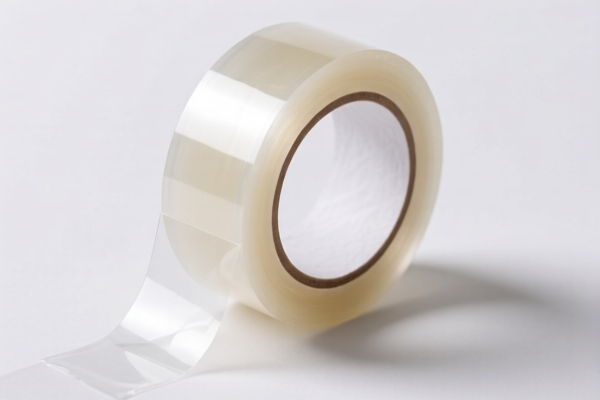
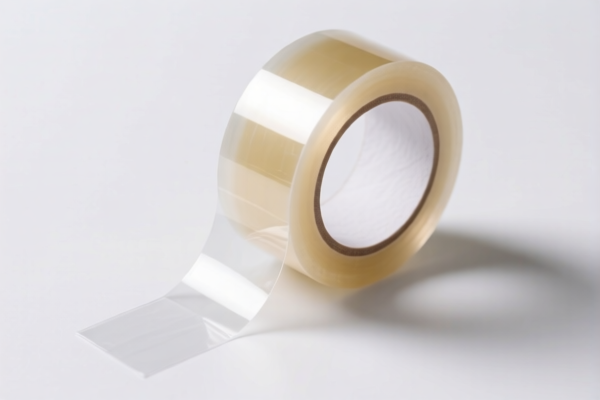
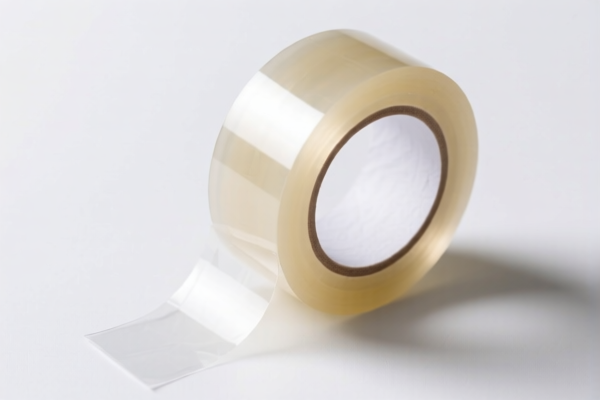
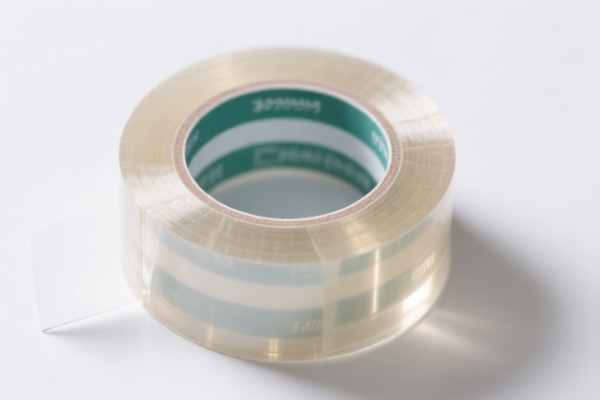
AI Analysis
🏷️ Transparent Tape (Printable)
🌐 HS Code Reference & Customs Clearance Guide | 2026 Latest Tariff Analysis | Professional Clearance Strategy
📌 I. Product Definition & Classification: What is "Printable Transparent Tape"?
Transparent Tape (Printable), often referred to as "Masking Tape" in a broader sense or "Labeling Tape" in industrial contexts, is a self-adhesive plastic strip used for packaging, labeling, or masking. Its key characteristic is the surface treatability for printing (inks, labels, or handwritten text).
In international trade, classification depends heavily on: 1. Material: Typically plastic films (BOPP, PVC, PET) or paper-backed plastic. 2. Form: Self-adhesive rolls. 3. Specifics: Width and length can sometimes influence sub-classification, though the core material determines the primary HS Code.
⚠️ Key Distinction:
- If it is plastic-based (BOPP/PVC) → Generally falls under Chapter 39 (Plastics).
- If it has a fabric/gauze backing with rubber adhesive → Could fall under Chapter 56 (Non-wovens/Textiles).
- If considered a general office supply/plastic article → Could fall under Chapter 39.26.
📦 II. HS Code Classification Details (Based on Provided Data)
Below are the four potential HS Codes derived from the analysis, along with their logical basis and tax implications.
1. 3919.10.20.40 – Self-Adhesive Plates, Sheets, Film, Roll & Other Flat Shapes, of Plastics
| Item | Details |
|---|---|
| Product Description | Self-adhesive plastic tape |
| Matching Logic | The term "Transparent" (透明) matches the physical appearance, and "Tape" (胶带) matches the form factor in the classification. Since "Labeling" (标签) does not create a conflict with material or shape parameters, it is inferred to fit the "Other" category under plastics. |
| Applicable Scenario | Standard BOPP or PVC transparent tape used for general labeling, packaging, or printing. |
| Total Tax Rate | 40.8% |
🔍 Why this code?
This is the most precise fit for self-adhesive plastic tapes. It directly addresses the "plastic tape" nature of the product.
2. 3919.90.50.40 – Other Self-Adhesive Plates, Sheets, Film, Roll & Other Flat Shapes, of Plastics
| Item | Details |
|---|---|
| Product Description | Other self-adhesive plastic products |
| Matching Logic | "Transparent" corresponds to "transparent," and "Tape" corresponds to "tape." By common sense, the material is inferred to be plastic, fitting the classification of self-adhesive plastic strips. |
| Applicable Scenario | Transparent tapes that may not fit the specific width/length criteria of the 3919.10 subheading but are still plastic-based self-adhesive rolls. |
| Total Tax Rate | 40.8% |
🔍 Why this code?
A "catch-all" for self-adhesive plastic tapes under Chapter 39. Often used when specific dimensions don't match the primary3919.10sub-categories.
3. 5604.10.00.00 – Thread & Cord, Coated with Rubber or Plastics; Textile Tape & Similar Articles
| Item | Details |
|---|---|
| Product Description | Textile tapes & similar articles, coated with rubber/plastics |
| Matching Logic | Based on common sense, the main material of transparent tape is plastic or gel, which aligns with the physical properties of a sticky material. No obvious material or shape conflict exists with this category. |
| Applicable Scenario | Tapes with a textile/fabric backing coated with plastic or rubber adhesive (e.g., certain heavy-duty masking tapes or cloth tapes). |
| Total Tax Rate | 41.3% |
🔍 Why this code?
This code is relevant if the tape has a fabric base (even if coated with plastic). Purely plastic tapes (BOPP) usually go to Chapter 39, but if the backing is textile, this code applies.
4. 3926.10.00.00 – Office or School Supplies, of Plastics
| Item | Details |
|---|---|
| Product Description | Office/School supplies of plastic |
| Matching Logic | Matches material and usage. By common sense, the tape material is plastic (backing is often BOPP, a plastic film). This fits the definition of office supplies and plastic products under Chapter 39.26. |
| Applicable Scenario | Transparent tape used primarily in offices, schools, or light commercial settings as a general supply. |
| Total Tax Rate | 15.3% |
🔍 Why this code?
Lowest Tax Rate! This code treats the tape as a "plastic article" rather than a raw adhesive material. It is applicable if the tape is marketed strictly as an office supply and not as an industrial packaging material. Check local customs interpretation carefully.
💰 III. 2026 Latest Tariff Rate Details (Including Surcharges & Policy Add-ons)
✅ Applicable Country: United States (US)
✅ Origin: China (CN)
✅ Effective Date: November 10, 2025 (and subsequent imports)
🎯 1. Codes 3919.10.20.40 & 3919.90.50.40 – Self-Adhesive Plastic Tapes
| Item | Content |
|---|---|
| Base Duty Rate | 5.8% (Ad Valorem) |
| Section 301 Surcharge (USITC) | +25.0% |
| 122 Clause Tariff (IEEPA) | +10.0% |
| Total Tax Rate | 40.8% |
| Tax Calculation | CIF Value × 40.8% |
| De Minimis Eligibility | ❌ Not Eligible (deny_de_minimis) |
| Legal Basis Path | IEEPA:122 → USITC:301 → HS:3919 |
📌 Explanation:
- 5.8% Base Duty: Standard MFN rate for self-adhesive plastic tapes. - 25% Section 301: Additional tariff under US Trade Act Section 301 against Chinese goods. - 10% IEEPA (122 Clause): Additional tariff under the International Emergency Economic Powers Act. - Total 40.8%: High cost. Must be factored into pricing.
🎯 2. Code 5604.10.00.00 – Coated Textile Tapes
| Item | Content |
|---|---|
| Base Duty Rate | 6.3% (Ad Valorem) |
| Section 301 Surcharge (USITC) | +25.0% |
| 122 Clause Tariff (IEEPA) | +10.0% |
| Total Tax Rate | 41.3% |
| Tax Calculation | CIF Value × 41.3% |
| De Minimis Eligibility | ❌ Not Eligible (deny_de_minimis) |
| Legal Basis Path | IEEPA:122 → USITC:301 → HS:5604 |
📌 Note:
- Slightly higher than Chapter 39 codes due to a higher base duty (6.3% vs 5.8%). - Only applicable if the tape has a textile/fabric backing.
🎯 3. Code 3926.10.00.00 – Plastic Office Supplies
| Item | Content |
|---|---|
| Base Duty Rate | 5.3% (Ad Valorem) |
| Section 301 Surcharge (USITC) | 0.0% |
| 122 Clause Tariff (IEEPA) | +10.0% |
| Total Tax Rate | 15.3% |
| Tax Calculation | CIF Value × 15.3% |
| De Minimis Eligibility | ❓ Check Specific Listing (Usually lower burden, but still subject to 122 Clause) |
| Legal Basis Path | IEEPA:122 → HS:3926 |
📌 Critical Advantage:
- No 25% Section 301 Tariff! This is the major differentiator. - If customs accepts this classification as "Plastic Office Supplies," the tax drops from ~41% to 15.3%. - Risk: Customs may challenge this if the tape is clearly an industrial packaging material. Must be marketed as office/school supplies.
🛠️ IV. Customs Clearance Practical Advice (Field Pitfall Avoidance Guide)
✅ 1. Required Document Checklist (All Are Mandatory)
| Document | Required? | Explanation |
|---|---|---|
| ✅ Product Specification Sheet | ✔️ | Must include: Material (BOPP/PVC/Paper), Width, Length, Adhesive Type, Printability. |
| ✅ Product Photos | ✔️ | Clear images showing the roll, core, and printing surface to justify "Printable/Labeling" use. |
| ✅ Commercial Invoice | ✔️ | Describe as "Transparent Printable Tape, Plastic, for Office Use" (if aiming for 3926). |
| ✅ Packing List | ✔️ | Detail net/gross weight, dimensions. |
| ✅ Origin Certificate (CO) | ✔️ | For proving Chinese origin (triggers surcharges) or preferential origin if applicable. |
✅ 2. Declaration Strategy (Key Mnemonic)
🔥 "Material Defines Code, Usage Lowers Tax!"
| Scenario | Correct HS Code | Wrong Approach | Consequence |
|---|---|---|---|
| Industrial Packaging Tape | 3919.10.20.40 / 3919.90.50.40 |
Declare as Office Supply | 40.8% Tax |
| Fabric-Backed Masking Tape | 5604.10.00.00 |
Declare as Plastic Tape | 41.3% Tax |
| Office/School Tape | 3926.10.00.00 |
Declare as Industrial Tape | 15.3% Tax (Savings!) |
| Misclassification (e.g., Paper Tape) | 4823.90.00.00 |
Declare as Plastic | Penalty + Back Tax |
💡 Pro Tip:
- If you want the 15.3% rate, ensure your product is marketed and invoiced as "Office Supplies" or "School Supplies", not "Industrial Packaging Tape." - Provide evidence of printing capability (e.g., "Printable Surface," "Suitable for Inkjet/Laser Labeling") to support the "Office/Labeling" use case.
✅ 3. Special Cases & Handling
| Situation | Handling Advice |
|---|---|
| Mixed Materials | If the tape has a paper backing with plastic coating, argue for 3926 (Plastic Article) if dominant feature is plastic, or 4823 (Paper) if dominant is paper. |
| Custom Rolls | Provide roll diameter and core size. Larger rolls may be scrutinized as industrial, reducing chance of 3926 classification. |
| Pre-Printed Tape | If the tape comes pre-printed, it may still fall under 3926 if for office use, but ensure it doesn't resemble "printed paper labels" (Chapter 49). |
| Large Volume Industrial Orders | Customs may default to 3919. Be prepared to justify 3926 with end-user information (e.g., "Supplied to Office Supply Retailer"). |
🌍 V. Global Market Customs Comparison (2026 Latest)
| Country/Region | Recommended HS Code | Tariff (China Origin) | Certification Requirements | Remarks |
|---|---|---|---|---|
| 🇺🇸 USA | 3926.10.00.00 |
15.3% (vs 40.8% for 3919) | None | Best for Office Tape. High risk of audit. |
| 🇺🇸 USA | 3919.10.20.40 |
40.8% | None | Default for general plastic tape. |
| 🇪🇺 EU | 3919.90 |
~6.5% (VAT extra) | REACH Compliance | No Section 301/122 tariffs. |
| 🇨🇳 China | 3919.10 |
~5.8% | N/A | Export to China is low tax. |
📌 Conclusion:
- USA is the critical market due to Section 301 and 122 Clause tariffs. -3926.10.00.00offers significant savings (15.3% vs 40.8%) if the product is clearly for office/school use. - European Union does not impose these specific US surcharges, making clearance easier but subject to REACH regulations for plastics.
📌 VI. Common Errors & Pitfall Guide (Blood & Tears Lessons)
❌ Error 1: Declaring industrial packaging tape as "Office Supplies" without justification
👉 Consequence: Customs flags the shipment for misclassification. Back taxes + Penalties!
❌ Error 2: Ignoring the 122 Clause (10%)
👉 Consequence: Even if you get a lower base rate, 10% is still applied to all Chinese plastic/adhesive goods. Don't assume "Free Trade."
❌ Error 3: Confusing "Printable" with "Paper Labels"
👉 Consequence: Printable plastic tape is NOT paper. Do not declare under Chapter 49. Use Chapter 39.
❌ Error 4: Using vague descriptions like "Tape"
👉 Consequence: Customs will choose the highest duty code based on ambiguity. Always specify Material and Use.
✅ Correct Practice:
"Transparent BOPP Tape, Self-Adhesive, Printable Surface, Width 1 inch, Roll Length 50 yards, For Office Labeling, Model XYZ"
🎯 VII. Conclusion: Professional Declaration, Save Costs, Ensure Compliance!
🎯 Remember the Mnemonic:
🔹 "Office Use = 3926 = 15.3% (Savings!)"
🔹 "Industrial/Packaging = 3919 = 40.8% (High Cost)"
🔹 "Fabric Base = 5604 = 41.3% (Highest Cost)"
🔹 "Never forget the 10% IEEPA surcharge!"
📌 Small Tip:
If your tape is pre-printed with logos, ensure the printing process is declared. If the printing is done after importation, it remains a "blank" tape under HS 3919/3926. If pre-printed, it may still fall under 3926 if for office labels, but ensure it doesn't cross into "printed paper" (Chapter 49).
📣 Immediate Action:
📞 Consult a customs broker for Pre-Ruling (Advance Ruling) on HS Code
3926.10.00.00eligibility.
🚀 Accurate classification saves 25.5% in taxes!
✨ Professional clearance starts with precise classification!
💼 Every cent of your cost deserves precise calculation!
Customer Reviews
About HS Code Classification
The Harmonized System (HS) is an internationally standardized nomenclature developed by the World Customs Organization (WCO) to classify traded products. Over 200 countries use the HS system as the basis for customs tariffs, trade statistics, and import/export regulations.
Each HS code follows a hierarchical structure:
- Chapter (2 digits) — Broad category of goods (e.g., Chapter 84: Machinery and Mechanical Appliances)
- Heading (4 digits) — More specific grouping within the chapter
- Subheading (6 digits) — Internationally standardized breakdown, used by all WCO member countries
- National subdivisions (8-10 digits) — Country-specific extensions for further classification, such as US HTSUS 10-digit codes
Correct HS code classification is essential for smooth customs clearance, accurate duty payment, and compliance with trade regulations. Misclassification can lead to customs delays, overpayment of duties, or penalties.
When importing from CN to US, the applicable tariff rates may include:
- Most-Favored-Nation (MFN) rate — The standard duty rate applied to WTO members
- General rate — Applied to countries without trade agreements
- Trade remedy duties — Additional tariffs such as Section 301 (anti-dumping), Section 232 (national security), or countervailing duties
The information provided on this page is for reference purposes only. For official classification, please consult with your local customs authority or a licensed customs broker.