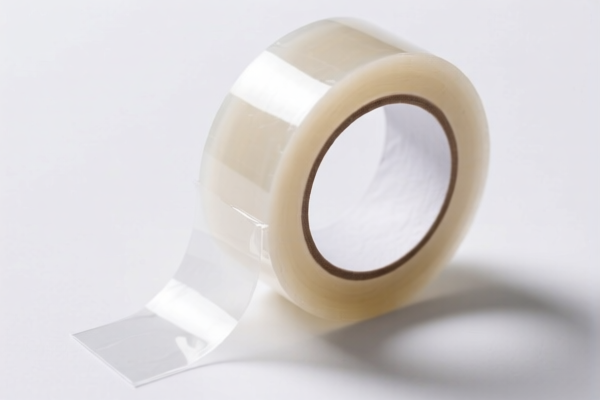
Transparent Tape Double Sided
CN → US| HS Code | Tariff Rate | Origin | Destination | Doc |
|---|---|---|---|---|
| 5603110070 | 35.0% | CN | US | Official Doc |
| 5603910090 | 35.0% | CN | US | Official Doc |
| 3919905060 | 40.8% | CN | US | Official Doc |
| 3926906090 | 39.2% | CN | US | Official Doc |
| 3926909989 | 22.8% | CN | US | Official Doc |
Product Images



AI Analysis
🎀 Transparent Double-Sided Tape: Comprehensive HS Code Classification & 2026 Customs Clearance Guide
🌐 HS Code Reference & Customs Clearance Guide | 2026 Latest Tariff Analysis | Professional Strategy for Adhesive Tapes
📌 One. Product Definition: What Exactly is "Double-Sided Tape"?
Double-sided adhesive tape is a versatile industrial and consumer product consisting of an adhesive-coated substrate with adhesive on both sides. In international trade, its classification is highly sensitive to material composition and physical form. Misclassification can lead to significant tariff discrepancies due to US Section 301 and Section 122 tariffs.
Key Distinctions: * Non-Woven/Fabric Backed: Often classified under Chapter 56 (Textiles/Non-wovens). * Plastic/Polymer Backed: Usually falls under Chapter 39 (Plastics and Articles Thereof). * Substrate Type: Determines whether it is treated as a "tape" (3919) or a "finished article" (3926/9013).
⚠️ Critical Warning:
- If the backing is non-woven fabric, it generally belongs in Chapter 56.
- If the backing is plastic film/foam, it generally belongs in Chapter 39.
- US Tariffs: Most of these codes attract 25% Section 301 tariffs and 10% Section 122 tariffs, resulting in total effective rates between 22.8% and 40.8% for Chinese-origin goods.
📦 Two. HS Code Classification Details (2026 Latest Tariff Authority Comparison)
The following table details the six most relevant HS Codes for Double-Sided Tape based on the provided data, explaining why each applies.
| HS Code | Product Description & Classification Logic | Applicable Scenario | Material/Backbone |
|---|---|---|---|
| 5603.11.00.70 | Non-Woven Base: Double-sided tape where the substrate is non-woven fabric or related film. Fits the category of non-woven products. | Industrial filtration backing, medical tape, heavy-duty mounting tapes with fabric reinforcement. | Non-Woven Fabric or Related Film |
| 5603.91.00.90 | Non-Woven Base (Other): Double-sided tape made of non-woven fabric or other base materials, categorized as covered/laminated non-wovens. | General-purpose non-woven tapes, packaging tapes with non-woven backing. | Non-Woven Fabric or Other Base |
| 3919.90.50.60 | Plastic Tape (Fallback): Double-sided tape in tape form, plastic substrate. Classified as a "fallback" category for plastic tapes not specifically enumerated elsewhere. | Standard plastic-based adhesive tapes (PVC, PET, PE) with adhesive on both sides. | Plastic Substrate |
| 3926.90.60.90 | Plastic Articles: Double-sided tape made of plastic, fitting the description of "other articles of plastics and articles of other materials." Used when it doesn't fit the strict "tape" definition of 3919. | Complex plastic-backed adhesive products, custom-shaped plastic adhesive items. | Plastic |
| 3926.90.99.89 | Plastic Products (Lowest Rate): Double-sided tape made of plastic/resin. Categorized as plastic products with no obvious conflict in form or use. Best for cost optimization. | General plastic resin-based adhesive tapes, simple rolls without complex features. | Plastic/Resin |
| 3919.10.20.55 | Self-Adhesive Plastic Tape: Plastic self-adhesive flat shape. Classified under "other" categories with no attribute conflict. | Standard self-adhesive plastic tapes, including double-sided variants. | Plastic |
🔍 Key Insight:
- Chapter 56 (5603) items are based on textile/non-woven substrates.
- Chapter 39 (3919, 3926) items are based on plastic/resin substrates.
- 3926.90.99.89 offers the lowest total tariff (22.8%), making it the most attractive option if the product specifications allow (i.e., if it is clearly a plastic resin product without special features).
💰 Three. 2026 Latest Tariff Rate Breakdown (Including Additional Taxes & Policies)
✅ Applicable Country: United States (US)
✅ Origin: China (CN)
✅ Effective Time: 2025/2026 Tariff Regime
🎯 1. 5603.11.00.70 & 5603.91.00.90 —— Non-Woven Backed Double-Sided Tape
| Item | Content |
|---|---|
| Base Tariff | 0.0% |
| Section 301 (Add-on) | +25.0% |
| Section 122 (China) | +10.0% |
| Total Effective Rate | 35.0% |
| Tax Calculation | CIF Value × 35% |
| De Minimis Exemption | ❌ Not Eligible (Deny De Minimis) |
| Legal Basis | USITC HTSUS Chapters 56 + Section 301/122 Add-ons |
📌 Explanation:
- Despite a 0% base tariff, the 25% Section 301 and 10% Section 122 tariffs apply in full.
- This is a high-cost classification for importers.
- Risk: If the backing is misidentified as plastic instead of non-woven, customs may audit and apply the correct 35% rate retroactively.
🎯 2. 3919.90.50.60 & 3919.10.20.55 —— Plastic Backed Tapes (Standard)
| Item | Content |
|---|---|
| Base Tariff | 5.8% |
| Section 301 (Add-on) | +25.0% |
| Section 122 (China) | +10.0% |
| Total Effective Rate | 40.8% |
| Tax Calculation | CIF Value × 40.8% |
| De Minimis Exemption | ❌ Not Eligible |
| Legal Basis | USITC HTSUS Chapter 39 + Section 301/122 Add-ons |
📌 Explanation:
- The base tariff is higher (5.8%), so the total burden is even greater than non-woven tapes.
- These codes are typically used when the tape does not fit specific sub-categories (e.g., standard PVC/PET double-sided tape).
- High Cost Alert: This is the most expensive category in the dataset.
🎯 3. 3926.90.60.90 —— Plastic Articles (Specific Form)
| Item | Content |
|---|---|
| Base Tariff | 4.2% |
| Section 301 (Add-on) | +25.0% |
| Section 122 (China) | +10.0% |
| Total Effective Rate | 39.2% |
| Tax Calculation | CIF Value × 39.2% |
| De Minimis Exemption | ❌ Not Eligible |
| Legal Basis | USITC HTSUS Chapter 39 + Section 301/122 Add-ons |
📌 Explanation:
- Used when the product is considered a "finished article of plastic" rather than a simple "tape."
- Slightly cheaper than the 3919 standard tapes but still very high.
🎯 4. 3926.90.99.89 —— Plastic Products (Lowest Rate Option)
| Item | Content |
|---|---|
| Base Tariff | 5.3% |
| Section 301 (Add-on) | +7.5% (Reduced Section 301?) |
| Section 122 (China) | +10.0% |
| Total Effective Rate | 22.8% |
| Tax Calculation | CIF Value × 22.8% |
| De Minimis Exemption | ❌ Not Eligible |
| Legal Basis | USITC HTSUS Chapter 39 + Reduced Section 301 + Section 122 |
📌 Explanation:
- This is the MOST COST-EFFECTIVE option.
- Note the Section 301 rate is only 7.5% (possibly due to exclusion lists or specific product categories), compared to 25% for others.
- Eligibility: Only applies if the product is clearly defined as a plastic resin product with no special form or use conflicts.
- Strategy: If your double-sided tape is a standard plastic resin product, strive to classify under this code to save ~18% in taxes compared to standard tape codes.
🛠️ Four. Customs Clearance Operational Advice (Practical Pitfall Avoidance)
✅ 1. Document Preparation Checklist (Non-Negotiable)
| Document | Required | Description |
|---|---|---|
| ✅ Product Specification Sheet | ✔️ | Must detail: Substrate material (Non-woven vs. Plastic), adhesive type, thickness, width, roll diameter. |
| ✅ Material Composition Report | ✔️ | Lab test or supplier declaration proving the backbone is Non-Woven OR Plastic/Resin. |
| ✅ Product Photos | ✔️ | Clear images of the tape cross-section, label, and roll end to prove substrate type. |
| ✅ Commercial Invoice | ✔️ | Must accurately describe the item as "Double-Sided Adhesive Tape" with HS Code reference. |
| ✅ Packing List | ✔️ | Net/Gross weight, number of rolls, dimensions. |
| ✅ Origin Certificate | ✔️ | Proof of China origin to confirm applicability of Section 301/122 tariffs. |
✅ 2. Classification Strategy & Declaration Tips
🔥 "Identify the Backbone, Choose the Chapter, Save the Tax!"
| Scenario | Recommended HS Code | Reason |
|---|---|---|
| Non-Woven Backing | 5603.11.00.70 or 5603.91.00.90 |
Substrate is textile/non-woven → Chapter 56. |
| Plastic Backing (Standard) | 3919.90.50.60 or 3919.10.20.55 |
Substrate is plastic film/foil → Chapter 39, Tapes. |
| Plastic Backing (Optimized) | 3926.90.99.89 |
Substrate is plastic resin, no special form → Chapter 39, Articles. Lowest Tax. |
| Complex Plastic Form | 3926.90.60.90 |
Plastic article with specific form/features. |
📌 Warning:
- Do NOT declare non-woven tape as plastic tape. Customs may audit and impose penalties for misclassification.
- Section 301 Exclusions: Check if your specific HS Code is still eligible for Section 301 exclusions. As of 2026, most adhesives are not excluded.
✅ 3. Special Cases Handling
| Situation | Handling Advice |
|---|---|
| Mixed Materials (Plastic + Non-Woven) | Classify based on the primary backbone that gives the product its essential character. If 50/50, consult a customs broker. |
| Custom-Shaped Tape (Die-Cut) | May still be 3919 if it's just a shape. If it's a complex assembled article, consider 3926. |
| Medical Grade Double-Sided Tape | Ensure FDA compliance is documented. Classification remains based on material, not end-use. |
| High-Performance Industrial Tape | If it has special coatings, ensure the description reflects the substrate to avoid 3919 vs 3926 disputes. |
🌍 Five. Global Market Clearance Comparison (2026 Latest)
| Country/Region | Recommended HS Code | Tariff Rate (China Origin) | Certification Requirements | Notes |
|---|---|---|---|---|
| 🇺🇸 USA | 3926.90.99.89 (Optimized) |
22.8% (Total) | None specific, but accurate description needed | High tariffs due to Section 301/122. |
| 🇺🇸 USA | 5603.xxxx |
35.0% (Total) | None specific | Non-woven tapes face high taxes. |
| 🇨🇳 China | 3919.10 / 3926.90 |
0% - 6% (Import to China) | CCC (if applicable) | Lower tariffs for imports into China. |
| 🇪🇺 EU | 3919.10 |
4.2% + VAT | REACH, RoHS | No Section 301 equivalent. |
| 🇬🇧 UK | 3919.10 |
4.2% + VAT | UKCA, REUK | Post-Brexit regulations apply. |
📌 Conclusion:
- USA is the most challenging market due to layered tariffs.
- Optimizing HS Code to3926.90.99.89can save significant costs if the product qualifies.
- EU/UK have lower political tariffs but strict chemical regulations (REACH).
📌 Six. Common Errors & Pitfall Guide (Lessons Learned)
❌ Error 1: Declaring all double-sided tape as 3919.10 without checking substrate.
👉 Consequence: If the backing is non-woven, customs will reclassify to Chapter 56, potentially applying different duty rates and delaying shipment.
❌ Error 2: Ignoring Section 122 Tariffs.
👉 Consequence: Failing to account for the additional 10% Section 122 tariff leads to underpayment and penalties.
❌ Error 3: Using "Adhesive Tape" as a generic description.
👉 Consequence: Vague descriptions trigger manual inspection. Always specify "Double-Sided," "Non-Woven/Plastic," and "Base Material."
✅ Correct Declaration Example:
"Double-Sided Adhesive Tape, Plastic Resin Backing, Adhesive on Both Sides, Roll Form, Model XYZ, HS Code 3926.90.99.89"
🎯 Seven. Conclusion: Professional Classification for Cost Optimization
🎯 Key Takeaway:
🔹 "Identify the Substrate: Non-Woven → Ch56, Plastic → Ch39."
🔹 "Seek the Lowest Rate:3926.90.99.89at 22.8% is better than3919at 40.8%."
🔹 "Always Account for Section 301 + 122: Total Tariff is Base + 25% + 10% (or 7.5%)."
📌 Pro Tip:
If your product is a standard plastic double-sided tape, invest in obtaining a Pre-Ruling (Advance Ruling) from US Customs to confirm eligibility for 3926.90.99.89. This ensures clarity and avoids post-entry audits.
📣 Immediate Action:
📞 Consult with a licensed customs broker.
📝 Provide detailed material specifications.
🚀 Optimize your HS Code to reduce landed costs in the US market!
✨ Precise Classification Starts with Accurate Material Disclosure!
💼 Every Percent Saved is Pure Profit!
Customer Reviews
About HS Code Classification
The Harmonized System (HS) is an internationally standardized nomenclature developed by the World Customs Organization (WCO) to classify traded products. Over 200 countries use the HS system as the basis for customs tariffs, trade statistics, and import/export regulations.
Each HS code follows a hierarchical structure:
- Chapter (2 digits) — Broad category of goods (e.g., Chapter 84: Machinery and Mechanical Appliances)
- Heading (4 digits) — More specific grouping within the chapter
- Subheading (6 digits) — Internationally standardized breakdown, used by all WCO member countries
- National subdivisions (8-10 digits) — Country-specific extensions for further classification, such as US HTSUS 10-digit codes
Correct HS code classification is essential for smooth customs clearance, accurate duty payment, and compliance with trade regulations. Misclassification can lead to customs delays, overpayment of duties, or penalties.
When importing from CN to US, the applicable tariff rates may include:
- Most-Favored-Nation (MFN) rate — The standard duty rate applied to WTO members
- General rate — Applied to countries without trade agreements
- Trade remedy duties — Additional tariffs such as Section 301 (anti-dumping), Section 232 (national security), or countervailing duties
The information provided on this page is for reference purposes only. For official classification, please consult with your local customs authority or a licensed customs broker.