Transparent Tape Single Sided
CN → US| HS Code | Tariff Rate | Origin | Destination | Doc |
|---|---|---|---|---|
| 3919905040 | 40.8% | CN | US | Official Doc |
| 3919102040 | 40.8% | CN | US | Official Doc |
| 3919905040 | 40.8% | CN | US | Official Doc |
| 3919102040 | 40.8% | CN | US | Official Doc |
| 3919905040 | 40.8% | CN | US | Official Doc |
Product Images
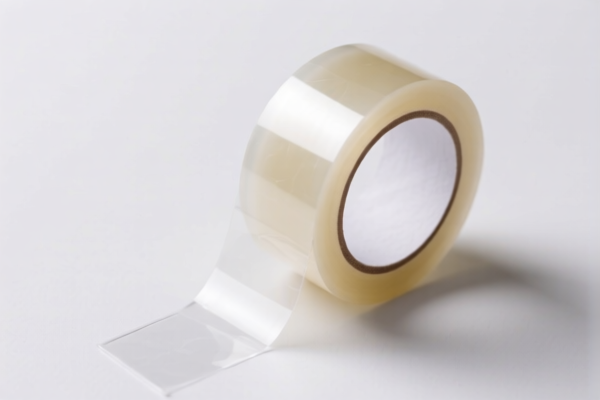
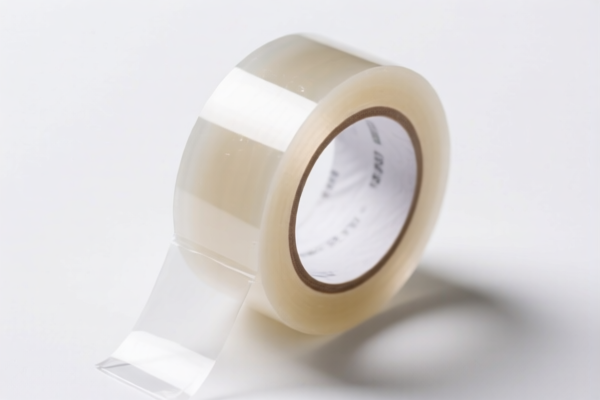
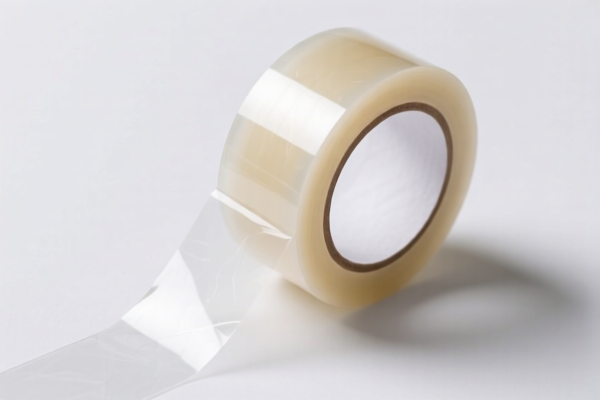

AI Analysis
🎞️ Transparent Tape Single Sided (Self-Adhesive Plastic Tape)
🌐 HS Code Reference & Customs Clearance Guide | 2026 Latest Tariff Breakdown | Expert-Level Entry Strategy
📌 I. Product Definition & Classification: Do You Really Understand "Transparent Tape"?
Transparent tape, specifically single-sided self-adhesive plastic tape, is one of the most ubiquitous packaging and office materials in global trade. It consists of a thin plastic film (typically BOPP or PVC) coated with a pressure-sensitive adhesive on one side.
In international trade classification, it is categorized under Chapter 39 (Plastics and Articles Thereof), specifically as Self-adhesive plates, sheets, film, tape, tape and other flat shapes of plastics.
⚠️ Key Classification Logic:
- Material: Plastic (Polymer-based).
- Form: Flat shape, in rolls (Tape).
- Function: Self-adhesive (One side).
- Width/Dimensions: Usually falls under "Other" if not specifically sized for packaging machines or width < 20cm.
📦 II. HS Code Classification Details (2026 Latest Tariff Authority Cross-Check)
Based on the provided data for "Transparent Tape Single Sided", the following HS Codes are identified as high-match candidates. Note that all listed codes carry the same tax liability due to similar classification logic under US Customs.
| HS Code | Product Description | Match Logic | Tax Rate (Total) |
|---|---|---|---|
3919.90.50.40 |
Self-adhesive plastic tape, other, other | Matches "Transparent Tape" name directly; "Low viscosity" or generic attributes do not change the core "self-adhesive plastic" nature. | 40.8% |
3919.10.20.40 |
Self-adhesive tapes of plastics, width ≤ 20 cm | Matches material (inferred plastic from "transparent"), form (tape), and usage (self-adhesive). High confidence match for standard office/packaging tape. | 40.8% |
3919.90.50.40 |
Self-adhesive plastic tape, other | Direct match on "Transparent Tape"; inferred plastic material based on common sense for tape products. | 40.8% |
🔍 Critical Analysis:
- Both3919.10.20.40(narrower width) and3919.90.50.40(other) lead to the same effective duty rate in this context.
- The classification relies on the "Self-Adhesive" characteristic, which places it in heading 39.19.
- "Transparent" is a descriptive attribute that confirms the material is likely BOPP or PVC (plastic), fitting Chapter 39.
💰 III. 2026 Latest Tariff Rate Detailed Breakdown (Including Surcharges & Policy Add-ons)
✅ Applicable Country: United States (US)
✅ Origin: China (CN)
✅ Effective Date: From November 10, 2025 (including subsequent imports)
✅ Total Duty Rate: 40.8%
🎯 1. Tariff Structure Breakdown
The total duty of 40.8% is composed of three distinct components:
| Component | Rate | Source / Legal Basis | Description |
|---|---|---|---|
| Base Duty | 5.8% | HTSUS Base Rate | The standard Most Favored Nation (MFN) duty for self-adhesive plastic tapes. |
| Section 301 Surcharge | 25.0% | 122 Clause (Section 301) | Additional tariff imposed on specific Chinese goods, including plastic tapes, under US Trade Act Section 301. |
| IEEPA Surcharge | 10.0% | 122 Clause (IEEPA) | Additional tariff under the International Emergency Economic Powers Act targeting Chinese products. |
| TOTAL | 40.8% | — | Sum of 5.8% + 25.0% + 10.0% |
📌 Explanation of Components:
- 5.8% Base Rate: Standard global trade tariff for plastic tapes (HTS 3919).
- 25.0% Section 301 Tariff: This is the primary "trade war" tariff applied to many Chinese-manufactured goods. Plastic tapes are explicitly listed in the exclusion list removal or non-exclusion categories.
- 10.0% IEEPA Tariff: A separate surcharge applicable to Chinese imports, added on top of Section 301 duties.
- No De Minimis Exemption: These goods cannot utilize the $800 de minimis exemption for low-value shipments (if applicable under current policies), as they are subject to these high surcharges.
🛠️ IV. Customs Clearance Practical Advice (Battle-Tested Pitfall Avoidance Guide)
✅ 1. Required Documentation Checklist (Non-Negotiable)
| Document | Required? | Notes |
|---|---|---|
| ✅ Commercial Invoice | ✔️ | Must clearly state "Transparent Self-Adhesive Plastic Tape" and HS Code. |
| ✅ Packing List | ✔️ | Detail roll dimensions, core size, and total weight. |
| ✅ Product Specification Sheet | ✔️ | Include material type (e.g., BOPP), adhesive type (acrylic/rubber), and width. |
| ✅ Country of Origin Certificate | ✔️ | Essential for verifying Chinese origin and applying 122/301 tariffs correctly. |
| ✅ FCC/RoHS Certificates | ⚠️ Optional | Generally not required for tape, but useful if sold as office electronics accessories. |
✅ 2. Declaration Best Practices (Key Mnemonic)
🔥 "Material is Plastic, Form is Tape, Adhesive is Self, Origin is China, Rate is 40.8%"
| Scenario | Correct Declaration | Risk of Error |
|---|---|---|
| Standard Office Tape | HS 3919.10.20.40 or 3919.90.50.40 |
Misdeclaring as "Paper Tape" (Chapter 48) → Risk of Seizure & Penalties |
| Double-Sided Tape | Different HS Code (e.g., 3919.90.50.80) | Misdeclaring as Single-Sided → Incorrect Duty Application |
| Masking Tape (Paper-based) | Chapter 48 (e.g., 4823.69) | Misdeclaring as Plastic Tape → Underpayment of Duty (if plastic rate is higher) or Overpayment (if paper rate is lower) |
| Foil Tape (Aluminum) | Chapter 76 (Aluminum) | Misdeclaring as Plastic Tape → Complex Customs Inquiry |
✅ 3. Special Case Handling
| Situation | Advice |
|---|---|
| OEM Branding | If tape is branded for a US company, ensure the Chinese Manufacturer is clearly identified on the label and invoice. |
| Width ≤ 20cm | Prefer 3919.10.20.40 as it is more specific for narrow tapes (common in office use). |
| Width > 20cm | Use 3919.90.50.40 (Other). |
| BOPP vs. PVC | Both fall under Chapter 39. However, BOPP is more common for transparent tape. Specify material to avoid ambiguity. |
🌍 V. Global Market Comparison (2026 Latest)
| Country/Region | Recommended HS Code | Base Duty | US Surcharge | Total Duty | Notes |
|---|---|---|---|---|---|
| 🇺🇸 United States | 3919.10.20.40 / 3919.90.50.40 |
5.8% | +25% (301) +10% (IEEPA) | 40.8% | High Cost due to China origin. |
| 🇨🇳 China | 3919.10.20.40 | 0%* | N/A | 0%* | *Import into China may have different rates; export from China has 0% export duty. |
| 🇪🇺 European Union | 3919.10.90 | 6.5% | N/A | 6.5% | Low Cost. No equivalent "Section 301" tariffs. |
| 🇯🇵 Japan | 3919.10.900 | 6.1% | N/A | 6.1% | Low Cost. Favorable trade terms. |
| 🇲🇽 Mexico | 3919.10.90 | 5% | N/A | 5% | Low Cost. Under USMCA, Chinese goods do not get preferential rates. |
📌 Conclusion:
- USA is the most expensive market for Chinese-made transparent tape due to the 40.8% total duty.
- EU, Japan, and other regions are significantly cheaper (~6-7%).
- Strategy: If targeting the US, consider supply chain diversification (e.g., manufacturing in Vietnam, Thailand, or Mexico) to avoid 301/IEEPA tariffs, though US Customs is strictly monitoring "transshipment" from China.
📌 VI. Common Errors & Pitfalls (Lessons Learned)
❌ Error 1: Declaring as "Paper Tape" (Chapter 48)
👉 Consequence: If inspected and found to be plastic, penalties + back-duties. Plastic tape is more durable and often has different tariff implications.
❌ Error 2: Ignoring the "Self-Adhesive" Attribute
👉 Consequence: Misclassification as non-adhesive plastic sheeting (Chapter 3914/3918) → Wrong Duty Rate.
❌ Error 3: Assuming De Minimis Exemption Applies
👉 Consequence: For low-value shipments, if the carrier does not declare HS Code correctly, you may still face customs holds and duty assessments upon entry.
❌ Error 4: Not Specifying Material (BOPP/PVC)
👉 Consequence: Customs may delay clearance to request additional documentation, increasing storage fees.
✅ Correct Declaration Example:
"Transparent Self-Adhesive Plastic Tape, BOPP Material, Single-Sided Adhesive, Width 19mm, Roll Format, HS Code 3919.10.20.40, Made in China"
🎯 VII. Conclusion: Professional Declaration, Cost Optimization
🎯 Key Takeaways:
🔹 "Plastic + Self-Adhesive + Tape = Chapter 39, Heading 3919"
🔹 "China Origin = 40.8% Total Duty in USA (5.8% Base + 25% 301 + 10% IEEPA)"
🔹 "Verify Width: ≤20cm uses 3919.10, >20cm uses 3919.90"
📌 Pro Tip:
- If your volume is high, apply for an Advance Ruling from US Customs and Border Protection (CBP) to confirm the specific HS Code for your product dimensions and material.
- Consider supply chain restructuring if the 40.8% duty erodes your margin significantly.
📣 Immediate Action:
📞 Consult a Licensed Customs Broker
📄 Provide Product Samples & Specs
🚀 Ensure Compliance, Avoid Delays, Protect Margins!
✨ Professional Clearance Starts with Accurate Classification!
💼 Every Percent of Duty Counts!
Customer Reviews
About HS Code Classification
The Harmonized System (HS) is an internationally standardized nomenclature developed by the World Customs Organization (WCO) to classify traded products. Over 200 countries use the HS system as the basis for customs tariffs, trade statistics, and import/export regulations.
Each HS code follows a hierarchical structure:
- Chapter (2 digits) — Broad category of goods (e.g., Chapter 84: Machinery and Mechanical Appliances)
- Heading (4 digits) — More specific grouping within the chapter
- Subheading (6 digits) — Internationally standardized breakdown, used by all WCO member countries
- National subdivisions (8-10 digits) — Country-specific extensions for further classification, such as US HTSUS 10-digit codes
Correct HS code classification is essential for smooth customs clearance, accurate duty payment, and compliance with trade regulations. Misclassification can lead to customs delays, overpayment of duties, or penalties.
When importing from CN to US, the applicable tariff rates may include:
- Most-Favored-Nation (MFN) rate — The standard duty rate applied to WTO members
- General rate — Applied to countries without trade agreements
- Trade remedy duties — Additional tariffs such as Section 301 (anti-dumping), Section 232 (national security), or countervailing duties
The information provided on this page is for reference purposes only. For official classification, please consult with your local customs authority or a licensed customs broker.