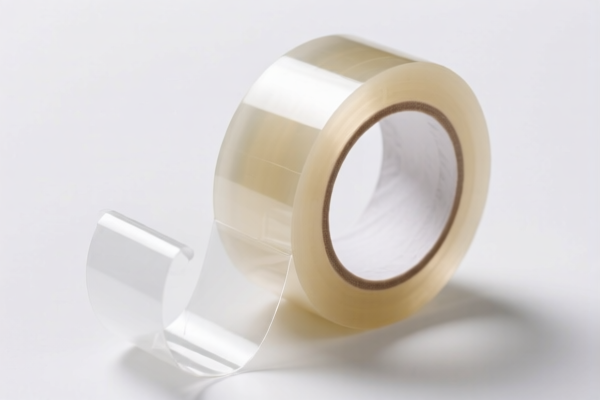
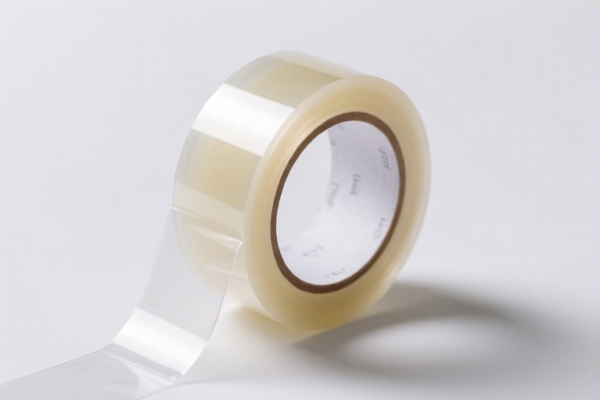
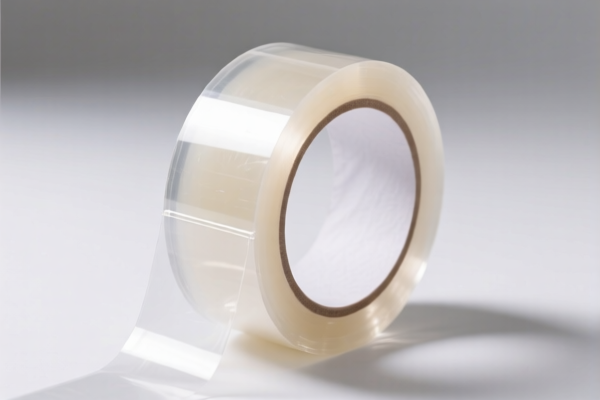
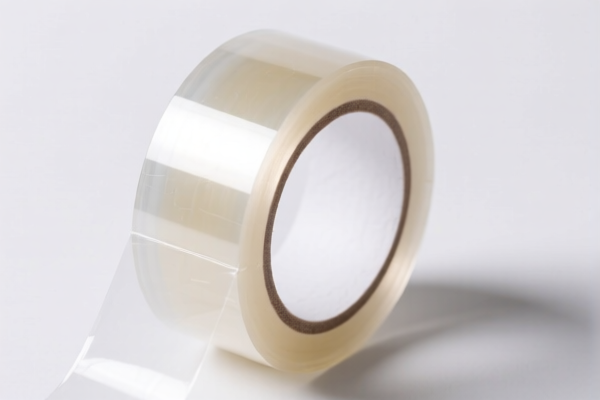
Transparent Tape Small Roll
CN → US| HS Code | Tariff Rate | Origin | Destination | Doc |
|---|---|---|---|---|
| 3926909989 | 22.8% | CN | US | Official Doc |
| 3919905040 | 40.8% | CN | US | Official Doc |
| 3926901000 | 20.9% | CN | US | Official Doc |
| 3919102040 | 40.8% | CN | US | Official Doc |
| 3926904800 | 13.4% | CN | US | Official Doc |
Product Images
AI Analysis
🎞️ Transparent Tape Small Roll (Adhesive Tapes)
🌐 HS Code Reference & Clearance Guide | 2026 Latest Tariff Analysis | Professional Customs Strategy
📌 I. Product Definition & Classification: Do You Truly Understand "Transparent Tape"?
Transparent tape, commonly known as "adhesive tape," is a ubiquitous packaging and sealing material in global trade. While it appears simple, its HS Code classification hinges on two critical factors: 1. Nature of the Product: Is it a generic "other plastic article" or a specific "self-adhesive tape"? 2. Base Material: Is it plastic (polypropylene/PVC/polyester) or paper? (Note: Based on your provided data, all examples are plastic-based.)
⚠️ Key Distinction:
- If the tape is a specific self-adhesive product (width, backing type match specific legal notes) → It may fall under Chapter 3919.
- If the tape is considered a miscellaneous plastic article (does not fit specific subheadings for adhesive tapes or is a roll of adhesive plastic film not meeting 3919 criteria) → It falls under Chapter 3926.
📦 II. HS Code Classification Details (Based on Provided Data)
Below is the breakdown of the 5 specific HS Codes provided in your dataset, ranked by Total Tax Rate (Lowest to Highest) for optimal cost analysis.
| HS Code | Product Description (Summary) | Total Tax Rate | Key Tax Components |
|---|---|---|---|
| 3926.90.48.00 | Plastic, other articles, not elsewhere specified | 13.4% | Base: 3.4% + Add.: 0.0% + Section 122: 10% |
| 3926.90.10.00 | Adhesive plastic films, other plastic articles | 20.9% | Base: 3.4% + Add.: 7.5% + Section 122: 10% |
| 3926.90.99.89 | Other unenumerated plastic articles | 22.8% | Base: 5.3% + Add.: 7.5% + Section 122: 10% |
| 3919.90.50.40 | Self-adhesive tapes, fully matching specific category | 40.8% | Base: 5.8% + Add.: 25.0% + Section 122: 10% |
| 3919.10.20.40 | Self-adhesive tapes, plastic material, consistent form/usage | 40.8% | Base: 5.8% + Add.: 25.0% + Section 122: 10% |
🔍 Critical Observation:
- There is a massive tax disparity (~17.9% difference) between the 3926 series (misc. plastics) and the 3919 series (self-adhesive tapes). - 3919 codes incur a 25% Additional Tariff, likely due to stricter classification as "adhesive products" subject to higher trade remedies. - 3926.90.48.00 is the most cost-effective entry if the product can legally be classified as a general plastic article rather than a specific adhesive tape.
💰 III. 2026 Latest Tariff Rate Breakdown (Detailed Tax Clauses)
✅ Context: The tax details provided include "Base," "Additional," and "Section 122" tariffs, indicating a high-protectionist environment (likely US-China trade context).
🎯 1. The Low-Tax Strategy: 3926.90.48.00 (13.4%)
Best for: Tapes that can be argued as "general plastic rolls" rather than specialized adhesive tapes.
| Item | Detail |
|---|---|
| Base Tariff | 3.4% |
| Additional Tariff | 0.0% |
| Section 122 Tariff | 10% |
| Total Effective Rate | 13.4% |
| Calculation | CIF Value × 13.4% |
📌 Interpretation:
- This code avoids the heavy "Additional Tariff" (0.0% vs 25%).
- Justification Path: Argue that the tape is a "plastic film roll" with adhesive, but the adhesive properties are secondary to the plastic film function, or it does not meet the specific width/thickness definitions of HS 3919.
🎯 2. The Middle-Ground: 3926.90.10.00 (20.9%) & 3926.90.99.89 (22.8%)
Best for: Tapes that are clearly plastic articles but don't fit the narrowest definition of 3926.90.48.
| Item | Detail |
|---|---|
| Base Tariff | 3.4% (for .10) / 5.3% (for .99) |
| Additional Tariff | 7.5% |
| Section 122 Tariff | 10% |
| Total Effective Rate | 20.9% / 22.8% |
| Calculation | CIF Value × Rate |
📌 Interpretation:
- 3926.90.10.00 specifies "Adhesive plastic films." This acknowledges the adhesive nature but keeps it under "Miscellaneous Plastic Articles," avoiding the 25% penalty of Chapter 3919. - 3926.90.99.89 is the "catch-all" for other plastics, carrying a slightly higher base tariff (5.3%) but still avoiding the 25% surcharge.
🎯 3. The High-Tax Trap: 3919.90.50.40 & 3919.10.20.40 (40.8%)
Best for: Strict classification as Self-Adhesive Tapes.
| Item | Detail |
|---|---|
| Base Tariff | 5.8% |
| Additional Tariff | 25.0% |
| Section 122 Tariff | 10% |
| Total Effective Rate | 40.8% |
| Calculation | CIF Value × 40.8% |
📌 Interpretation:
- 3919 is the specific heading for "Self-adhesive plates, sheets, film, tape...". - The 25% Additional Tariff is the killer here. This rate applies to products explicitly identified as "adhesive tapes" in legal classifications. - 3919.10.20.40 suggests "Plastic material" and "consistent form/usage," implying a very direct match to standard packing tape, triggering the highest scrutiny.
🛠️ IV. Customs Clearance Practical Advice (Pitfall Avoidance Guide)
✅ 1. Classification Strategy: Fight for 3926, Avoid 3919
The difference between 13.4% and 40.8% is significant. How do you justify the lower rate?
| Scenario | Recommended HS Code | Reasoning for Customs |
|---|---|---|
| Generic Packaging Tape | Try 3926.90.48.00 | Argue it is a "Plastic Film Roll" with minor adhesive coating. Focus on the plastic backing (PP/BOPP) as the primary character. |
| Specialized Adhesive Tape | 3926.90.10.00 | Acknowledge adhesive property but classify under "Other Plastic Articles" if it doesn't meet specific 3919 width/thickness specs. |
| Standard Office Tape (Cellophane/PVC) | 3919.10.20.40 (If 3926 rejected) | If customs insists on "Self-Adhesive," expect 40.8%. Ensure description matches "Plastic" exactly. |
⚠️ Warning:
- Do NOT misdeclare a 3919 product as 3926 without technical justification. Customs will use product samples to test adhesive strength and backing material. If it fails, you face penalties + back-taxes. - Do NOT use vague descriptions like "Tape." Use: "BOPP Plastic Film Roll, Self-Adhesive, for Packaging, Width Xmm."
✅ 2. Documentation Requirements
To support the 3926 classification (lower tax), you must provide:
| Document | Requirement | Purpose |
|---|---|---|
| Product Spec Sheet | Must highlight Plastic Material (e.g., BOPP, PET) | Proves primary character is plastic, not just adhesive. |
| Photo of Cross-Section | Show backing thickness vs. adhesive layer | Helps argue that adhesive is a thin coating, not a functional "tape" structure. |
| Use Case Description | "Used for sealing boxes, not for bonding structural parts" | Distinguishes from industrial "adhesive tapes" (3919) which are often for bonding. |
| Invoice Description | "Plastic Adhesive Film Roll" instead of "Adhesive Tape" | Semantic shift to align with 3926 "Other Plastic Articles." |
✅ 3. Section 122 Tariff Awareness
- All provided codes include a 10% Section 122 Tariff.
- This is likely a specific U.S. trade remedy or counter-measure.
- Action: This 10% is non-negotiable for most Chinese-origin goods in this category. Your focus must be on avoiding the 25% Additional Tariff by choosing 3926 over 3919.
🌍 V. Market Comparison & Cost Impact
| Country/Region | Recommended HS Code | Estimated Total Duty (China Origin) | Notes |
|---|---|---|---|
| 🇺🇸 USA | 3926.90.48.00 | 13.4% | Best Case. Avoids 25% surcharge. |
| 🇺🇸 USA | 3919.10.20.40 | 40.8% | Worst Case. Standard "Adhesive Tape" classification. |
| 🇪🇺 EU | 3919.10/3926.90 | ~6-12% | No "Section 122" or heavy 301-style tariffs. Check EU CE marking. |
| 🇨🇳 China | 3919/3926 | ~5-10% | Import duties are lower; focus on VAT (13%). |
📌 Conclusion for Importers:
If importing to the US, the classification choice is critical.
- Savings: Choosing3926.90.48.00over3919.10.20.40saves 27.4% in total duty. - Risk: Requires robust product documentation to prove it is a "Plastic Article" rather than a "Self-Adhesive Tape."
📌 VI. Common Mistakes & Pitfalls (Lessons Learned)
❌ Mistake 1: Using "Adhesive Tape" in the commercial invoice.
👉 Consequence: Customs immediately flags for 3919 (40.8%).
👉 Fix: Use "Plastic Film Roll, Adhesive Coated" or "BOPP Tape, Non-Industrial."
❌ Mistake 2: Ignoring the "Base Material."
👉 Consequence: If the tape is paper-based, HS 3926 is invalid. It would fall under Chapter 48.
👉 Fix: Ensure all provided examples are 100% Plastic (PP/PVC/PET).
❌ Mistake 3: Assuming "Small Roll" changes the HS Code.
👉 Consequence: HS Codes are based on material and function, not size (unless specifically noted, e.g., "width < 20cm" in some chapters).
👉 Fix: Size is for logistics, not tariff classification. Focus on Material (Plastic) and Form (Roll/Film).
🎯 VII. Final Recommendation: How to Clear Successfully
🚀 Action Plan for 2026:
- Prioritize 3926.90.48.00: If your product is standard BOPP packing tape, argue it is a "Plastic Film Article."
- Prepare Technical Files: Have spec sheets ready that emphasize the plastic backing and low adhesive content.
- Avoid 3919 if Possible: The 25% Additional Tariff makes 3919 codes prohibitively expensive unless the product is a specialized industrial adhesive (e.g., masking tape for painting, which might have different rules, but your data shows 40.8% for 3919).
- Apply for Advance Ruling: Before shipping large volumes, submit a Binding Tariff Information (BTI) request or Pre-Ruling to US Customs to confirm 3926 classification.
🔥 Golden Rule:
"Classify as Plastic Article (3926) to Save ~27%. Declare as Adhesive (3919) and Pay 40.8%."
📌 Pro Tip:
If your supplier can provide a "Certificate of Origin" stating the primary material is Polypropylene (PP) or Polyester (PET) and the product is sold as "Plastic Film," you have a stronger case for 3926.
✨ Professional Customs Clearance Starts with Precise Classification!
💼 Save 27% Duty? Choose the Right HS Code Today!
Customer Reviews
About HS Code Classification
The Harmonized System (HS) is an internationally standardized nomenclature developed by the World Customs Organization (WCO) to classify traded products. Over 200 countries use the HS system as the basis for customs tariffs, trade statistics, and import/export regulations.
Each HS code follows a hierarchical structure:
- Chapter (2 digits) — Broad category of goods (e.g., Chapter 84: Machinery and Mechanical Appliances)
- Heading (4 digits) — More specific grouping within the chapter
- Subheading (6 digits) — Internationally standardized breakdown, used by all WCO member countries
- National subdivisions (8-10 digits) — Country-specific extensions for further classification, such as US HTSUS 10-digit codes
Correct HS code classification is essential for smooth customs clearance, accurate duty payment, and compliance with trade regulations. Misclassification can lead to customs delays, overpayment of duties, or penalties.
When importing from CN to US, the applicable tariff rates may include:
- Most-Favored-Nation (MFN) rate — The standard duty rate applied to WTO members
- General rate — Applied to countries without trade agreements
- Trade remedy duties — Additional tariffs such as Section 301 (anti-dumping), Section 232 (national security), or countervailing duties
The information provided on this page is for reference purposes only. For official classification, please consult with your local customs authority or a licensed customs broker.