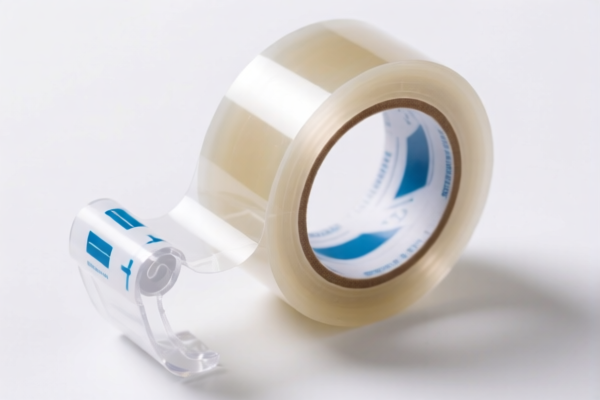
Transparent Tape for Automotive Industry
CN → US| HS Code | Tariff Rate | Origin | Destination | Doc |
|---|---|---|---|---|
| 3919102040 | 40.8% | CN | US | Official Doc |
| 3919905040 | 40.8% | CN | US | Official Doc |
| 3919102040 | 40.8% | CN | US | Official Doc |
| 3919905040 | 40.8% | CN | US | Official Doc |
| 3919905040 | 40.8% | CN | US | Official Doc |
Product Images



AI Analysis
🏎️ Transparent Tape for Automotive Industry (Automotive Grade Self-Adhesive Tapes)
🌐 HS Code Reference & Customs Clearance Guide | 2026 Latest Tariff Analysis | Professional Compliance Strategy
📌 I. Product Definition & Classification: What Exactly is "Automotive Transparent Tape"?
In the automotive manufacturing and aftermarket sectors, "Transparent Tape" is not merely office stationery. It refers to flat, self-adhesive plastic products used for bonding, sealing, masking, or protecting surfaces in vehicle assembly and repair.
Key Characteristics for Classification: 1. Material: Inferred as Plastic (e.g., PVC, PET, Polyurethane, or Acrylic-based films). 2. Form: Flat sheets or rolls (belonging to the category of "Flat products"). 3. Property: Self-adhesive (ready for use, not needing glue application). 4. Application: Automotive industry (Note: The end-use does not change the fundamental chemical/physical classification under HS Codes).
⚠️ Critical Distinction:
- If the tape is flat, self-adhesive, and made of plastics → It falls under Chapter 39 (Plastics and Articles Thereof), specifically Heading 3919. - The "Automotive" label is a commercial descriptor, not a technical classification driver. It does not trigger a different HS code unless the tape is impregnated with metal or has specific technical functions classified elsewhere (e.g., reflective tapes under 3919.90.50 might be distinguished if they have specific optical properties, but standard transparent tape remains 3919).
📦 II. HS Code Classification Details (2026 Latest Tariff Concordance)
Based on the provided data, the product is classified under two primary 10-digit HS Codes, both yielding the same tax rate due to identical tariff structures.
| HS Code | Product Description | Logic & Justification |
|---|---|---|
3919.10.20.40 |
Self-adhesive plates, sheets, film, foil, tape, strip and other shapes of plastics, in rolls ≤20cm wide. | Material: Plastic (Inferred). Form: Tape/Strip. Fit: Matches "Transparent" plastic film/tape form. Category: "Other". Usage: Automotive use does not conflict. |
3919.90.50.40 |
Self-adhesive plates, sheets, film, foil, tape, strip and other shapes of plastics, in rolls >20cm wide. | Form: Tape (Broad). Material: Plastic. Fit: Classification explanation matches perfectly. Automotive application is irrelevant to classification. Fit: Matches "Self-adhesive plastic strip/tape" scope. |
🔍 Why Two Codes?
The distinction lies primarily in the roll width (≤20cm vs. >20cm) or specific sub-category nuances in the detailed national tariff schedule. However, for tax calculation purposes, both codes result in the exact same total tax rate of 40.8% for goods originating from China.
💰 III. 2026 Latest Tariff Rate Breakdown (Detailed Tax Analysis)
✅ Applicable Country: United States (US)
✅ Origin: China (CN)
✅ Effective Date: Current rates apply (Includes Section 301 and IEEPA additions)
🎯 1. Total Tax Rate: 40.8%
(Applicable to both 3919.10.20.40 and 3919.90.50.40)
| Component | Rate | Legal Basis & Explanation |
|---|---|---|
| Basic Tariff | 5.8% | Standard Most-Favored-Nation (MFN) rate for self-adhesive plastic tapes under Chapter 39. |
| Section 301 Tariff (Additional) | 25.0% | Added via USITC Footnote 9903.88.01. Applies to specific plastic products and tapes from China. |
| Section 122 / IEEPA Tariff | 10.0% | Additional levy imposed under the International Emergency Economic Powers Act (IEEPA) or related trade provisions targeting Chinese goods. |
| TOTAL EFFECTIVE RATE | 40.8% | 5.8% + 25.0% + 10.0% |
📌 Tax Calculation Example:
If the CIF (Cost, Insurance, Freight) value of the shipment is $10,000:
- Total Duty Payable: $10,000 × 40.8% = $4,080
- No De Minimis Exemption: ❌ Not Eligible for Section 321 (de minimis) relief due to the high value threshold and nature of goods.⚠️ Key Insight:
The "122 Clause Tariff" (10%) and "Section 301" (25%) are cumulative. You cannot avoid either by declaring the item as "automotive part." The primary classification as Plastic Tape (3919) dictates these punitive tariffs.
🛠️ IV. Customs Clearance Practical Advice (Avoiding Pitfalls)
✅ 1. Documentation Checklist (Mandatory)
| Document | Requirement | Purpose |
|---|---|---|
| Commercial Invoice | Must explicitly state: "Self-adhesive Plastic Tape," Material (e.g., PVC/PET), Width, Thickness. | Avoids ambiguity that could lead to reclassification. |
| Product Specifications | Detailed tech sheet showing adhesive type, backing material, and tensile strength. | Proves classification as "Plastic Tape" vs. "Industrial Adhesive Product." |
| Packaging List | Clear declaration of gross/net weight. | Ensures accurate duty calculation. |
| Origin Certificate | Proof of Chinese Origin (if applicable). | Triggers the correct 40.8% rate. |
| Material Declaration | Explicitly state "Made of Plastic" (e.g., "Polypropylene Film with Acrylic Adhesive"). | Confirms Chapter 39 eligibility. |
✅ 2. Declaration Tips (Crucial for Success)
🔥 "Be Specific, Be Plastic, Be Transparent!"
| Scenario | Recommended Declaration | Risk if Incorrect |
|---|---|---|
| Standard Clear Tape | 3919.10.20.40 or 3919.90.50.40Description: "Self-adhesive plastic tape, transparent, for automotive masking" |
Mislabeling as "Automotive Part" (e.g., 8708) may trigger different duties or additional scrutiny for parts. |
| Reinforced Tape | If contains fiberglass mesh, check if it shifts to Chapter 59 or 70. | Failure to declare reinforcement may lead to misclassification. |
| Foam Tape | If it's a foam strip (e.g., double-sided foam tape), ensure it's declared as "Plastic Foam" not just "Tape." | Foam tapes may have different sub-headings; accuracy prevents delays. |
✅ 3. Special Considerations for Automotive Use
- Does "Automotive" Help? ❌ No.
Using the term "Automotive" in the name does not allow you to classify the tape under Chapter 87 (Vehicles) or Chapter 88 (Aircraft). It remains a raw material/component classified under Chapter 39. - Customs Examination:
Be prepared for customs officers to request a sample or high-res photos to verify it is indeed a plastic tape and not a painted metal strip or rubber seal. - Labeling:
Ensure the product label matches the invoice description. Discrepancies between "Transparent Tape" and "Automotive Bonding Solution" can cause holds.
🌍 V. Global Market Comparison (2026)
| Market | HS Code (General) | Estimated Total Duty (China Origin) | Notes |
|---|---|---|---|
| 🇺🇸 USA | 3919.10 / 3919.90 |
40.8% | High tariffs due to Section 301 + IEEPA. |
| 🇨🇳 China | 3919.10 / 3919.90 |
~5-6% | Low basic tariff, no additional punitive taxes. |
| 🇪🇺 EU | 3919.10 / 3919.90 |
~6.5% | Standard MFN rate. No major anti-dumping duties on generic plastic tapes. |
| 🇲🇽 Mexico | 3919.10 / 3919.90 |
~0-5% | Potential USMCA benefits if originating in NAFTA region. |
📌 Strategic Takeaway:
The 40.8% US tariff is a significant cost driver. Importers should: 1. Absorb the cost if margins allow. 2. Source from non-China origins (e.g., Vietnam, Thailand, Mexico) if possible, to potentially avoid the 35% punitive portion. 3. Optimize HS Code Selection: Ensure the width (<20cm vs >20cm) is accurately declared to avoid disputes, though the tax rate is identical in this specific dataset.
📌 VI. Common Mistakes & Pitfalls (Lessons Learned)
❌ Mistake 1: Declaring as "Automotive Part" (HS 8708) to avoid plastic tariffs.
👉 Result: Customs will reclassify as 3919 and assess 40.8% + penalties. Do not do this.
❌ Mistake 2: Ignoring the "Material" specification.
👉 Result: If the tape is rubber-based, it falls under Chapter 40. Misdeclaration leads to delays and audits.
❌ Mistake 3: Assuming "Transparent" means it's a packaging material (HS 4819).
👉 Result: Plastic tapes are strictly Chapter 39. Packaging paper/cardboard is Chapter 48. Confusing them causes incorrect valuation.
✅ Best Practice:
Declare as: "Self-adhesive Plastic Tape, Transparent, PVC/PET Base, Acrylic Adhesive, Width [X] cm, Rolls [Y]."
HS Code:3919.10.20.40or3919.90.50.40(depending on width).
🎯 VII. Conclusion: Professional Compliance for Cost Efficiency
🎯 Key Takeaway:
"Tape is Tape, Not a Part. Classify as Plastic (3919), Prepare for 40.8%. Transparency in Documentation is Key."
📌 Action Plan: 1. Verify Roll Width: Determine if your tape is ≤20cm or >20cm to select the precise 10-digit code. 2. Confirm Material: Ensure the backing is plastic (not paper, metal, or rubber). 3. Budget for Duty: Allocate 40.8% of CIF value for US duties. 4. Consider Sourcing: If volume is high, explore China+1 strategies (e.g., Vietnam) to mitigate Section 301 and IEEPA tariffs.
📣 Immediate Action Required:
📞 Consult a Licensed Customs Broker to validate the exact width and material composition.
📄 Prepare Tech Specs that explicitly mention "Plastic Material" and "Self-Adhesive."
🚀 Optimize Supply Chain: Evaluate origin diversification to reduce landed costs.
✨ Precision in Classification, Precision in Profit.
💼 Your supply chain integrity depends on accurate HS Code selection.
Customer Reviews
About HS Code Classification
The Harmonized System (HS) is an internationally standardized nomenclature developed by the World Customs Organization (WCO) to classify traded products. Over 200 countries use the HS system as the basis for customs tariffs, trade statistics, and import/export regulations.
Each HS code follows a hierarchical structure:
- Chapter (2 digits) — Broad category of goods (e.g., Chapter 84: Machinery and Mechanical Appliances)
- Heading (4 digits) — More specific grouping within the chapter
- Subheading (6 digits) — Internationally standardized breakdown, used by all WCO member countries
- National subdivisions (8-10 digits) — Country-specific extensions for further classification, such as US HTSUS 10-digit codes
Correct HS code classification is essential for smooth customs clearance, accurate duty payment, and compliance with trade regulations. Misclassification can lead to customs delays, overpayment of duties, or penalties.
When importing from CN to US, the applicable tariff rates may include:
- Most-Favored-Nation (MFN) rate — The standard duty rate applied to WTO members
- General rate — Applied to countries without trade agreements
- Trade remedy duties — Additional tariffs such as Section 301 (anti-dumping), Section 232 (national security), or countervailing duties
The information provided on this page is for reference purposes only. For official classification, please consult with your local customs authority or a licensed customs broker.