Transparent plastic hoses
CN → US| HS Code | Tariff Rate | Origin | Destination | Doc |
|---|---|---|---|---|
| 3917400095 | 40.3% | CN | US | Official Doc |
| 3926305000 | 22.8% | CN | US | Official Doc |
| 3917400060 | 40.3% | CN | US | Official Doc |
| 3926909987 | 22.8% | CN | US | Official Doc |
| 3917290050 | 38.1% | CN | US | Official Doc |
Product Images


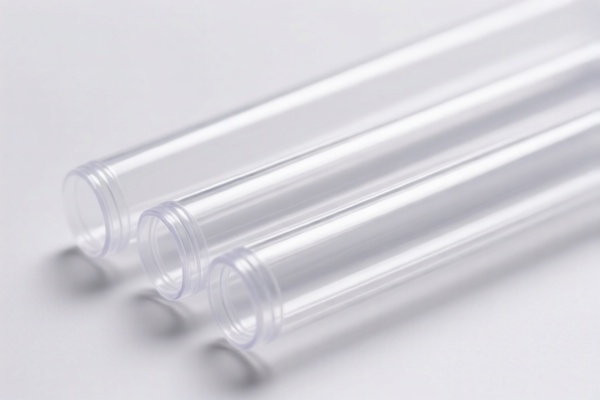

AI Analysis
🌊 Transparent Plastic Hoses (Clear PVC/PE Tubing)
🌐 HS Code Reference & Customs Clearance Guide | 2026 Latest Tariff Analysis | Professional通关 Strategy
📌 One, Product Definition & Classification: What exactly are "Transparent Plastic Hoses"?
Transparent plastic hoses, widely used in fluid transfer, medical equipment, automotive fluids, and household applications, are classified based on their material nature, stiffness (rigidity), and specific form. In international trade, the distinction between "hoses," "tubes," and "general plastic parts" is critical for correct HS Code assignment and tax liability.
Key Distinctions: * Rigid Pipes/Pipes Accessories (3917): Stiff, non-bendable pipes or fittings that require glue/soldering/jointing. * Flexible Hoses/Tubing (3917.29): Flexible, bendable tubes made of plastics. * General Plastic Articles (3926): Fittings or parts that do not fit strictly into pipe/hose definitions or are considered general-purpose plastic components.
⚠️ Critical Classification Point:
- If the product is a rigid pipe or a fitting (connector/elbow) for pipes, it often falls under Chapter 3917 (Rigid pipes).
- If the product is a flexible hose/tube, it falls under 3917.29 (Flexible tubes).
- If the product is considered a general plastic accessory or the specific pipe/hose description doesn't fit perfectly, it may fall under Chapter 3926 (Other plastic articles).
📦 Two, HS Code Classification Details (Based on Provided Data)
| HS Code | Product Description Summary | Tax Rate Summary | Tax Breakdown (US Import from China) |
|---|---|---|---|
3917.40.00.95 |
Plastic pipe fittings, transparent tube, material: plastic, form: fittings, use: pipe accessories. | 40.3% | Base: 5.3% Section 301: 25.0% Section 122 (9903): 10% |
3926.30.50.00 |
Plastic pipe fittings, transparent tube, material: plastic, classified as plastic articles, no material conflict. | 22.8% | Base: 5.3% Section 301: 7.5% Section 122 (9903): 10% |
3917.40.00.60 |
Plastic pipe fittings, transparent tube, material: plastic, form: fittings/accessories, fits PVC pipe accessory category. | 40.3% | Base: 5.3% Section 301: 25.0% Section 122 (9903): 10% |
3926.90.99.87 |
Plastic pipe fittings, transparent tube, material: plastic, form: fittings/transparent tube, fits description of tubes/hard tubes. | 22.8% | Base: 5.3% Section 301: 7.5% Section 122 (9903): 10% |
3917.29.00.50 |
Plastic rigid flexible hose, material: plastic, form: hard tube, fits plastic pipe and rigid tube attributes. | 38.1% | Base: 3.1% Section 301: 25.0% Section 122 (9903): 10% |
🔍 Key Observation:
- Chapter 3917 (Pipes/Hoses/Fittings) generally carries higher Section 301 tariffs (25%) compared to Chapter 3926 (Other Plastic Articles) which has lower Section 301 tariffs (7.5%).
- The Base Tariff also varies (5.3% vs 3.1%).
- Section 122 Tariff (10%) applies to all listed codes for Chinese origin goods (effective Nov 2024/2025 timeframe).
💰 Three, Detailed Tariff Rate Analysis (2026 Latest)
✅ Applicable Country: United States (US)
✅ Country of Origin: China (CN)
✅ Effective Date: Post-2024 Tariff Adjustments (Section 301 & Section 122)
🎯 1. 3917.40.00.95 & 3917.40.00.60 — Plastic Pipe Fittings (High Tariff Tier)
| Item | Details |
|---|---|
| Base Duty Rate | 5.3% (Ad Valorem) |
| Section 301 Duty | +25.0% (China-origin specific) |
| Section 122 Duty | +10.0% (China-origin specific, 9903.01.05) |
| Total Tariff Rate | 40.3% |
| Tax Calculation | CIF Value × 40.3% |
| De Minimis Exemption | ❌ Not Eligible (Section 301 and Section 122 duties apply regardless of value below $800) |
| Legal Basis Path | HTSUS:3917.40.00 → Section 301: 9903.01.03 → Section 122: 9903.01.05 |
📌 Explanation:
- This classification is for rigid pipe fittings. The 25% Section 301 tariff is standard for most plastic pipe products from China.
- The additional 10% Section 122 tariff further increases the burden.
- High Cost Alert: A $10,000 shipment incurs $4,030 in duties alone.
🎯 2. 3926.30.50.00 & 3926.90.99.87 — General Plastic Articles/Fittings (Lower Tariff Tier)
| Item | Details |
|---|---|
| Base Duty Rate | 5.3% (for 3926.30) / 5.3% (for 3926.90) |
| Section 301 Duty | +7.5% (China-origin specific, reduced rate for certain plastic articles) |
| Section 122 Duty | +10.0% (China-origin specific) |
| Total Tariff Rate | 22.8% |
| Tax Calculation | CIF Value × 22.8% |
| De Minimis Exemption | ❌ Not Eligible |
| Legal Basis Path | HTSUS:3926.30 or 3926.90 → Section 301: 9903.01.03 → Section 122: 9903.01.05 |
📌 Explanation:
- Classification under 3926 (Other Plastic Articles) allows for a lower Section 301 rate (7.5% vs 25%).
- This is a significant savings opportunity if the product can be legitimately classified as a "plastic article" rather than a "pipe fitting."
- Savings Potential: On a $10,000 shipment, duties are only $2,280, saving $1,750 compared to 3917 classification.
🎯 3. 3917.29.00.50 — Plastic Rigid Flexible Hose (Mid-Range Tariff)
| Item | Details |
|---|---|
| Base Duty Rate | 3.1% |
| Section 301 Duty | +25.0% |
| Section 122 Duty | +10.0% |
| Total Tariff Rate | 38.1% |
| Tax Calculation | CIF Value × 38.1% |
| De Minimis Exemption | ❌ Not Eligible |
| Legal Basis Path | HTSUS:3917.29.00 → Section 301: 9903.01.03 → Section 122: 9903.01.05 |
📌 Explanation:
- Although the base rate is lower (3.1%), the 25% Section 301 tariff brings the total to 38.1%.
- This code is for flexible hoses that are considered "hard" or rigid in structure.
- Caution: If the hose is truly flexible, ensure it doesn't fit better under 3917.29 with different sub-classification, but based on provided data, this is the applicable code with its associated costs.
🛠️ Four, Customs Clearance Practical Advice (Avoid Pitfalls)
✅ 1. Documentation Checklist (Essential)
| Document | Required | Notes |
|---|---|---|
| ✅ Product Specification Sheet | ✔️ | Must detail material (e.g., PVC, PE, PU), diameter, wall thickness, flexibility, and usage. |
| ✅ Technical Drawing | ✔️ | Shows cross-section to prove rigidity vs. flexibility. Crucial for 3917 vs. 3926 debate. |
| ✅ Commercial Invoice | ✔️ | Clearly state "Transparent Plastic Hose" or "Plastic Pipe Fitting." Avoid vague terms like "Plastic Parts." |
| ✅ Material Safety Data Sheet (MSDS) | ✔️ | If used for chemicals or food, provide safety data. |
| ✅ Certificate of Origin (CO) | ✔️ | To prove China origin (triggers Section 301 & 122). |
| ✅ Photos | ✔️ | Show product shape, connectors, and transparency. |
✅ 2. Declaration Strategy (Key Mnemonic)
🔥 "Material Defines, Form Dictates, Fitting vs. Pipe Determines the 17.5% Difference!"
| Scenario | Correct HS Code Approach | Incorrect Approach |
|---|---|---|
| Rigid Connector/Elbow | 3917.40 (40.3%) |
Misdeclare as 3926 (22.8%) → Risk of Penalty |
| Flexible Clear Tube | 3917.29 (38.1%) |
Misdeclare as 3926 (22.8%) → Risk of Penalty |
| General Plastic Adapter | 3926.30/90 (22.8%) |
Over-declare as complex pipe fitting → Unnecessary Tax |
| Mixed Shipment | Declare items separately by type | Bundle everything under one code → Audit Risk |
✅ 3. Special Considerations
| Situation | Recommendation |
|---|---|
| Product is "Soft" Tubing | Emphasize flexibility in documentation. If it bends easily without support, argue for 3917.29 (Hose) not 3917.40 (Rigid Fitting). |
| Product is Hard Pipe Fitting | Accept the 40.3% rate. Do not try to classify as 3926 unless it is truly a general plastic part (e.g., a clip or clip-on fitting). |
| Transparency | Transparency does not change HS Code but must be declared accurately. "Clear" does not mean "Glass" (which would be 7019/7013). |
| Section 122 Exemptions | Currently, no exemptions for these codes from the 10% Section 122 duty. Plan cash flow accordingly. |
🌍 Five, Global Market Comparison (2026)
| Country/Region | Recommended HS Code | Estimated Tariff (China Origin) | Notes |
|---|---|---|---|
| 🇺🇸 USA | 3917.40.00.95 / 3926.30.50.00 |
22.8% - 40.3% | Includes Section 301 + Section 122. |
| 🇨🇳 China | 3917.40.00 / 3926.30.50.00 |
5.3% - 6.5% | No Section 301/122. Import duty only. |
| 🇪🇺 EU | 3917.40.00.90 / 3926.90.99 |
6.5% - 9.5% | No anti-dumping duties on most plastic hoses. |
| 🇯🇵 Japan | 3917.40.00 / 3926.30.50 |
5.0% - 7.5% | CPTPP benefits may apply if originating in member countries. |
📌 Conclusion:
- USA is the highest cost market due to dual-layer additional tariffs (Section 301 + 122).
- Classify carefully: Moving from3917(40.3%) to3926(22.8%) saves 17.5%. However, misclassification leads to seizures and fines.
- Transparent plastic hoses are versatile; ensure the physical properties (rigid vs. flexible) match the declared HS Code.
📌 Six, Common Errors & Pitfalls (Blood-Teaching Lessons)
❌ Error 1: Declaring all plastic tubes as 3926.90 to avoid Section 301.
👉 Consequence: CBP audits may reclassify as 3917, leading to 17.5% back-tariff + penalties + interest.
❌ Error 2: Confusing "Fittings" (connectors) with "Hoses" (tubes).
👉 Consequence: Fittings are often rigid (3917.40), hoses are flexible (3917.29). Misclassification changes the Section 301 rate (25% vs 7.5% for 3926).
❌ Error 3: Ignoring Section 122 (10% Additional Duty).
👉 Consequence: Many importers only calculate Section 301 (25% or 7.5%) and forget the 10% Section 122, underpaying duties by 10% of CIF value.
❌ Error 4: Using "Plastic Pipe" as a generic term without specifying rigid/flexible.
👉 Consequence: Customs will ask for clarification, causing customs hold delays (7-14 days).
✅ Correct Action:
"Flexible Transparent PVC Hose, 1/2 inch ID, Bendable, No Rigid Fittings" → Consider
3917.29or3926if applicable.
"Rigid Plastic Pipe Elbow Connector, PVC, Transparent" →3917.40.
🎯 Seven, Conclusion: Professional Declaration, Cost Saving!
🎯 Remember the Golden Rule:
🔹 "Rigid Pipe/Fitting = 3917 (40.3%)"
🔹 "Flexible Tube/Hose = 3917.29 (38.1%)"
🔹 "General Plastic Part = 3926 (22.8%)"
🔹 "Section 122 Adds 10% to All!"
📌 Pro Tip:
If your product is a clear plastic adapter or clip that doesn't function as a primary pipe or hose, investigate if 3926.30.50.00 or 3926.90.99.87 is legally defensible. The 17.5% tax difference is significant for high-volume shipments.
📣 Immediate Action:
📞 Consult a licensed customs broker for an Advance Ruling.
📄 Provide technical drawings proving flexibility/rigidity.
🚀 Optimize classification to legally minimize your 39.1% - 40.3% exposure.
✨ Professional Customs Clearance Starts with Precise Classification!
💼 Every Percentage Point Counts in Cross-Border Trade!
Customer Reviews
About HS Code Classification
The Harmonized System (HS) is an internationally standardized nomenclature developed by the World Customs Organization (WCO) to classify traded products. Over 200 countries use the HS system as the basis for customs tariffs, trade statistics, and import/export regulations.
Each HS code follows a hierarchical structure:
- Chapter (2 digits) — Broad category of goods (e.g., Chapter 84: Machinery and Mechanical Appliances)
- Heading (4 digits) — More specific grouping within the chapter
- Subheading (6 digits) — Internationally standardized breakdown, used by all WCO member countries
- National subdivisions (8-10 digits) — Country-specific extensions for further classification, such as US HTSUS 10-digit codes
Correct HS code classification is essential for smooth customs clearance, accurate duty payment, and compliance with trade regulations. Misclassification can lead to customs delays, overpayment of duties, or penalties.
When importing from CN to US, the applicable tariff rates may include:
- Most-Favored-Nation (MFN) rate — The standard duty rate applied to WTO members
- General rate — Applied to countries without trade agreements
- Trade remedy duties — Additional tariffs such as Section 301 (anti-dumping), Section 232 (national security), or countervailing duties
The information provided on this page is for reference purposes only. For official classification, please consult with your local customs authority or a licensed customs broker.