Transportation Box
CN → US| HS Code | Tariff Rate | Origin | Destination | Doc |
|---|---|---|---|---|
| 4202122120 | 55.0% | CN | US | Official Doc |
| 3923900080 | 38.0% | CN | US | Official Doc |
| 3923109000 | 38.0% | CN | US | Official Doc |
| 4202122150 | 55.0% | CN | US | Official Doc |
| 4202923131 | 52.6% | CN | US | Official Doc |
Product Images
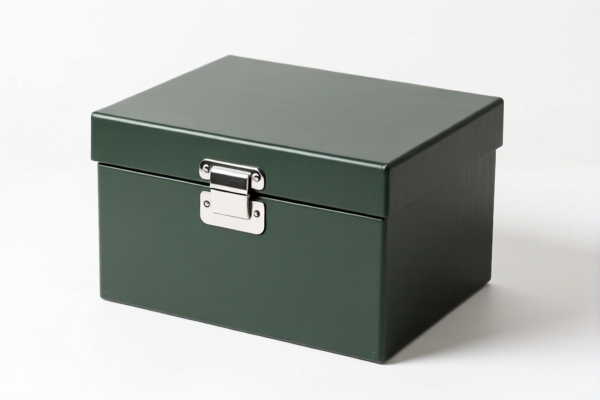
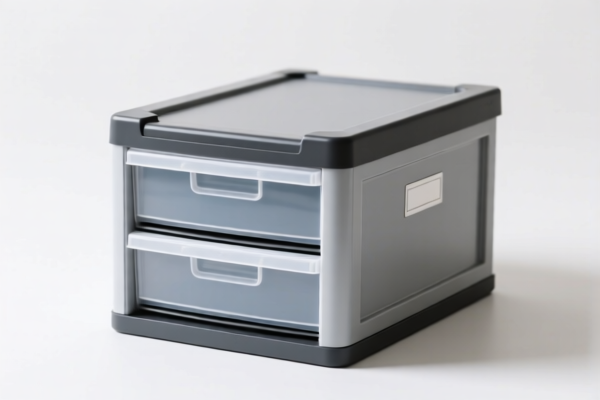
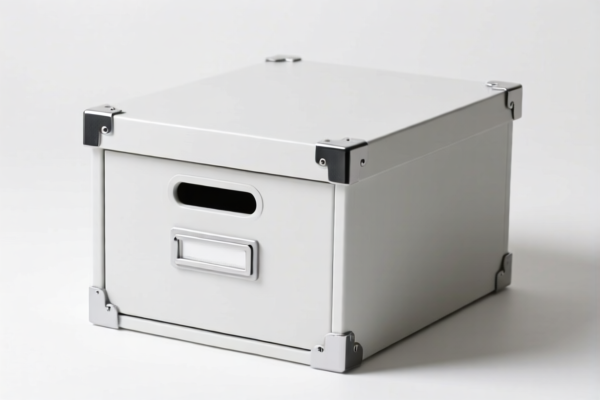
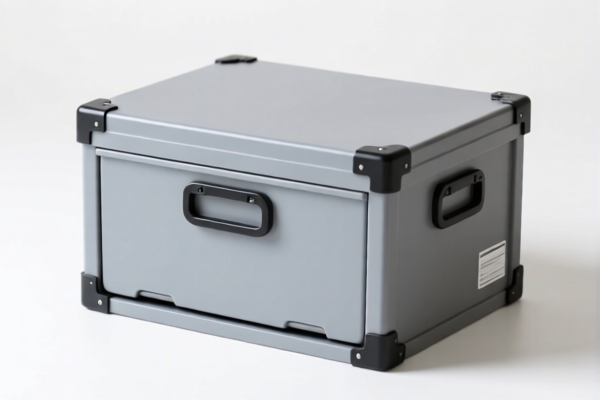
AI Analysis
🧳 Transportation Box / Travel Luggage
🌐 HS Code Reference & Customs Clearance Guide | 2026 Latest Tariff Analysis | Professional Clearance Strategy
📌 I. Product Definition & Classification: What Exactly Is a "Transportation Box"?
The term "Transportation Box" in international trade typically refers to Travel Luggage, Suitcases, Trunks, and Carrying Cases. However, its HS Code classification is highly dependent on two critical factors: 1. Material Composition: Is it made of plastic, leather, textiles, or other materials? 2. Intended Use & Form: Is it a structured "suitcase/trunk" for personal travel, or a flexible/semi-rigid "container" for cargo packaging?
⚠️ Key Distinction Point:
- If it is a structured travel case (suitcase, trunk, briefcase, toiletry bag) → Chapter 42
- If it is a plastic container for cargo/packaging (rigid or semi-rigid plastic box, not designed as personal luggage) → Chapter 39
📦 II. HS Code Classification Details (2026 Latest Tariff Authoritative Mapping)
| HS Code | Product Description | Application Scenario | Material | Tax Rate |
|---|---|---|---|---|
4202.12.21.20 |
Travel cases, trunks, suitcases (outer surface of plastics or sheeting of plastics) | Hard-shell suitcases, plastic travel luggage | Plastic / Synthetic Leather | 55.0% |
3923.90.00.80 |
Other articles for the conveyance or packing of goods, of plastics | Plastic cargo boxes, packaging containers, non-luggage items | Plastic | 38.0% |
3923.10.90.00 |
Boxes, cases, crates, and similar articles, of plastics | Plastic storage boxes, rigid packaging, non-travel specific | Plastic / Plastic-coated | 38.0% |
4202.12.21.50 |
Travel cases, trunks, suitcases (outer surface of plastics, leather, or textile materials) | Mixed-material suitcases, leather-plastic hybrid luggage | Plastic/Leather/Textile | 55.0% |
4202.92.31.31 |
Other articles with outer surface of textile materials, including pet carriers | Pet transport bags, soft-sided carrying cases, nylon/polyester bags | Textile (Nylon/Polyester) | 52.6% |
🔍 Key Reminder:
- Structured luggage (with handles, zippers, wheels, frames) → Generally falls under Chapter 42 (55% or 52.6%); - Cargo/Packaging boxes (no handles, not for personal travel) → Falls under Chapter 39 (38%); - Pet carriers made of textile → Falls under 4202.92.31.31 (52.6%).
💰 III. 2026 Latest Tariff Rate Breakdown (Including Surcharge & Policy Surcharges)
✅ Applicable Country: United States (US)
✅ Country of Origin: China (CN)
✅ Effective Date: From November 10, 2025 (including subsequent imports)
🎯 1. 4202.12.21.20 & 4202.12.21.50 —— Travel Cases, Trunks, Suitcases (Plastic/Leather/Textile)
| Item | Content |
|---|---|
| Base Tariff | 20.0% (ad valorem) |
| Section 301 Surcharge | +25.0% (from USITC Footnote 9903.88.01) |
| Section 122 Surcharge | +10.0% (specific to China-origin goods) |
| Total Tariff Rate | 55.0% |
| Tax Calculation | CIF Value × 55% |
| De Minimis Exemption Available? | ❌ No (deny_de_minimis) |
| Legal Basis Path | USITC:4202.12.21.20 → 301:Footnote 9903.88.01 → 122:China Origin |
📌 Explanation:
- These items are classified as luggage/travel accessories under Chapter 42; - The 55% total rate is extremely high, combining base duty (20%), Section 301 (25%), and Section 122 (10%); - No de minimis exemption applies, meaning even small shipments are subject to full tariff.
🎯 2. 3923.90.00.80 & 3923.10.90.00 —— Plastic Containers for Conveyance/Packing
| Item | Content |
|---|---|
| Base Tariff | 3.0% (ad valorem) |
| Section 301 Surcharge | +25.0% |
| Section 122 Surcharge | +10.0% |
| Total Tariff Rate | 38.0% |
| Tax Calculation | CIF Value × 38% |
| De Minimis Exemption Available? | ❌ No (deny_de_minimis) |
| Legal Basis Path | USITC:3923.90.00.80 / 3923.10.90.00 → 301:Footnote 9903.88.01 → 122:China Origin |
📌 Explanation:
- These are classified as plastic packaging/conveyance articles, not personal luggage; - The 38% total rate is lower than Chapter 42 but still significant; - Critical: Must prove the item is not designed for personal travel (no handles, zippers, wheels, etc.).
🎯 3. 4202.92.31.31 —— Textile Outer Surface Carrying Cases (Including Pet Carriers)
| Item | Content |
|---|---|
| Base Tariff | 17.6% (ad valorem) |
| Section 301 Surcharge | +25.0% |
| Section 122 Surcharge | +10.0% |
| Total Tariff Rate | 52.6% |
| Tax Calculation | CIF Value × 52.6% |
| De Minimis Exemption Available? | ❌ No (deny_de_minimis) |
| Legal Basis Path | USITC:4202.92.31.31 → 301:Footnote 9903.88.01 → 122:China Origin |
📌 Explanation:
- Applies to soft-sided bags (nylon, polyester, canvas) with outer surface of textile; - Includes pet carriers, backpacks, duffel bags, etc.; - 52.6% total rate is still very high, but slightly lower than hard-shell plastic suitcases.
🛠️ IV. Customs Clearance Practical Advice (Avoid Pitfalls)
✅ 1. Preparation Checklist (All Documents Required)
| Document | Required | Notes |
|---|---|---|
| ✅ Product Specifications | ✔️ | Material, dimensions, weight, intended use |
| ✅ Product Photos | ✔️ | Show handles, wheels, zippers, labels, overall structure |
| ✅ Commercial Invoice | ✔️ | Clearly state "Travel Suitcase" or "Plastic Packaging Box" |
| ✅ Packing List | ✔️ | Detail contents, avoid mixing luggage with cargo boxes |
| ✅ Material Certificate | ✔️ | Specify if outer surface is plastic, leather, or textile |
| ✅ Declaration of Use | ✔️ | Confirm if for personal travel or cargo packaging |
✅ 2. Declaration Tips (Critical Keywords)
🔥 "Structure Determines Category, Material Determines Code, Declaration Must Match Reality!"
| Scenario | Correct HS Code | Wrong Declaration | Consequence |
|---|---|---|---|
| Hard-shell suitcase (plastic) | 4202.12.21.20 |
Declare as "Plastic Box" | 55% vs 38% → Overpay tax |
| Plastic cargo container (no handles) | 3923.90.00.80 |
Declare as "Suitcase" | 38% vs 55% → Underpay tax, penalty risk |
| Nylon backpack | 4202.92.31.31 |
Declare as "Plastic Case" | 52.6% vs 38% → Major compliance risk |
| Pet carrier (textile) | 4202.92.31.31 |
Declare as "General Bag" | 52.6% vs potential misclassification |
📌 Key Advice:
- If the item has wheels, handles, zippers, and a rigid frame, it is Luggage → Chapter 42; - If it is a simple box/container for shipping goods, it is Packaging → Chapter 39.
✅ 3. Special Cases Handling
| Case | Handling Advice |
|---|---|
| OEM Custom Suitcases | Provide design drawings + client orders to prove "luggage" nature |
| Mixed Materials | Declare based on outer surface material (e.g., plastic-coated fabric → still Chapter 42) |
| Pet Carriers | Must declare as "Pet Carrier" under 4202.92.31.31, not as "General Bag" |
| Plastic Storage Boxes | If no travel features, declare under 3923.90.00.80 or 3923.10.90.00 |
🌍 V. Global Market Clearance Comparison (2026 Latest)
| Country/Region | Recommended HS Code | Tariff Rate | Certification Required | Notes |
|---|---|---|---|---|
| 🇺🇸 USA | 4202.12.21.20 / 3923.90.00.80 |
55% (Luggage) / 38% (Packaging) | No specific cert | High tariff, no de minimis |
| 🇨🇳 China | 4202.12.21.20 / 3923.90.00.80 |
20% (Luggage) / 3% (Packaging) | CCC (if applicable) | No Section 301/122 |
| 🇪🇺 EU | 4202.12.21.20 / 3923.90.00.80 |
4% (Luggage) / 0-6% (Packaging) | CE (if applicable) | No surcharge |
| 🇬🇧 UK | 4202.12.21.20 / 3923.90.00.80 |
4% (Luggage) / 0-6% (Packaging) | UKCA | Post-Brexit rules apply |
| 🇦🇺 Australia | 4202.12.21.20 / 3923.90.00.80 |
5% (Luggage) / 0-5% (Packaging) | RCM | Low tariff |
📌 Conclusion:
- USA has the highest tariffs due to Section 301 & 122 surcharges; - China, EU, UK, Australia have significantly lower base tariffs; - Tariff arbitrage is possible via supply chain optimization (e.g., final assembly in non-China origin countries).
📌 VI. Common Mistakes & Pitfalls (Lessons Learned)
❌ Mistake 1: Declaring a hard-shell suitcase as a "Plastic Box"
👉 Consequence: Tariff drops from 55% to 38%, but if detected → penalty + back taxes
❌ Mistake 2: Declaring a plastic cargo container as a "Suitcase"
👉 Consequence: Overpaying 17% unnecessary tax → profit loss
❌ Mistake 3: Using vague terms like "Bag" or "Container"
👉 Consequence: Customs uncertainty → delayed clearance or random inspection
❌ Mistake 4: Ignoring Section 122 surcharge
👉 Consequence: Under-declaration → 10% penalty + interest
✅ Correct Approach:
"Hard-shell Travel Suitcase, Polypropylene Shell, Telescopic Handle, 4 Wheels, Model ABC, US Market"
vs.
"Plastic Storage Container, No Handles, For Cargo Packaging, Model XYZ"
🎯 VII. Conclusion: Precise Classification Saves Money!
🎯 Remember the Mantra:
🔹 "Luggage = Chapter 42 (55%), Packaging = Chapter 39 (38%), Pet Carrier = 52.6%!"
🔹 "HS Code Determines Cost, Declaration Determines Risk, Misclassification = Penalty!"
📌 Pro Tip:
If your luggage is originating from Vietnam, Mexico, Thailand, or Malaysia, you may apply for IEEPA Exemption, reducing tariffs to 0-5%;
It is recommended to apply for Advance Ruling before shipment to avoid clearance risks.
📣 Immediate Action:
📞 Contact Professional Customs Broker + Provide Product Photos + Apply for HS Code Advance Ruling
🚀 Let your Transportation Boxes clear customs smoothly, efficiently, and cost-effectively!
✨ Professional Clearance Starts with Accurate Classification!
💼 Every Dollar Saved is a Dollar Earned!
Customer Reviews
About HS Code Classification
The Harmonized System (HS) is an internationally standardized nomenclature developed by the World Customs Organization (WCO) to classify traded products. Over 200 countries use the HS system as the basis for customs tariffs, trade statistics, and import/export regulations.
Each HS code follows a hierarchical structure:
- Chapter (2 digits) — Broad category of goods (e.g., Chapter 84: Machinery and Mechanical Appliances)
- Heading (4 digits) — More specific grouping within the chapter
- Subheading (6 digits) — Internationally standardized breakdown, used by all WCO member countries
- National subdivisions (8-10 digits) — Country-specific extensions for further classification, such as US HTSUS 10-digit codes
Correct HS code classification is essential for smooth customs clearance, accurate duty payment, and compliance with trade regulations. Misclassification can lead to customs delays, overpayment of duties, or penalties.
When importing from CN to US, the applicable tariff rates may include:
- Most-Favored-Nation (MFN) rate — The standard duty rate applied to WTO members
- General rate — Applied to countries without trade agreements
- Trade remedy duties — Additional tariffs such as Section 301 (anti-dumping), Section 232 (national security), or countervailing duties
The information provided on this page is for reference purposes only. For official classification, please consult with your local customs authority or a licensed customs broker.