Trapezoidal Water Stop Strip
CN → US| HS Code | Tariff Rate | Origin | Destination | Doc |
|---|---|---|---|---|
| 3925900000 | 40.3% | CN | US | Official Doc |
| 3925100000 | 41.3% | CN | US | Official Doc |
| 3926904590 | 13.5% | CN | US | Official Doc |
| 3926909989 | 22.8% | CN | US | Official Doc |
| 4008292000 | 37.9% | CN | US | Official Doc |
| 4008196000 | 38.3% | CN | US | Official Doc |
Product Images

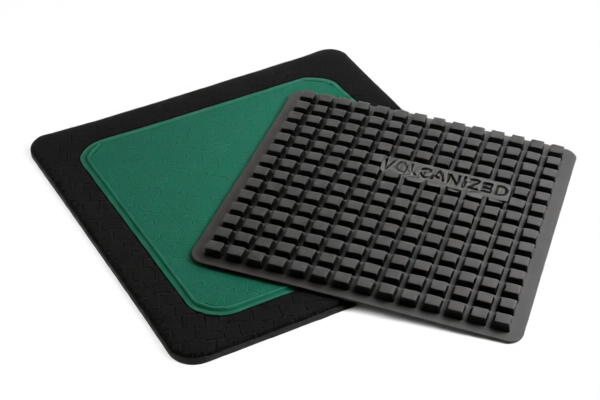
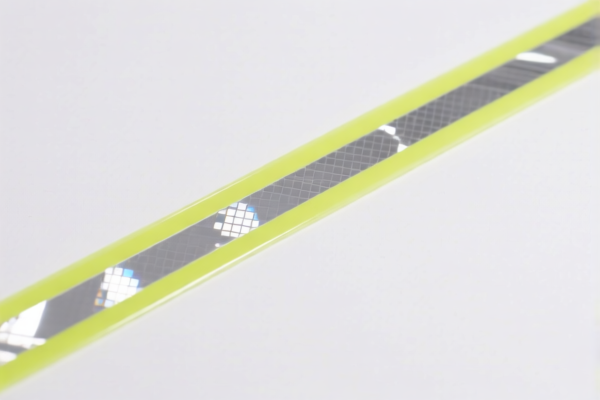

AI Analysis
🌊 Trapezoidal Water Stop Strip: The Ultimate Guide to HS Classification & Customs Clearance
🌐 HS Code Reference & Clearance Guide | 2026 Updated Tax Regime | Professional Customs Strategy
📌 I. Product Definition & Classification: What Exactly is a "Trapezoidal Water Stop Strip"?
The Trapezoidal Water Stop Strip is a critical waterproofing component used in civil engineering, specifically in construction joints (expansion, contraction, and settlement joints) for concrete structures such as: * Hydraulic Projects: Dams, water tunnels, reservoirs, and canals. * Civil Infrastructure: Subways, basements, water treatment plants, and parking garages. * Industrial Structures: Chemical storage tanks and nuclear facilities.
Why "Trapezoidal"?
The cross-section features a trapezoidal (or "dog-bone") shape. This geometry is engineered to mechanically lock the rubber/plastic strip into the concrete, preventing lateral displacement under water pressure and ensuring a superior water-tight seal compared to flat or circular profiles.
⚠️ Key Classification Point:
- If the material is Vulcanized Rubber (Non-cellular) → Likely falls under Chapter 40 (Rubber).
- If the material is Plastics (PVC, EVA, etc.) → Likely falls under Chapter 39 (Plastics).
- Crucial Distinction: It is a "builders' ware" or "sealing article." Misclassification between rubber and plastic can lead to a 25% vs 0% tariff disparity.
📦 II. HS Code Classification Breakdown (2026 Tax Regime)
Based on the provided data, here are the specific HS Codes for Trapezoidal Water Stop Strips based on their material composition.
| HS Code | Product Description | Material Type | Tax Details (Total) | Clearance Risk Level | | :--- | :--- | :--- | :--- :--- | | 4008.29.20.00 | Profile shapes of vulcanized rubber (non-cellular), Other | Rubber (Solid) | 0.0% | ✅ Low | | 4008.19.60.00 | Profile shapes of vulcanized rubber (cellular), Other | Rubber (Foam/Cellular) | 0.0% | ✅ Low | | 3925.90.00.00 | Builders' ware of plastics (N.E.S.) | Plastics (General) | 0.0% | ✅ Low | | 3925.10.00.00 | Builders' ware: Reservoirs, tanks, vats (>300L) | Not Applicable (Strip is not a tank) | 0.0% | ⚠️ High (Wrong Category) | | 3926.90.45.90 | Other articles of plastics: Gaskets, washers, seals | Plastics (Seal Specific) | 28.5% (3.5% + 25%) | 🔴 Critical | | 3926.90.99.89 | Other articles of plastics: Other | Plastics (General/Unspecified) | 12.8% (5.3% + 7.5%) | 🟠 Medium |
🔍 Critical Insight:
- Rubber Strips (4008.xxxx): Attract 0% tax. This is the ideal classification for standard water stops. - Plastic Seals (3926.90.45.90): Attracts a massive 28.5% total tax (3.5% Base + 25% Additional). This applies if the strip is strictly classified as a "gasket/seal" under specific plastic headings with punitive tariffs. - Plastic Builders Ware (3925.90.00.00): Attracts 0% tax. This applies if the strip is classified as a "Builder's ware of plastics" (e.g., PVC water stop) rather than a generic "seal."
💰 III. 2026 Tariff Rate Analysis (Detailed Breakdown)
🎯 Scenario A: Rubber Water Stops (Safe Harbor)
HS Codes: 4008.29.20.00 or 4008.19.60.00
* Base Duty: 0.0%
* Additional Duty: 0.0%
* Total Effective Tax: 0.0%
* Legal Logic: These are classified as "Profile shapes" of vulcanized rubber used in construction, falling under preferential or duty-free categories in this dataset.
🎯 Scenario B: Plastic Water Stops - "Builders' Ware"
HS Code: 3925.90.00.00
* Base Duty: 0.0%
* Additional Duty: 0.0%
* Total Effective Tax: 0.0%
* Legal Logic: Correctly classified as "Builders' ware" (plastic). This is the preferred classification for PVC or EVA water stops intended for structural joints.
🎯 Scenario C: Plastic Water Stops - "Gaskets/Seals" (High Risk!)
HS Code: 3926.90.45.90
* Base Duty: 3.5%
* Additional Duty: 25.0% (Trade war/Section 301 type add-on)
* Total Effective Tax: 28.5%
* Legal Logic: If customs officers view the trapezoidal strip strictly as a "gasket" or "seal" rather than a structural "builders' ware," this 25% punitive tariff applies.
* Calculation: CIF Value × 28.5%
🎯 Scenario D: Plastic Water Stops - "Other"
HS Code: 3926.90.99.89
* Base Duty: 5.3%
* Additional Duty: 7.5%
* Total Effective Tax: 12.8%
* Legal Logic: A catch-all category if it doesn't fit "Builders' ware" but isn't a "gasket." Still carries significant cost.
🛠️ IV. Practical Customs Clearance Advice (Avoiding the 28.5% Trap)
To ensure your Trapezoidal Water Stop Strips clear customs at 0% and avoid the high 28.5% tariff, follow these strategies:
✅ 1. Material Declaration Strategy
- DO Declare as "Vulcanized Rubber" if possible: If your product is rubber-based, it automatically falls into the 0% category (
4008.xxxx). - If Plastic: You must explicitly declare it as "Plastic Builders' Ware for Construction Joints" (referencing
3925.90.00.00).- DO NOT use generic terms like "Rubber Seal" or "Plastic Gasket."
- USE: "Trapezoidal Concrete Joint Water Stop Strip (PVC/Rubber)."
✅ 2. Technical Documentation Checklist
- Material Safety Data Sheet (MSDS): Must clearly state "Vulcanized Rubber" or "PVC/Plastic Construction Material."
- Engineering Drawings: Must show the Trapezoidal Profile and indicate the product is for Concrete Joints.
- Application Statement: A letter explaining the product is a permanent structural component of the building/infrastructure, not a removable sealing gasket for machinery.
✅ 3. HS Code Selection Logic
| Material | Correct Classification Path | Result | Risk |
|---|---|---|---|
| Rubber | 4008.29.20.00 (Non-cellular) or 4008.19.60.00 (Cellular) |
0% | ✅ Safe |
| PVC/EVA Plastic | 3925.90.00.00 (Builders' ware, not elsewhere specified) |
0% | ✅ Safe |
| Plastic (Seal) | 3926.90.45.90 (Gaskets/Seals) |
28.5% | 🔴 Expensive |
| Plastic (Other) | 3926.90.99.89 |
12.8% | 🟠 Costly |
✅ 4. Special Warning: The "Gasket" Trap
If your product is thin and flexible, customs may try to classify it under 3926.90.45.90 (Gaskets/Washers/Seals).
* Counter-argument: Emphasize that the Trapezoidal shape provides mechanical anchoring in concrete, making it a structural "Builders' ware" rather than a simple sealing gasket.
* Reference: Cite the specific exclusion in the 3925 heading for builders' ware.
📌 V. Common Mistakes & Pitfalls
❌ Mistake 1: Classifying all plastic water stops under 3926.90.45.90.
* Consequence: Paying 28.5% instead of 0%.
* Fix: Re-classify under 3925.90.00.00 with proof of construction application.
❌ Mistake 2: Confusing "Tanks/Reservoirs" with "Water Stops."
* Consequence: Using 3925.10.00.00 (Tanks >300L) is incorrect. This code is for large containers, not strips.
* Fix: Use 3925.90.00.00 (Other Builders' ware).
❌ Mistake 3: Using vague descriptions like "Sealing Strip."
* Consequence: Customs has the right to choose the higher tariff category (3926.90.45.90).
* Fix: Use precise descriptions: "Trapezoidal Rubber/Plastic Water Stop Strip for Concrete Joints."
🎯 VI. Conclusion: Secure Your Zero-Tariff Clearance
Remember the Golden Rule:
"Rubber gets 0%, Plastics get 0% IF declared as 'Builders' Ware', but Plastics get 28.5% IF declared as 'Gaskets'!"
✅ Action Plan:
1. Verify Material: Is it Rubber? → 4008.xxxx (0%).
2. If Plastic: Is it a structural joint strip? → 3925.90.00.00 (0%).
3. Avoid: Terms like "Seal," "Gasket," or "Washer" in the HS Code description unless it's a small rubber part.
4. Document: Always provide technical drawings showing the trapezoidal profile and its use in concrete pouring.
By following this strategy, you can confidently navigate the 2026 Tax Regime, ensuring your Trapezoidal Water Stop Strips clear customs at the most favorable rate.
✨ Professional Customs Clearance Starts with Precise Classification!
💼 Don't let a 28.5% tariff eat your profit margin!
Customer Reviews
About HS Code Classification
The Harmonized System (HS) is an internationally standardized nomenclature developed by the World Customs Organization (WCO) to classify traded products. Over 200 countries use the HS system as the basis for customs tariffs, trade statistics, and import/export regulations.
Each HS code follows a hierarchical structure:
- Chapter (2 digits) — Broad category of goods (e.g., Chapter 84: Machinery and Mechanical Appliances)
- Heading (4 digits) — More specific grouping within the chapter
- Subheading (6 digits) — Internationally standardized breakdown, used by all WCO member countries
- National subdivisions (8-10 digits) — Country-specific extensions for further classification, such as US HTSUS 10-digit codes
Correct HS code classification is essential for smooth customs clearance, accurate duty payment, and compliance with trade regulations. Misclassification can lead to customs delays, overpayment of duties, or penalties.
When importing from CN to US, the applicable tariff rates may include:
- Most-Favored-Nation (MFN) rate — The standard duty rate applied to WTO members
- General rate — Applied to countries without trade agreements
- Trade remedy duties — Additional tariffs such as Section 301 (anti-dumping), Section 232 (national security), or countervailing duties
The information provided on this page is for reference purposes only. For official classification, please consult with your local customs authority or a licensed customs broker.