Travel Accessory Bags
CN → US| HS Code | Tariff Rate | Origin | Destination | Doc |
|---|---|---|---|---|
| 3923900080 | 38.0% | CN | US | Official Doc |
| 4202923120 | 52.6% | CN | US | Official Doc |
| 6307909891 | 24.5% | CN | US | Official Doc |
| 4202923131 | 52.6% | CN | US | Official Doc |
| 6307909875 | 17.0% | CN | US | Official Doc |
Product Images
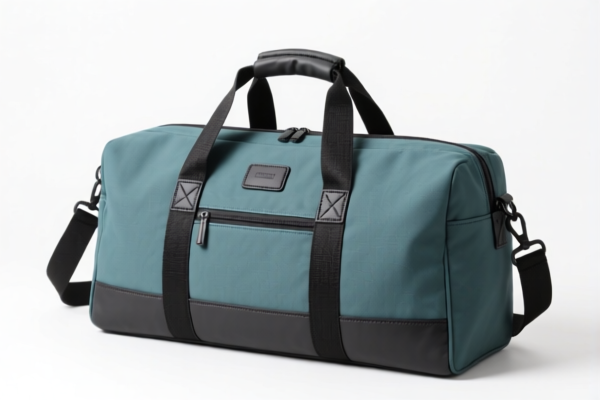
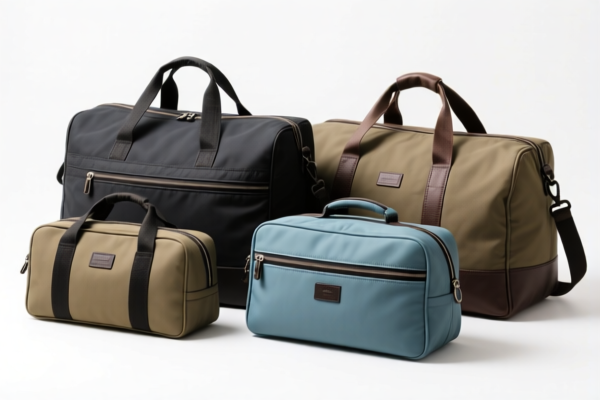
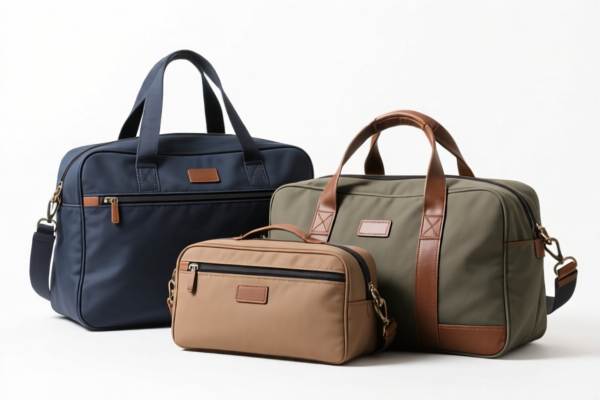
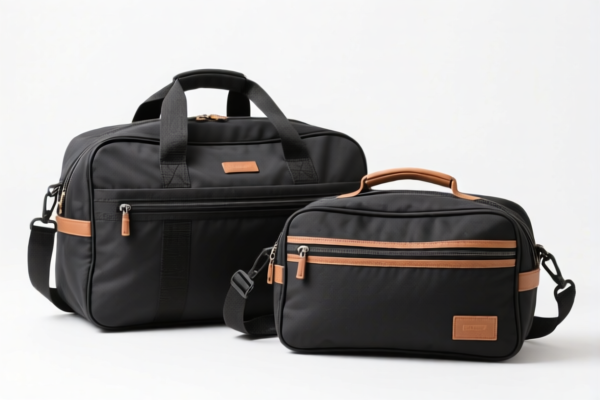
AI Analysis
🧳 Travel Accessory Bags (Luggage Organizers & Pouches)
🌐 HS Code Reference & Customs Clearance Guide | 2026 Latest Tariff Analysis | Professional Clearance Strategy
📌 I. Product Definition: What Exactly Are "Travel Accessory Bags"?
Travel Accessory Bags are versatile storage solutions designed for organizing personal items, cosmetics, electronics, or clothing within luggage or for standalone use. In international trade, their classification hinges critically on material composition and specific function. They are generally categorized into three main groups:
- Packaging/Container Types: Often made of plastics or synthetic fibers, viewed as "other containers" rather than finished bags.
- Luggage/Bag Types: Made of textile materials or plastic sheeting, classified specifically as "articles of luggage" or "travel bags."
- Other Made-Up Textile Articles: If made of textile materials but not fitting specific "bag" definitions, they may fall under "other made-up articles."
⚠️ Critical Classification Logic:
- Material is Key: Plastic/Sheeting vs. Textile.
- Function is Key: Is it a "luggage article" (Chapter 42) or a "general textile article" (Chapter 63)?
- Tariff Impact: The difference between Chapter 42 and Chapter 63 can result in a tariff disparity of up to 35% due to Section 301 and IEEPA duties.
📦 II. HS Code Classification Matrix (2026 Data Extract)
The following table details the specific HS Codes extracted from the provided data, along with their rationale and total tax burden (including US base, Section 301, and IEEPA tariffs).
| HS Code | Summary Description | Material Inference | Total Tax Rate | Tax Breakdown Details |
|---|---|---|---|---|
3923.90.00.80 |
Packaging/Container Category | Plastic or Synthetic Fiber | 38.0% | Base: 3.0% Sect. 301: 25.0% IEEPA: 10% |
4202.92.31.20 |
Luggage/Bag Category | Textile or Plastic Sheet | 52.6% | Base: 17.6% Sect. 301: 25.0% IEEPA: 10% |
6307.90.98.91 |
Other Made-Up Articles | Textile | 24.5% | Base: 7.0% Sect. 301: 7.5% IEEPA: 10% |
4202.92.31.31 |
Luggage/Bag Category | Textile (Outer Surface) | 52.6% | Base: 17.6% Sect. 301: 25.0% IEEPA: 10% |
6307.90.98.75 |
Other Made-Up Articles | Textile | 17.0% | Base: 7.0% Sect. 301: 0.0% IEEPA: 10% |
🔍 Key Insight:
- Highest Burden (52.6%): Items classified as Luggage Bags (4202.92.31.xx). This is due to the high Base Rate (17.6%) plus the standard Section 301 (25%) and IEEPA (10%).
- Lowest Burden (17.0%): Items classified as Other Textile Articles (6307.90.98.75). This is achievable only if the product qualifies for a 0% Section 301 rate on the base textile category, keeping only the IEEPA 10% and Base 7.0%.
- Middle Ground (24.5% & 38.0%): Dependent on whether the item is seen as a "Plastic Container" (3923) or "Other Textile" (6307) with higher Section 301 rates.
💰 III. Detailed Tax Clause Explanation (2026 US Import Rules)
✅ Applicable Country: USA
✅ Origin: China (CN)
✅ Components of Tax:
1. Base Tariff (MFN Rate): The standard tariff for the HS code.
2. Section 301 Tariff (25% or 7.5% or 0%): Trade war tariffs imposed by USITC.
3. IEEPA Tariff (10%): Additional tariff under the International Emergency Economic Powers Act.
🎯 1. The "Luggage Bag" Trap (4202.92.31.20 & 4202.92.31.31)
- Total Tax: 52.6%
- Breakdown:
- Base: 17.6% (High base rate for bags of textiles/plastic)
- Section 301: 25.0%
- IEEPA: 10.0%
- Analysis: This is the most expensive classification. Chapter 42 (Articles of Leather/Travelling Goods) carries a high base duty. If your bag is considered a "travelling good," you pay the full brunt of the 17.6% base + 25% penalty.
🎯 2. The "Packaging/Container" Option (3923.90.00.80)
- Total Tax: 38.0%
- Breakdown:
- Base: 3.0% (Low base rate for plastic articles)
- Section 301: 25.0%
- IEEPA: 10.0%
- Analysis: If the bag is primarily made of plastic and viewed as a "container" rather than a fashion accessory or luggage item, the base tariff drops to 3%. However, the 25% Section 301 and 10% IEEPA remain, totaling 38%.
🎯 3. The "Textile Article" Loophole (6307.90.98.91 & 6307.90.98.75)
- Scenario A (6307.90.98.91): 24.5%
- Base: 7.0%
- Section 301: 7.5%
- IEEPA: 10.0%
- Note: Higher base (7%) but lower Section 301 (7.5%).
- Scenario B (6307.90.98.75): 17.0% 💡 BEST CASE
- Base: 7.0%
- Section 301: 0.0%
- IEEPA: 10.0%
- Note: This is the optimal classification. If the bag is classified as a "other made-up textile article" that falls under a sub-category exempt from Section 301 duties, the total tax drops to just 17%. This saves 35.6% compared to the "Luggage Bag" classification!
🛠️ IV. Customs Clearance Strategy & Practical Advice
✅ 1. How to Choose the Right HS Code (Decision Matrix)
| Product Characteristic | Recommended HS Code | Tax Rate | Strategy |
|---|---|---|---|
| Made of Textile, NOT a formal "Luggage Bag" (e.g., simple pouch, organizer insert) | 6307.90.98.75 |
17.0% | TARGET THIS ONE. Emphasize "Textile Article" and "Not for Luggage Structure." Ensure it doesn't look like a handbag or suitcase. |
| Made of Plastic, Simple Container | 3923.90.00.80 |
38.0% | Use if the product is clearly a plastic pouch/container. Avoid calling it a "bag" in descriptions. |
| Made of Textile, Structured Bag with Handles/Zippers | 4202.92.31.20/31 |
52.6% | AVOID IF POSSIBLE. This is the highest tax. Only use if the product is unmistakably a "travel bag" or "luggage accessory" in the traditional sense. |
✅ 2. Documentation & Declaration Tips
- Description Matters:
- ❌ Bad: "Travel Luggage Bag"
- ✅ Good: "Textile Organizer Pouch for Cosmetic Storage" (supports 6307 classification)
- ✅ Good: "Plastic Storage Container" (supports 3923 classification)
- Material Declaration:
- Clearly state the outer surface material. If it's textile, highlight "100% Polyester/Nylon" to support Chapter 63.
- If using
6307.90.98.75, prove it is not a "handbag" or "suitcase" but an "accessory" or "general textile article."
- Structure Analysis:
- Bags with rigid frames, wheels, or handles are likely
4202. - Soft-sided, zippered pouches without handles are more likely
6307or3923.
- Bags with rigid frames, wheels, or handles are likely
✅ 3. Special Considerations for IEEPA (10%)
- The 10% IEEPA tariff applies to all Chinese-origin goods in this category (according to the provided data).
- There is no IEEPA exemption for these HS codes in the given data.
- Therefore, cost reduction strategies must focus on lowering the Base and Section 301 components by choosing the correct Chapter (63 vs 42 vs 39).
🌍 V. Comparative Market Impact (US vs. Global)
| Market | Recommended HS Code | Est. Total Tax (China Origin) | Notes |
|---|---|---|---|
| 🇺🇸 USA | 6307.90.98.75 |
17.0% | Best option due to 0% Section 301. |
| 🇺🇸 USA | 4202.92.31.20 |
52.6% | Worst option due to high base + full Section 301. |
| 🇪🇺 EU | N/A (Data not provided) | Typically 4-12% | EU does not have Section 301 or IEEPA tariffs. |
| 🇨🇳 China | N/A (Data not provided) | Typically 0-10% | Domestic trade or export from China has different duties. |
📌 Conclusion for US Importers:
The choice of HS Code can change your tax cost from 17% to 52.6%. This is a 35.6% difference on the CIF value.
- Action: Consult with a customs broker to verify if your specific product design qualifies for6307.90.98.75(Textile Article) to avoid the heavy4202(Luggage Bag) duties.
📌 VI. Common Mistakes & Pitfalls
❌ Mistake 1: Calling all soft-sided organizers "Travel Bags" and classifying under 4202.
👉 Result: Paying 52.6% tax instead of 17%.
Fix: Classify as "Textile Organizer Pouch" under 6307 if no handles/straps.
❌ Mistake 2: Assuming all plastic bags are the same.
👉 Result: Misclassifying a complex plastic container as a simple bag.
Fix: Ensure 3923 is only used for simple plastic packaging containers.
❌ Mistake 3: Ignoring the IEEPA 10% surcharge.
👉 Result: Underestimating total landed cost.
Fix: Always add 10% to any calculation for Chinese-origin goods under these HS codes.
🎯 VII. Final Recommendation
💡 Golden Rule for Travel Accessory Bags:
"If it's a simple pouch, classify as Textile (6307) to save 35%! If it's a structured bag, prepare for4202tax."
🚀 Action Plan:
- Audit Your Product: Does it have handles? Is it structured? Is it just a soft pouch?
- Select HS Code:
- Soft Pouch/Textile →
6307.90.98.75(17.0%) - Plastic Container →
3923.90.00.80(38.0%) - Structured Bag →
4202.92.31.20(52.6%)
- Soft Pouch/Textile →
- Verify with Broker: Get a pre-ruling if possible to lock in the 17% rate.
✨ Professional Clearance Starts with Precise Classification!
💼 Every 1% of tax saved is pure profit gained!
Customer Reviews
About HS Code Classification
The Harmonized System (HS) is an internationally standardized nomenclature developed by the World Customs Organization (WCO) to classify traded products. Over 200 countries use the HS system as the basis for customs tariffs, trade statistics, and import/export regulations.
Each HS code follows a hierarchical structure:
- Chapter (2 digits) — Broad category of goods (e.g., Chapter 84: Machinery and Mechanical Appliances)
- Heading (4 digits) — More specific grouping within the chapter
- Subheading (6 digits) — Internationally standardized breakdown, used by all WCO member countries
- National subdivisions (8-10 digits) — Country-specific extensions for further classification, such as US HTSUS 10-digit codes
Correct HS code classification is essential for smooth customs clearance, accurate duty payment, and compliance with trade regulations. Misclassification can lead to customs delays, overpayment of duties, or penalties.
When importing from CN to US, the applicable tariff rates may include:
- Most-Favored-Nation (MFN) rate — The standard duty rate applied to WTO members
- General rate — Applied to countries without trade agreements
- Trade remedy duties — Additional tariffs such as Section 301 (anti-dumping), Section 232 (national security), or countervailing duties
The information provided on this page is for reference purposes only. For official classification, please consult with your local customs authority or a licensed customs broker.