Travel Adapter
CN → US| HS Code | Tariff Rate | Origin | Destination | Doc |
|---|---|---|---|---|
| 9617001000 | 17.2% | CN | US | Official Doc |
| 4202321000 | 0.0% | CN | US | Official Doc |
| 4202329300 | 52.6% | CN | US | Official Doc |
| 9617006000 | 17.2% | CN | US | Official Doc |
| 9617001000 | 17.2% | CN | US | Official Doc |
Product Images
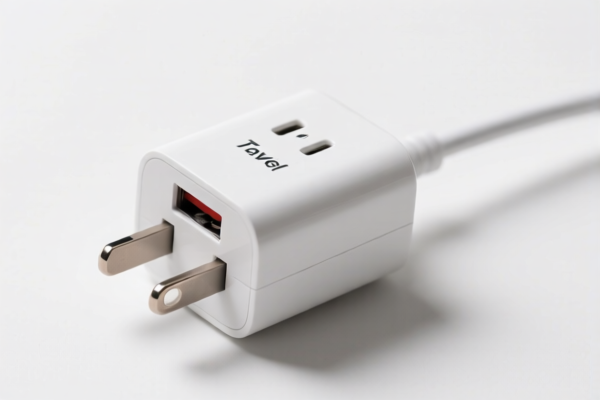
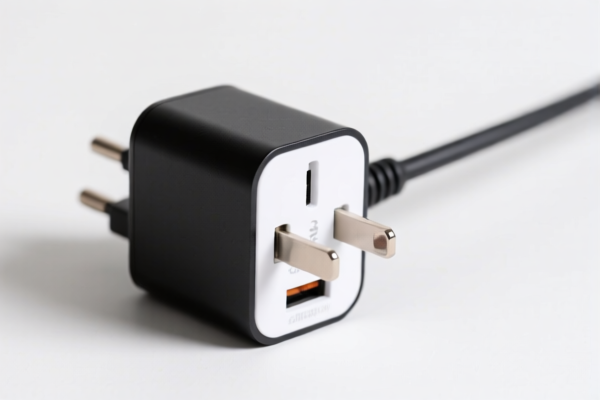
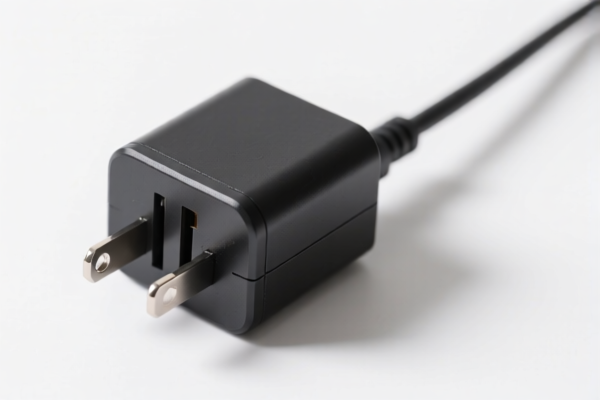
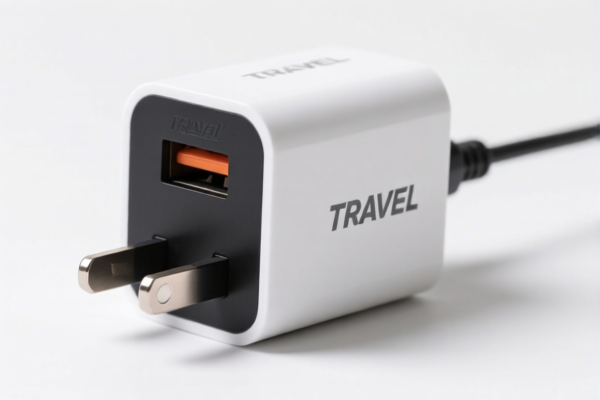
AI Analysis
🔌 Travel Adapter (Multi-Function Power Adapter & Accessories)
🌐 HS Code Reference & Customs Clearance Guide | 2026 Latest Tariff Analysis | Professional-Level Strategy
📌 I. Product Definition & Classification: Do You Really Understand "Travel Adapters"?
A Travel Adapter is a compact device used to connect electrical appliances to power outlets in foreign countries. In international trade, classification is critical because these products often fall into "gray areas" due to their multi-purpose nature and ambiguous material composition.
Key Classification Logic: * Accessories/Parts Category: If viewed as parts of lighting equipment or general mechanical appliances. * Carried Articles Category: If viewed as items designed for travel, pockets, or handbags. * Residual/Fallback Category: If the product does not fit specific material definitions (e.g., specific plastics or textiles).
⚠️ Critical Distinction:
- If the adapter is primarily seen as a mechanical part of a larger system or has ambiguous materials → Often falls under 9617 (Miscellaneous manufactured articles) or 9617.60 (Vacuum container parts - rare but possible for insulated travel gear).
- If the adapter is designed to be carried in a pocket/bag → Falls under 4202 (Articles of bedding, travelling bags, etc.).
- No Material Conflict: The provided data indicates no specific conflict with textile or plastic material definitions, allowing for fallback to general accessory rules.
📦 II. HS Code Classification Details (2026 Latest Authoritative Comparison)
| HS Code | Product Description | Application Scenario | Tax Rate (Total) | Basis |
|---|---|---|---|---|
9617.00.10.00 |
Travel Adapter Accessory (Generic/Part) | General-purpose adapters, ambiguous material, fallback to accessories/parts category | 17.2% | Base: 7.2% + Section 122: 10% |
4202.32.10.00 |
Travelling Bag Accessory | Items inferred for carrying/portability, fits "carried article" description | 43.7% | Base: 4.6% + $12.1¢/kg + Sec 301: 25% + Sec 122: 10% |
4202.32.93.00 |
Other Carried Articles (Textile/Plastic No-Conflict) | Ambiguous use/form, no textile/plastic conflict, default accessory tendency | 52.6% | Base: 17.6% + Sec 301: 25% + Sec 122: 10% |
9617.00.60.00 |
Vacuum Container/Insulated Accessory Fallback | Fallback principle, no conflict with vacuum container parts, may include insulated travel gear | 17.2% | Base: 7.2% + Section 122: 10% |
🔍 Key Insight:
-9617.00.10.00&9617.00.60.00offer the lowest total tax burden (17.2%) because they do not attract the 25% Section 301 tariff, only the base rate (7.2%) and Section 122 (10%).
-4202.32.10.00&4202.32.93.00are significantly more expensive due to the 25% Section 301 tariff on Chinese-origin goods, bringing the total to 43.7%–52.6%.
💰 III. 2026 Latest Tariff Rate Details (Including Surcharges & Policy Add-ons)
✅ Applicable Country: United States (US)
✅ Origin: China (CN)
✅ Effective Date: November 10, 2025 onwards
🎯 1. 9617.00.10.00 & 9617.00.60.00 —— The Cost-Optimized Choice
| Item | Content |
|---|---|
| Base Tariff | 7.2% (Ad valorem) |
| Section 301 Surcharge | 0.0% (Not applicable to this subheading) |
| Section 122 Surcharge | +10% (Under 19 U.S.C. § 1862, for certain goods) |
| Total Effective Rate | 17.2% |
| Calculation | CIF Value × 17.2% |
| De Minimis Eligibility | ❌ No (Deny de_minimis for Section 122 goods) |
| Legal Basis Path | IEEPA:9903.01.24 (if applicable) → USITC:9617.00.x0 → SECTION 122 |
📌 Explanation:
- These codes are classified under Chapter 96 (Miscellaneous Manufactured Articles), which generally avoids the heavy Section 301 tariffs applied to Chapter 42 (Articles of bedding, travelling bags, etc.).
- The 10% Section 122 tariff is a specific levy on certain goods, but the absence of the 25% Section 301 tariff makes this route significantly cheaper.
- Total Tax: 17.2% is highly competitive compared to other categories.
🎯 2. 4202.32.10.00 —— The "Travel Accessory" Route (Higher Cost)
| Item | Content |
|---|---|
| Base Tariff | 4.6% + $12.1¢/kg (Compound rate) |
| Section 301 Surcharge | +25.0% (High tariff on Chinese origin goods) |
| Section 122 Surcharge | +10.0% |
| Total Effective Rate | ~43.7% (Plus per-kg weight fee) |
| Calculation | (CIF Value × 4.6%) + (Weight in kg × $0.121) + (CIF Value × 25%) + (CIF Value × 10%) |
| De Minimis Eligibility | ❌ No |
| Legal Basis Path | IEEPA:9901.25 → USITC:4202.32.10 → SECTION 122 |
📌 Note:
- Even though the base rate is low (4.6%), the 25% Section 301 tariff drastically increases the cost.
- Additionally, the $12.1¢/kg weight-based charge adds to the cost, especially for heavier adapters.
- Total Tax: ~43.7% makes this option less attractive unless the product strictly fits the "travelling bag" definition.
🎯 3. 4202.32.93.00 —— The Fallback "Other" Category (Highest Cost)
| Item | Content |
|---|---|
| Base Tariff | 17.6% |
| Section 301 Surcharge | +25.0% |
| Section 122 Surcharge | +10.0% |
| Total Effective Rate | 52.6% |
| Calculation | CIF Value × 52.6% |
| De Minimis Eligibility | ❌ No |
| Legal Basis Path | USITC:4202.32.93 → SECTION 122 |
📌 Warning:
- This is the most expensive option.
- It applies when the product does not fit the specific "travelling bag" description of4202.32.10.00but still falls under Chapter 42.
- Total Tax: 52.6% should be avoided if possible.
🛠️ IV. Customs Clearance Practical Advice (Real-World Pitfall Avoidance)
✅ 1. Documentation Checklist (Non-Negotiable)
| Document | Required | Notes |
|---|---|---|
| ✅ Product Specifications | ✔️ | Include voltage, amperage, plug types, weight, dimensions |
| ✅ Material Composition | ✔️ | Clarify if plastic, metal, or mixed. Crucial for Chapter 96 vs. 42. |
| ✅ Product Photos | ✔️ | Clear images of the plug, body, and any packaging |
| ✅ Commercial Invoice | ✔️ | Must state "Travel Adapter" or "Power Conversion Plug" |
| ✅ Packing List | ✔️ | Detail net/gross weight (for 4202.32.10.00 weight fees) |
| ✅ Certificate of Origin | ✔️ | Essential for determining Section 301 applicability |
✅ 2. Declaration Strategy (Key Mantra)
🔥 "Define by Function, Not by Container: If it's a part, go Chapter 96; if it's a carried item, go Chapter 42!"
| Scenario | Recommended HS Code | Why? |
|---|---|---|
| Generic Travel Adapter | 9617.00.10.00 |
Lowest tax (17.2%), no Section 301, fits "miscellaneous parts" |
| Adapter in a Travelling Bag/Case | 4202.32.10.00 |
If sold with a bag, it may be classified as an accessory to the bag. Higher tax. |
| Insulated/Vacuum-Style Travel Gear | 9617.00.60.00 |
Fallback for insulated items, low tax (17.2%), no Section 301. |
| Ambiguous/Other Carried Item | 4202.32.93.00 |
Last resort for Chapter 42. Highest tax (52.6%). Avoid. |
✅ 3. Special Situations
| Situation | Handling Advice |
|---|---|
| OEM Custom Adapters | Provide design specs to prove it's a "part" rather than a "bag accessory" to qualify for 9617. |
| Bundled with Chargers | If the adapter includes a power brick, ensure the declaration reflects the primary function. A "Power Adapter" is often classified under 9617 or 8504, not 4202. |
| Weight-Sensitive Shipments | If using 4202.32.10.00, minimize packaging weight to reduce the $0.121/kg fee. |
| Section 122 Goods | Be aware that Section 122 goods are not eligible for de minimis (under $800 duty-free entry). All shipments, even small ones, may incur duties. |
🌍 V. Global Market Comparison (2026 Latest)
| Country/Region | Recommended HS Code | Tariff (China Origin) | Certification | Notes |
|---|---|---|---|---|
| 🇺🇸 USA | 9617.00.10.00 |
17.2% | FCC, UL | Best Option: Avoids 25% Section 301. |
| 🇺🇸 USA | 4202.32.10.00 |
~43.7% | FCC, UL | High cost due to Section 301 + weight fee. |
| 🇨🇳 China | 8536.69.00.00* |
0% | CCC | *Note: China has different codes. Importers should verify local HS. |
| 🇪🇺 EU | 8536.69.00 |
0% | CE | No Section 301 in EU. |
| 🇬🇧 UK | 8536.69.00 |
0% | UKCA | Post-Brexit rules apply. |
📌 Conclusion:
- For US Imports,9617.00.10.00is the strategic choice to minimize tariffs.
-4202codes should only be used if the product is intrinsically a "travelling bag accessory" and the brand/market positioning supports it.
- Section 122 applies to all recommended options, so ensure your accounting team accounts for the 10% levy.
📌 VI. Common Errors & Pitfall Guide (Lessons from Experience)
❌ Mistake 1: Classifying a simple power adapter as 4202.32.93.00
👉 Consequence: Paying 52.6% tax instead of 17.2%.
👉 Solution: Argue that it is a "miscellaneous manufactured article" (Chapter 96), not a "carried article."
❌ Mistake 2: Assuming De Minimis ($800) applies
👉 Consequence: Shipments under $800 are rejected or taxed because Section 122 goods are excluded from de minimis.
👉 Solution: Always declare duties for Section 122 goods, regardless of value.
❌ Mistake 3: Ignoring Weight Fees in 4202.32.10.00
👉 Consequence: Unexpected costs due to $0.121/kg charge.
👉 Solution: Use lightweight materials and packaging if forced to use Chapter 42.
✅ Correct Practice:
"Power Adapter, Plastic Body, Multi-Plug, for International Travel, Model XYZ, FCC Certified. Classified under HS 9617.00.10.00 as a miscellaneous manufactured article."
🎯 VII. Conclusion: Professional Declaration, Cost Optimization!
🎯 Remember the Mantra:
🔹 "Chapter 96 is King: No Section 301, Low Tax (17.2%). Chapter 42 is Quagmire: High Tax (43-52%) + Weight Fees."
🔹 "Define it as a Part, Not a Bag Accessory, to Save Thousands!"
🔹 "Section 122 Applies to All: No De Minimis Exemption!"
📌 Pro Tip:
If your travel adapters are manufactured in Vietnam, Mexico, or Malaysia, you may still face Section 301 if they use Chinese components, but check for transshipment rules. However, for China-origin goods, the 9617 classification is your best defense against high tariffs.
📣 Immediate Action:
📞 Contact Your Customs Broker: Provide product photos and material specs.
📄 Request Advance Ruling: If possible, seek a binding ruling for9617.00.10.00.
🚀 Optimize Your Supply Chain: Ensure your invoicing clearly describes the product as a "Power Adapter" or "Electrical Part," not a "Travelling Accessory."
✨ Professional Clearance Starts with Precise Classification!
💼 Every Percentage Point Saved is Pure Profit!
Customer Reviews
About HS Code Classification
The Harmonized System (HS) is an internationally standardized nomenclature developed by the World Customs Organization (WCO) to classify traded products. Over 200 countries use the HS system as the basis for customs tariffs, trade statistics, and import/export regulations.
Each HS code follows a hierarchical structure:
- Chapter (2 digits) — Broad category of goods (e.g., Chapter 84: Machinery and Mechanical Appliances)
- Heading (4 digits) — More specific grouping within the chapter
- Subheading (6 digits) — Internationally standardized breakdown, used by all WCO member countries
- National subdivisions (8-10 digits) — Country-specific extensions for further classification, such as US HTSUS 10-digit codes
Correct HS code classification is essential for smooth customs clearance, accurate duty payment, and compliance with trade regulations. Misclassification can lead to customs delays, overpayment of duties, or penalties.
When importing from CN to US, the applicable tariff rates may include:
- Most-Favored-Nation (MFN) rate — The standard duty rate applied to WTO members
- General rate — Applied to countries without trade agreements
- Trade remedy duties — Additional tariffs such as Section 301 (anti-dumping), Section 232 (national security), or countervailing duties
The information provided on this page is for reference purposes only. For official classification, please consult with your local customs authority or a licensed customs broker.