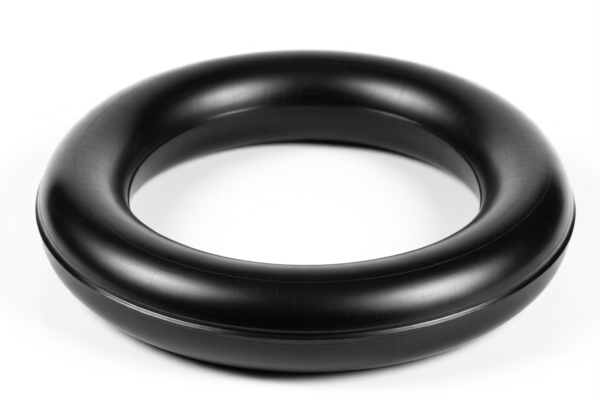
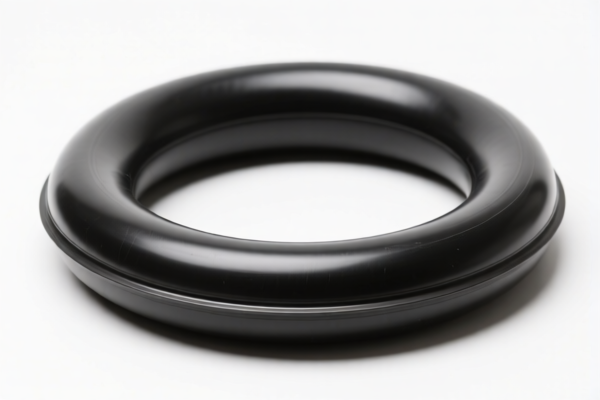
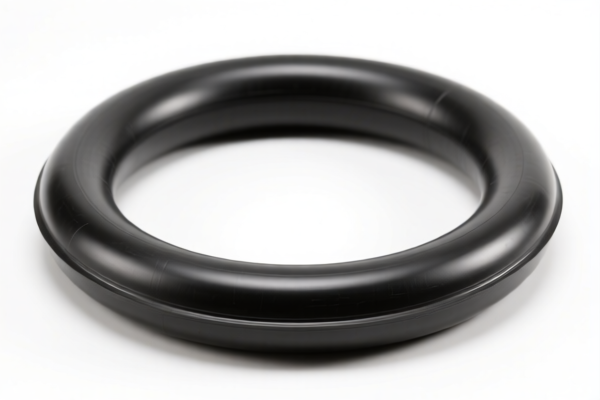
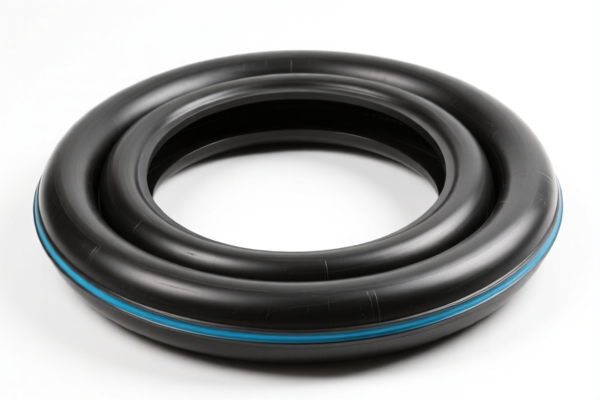
Travel Car Inner Tube
CN → US| HS Code | Tariff Rate | Origin | Destination | Doc |
|---|---|---|---|---|
| 8708706060 | 37.5% | CN | US | Official Doc |
| 4013100010 | 38.7% | CN | US | Official Doc |
| 8708998180 | 37.5% | CN | US | Official Doc |
Product Images
AI Analysis
🚗 Travel Car Inner Tube (Passenger Vehicle Inner Tubes)
🌐 HS Code Reference & Customs Clearance Guide | 2026 Latest Tariff Analysis for US Imports from China | Professional通关 Strategy
📌 1. Product Definition & Classification: Understanding "Travel Car Inner Tube"
The "Travel Car Inner Tube" refers to rubber inner tubes specifically designed for passenger vehicles (sedans, SUVs, etc.). In international trade classification, these are categorized based on their function as parts of road wheels or general rubber tire components.
⚠️ Key Classification Distinction:
- As a Wheel Part: Classified under Chapter 87 (Vehicles), specifically as parts of road wheels. This is often the most precise functional classification.
- As a Rubber Product: Classified under Chapter 40 (Rubber), specifically as pneumatic tires or inner tubes.
- Note: The choice of HS Code significantly impacts the total tax burden due to different base duties and additional tariffs.
📦 2. HS Code Classification Details (2026 Tariff Schedule)
Based on the provided data, there are three primary HS Code classifications for this product. Each has a different rationale and tax implication.
| HS Code | Classification Rationale | Product Description | Material | Total Tax Rate (China Origin) |
|---|---|---|---|---|
| 8708.70.60.60 | Parts of Road Wheels | Inner tube as a specific component of road wheels, not including the rim. Fits the "Other" category for wheel parts. | Rubber (Inferred) | 37.5% |
| 4013.10.00.10 | Rubber Inner Tubes | Exact match for "Inner Tubes" made of rubber, intended for passenger vehicles. | Rubber | 38.7% |
| 8708.99.81.80 | Other Auto Parts | Classified as a general automotive spare part (inner tube as part of the tire system). Fits the "Other" category for car parts. | Rubber (Inferred) | 37.5% |
🔍 Key Insight:
- 8708.70.60.60 and 8708.99.81.80 both result in a 37.5% total tax rate.
- 4013.10.00.10 results in a slightly higher 38.7% total tax rate.
- The primary difference lies in the Base Duty: Chapter 87 items have a 2.5% base duty, while Chapter 40 items have a 3.7% base duty. All additional tariffs (25% Section 301 + 10% Section 122) remain constant across these codes for China-origin goods.
💰 3. 2026 Latest Tariff Rate Breakdown (Including Additional Duties)
✅ Applicable Country: United States (US)
✅ Origin: China (CN)
✅ Effective Date: Current (as per data provided)
🎯 1. HS Code 8708.70.60.60 — Parts of Road Wheels
| Item | Detail |
|---|---|
| Base Duty | 2.5% (Ad Valorem) |
| Section 301 Duty | +25.0% (Additional Tariff) |
| Section 122 Duty | +10.0% (Additional Tariff) |
| Total Effective Rate | 37.5% |
| Tax Calculation | CIF Value × 37.5% |
| De Minimis Exemption | ❌ Not Eligible (High duty rate exceeds threshold considerations for small packages) |
| Legal Basis Path | HTSUS:8708.70.60.60 → Section 301: Footnote 9903.88.01 → Section 122: 19 USC 1623 |
📌 Explanation:
- The 2.5% base duty applies because inner tubes are classified as parts of vehicles (Chapter 87).
- The 25% Section 301 tariff applies to most Chinese goods under Chapter 87.
- The 10% Section 122 tariff applies to specific categories, including certain rubber products and auto parts from China.
- Total: 37.5%. This is a significant cost factor.
🎯 2. HS Code 4013.10.00.10 — Rubber Inner Tubes
| Item | Detail |
|---|---|
| Base Duty | 3.7% (Ad Valorem) |
| Section 301 Duty | +25.0% (Additional Tariff) |
| Section 122 Duty | +10.0% (Additional Tariff) |
| Total Effective Rate | 38.7% |
| Tax Calculation | CIF Value × 38.7% |
| De Minimis Exemption | ❌ Not Eligible |
| Legal Basis Path | HTSUS:4013.10.00.10 → Section 301: Footnote 9903.88.01 → Section 122: 19 USC 1623 |
📌 Note:
- The 3.7% base duty is higher than Chapter 87 because rubber tires/tubes are subject to a higher general duty rate.
- Despite being a more "exact" description, the higher base duty results in a 1.2% higher total tax compared to Chapter 87 classifications.
- This code is used if the product is declared purely as a rubber good rather than a vehicle part.
🎯 3. HS Code 8708.99.81.80 — Other Auto Parts
| Item | Detail |
|---|---|
| Base Duty | 2.5% (Ad Valorem) |
| Section 301 Duty | +25.0% (Additional Tariff) |
| Section 122 Duty | +10.0% (Additional Tariff) |
| Total Effective Rate | 37.5% |
| Tax Calculation | CIF Value × 37.5% |
| De Minimis Exemption | ❌ Not Eligible |
| Legal Basis Path | HTSUS:8708.99.81.80 → Section 301: Footnote 9903.88.01 → Section 122: 19 USC 1623 |
📌 Note:
- This is a "catch-all" category for auto parts not specifically listed elsewhere.
- It shares the same 37.5% total tax rate as8708.70.60.60.
- Use this if the specific "parts of road wheels" classification is disputed or if the inner tube is sold as a general spare part without clear wheel-specific labeling.
🛠️ 4. Customs Clearance Practical Advice (Avoiding Pitfalls)
✅ 1. Required Documentation Checklist
| Document | Required? | Notes |
|---|---|---|
| ✅ Product Specification | ✔️ | Must state material (Rubber), usage (Passenger Vehicle), and size. |
| ✅ Commercial Invoice | ✔️ | Clearly state "Inner Tube for Passenger Vehicle". |
| ✅ Packing List | ✔️ | Include weight, dimensions, and quantity. |
| ✅ Certificate of Origin | ✔️ | Essential for confirming China origin and applying additional tariffs. |
| ✅ Bill of Lading/Air Waybill | ✔️ | Standard shipping document. |
| ✅ Customs Entry Type | ✔️ | Ensure correct entry type (e.g., Type 86 for informal, Type 01 for formal). |
✅ 2. Declaration Strategy
🔥 Golden Rule: "Choose Chapter 87 for lower base duty, but be prepared to justify 'part of wheel' functionality."
| Scenario | Recommended HS Code | Reason |
|---|---|---|
| Standard Passenger Inner Tube | 8708.70.60.60 |
Lowest base duty (2.5%). Most accurate for "wheel part". |
| Sold as General Rubber Good | 4013.10.00.10 |
If declared as rubber material rather than vehicle part. Higher duty (3.7% base). |
| Unclear or Mixed Use | 8708.99.81.80 |
Safe fallback for auto parts. Same duty as 8708.70. |
⚠️ Critical Warning:
- Do not mix declarations. If you declare as8708.70.60.60, ensure the product is clearly identifiable as a part of a road wheel.
- Misclassification can lead to audits, penalties, and retroactive duty payments.
✅ 3. Special Circumstances
| Situation | Handling Advice |
|---|---|
| OEM Branded Tubes | Provide OEM authorization letter if claiming brand-specific exemptions (rare for this category). |
| Tubes with Valves | Still classified as inner tube. Valves are considered integral parts. |
| High-Volume Imports | Consider applying for a Section 301 Exclusion if available (check USTR website for current exclusions). |
| Third-Country Transshipment | Do not attempt to route through Vietnam/Mexico to avoid tariffs. US CBP strictly enforces origin rules. Penalties are severe. |
🌍 5. Global Market Comparison (2026)
| Country/Region | Recommended HS Code | Base Duty | Total Tax (China Origin) | Notes |
|---|---|---|---|---|
| 🇺🇸 USA | 8708.70.60.60 |
2.5% | 37.5% | High additional tariffs (35% combined). |
| 🇨🇳 China | 4013.10.00.10 |
3.7% | ~3.7% | No additional tariffs for domestic trade. |
| 🇪🇺 EU | 4013.10.00.10 |
3.5% | ~3.5% | No Section 301/122 equivalent. |
| 🇬🇧 UK | 4013.10.00.10 |
3.5% | ~3.5% | Post-Brexit tariffs. |
| 🇯🇵 Japan | 4013.10.00.10 |
3.0% | ~3.0% | Low base duty. |
📌 Conclusion:
- The USA imposes significantly higher tariffs (37.5%) on Chinese-made inner tubes compared to other major markets.
- This is primarily due to Section 301 (25%) and Section 122 (10%) additional duties.
- Importers must factor this 37.5% cost into their pricing strategy.
📌 6. Common Errors & Pitfalls (Lessons Learned)
❌ Error 1: Declaring as "Tire" instead of "Inner Tube"
👉 Consequence: Misclassification. Tires and tubes have different HS codes and potentially different duty rates. Leads to delays and penalties.
❌ Error 2: Claiming "De Minimis" Exemption (Section 321)
👉 Consequence: Invalid. Goods with duties exceeding certain thresholds or specifically excluded items (like those under Section 301) do not qualify for the $800 de minimis exemption. CBP will assess full duties.
❌ Error 3: Using "Other Auto Parts" (8708.99.81.80) without justification
👉 Consequence: If the product is clearly a wheel part, CBP may reclassify to 8708.70.60.60. While the duty is the same, it triggers an audit risk for inconsistent declaration practices.
❌ Error 4: Ignoring Section 122 Tariffs
👉 Consequence: Underestimating total landed cost. Section 122 (10%) is a relatively recent addition and many importers overlook it, leading to unexpected duty bills.
✅ Correct Practice:
"Inner Tube, Rubber, for Passenger Vehicle Tires, Model XYZ, Origin: China"
HS Code: 8708.70.60.60
Total Duty: 37.5%
🎯 7. Conclusion: Professional Declaration for Cost Efficiency
🎯 Key Takeaway:
🔹 "Chapter 87 is your friend for lower base duty, but add 35% in additional tariffs."
🔹 "Total cost is 37.5% for China-origin inner tubes entering the US."
🔹 "Never misclassify as 'tire' or claim de minimis exemption."
📌 Pro Tip:
If your inner tubes are originating from Vietnam, Mexico, or Thailand, you may avoid Section 301 and 122 tariffs, significantly reducing costs. Ensure proof of origin (e.g., Form A, Certificate of Origin) is accurate and verifiable.
📣 Immediate Action:
📞 Consult a Licensed Customs Broker to validate your HS Code.
📄 Prepare Complete Documentation (Invoice, Packing List, Origin Proof).
📊 Calculate Landed Cost including the 37.5% total duty to ensure profitability.
✨ Precision in Classification Saves Money!
💼 Every percentage point of duty matters in cross-border trade!
Customer Reviews
About HS Code Classification
The Harmonized System (HS) is an internationally standardized nomenclature developed by the World Customs Organization (WCO) to classify traded products. Over 200 countries use the HS system as the basis for customs tariffs, trade statistics, and import/export regulations.
Each HS code follows a hierarchical structure:
- Chapter (2 digits) — Broad category of goods (e.g., Chapter 84: Machinery and Mechanical Appliances)
- Heading (4 digits) — More specific grouping within the chapter
- Subheading (6 digits) — Internationally standardized breakdown, used by all WCO member countries
- National subdivisions (8-10 digits) — Country-specific extensions for further classification, such as US HTSUS 10-digit codes
Correct HS code classification is essential for smooth customs clearance, accurate duty payment, and compliance with trade regulations. Misclassification can lead to customs delays, overpayment of duties, or penalties.
When importing from CN to US, the applicable tariff rates may include:
- Most-Favored-Nation (MFN) rate — The standard duty rate applied to WTO members
- General rate — Applied to countries without trade agreements
- Trade remedy duties — Additional tariffs such as Section 301 (anti-dumping), Section 232 (national security), or countervailing duties
The information provided on this page is for reference purposes only. For official classification, please consult with your local customs authority or a licensed customs broker.