Travel Diary
CN → US| HS Code | Tariff Rate | Origin | Destination | Doc |
|---|---|---|---|---|
| 9017900160 | 0.0% | CN | US | Official Doc |
| 9017900105 | 0.0% | CN | US | Official Doc |
| 4817300000 | 35.0% | CN | US | Official Doc |
| 4817202000 | 35.0% | CN | US | Official Doc |
| 9609908000 | 17.5% | CN | US | Official Doc |
| 9609100000 | 0.0% | CN | US | Official Doc |
| 4820102010 | 35.0% | CN | US | Official Doc |
| 4820102060 | 35.0% | CN | US | Official Doc |
Product Images



AI Analysis
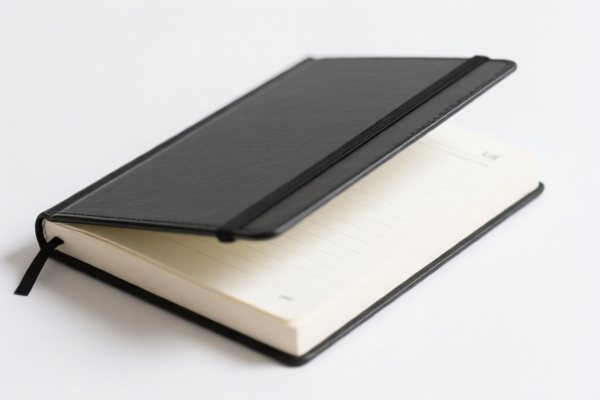
📔 Travel Diary / Hand Journal
(Classified as Notebooks, Diaries, and Address Books)
🌐 HS Code Reference & Customs Clearance Guide | 2026 Latest Tariff Analysis | Professional Compliance Strategy
📌 I. Product Definition & Classification: Is it Just a "Book"?
A Travel Diary or Travel Hand Journal is not merely a notebook; it is a specialized stationery item used for recording travel logs, sketches, and memories. In international trade, it falls under the category of paper stationery, specifically bound notebooks and diaries.
⚠️ Key Distinction:
- If it is a bound book with lined pages, pockets, or special layouts for writing → It is classified as a Diary/Notebook (HS 4820).
- If it contains significant electronic components (e.g., e-ink screen, charging port) → It may be classified as an electronic device, NOT 4820.
- Assumption for this guide: We are treating standard paper-based Travel Diaries/Journals.
📦 II. HS Code Classification Details (2026 Latest Tariff Authority Mapping)
Based on the product characteristics (bound paper items for recording travel logs), two primary HS codes are applicable depending on the specific dimensions or sub-category definitions in the target market (e.g., US HTS).
| HS Code | Product Description | Application Scenario | Key Feature |
|---|---|---|---|
4820.10.20.10 |
Diaries, notebooks, address books, etc., specifically categorized under detailed sub-classes (e.g., specific standard sizes or types) | Standard size travel diaries, fixed format journals | Specific size/type defined in sub-heading |
4820.10.20.60 |
Other diaries, notebooks, and address books (non-specific dimensions/types) | Custom-sized travel journals, artistic layouts, irregular formats | General category for non-standard items |
🔍 Critical Note:
- Both codes fall under 4820.10.20 ("Diaries, notebooks, address books...").
- The distinction between.10and.60often depends on whether the product matches a specific predefined size/template or is a generic/custom format.
- Do not confuse with books under Chapter 49 (printed books). Since it is a blank/linered notebook for user writing, it stays in Chapter 48.
💰 III. 2026 Latest Tariff Rate Breakdown (Detailed Tax Clauses)
✅ Applicable Country: United States (US)
✅ Country of Origin: China (CN)
✅ Total Tax Rate: 35.0%
✅ Effective Date: Subject to current enforcement of Section 301 and IEEPA provisions
🎯 1. 4820.10.20.10 & 4820.10.20.60 — Diaries, Notebooks, Travel Journals
| Tax Component | Rate | Legal Basis / Clause | Explanation |
|---|---|---|---|
| Basic Duty (MFN) | 0.0% | HTS Base Rate | Standard Most Favored Nation rate for paper stationery is zero. |
| Section 301 Surcharge | 25.0% | 19 CFR 1220 | Additional duty imposed on Chinese goods under Trade Act Section 301. |
| Section 1222 / IEEPA Surcharge | 10.0% | IEEPA 9903 / 1222 Clauses | Additional duty specifically targeting certain categories of Chinese consumer goods/stationery. |
| TOTAL TAX RATE | 35.0% | Sum of Above | High impact on landed cost. |
📌 Tax Calculation Example:
- CIF Value: $100.00
- Basic Duty: $0.00 (0%)
- Section 301 Duty: $25.00 (25%)
- 1222/IEEPA Duty: $10.00 (10%)
- Total Duty Payable: $35.00⚠️ De Minimis Warning:
- ❌ Not Eligible for Section 321 (De Minimis) Exemption for most commercial shipments or if the value exceeds thresholds.
- Note: While small parcels (<$800) may often enter duty-free, specific high-tariff items are sometimes scrutinized. However, for commercial B2B imports, the 35% is fully applicable. Always verify current CBP enforcement on Section 321 for paper goods.
🛠️ IV. Customs Clearance Practical Advice (Avoiding Pitfalls)
✅ 1. Required Documentation Checklist
| Document | Mandatory? | Purpose |
|---|---|---|
| Commercial Invoice | ✅ Yes | Must clearly state "Travel Diary" or "Notebook", not just "Paper Product". |
| Product Photographs | ✅ Yes | Show bound pages, cover, and any internal layout (lined, blank, pockets). |
| Material Composition | ✅ Yes | Specify paper type (e.g., 80gsm coated paper), cover material (leather/cardboard). |
| HS Code Justification | ✅ Recommended | Explain why it’s 4820 and not 4901 (printed book). Emphasize "blank/linered for writing". |
| Packing List | ✅ Yes | List quantity per box, total pieces. |
✅ 2. Classification Strategy
| Scenario | Recommended HS Code | Reasoning |
|---|---|---|
| Standard Rectangular Journal | 4820.10.20.10 |
Fits common size categories defined in sub-headings. |
| Irregular/Artistic Layout | 4820.10.20.60 |
Does not fit standard definitions; falls under "Other". |
| Electronic Travel Log | NOT 4820 | If it has screens/batteries, check Chapter 85 or 90. |
✅ 3. Common Mistakes to Avoid
❌ Mistake 1: Classifying as 4901.99 (Printed Books)
👉 Risk: 4901 may have different duty rates (often 0-5%), but if deemed a "notebook", it could be reclassified.
👉 Fix: Clearly state "Blank Pages / Lined Pages for Writing" in description.
❌ Mistake 2: Ignoring Section 1222/IEEPA 10%
👉 Risk: Under-declaring taxes by only paying the 25% Section 301 duty.
👉 Fix: Ensure your broker includes both the 25% and 10% surcharges in the entry summary.
❌ Mistake 3: Vague Description "Stationery"
👉 Risk: Customs may hold for inspection due to lack of specificity.
👉 Fix: Use precise terms: "Paper Travel Diary, Bound, Lined Pages, Leather Cover".
🌍 V. Global Market Comparison (2026)
| Market | HS Code | Base Duty | Additional Duties (CN) | Total Est. Rate | Notes |
|---|---|---|---|---|---|
| 🇺🇸 USA | 4820.10.20.xx |
0% | 25% (Sec 301) + 10% (IEEPA/1222) | 35% | Highest cost driver. |
| 🇪🇺 EU | 4820.10.00 |
6% | 0% (WTO Rate) | 6% | No Section 301 equivalent. |
| 🇨🇳 China | 4820.10.00 |
5-10% | 0% | 5-10% | Varies by paper type. |
| 🇬🇧 UK | 4820.10.00 |
5% | 0% | 5% | Post-Brexit trade terms. |
📌 Conclusion:
- The US market is significantly more expensive for Chinese-made travel diaries due to layered tariffs (35%).
- EU/UK/Other markets are more cost-effective for export, with duties ranging from 5-6%.
📌 VI. Expert Tips for Importers
- Pre-Ruling Application:
-
Consider applying for a Customs Ruling from CBP to confirm if your specific design fits
.10or.60. This provides legal certainty. -
Supply Chain Diversification:
-
For US-bound goods, consider sourcing from Vietnam, Mexico, or Thailand to avoid the 25% + 10% Chinese surcharges (subject to origin rules).
-
Labeling:
-
Ensure each diary has a Country of Origin Label ("Made in China") as per US marking requirements. Failure to mark can result in penalties even if duties are paid.
-
De Minimis Strategy (B2C):
- If shipping directly to consumers via e-commerce (e.g., Amazon FBA, Shopify), check if shipments under $800 qualify for Section 321 exemption. Note: CBP is tightening enforcement on high-tariff items, so consult a broker.
🎯 VII. Final Summary
🔹 HS Code:
4820.10.20.10or4820.10.20.60
🔹 Product: Travel Diary / Notebook
🔹 Total US Duty: 35% (0% Base + 25% Sec 301 + 10% IEEPA/1222)
🔹 Key Action: Verify product type (Bound Notebook vs. Book), include all surcharges in cost calculation, and consider origin diversification for US market.
📣 Immediate Next Steps:
📞 Contact a Licensed Customs Broker to file a Pre-Ruling.
📄 Prepare Product Specs: Highlight "Bound Paper", "Blank/Lined Pages".
🚀 Calculate Landed Cost: Factor in the 35% tariff for accurate pricing.
✨ Precision in Classification Saves Millions in Tariffs!
💼 Your Travel Diary is not just a book; it’s a strategic import asset.
Customer Reviews
About HS Code Classification
The Harmonized System (HS) is an internationally standardized nomenclature developed by the World Customs Organization (WCO) to classify traded products. Over 200 countries use the HS system as the basis for customs tariffs, trade statistics, and import/export regulations.
Each HS code follows a hierarchical structure:
- Chapter (2 digits) — Broad category of goods (e.g., Chapter 84: Machinery and Mechanical Appliances)
- Heading (4 digits) — More specific grouping within the chapter
- Subheading (6 digits) — Internationally standardized breakdown, used by all WCO member countries
- National subdivisions (8-10 digits) — Country-specific extensions for further classification, such as US HTSUS 10-digit codes
Correct HS code classification is essential for smooth customs clearance, accurate duty payment, and compliance with trade regulations. Misclassification can lead to customs delays, overpayment of duties, or penalties.
When importing from CN to US, the applicable tariff rates may include:
- Most-Favored-Nation (MFN) rate — The standard duty rate applied to WTO members
- General rate — Applied to countries without trade agreements
- Trade remedy duties — Additional tariffs such as Section 301 (anti-dumping), Section 232 (national security), or countervailing duties
The information provided on this page is for reference purposes only. For official classification, please consult with your local customs authority or a licensed customs broker.