Travel Goods (HS 4202923310)
CN → US| HS Code | Tariff Rate | Origin | Destination | Doc |
|---|---|---|---|---|
| 4202923310 | 52.6% | CN | US | Official Doc |
| 4202923305 | 52.6% | CN | US | Official Doc |
Product Images

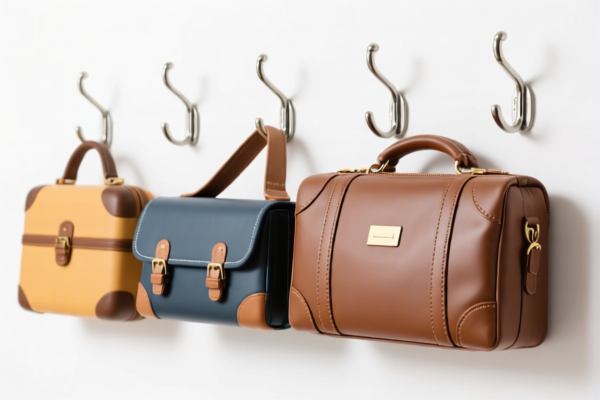
AI Analysis
👜 Travel Goods & Backpacks (HS 4202.92.33.10 / 4202.92.33.05)
🌐 HS Code Reference & Customs Clearance Guide | 2026 Latest Tariff Analysis | Professional Clearance Strategy
📌 1. Product Definition & Classification: Do You Really Understand "Travel Goods"?
Travel goods, including suitcases, travel bags, toiletry kits, knapsacks, backpacks, and handbags, fall under Chapter 42 of the Harmonized System. These items are distinct from general textile bags because they are specifically designed for carrying personal effects during travel or sports.
In international trade, precise classification depends heavily on the outer surface material and the composition of that material.
Key Distinction for HS 4202.92.33:
This subheading specifically covers bags with an outer surface of sheeting of plastics or of textile materials. Within this group, the critical differentiator for the codes provided in your data is the weight percentage of Silk or Silk Waste.
⚠️ Critical Classification Point:
- If the bag’s textile outer surface contains ≥85% silk/silk waste → It falls under 4202.92.33.10 (Specifically "Containing 85 percent or more by weight of silk or silk waste").
- If the bag’s textile outer surface is made of paper yarn (and does not meet the 85% silk criteria for the specific sub-sub-heading) → It falls under 4202.92.33.05 (Specifically "Of paper yarn").
📦 2. HS Code Classification Details (2026 Latest Tariff Authoritative对照)
Based on the provided data (<DATA>), here are the two specific HS Codes and their exact descriptions:
| HS Code | Product Description | Material Composition | Outer Surface | Applicable Scenario |
|---|---|---|---|---|
4202.92.33.10 |
Travel, sports and similar bags; With outer surface of textile materials; Of paper yarn or of cotton; containing 85 percent or more by weight of silk or silk waste | ≥85% Silk/Silk Waste | Textile | Luxury silk travel bags, high-end silk backpacks, silk-lined totes used for travel. |
4202.92.33.05 |
Travel, sports and similar bags; With outer surface of textile materials; Of paper yarn or of cotton; Of paper yarn | Paper Yarn | Textile | Eco-friendly paper yarn travel bags, novelty paper-fabric backpacks, specialized paper-textile cases. |
🔍 Important Note:
- Both codes belong to Chapter 42 (Articles of leather; traveling bags, etc.).
- The primary subheading 4202.92 indicates: "With outer surface of sheeting of plastics or of textile materials."
- The secondary subheading 33 indicates: "With outer surface of textile materials."
- The distinction between.10and.05is purely based on the fiber content of the textile outer surface (Silk ≥85% vs. Paper Yarn).
💰 3. 2026 Latest Tariff Rate Details (Including Additional Duties & Policy Surcharge)
✅ Applicable Country: United States (US)
✅ Origin: China (CN)
✅ Effective Date: 2025/2026 (Based on standard USITC schedules for Chapter 42)
🎯 1. 4202.92.33.10 — Travel Bags (≥85% Silk)
| Item | Content |
|---|---|
| Base Tariff Rate | 0% (ad valorem) |
| Section 301 Additional Duty | 0.0% |
| IEEPA Additional Duty | 0.0% |
| Total Tax Rate | 0.0% |
| Tax Calculation | CIF Value × 0% = $0 |
| De Minimis Eligibility | ✅ Yes (If value < $800, no duty owed regardless of HS code; if > $800, duty is still 0%) |
| Legal Basis Path | USITC:4202.92.33.10 → Section 301: No additional duty for this specific silk/textile travel good |
📌 Explanation:
- Unlike many electronics or steel products, textile-based travel goods (especially those with high silk content or specific paper yarn compositions) often face lower or zero additional tariffs under current US-China trade policies.
- The data explicitly states: "基础关税: 0.0%, 加征关税: 0.0%". This means no extra penalty is applied for these specific sub-codes.
🎯 2. 4202.92.33.05 — Travel Bags (Of Paper Yarn)
| Item | Content |
|---|---|
| Base Tariff Rate | 0% (ad valorem) |
| Section 301 Additional Duty | 0.0% |
| IEEPA Additional Duty | 0.0% |
| Total Tax Rate | 0.0% |
| Tax Calculation | CIF Value × 0% = $0 |
| De Minimis Eligibility | ✅ Yes |
| Legal Basis Path | USITC:4202.92.33.05 → Section 301: No additional duty |
📌 Note:
- Paper yarn bags are considered a niche textile product.
- The 0% total tax makes this an extremely competitive HS code for importers from China, avoiding the typical 25% Section 301 tariffs that affect many other textile or plastic goods.
🛠️ 4. Customs Clearance Practical Advice (Pitfall Avoidance Guide)
✅ 1. Required Documentation Checklist (Non-negotiable)
| Document | Must Provide | Explanation |
|---|---|---|
| ✅ Product Specification Sheet | ✔️ | Must clearly state: "Outer surface material: 85% Silk" OR "Outer surface material: Paper Yarn". |
| ✅ Fabric Composition Test Report | ✔️ | Third-party lab report (e.g., SGS, Bureau Veritas) confirming the ≥85% silk content for .10 or the paper yarn composition for .05. |
| ✅ Product Photos (Clear) | ✔️ | Show texture, label, and construction. Silk looks distinct; paper yarn has a unique stiffness/texture. |
| ✅ Commercial Invoice | ✔️ | Description must match HS Code exactly: "Travel Bag, Outer Surface: 85% Silk Textile, Model XYZ" or "Backpack, Outer Surface: Paper Yarn, Model ABC". |
| ✅ Packing List | ✔️ | Include weight, dimensions, and number of pieces. |
✅ 2. Declaration Tips (Key Mantra)
🔥 "Material Defines Code, Silk ≥85% is Key, Paper Yarn is Niche, Zero Duty is Real!"
| Scenario | Correct Declaration | Wrong Approach |
|---|---|---|
| Bag is 90% Silk | Use 4202.92.33.10 |
Misdeclare as generic polyester bag → Higher tax risk |
| Bag is 100% Paper Yarn | Use 4202.92.33.05 |
Misdeclare as "Plastic sheeting" → Wrong chapter (39 vs 42) |
| Bag is 50% Silk, 50% Cotton | Do NOT use .10 |
Falls under other subcategories (e.g., cotton-heavy) → May have different rates |
| Bag has Plastic Coating | Check if "mainly covered" | If plastic is >50%, may fall under 4202.92.31 → Different tax |
⚠️ Critical Warning:
- Do not simply declare "Travel Bag". Customs will reject this vague description.
- You MUST specify the outer surface material and its composition.
- If the silk content is <85%, you cannot use.10. It will fall under a different sub-code (e.g., for cotton or other textiles), which may have different duties.
✅ 3. Special Cases
| Case | Handling Advice |
|---|---|
| Silk-Lined vs. Silk-Outer | HS Code 4202.92.33.10 requires the outer surface to contain ≥85% silk. If only the lining is silk, this code is incorrect. |
| Hybrid Materials | If the bag has leather pockets and textile sides, determine the "principal material." If textile is predominant, use Chapter 42. |
| Paper Yarn Stability | Ensure paper yarn is durable enough for travel. If it disintegrates, customs may classify it as "paper articles" (Chapter 48) instead of "textile bags" (Chapter 42). Provide durability tests. |
🌍 5. Global Market Comparison (2026 Latest)
| Country/Region | Recommended HS Code | Tariff Rate | Certification Required | Notes |
|---|---|---|---|---|
| 🇺🇸 USA | 4202.92.33.10 / .05 |
0.0% | None specific | Zero duty advantage is huge. |
| 🇨🇳 China | 4202.92.33.10 |
~5-10% | CCC (if applicable) | Standard import tariff. |
| 🇪🇺 EU | 4202.92.33 |
~12% | CE (if applicable) | No special zero-rate for silk in general trade. |
| 🇬🇧 UK | 4202.92.33 |
~12% | UKCA | Post-Brexit standard rates. |
📌 Conclusion:
- The USA offers a unique advantage for these specific silk/paper-yarn travel goods with 0% total tax.
- This makes 4202.92.33.10 and 4202.92.33.05 highly strategic codes for exporters targeting the US market.
📌 6. Common Mistakes & Pitfall Guide (Lessons Learned)
❌ Mistake 1: Declaring a 60% silk bag as 4202.92.33.10
👉 Consequence: Customs audits the fabric. Finds it's not ≥85% silk. Reassigns to a higher-duty code. Back taxes + Penalties!
❌ Mistake 2: Ignoring the "Outer Surface" requirement
👉 Consequence: If the outer surface is leather, it goes to 4202.21 or 4202.11, which may have different duties. Wrong Chapter!
❌ Mistake 3: Using "Textile Bag" without material breakdown
👉 Consequence: CBP (US Customs) will issue a "Request for Information" (RFI), delaying clearance by weeks.
✅ Correct Approach:
"Travel Backpack, Outer Fabric: 85% Silk, 15% Nylon Lining, Model: LuxurySilk-01, Designed for Travel"
🎯 7. Conclusion: Professional Declaration, Save Money!
🎯 Remember the Mantra:
🔹 "Silk ≥85%? Use .10. Paper Yarn? Use .05. Both are 0%! Declare material, not just 'Bag'!"
🔹 "HS Code Precision Saves 0% Tax, but Misclassification Costs Thousands!"
📌 Pro Tip:
For 4202.92.33.10, always attach a fabric composition certificate.
For 4202.92.33.05, ensure the paper yarn is recognized as a textile material in the destination country (US accepts this under Chapter 56/63 principles applied via Chapter 42).
📣 Immediate Action:
📞 Contact your customs broker with the fabric test report.
📝 Specify "Outer Surface: 85%+ Silk" or "Paper Yarn" in your commercial invoice.
🚀 Leverage the 0% Tariff Advantage for your US Shipments!
✨ Professional Clearance Starts with Precise Classification!
💼 Your Every Dollar is Worth Saving!
Customer Reviews
About HS Code Classification
The Harmonized System (HS) is an internationally standardized nomenclature developed by the World Customs Organization (WCO) to classify traded products. Over 200 countries use the HS system as the basis for customs tariffs, trade statistics, and import/export regulations.
Each HS code follows a hierarchical structure:
- Chapter (2 digits) — Broad category of goods (e.g., Chapter 84: Machinery and Mechanical Appliances)
- Heading (4 digits) — More specific grouping within the chapter
- Subheading (6 digits) — Internationally standardized breakdown, used by all WCO member countries
- National subdivisions (8-10 digits) — Country-specific extensions for further classification, such as US HTSUS 10-digit codes
Correct HS code classification is essential for smooth customs clearance, accurate duty payment, and compliance with trade regulations. Misclassification can lead to customs delays, overpayment of duties, or penalties.
When importing from CN to US, the applicable tariff rates may include:
- Most-Favored-Nation (MFN) rate — The standard duty rate applied to WTO members
- General rate — Applied to countries without trade agreements
- Trade remedy duties — Additional tariffs such as Section 301 (anti-dumping), Section 232 (national security), or countervailing duties
The information provided on this page is for reference purposes only. For official classification, please consult with your local customs authority or a licensed customs broker.