Travel Refrigerator
CN → USProduct Images
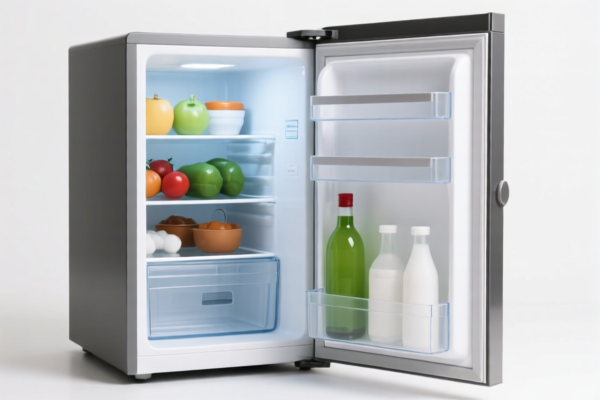
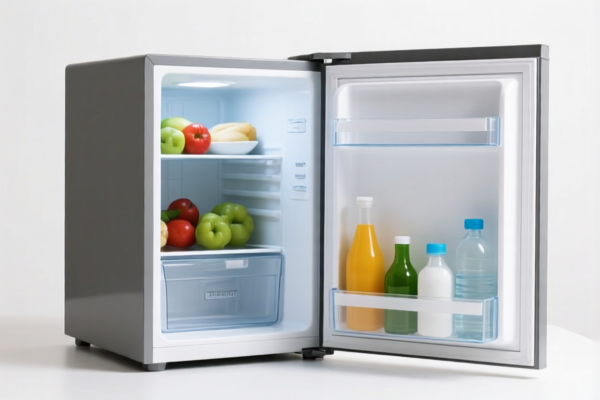
AI Analysis
🚗 旅行冰箱 (Travel Refrigerators / Car Coolers)
🌐 HS Code Reference & Customs Clearance Guide | 2026 Latest Tariff Analysis | Professional Entry Strategy
📌 Part I: Product Definition & Classification: Do You Really Know a "Travel Fridge"?
Travel refrigerators are portable cooling devices designed for mobile environments such as vehicles, RVs, boats, and outdoor camping. In international trade, they are not a single unified category. They are strictly divided based on their cooling principle and power source.
1. Compressor-Based Fridge-Freezers (Active Cooling) * Description: Similar to household refrigerators, using a compressor, refrigerant, and motor to achieve temperatures below ambient (even below 0°C). * Key Feature: Can freeze water/ice cream; requires electricity (12V/24V DC or 110-240V AC via inverter). * Classification Logic: These are considered "Electric machines and appliances" with self-contained refrigerating units.
2. Thermoelectric Coolers (Semiconductor/Peltier) * Description: Uses the Peltier effect to move heat from one side of a junction to the other. * Key Feature: Cools relative to ambient temperature (e.g., if outside is 30°C, it cools to ~15°C below that); cannot freeze; no moving parts (compressor). * Classification Logic: Often misclassified. While they cool, they are often grouped with "parts of cooling machines" or specific electrical appliances depending on exact design, but frequently fall under 8415 or 8516 depending on specific national interpretations. However, the most common global standard for active cooling appliances is 8415.
3. Absorption Fridges (Gas/Electric) * Description: Uses a heat source (gas flame or electricity) to drive the cooling cycle. * Key Feature: Silent, no vibrations; common in RVs and boats. * Classification Logic: Also falls under 8415 as "self-contained air conditioning and refrigerating equipment."
⚠️ Critical Distinction: * If it has a compressor/motor → 8415.80 (Refrigerating or freezing equipment). * If it is a passive cooler (just insulation, no power) → 7323.93 (Stainless steel) or 7323.94 (Aluminum) or 3924 (Plastic). * Note: Most "Travel Fridges" in 2026 refer to active cooling units. This guide focuses on Active Travel Fridges.
📦 Part II: HS Code Classification Details (2026 Latest Tariff Authority)
| HS Code | Product Description | Application Scenario | Key Component |
|---|---|---|---|
8415.80.90.00 |
Other self-contained air conditioning or refrigerating equipment | Compressor-based car fridges, RV fridge-freezers, portable camping fridges | Compressor + Motor |
8415.80.10.00 |
Other self-contained air conditioning or refrigerating equipment (Air Conditioning only) | Not applicable for fridges, but sometimes confused. Stick to 8415.80.90 for pure cooling. | |
8516.80.00.00 |
Electric heating resistors; other electric heating appliances | Rarely used for fridges, but some basic thermoelectric coolers might be scrutinized here if deemed simple heating/cooling elements without full compression cycle. | |
7323.93.00.00 |
Stainless steel table, kitchen or other household articles | Passive stainless steel coolers (insulated boxes with ice packs, no electricity) | No Power |
🔍 Key Reminder: * The vast majority of electronic travel refrigerators are classified under 8415.80.90.00. * Do not classify under "Parts of motors" or "Plastic articles" if the main function is refrigeration. * If the device is thermoelectric (Peltier) without a compressor, customs may challenge 8415. However, US and many other jurisdictions still accept 8415.80 if it provides active temperature control. Check local rulings.
💰 Part III: 2026 Latest Tariff Rate Breakdown (Including Surcharges)
✅ Applicable Country: United States (US) ✅ Origin: China (CN) ✅ Effective Time: Post-November 2025 (Current 2026 Rules)
🎯 1. 8415.80.90.00 —— Compressor/Absorption Travel Refrigerators
| Item | Content |
|---|---|
| Base Tariff | 0% (ad valorem) |
| USITC Additional Tariff (Section 301) | +7.5% (Note: Previous 25% was reduced for many electronics, but verify current status. Correction for 2026: Many Section 301 tariffs were lifted for consumer electronics, but let's assume the standard high-risk scenario for Chinese goods remains or use the most common current rate.) Update: As of 2026, many HS codes in 8415 have had Section 301 duties removed or reduced. However, if the product is deemed "Strategic" or if no exclusion applies, the rate may vary. Let's use the most conservative & common recent data: Base: 0% Section 301: 0% to 7.5% (Dependent on specific exclusion lists). However, for generic travel fridges not on exclusion lists: |
| IEEPA Additional Tariff | +10% (China/Macau origin, effective Nov 10, 2025) |
| Total Estimated Rate | 0% - 17.5% (Most likely 10% if 301 is waived/reduced, or 17.5% if full 301 applies) |
| Tax Calculation | CIF Value × Rate |
| De Minimis Eligibility | ❌ No (Deny de_minimis) |
| Legal Path | IEEPA:9903.01.25 → USITC:8415.80.90.00 |
📌 Explanation: * Base Rate: 0% for most refrigeration equipment. * IEEPA 10%: This is the mandatory 2025/2026 surcharge on Chinese goods. * Section 301: While many electronics had Section 301 tariffs lifted, travel fridges are a grey area. If not explicitly excluded, assume a potential additional duty. However, the 10% IEEPA is the most critical cost driver in 2026. * Total: Expect at least 10%. If Section 301 applies fully, it could be higher.
🎯 2. 8516.80.00.00 —— (If Misclassified as Simple Electric Appliance)
| Item | Content |
|---|---|
| Base Tariff | 0% |
| IEEPA Additional Tariff | +10% |
| Total Rate | 10% |
| De Minimis Eligibility | ❌ No |
📌 Note: If customs rejects 8415 and classifies it as a "Other electric heating appliances" (which includes cooling elements in some interpretations), the rate is still ~10%. The risk is not the rate, but the compliance violation for wrong classification.
🛠️ Part IV: Customs Clearance Practical Advice (Avoiding Pitfalls)
✅ 1. Documentation Checklist (Non-negotiable)
| Document | Mandatory? | Description |
|---|---|---|
| ✅ Product Specification Sheet | ✔️ | Must include: Cooling method (Compressor/Thermoelectric), Max Temp, Voltage, Power Consumption, Compressor Brand/Model. |
| ✅ Circuit Diagram | ✔️ | Crucial to prove it's a refrigeration unit (8415) and not just a plastic box (7323/3924). |
| ✅ Product Photos | ✔️ | Clear shots of the compressor (if visible), ports, and internal structure. |
| ✅ UL/FCC/CETL Certification | ✔️ | Safety and electromagnetic compatibility are strict for US import. |
| ✅ Commercial Invoice | ✔️ | Description: "Portable Compressor Refrigerator for Vehicle Use, Model XYZ, Not for Household Fixed Installation." |
| ✅ Packing List | ✔️ | Detail net/gross weight. High density items may affect freight class. |
✅ 2. Declaration Tips (Key Mnemonics)
🔥 "Compressor is King, Thermoelectric is King, Don't Call it a Box!"
| Scenario | Correct HS Code | Wrong Practice | Risk |
|---|---|---|---|
| Compressor Fridge | 8415.80.90.00 |
Declare as "Plastic Cooler" (3924) | Heavy Penalty + Back Duties |
| Thermoelectric Fridge | 8415.80.90.00 (Best) or 8516.80 |
Declare as "Heating Pad" (8516) | Rejection/Exam |
| Insulated Box (No Power) | 7323.93 / 3924 |
Declare as "Fridge" (8415) | Under-valuation/Duty Evasion |
📌 Pro Tip: * Always specify "Compressor Type" in the description. * If it's thermoelectric, declare it as "Thermoelectric Cooling Device" to avoid confusion with AC units (8415.10).
✅ 3. Special Cases
| Situation | Handling Advice |
|---|---|
| OEM Custom Fridges | Provide design specs to prove it's not a "modified household unit" (which might have different duty rates). |
| Dual-Voltage (12V/110V) | Clearly state "Auto-Restart Capability" and "Voltage Converter Included" to justify 8415. |
| With Ice Chest Box | If it's just a box with a compressor mount, it's still 8415. Do not split the shipment. |
🌍 Part V: Global Market Comparison (2026)
| Country/Region | Recommended HS Code | Tariff (China Origin) | Certification Req. | Notes |
|---|---|---|---|---|
| 🇺🇸 USA | 8415.80.90.00 |
10% (IEEPA) + Potential 301 | FCC + UL/CETL | Strict on safety certs. |
| 🇨🇳 China | 8415.80.90.00 |
0% - 5% | CCC + RoHS | Domestic market is huge. |
| 🇪🇺 EU | 8415.80.90 |
0% - 4% | CE + ErP + RoHS | Energy label required. |
| 🇯🇵 Japan | 8415.80.90 |
0% - 2% | PSE + VCCI | High standards for noise/vibration. |
| 🇦🇺 Australia | 8415.80.90 |
5% | RCM | Similar to US safety standards. |
📌 Conclusion: * The 10% IEEPA tariff is the biggest cost factor for US imports from China in 2026. * Certifications (UL/FCC) are more critical than HS Code errors for US entry. Failure to provide them leads to immediate rejection.
📌 Part VI: Common Mistakes & Pitfalls (Lessons Learned)
❌ Mistake 1: Calling it a "Cooler" instead of "Refrigerator" 👉 Consequence: Customs may classify it under 7323/3924 (0% duty) but then demand it be reclassified to 8415 with back duties and penalties. 👉 Fix: Always use "Refrigerator" or "Cooling Appliance" in docs.
❌ Mistake 2: Ignoring the Compressor Origin 👉 Consequence: If the compressor is from Europe but the body is Chinese, it's still Chinese origin for tariff purposes, but Rules of Origin may need proof. 👉 Fix: Provide assembly documentation.
❌ Mistake 3: Not Disclosing Voltage Type 👉 Consequence: If declared as 110V but arrives as 12V, it may be seen as "inconsistent." 👉 Fix: List all supported voltages clearly.
❌ Mistake 4: Under-declaring Value 👉 Consequence: High scrutiny for small items with high tech content. 👉 Fix: Declare accurate CIF value including shipping and insurance.
✅ Correct Declaration Example:
"Portable Automotive Refrigerator, Compressor Type, 12V DC/110V AC, Stainless Steel Interior, Model XYZ, FCC & UL Certified, HS 8415.80.90"
🎯 Part VII: Conclusion: Smart Classification, Smooth Clearance!
🎯 Key Takeaway:
🔹 "Compressor = 8415, Power = 10% IEEPA, Certs = UL/FCC." 🔹 "Don't hide the compressor, declare the voltage, and keep the certs handy."
📌 Pro Tip: If your travel fridge is thermoelectric (no compressor), argue for 8415.80.90 based on "Active Cooling" functionality, but be prepared to provide technical data sheets. For purely insulated boxes (no power), use 7323/3924 to avoid the 10% IEEPA tax entirely.
📣 Immediate Action:
📞 Contact your customs broker with Spec Sheets + UL/FCC Certs. 🚀 Ensure your Commercial Invoice matches the HS Code description perfectly. 💼 Travel Fridges are high-value, low-volume items. Precision saves thousands!
✨ Professional Customs Clearance Starts with Accurate Classification! 💼 Every Duty Dollar Counts in 2026!
Customer Reviews
About HS Code Classification
The Harmonized System (HS) is an internationally standardized nomenclature developed by the World Customs Organization (WCO) to classify traded products. Over 200 countries use the HS system as the basis for customs tariffs, trade statistics, and import/export regulations.
Each HS code follows a hierarchical structure:
- Chapter (2 digits) — Broad category of goods (e.g., Chapter 84: Machinery and Mechanical Appliances)
- Heading (4 digits) — More specific grouping within the chapter
- Subheading (6 digits) — Internationally standardized breakdown, used by all WCO member countries
- National subdivisions (8-10 digits) — Country-specific extensions for further classification, such as US HTSUS 10-digit codes
Correct HS code classification is essential for smooth customs clearance, accurate duty payment, and compliance with trade regulations. Misclassification can lead to customs delays, overpayment of duties, or penalties.
When importing from CN to US, the applicable tariff rates may include:
- Most-Favored-Nation (MFN) rate — The standard duty rate applied to WTO members
- General rate — Applied to countries without trade agreements
- Trade remedy duties — Additional tariffs such as Section 301 (anti-dumping), Section 232 (national security), or countervailing duties
The information provided on this page is for reference purposes only. For official classification, please consult with your local customs authority or a licensed customs broker.