Travel Storage Bags
CN → US| HS Code | Tariff Rate | Origin | Destination | Doc |
|---|---|---|---|---|
| 3923900080 | 38.0% | CN | US | Official Doc |
| 4202923120 | 52.6% | CN | US | Official Doc |
| 6307909891 | 24.5% | CN | US | Official Doc |
| 4202923131 | 52.6% | CN | US | Official Doc |
| 6307909875 | 17.0% | CN | US | Official Doc |
Product Images
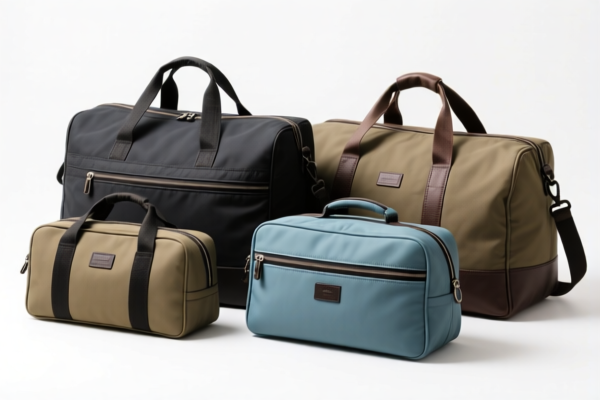
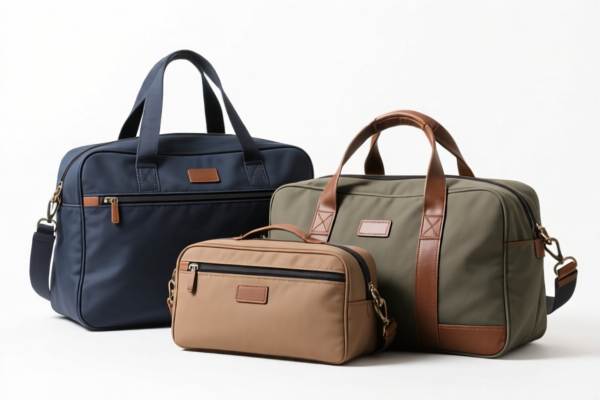
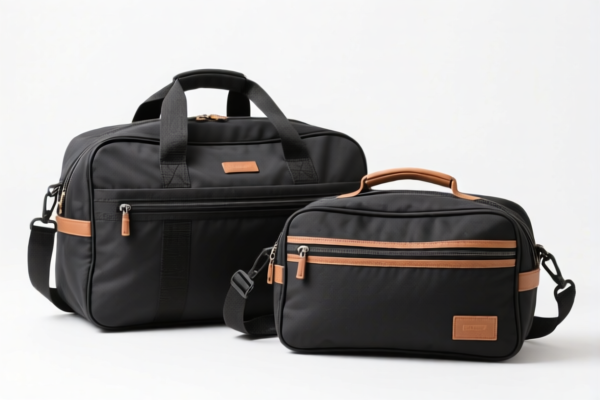
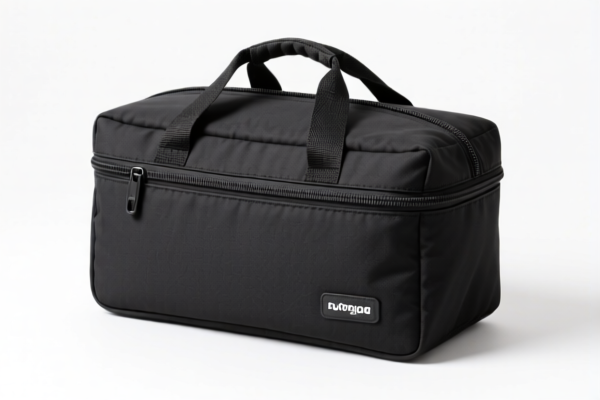
AI Analysis
🎒 Travel Storage Bags
🌐 HS Code Reference & Customs Clearance Guide | 2026 Updated Tariff Analysis | Pro-Level Import Strategy
📌 One Product, Five Possible HS Codes — Know Which One Applies to You!
📦 1. Product Definition & Classification: What Exactly Is a "Travel Storage Bag"?
A travel storage bag is a portable, reusable container used for organizing and carrying personal items during travel — commonly used for clothes, toiletries, electronics, or accessories. These bags are not primary luggage (like suitcases), but secondary packing solutions.
They come in various forms: - Zippered mesh pouches - Compression bags - Laundry bags - Toiletry organizers - Electronics organizers - Multi-compartment packing cubes
⚠️ Key Determining Factors: - Material: Plastic (e.g., PVC, polyethylene), synthetic fiber (e.g., polyester, nylon), or textile (e.g., cotton, canvas) - Structure: Soft, flexible, non-rigid, no wheels or handles - Function: Packing aid, not a standalone bag for carrying luggage
✅ Not classified as luggage (HS 4202.92.31), but may fall under packaging, textile goods, or other manufactured products depending on material and design.
📌 2. HS Code Breakdown (2026 Official Tariff Mapping)
| HS Code | Product Description | Material Inference | Tax Rate | Key Classification Logic |
|---|---|---|---|---|
3923.90.00.80 |
Other packaging articles, containers, or packing materials made of plastic or synthetic materials | Plastic or synthetic fiber | 38.0% | Classified as packaging/containers under "other" category |
4202.92.31.20 |
Other travel or similar bags, made of textile or plastic film | Textile or plastic film | 52.6% | Falls under travel bags category; high tariff due to material and use |
6307.90.98.91 |
Other made-up articles, not elsewhere specified, made of textile | Textile (e.g., polyester, nylon) | 24.5% | Treated as finished textile product; lower base rate |
4202.92.31.31 |
Travel or similar bags, outer surface made of textile | Textile outer layer | 52.6% | Same as 4202.92.31.20 — same tariff |
6307.90.98.75 |
Other made-up articles, not elsewhere specified, made of textile | Textile | 17.0% | "Other" textile product; lowest rate among all options |
🔍 Critical Insight:
- Material is the deciding factor — plastic = higher risk of 3923.90.00.80
- Textile-based bags have multiple options:4202.92.31(high tariff) vs6307.90.98(lower tariff)
- No single "correct" code — depends on material, structure, and intent
💰 3. 2026 Tariff Breakdown (USA Market, China-Origin)
✅ Target Country: United States (US)
✅ Origin: China (CN)
✅ Effective Date: November 10, 2025 (including all future imports)
🎯 1. 3923.90.00.80 — Packaging/Containers (Plastic/Synthetic)
| Item | Detail |
|---|---|
| Base Duty | 3.0% (ad valorem) |
| Section 301 (USITC) | +25.0% (from US Trade Act 301) |
| Section 122 (IEEPA) | +10.0% (International Emergency Economic Powers Act) |
| Total Tariff | 38.0% |
| Tax Calculation | CIF Value × 38.0% |
| De Minimis Exemption? | ❌ No (denied under IEEPA) |
| Legal Pathway | IEEPA:9903.01.25 → USITC:3923.90.00.80 → FOOTNOTE:9903.88.01 |
📌 Why This Applies:
- If your bag is made of plastic or synthetic fiber, and used primarily as a container/packing aid, it falls under packaging. - Even if it looks like a "bag", if it’s not designed as a travel bag, it may be treated as packaging.
🎯 2. 4202.92.31.20 — Travel Bags (Textile or Plastic Film)
| Item | Detail |
|---|---|
| Base Duty | 17.6% |
| Section 301 (USITC) | +25.0% |
| Section 122 (IEEPA) | +10.0% |
| Total Tariff | 52.6% |
| Tax Calculation | CIF × 52.6% |
| De Minimis Exemption? | ❌ No |
| Legal Pathway | IEEPA:9903.01.24 → USITC:4202.92.31.20 → FOOTNOTE:9903.88.01 |
📌 Why This Applies:
- If the bag is designed as a travel bag, even if soft and flexible, and made of textile or plastic film, it’s classified under travel bags. - Highest tariff among all codes — danger zone for cost control.
🎯 3. 6307.90.98.91 — Other Made-Up Textile Articles (Non-Specific)
| Item | Detail |
|---|---|
| Base Duty | 7.0% |
| Section 301 (USITC) | +7.5% |
| Section 122 (IEEPA) | +10.0% |
| Total Tariff | 24.5% |
| Tax Calculation | CIF × 24.5% |
| De Minimis Exemption? | ❌ No |
| Legal Pathway | IEEPA:9903.01.25 → USITC:6307.90.98.91 → FOOTNOTE:9903.88.01 |
📌 Why This Applies:
- If the bag is textile-based, but not clearly a travel bag, and not a container, it may be treated as a general made-up textile article. - Lower base duty than travel bag codes — ideal for cost-sensitive exporters.
🎯 4. 4202.92.31.31 — Travel Bags (Outer Surface: Textile)
| Item | Detail |
|---|---|
| Base Duty | 17.6% |
| Section 301 (USITC) | +25.0% |
| Section 122 (IEEPA) | +10.0% |
| Total Tariff | 52.6% |
| Tax Calculation | CIF × 52.6% |
| De Minimis Exemption? | ❌ No |
| Legal Pathway | IEEPA:9903.01.24 → USITC:4202.92.31.31 → FOOTNOTE:9903.88.01 |
📌 Why This Applies:
- Identical to4202.92.31.20— same rate, same logic. - Only difference: outer surface is textile, but still falls under travel bag category.
🎯 5. 6307.90.98.75 — Other Made-Up Textile Articles (Lowest Tariff)
| Item | Detail |
|---|---|
| Base Duty | 7.0% |
| Section 301 (USITC) | +0.0% |
| Section 122 (IEEPA) | +10.0% |
| Total Tariff | 17.0% |
| Tax Calculation | CIF × 17.0% |
| De Minimis Exemption? | ❌ No |
| Legal Pathway | IEEPA:9903.01.25 → USITC:6307.90.98.75 → FOOTNOTE:9903.88.01 |
📌 Why This Applies:
- Lowest total tariff among all options. - Applies when the bag is textile-based, but not clearly a travel bag, and no functional design for travel. - Often used for "packing cubes" or "organizers" with no branding or travel-specific features.✅ Best Option for Cost Optimization — if you can avoid "travel bag" classification.
🛠️ 4. Customs Clearance Best Practices (Pro Tips)
✅ 1. Essential Documentation (Must-Have)
| Document | Required? | Why It Matters |
|---|---|---|
| ✅ Product Specification Sheet | ✔️ | Shows material, dimensions, function |
| ✅ Product Photos (Front, Back, Interior) | ✔️ | Proves material (textile vs plastic) |
| ✅ Commercial Invoice | ✔️ | Must state exact product name, e.g., “Travel Packing Cube, Polyester, Zippered” |
| ✅ Certificate of Origin (CO) | ✔️ | Required for tariff eligibility |
| ✅ Material Test Report | ✔️ | Confirms fiber type (e.g., polyester vs nylon) |
| ✅ Packaging & Labeling Details | ✔️ | Avoids misclassification as "luggage" or "container" |
✅ 2.申报技巧(申报口诀)
🔥 "Material First, Use Second, Name Accurate, Tax Drops Fast!"
| Scenario | Correct HS Code | Wrong Code | Result |
|---|---|---|---|
| Plastic mesh bag for clothes | 3923.90.00.80 |
4202.92.31.20 |
Tax: 38% vs 52.6% → Save 14.6% |
| Textile packing cube with no travel branding | 6307.90.98.75 |
4202.92.31.31 |
Tax: 17% vs 52.6% → Save 35.6% |
| Zippered toiletry bag with travel logo | 4202.92.31.20 |
6307.90.98.91 |
Tax: 52.6% vs 24.5% → Avoid! |
| Multi-compartment bag with wheels | ❌ Not applicable | ❌ Not applicable | May be classified as luggage → HS 4202.92.31 — higher tariff |
✅ 3. Special Cases & Risk Mitigation
| Situation | Recommended Action |
|---|---|
| Mixed material (e.g., plastic lining + textile outer) | Declare as textile if outer surface dominates → use 6307.90.98.75 or 6307.90.98.91 |
| No clear function (e.g., "packing organizer") | Use 6307.90.98.75 — lowest tariff |
| Branded as "travel bag" | Risk of 4202.92.31.x → 52.6% — avoid branding if possible |
| Exporting to EU, Japan, Australia | Tariffs vary — check local rules (e.g., EU: 0% if CE compliant) |
🌍 5. Global Market Comparison (2026)
| Country | Recommended HS Code | Tariff (China Origin) | Certification Required | Notes |
|---|---|---|---|---|
| 🇺🇸 USA | 6307.90.98.75 |
17.0% | None (but must prove origin) | Avoid 52.6% codes |
| 🇨🇳 China | 6307.90.98.75 |
5% | CCC (if applicable) | No extra tariffs |
| 🇪🇺 EU | 6307.90.98.75 |
0% (if CE) | CE, RoHS | No 301/IEEPA tariffs |
| 🇦🇺 Australia | 6307.90.98.75 |
5% | RCM | No additional duties |
| 🇯🇵 Japan | 6307.90.98.75 |
0% | PSE | No extra taxes |
📌 Key Takeaway:
- USA is the only market with high附加 tariffs (IEEPA + 301). - Other markets are much friendlier — consider shifting logistics.
📌 6. Common Mistakes & How to Avoid Them (Real Cases)
❌ Mistake 1: Calling a plastic packing cube a "travel bag"
👉 Result: Tax jumps from 17% to 52.6% → $10,000+ extra on a $20k shipment
❌ Mistake 2: Using 4202.92.31.20 for a textile bag with no travel branding
👉 Result: Overpaid tax — use 6307.90.98.75 instead
❌ Mistake 3: Not including material proof in invoice
👉 Result: Customs delays, reclassification, or seizure
✅ Correct Way to Describe Product:
“Packing Organizer, 3-Compartment, Polyester Fabric, Zippered, Non-Travel Branded, for Personal Use”
🎯 7. Final Verdict: Choose Your HS Code Wisely!
🔥 Top 3 Strategies for 2026: 1. Use
6307.90.98.75if your bag is textile-based and not branded as a travel bag → 17% tax 2. Use3923.90.00.80if plastic/synthetic → 38% tax (better than 52.6%) 3. Avoid4202.92.31.xcodes at all costs — 52.6% is a tax bomb📌 Golden Rule:
Material > Branding > Function
- If it’s textile, and not a travel bag, use6307.90.98.75
- If it’s plastic, use3923.90.00.80
- Never use4202.92.31.xunless it’s clearly a travel bag
📣 Call to Action: Optimize Your Import Today!
📞 Contact a licensed customs broker + provide product photos + request HS Code pre-ruling
🚀 Save thousands per shipment — avoid 52.6% by choosing the right code
✨ Professional Clearance Starts with Accurate Classification!
💼 Your profit margin depends on the right HS Code. Don’t gamble.
🎯 Pro Tip:
If your product is made in Vietnam, Mexico, or Thailand, you may qualify for IEEPA exemption → 0% tariff on 6307.90.98.75!
✅ Shift production or use a third-country manufacturer to reduce costs.
✅ Your Travel Storage Bag Can Be Low-Tax — If You Know the Rules!
📦 Smart Classification = Smart Savings.
Customer Reviews
About HS Code Classification
The Harmonized System (HS) is an internationally standardized nomenclature developed by the World Customs Organization (WCO) to classify traded products. Over 200 countries use the HS system as the basis for customs tariffs, trade statistics, and import/export regulations.
Each HS code follows a hierarchical structure:
- Chapter (2 digits) — Broad category of goods (e.g., Chapter 84: Machinery and Mechanical Appliances)
- Heading (4 digits) — More specific grouping within the chapter
- Subheading (6 digits) — Internationally standardized breakdown, used by all WCO member countries
- National subdivisions (8-10 digits) — Country-specific extensions for further classification, such as US HTSUS 10-digit codes
Correct HS code classification is essential for smooth customs clearance, accurate duty payment, and compliance with trade regulations. Misclassification can lead to customs delays, overpayment of duties, or penalties.
When importing from CN to US, the applicable tariff rates may include:
- Most-Favored-Nation (MFN) rate — The standard duty rate applied to WTO members
- General rate — Applied to countries without trade agreements
- Trade remedy duties — Additional tariffs such as Section 301 (anti-dumping), Section 232 (national security), or countervailing duties
The information provided on this page is for reference purposes only. For official classification, please consult with your local customs authority or a licensed customs broker.