Travel Storage Set Combination
CN → US| HS Code | Tariff Rate | Origin | Destination | Doc |
|---|---|---|---|---|
| 4202923120 | 52.6% | CN | US | Official Doc |
| 3923900080 | 38.0% | CN | US | Official Doc |
| 6307909891 | 24.5% | CN | US | Official Doc |
| 4202923131 | 52.6% | CN | US | Official Doc |
| 6307909875 | 24.5% | CN | US | Official Doc |
Product Images
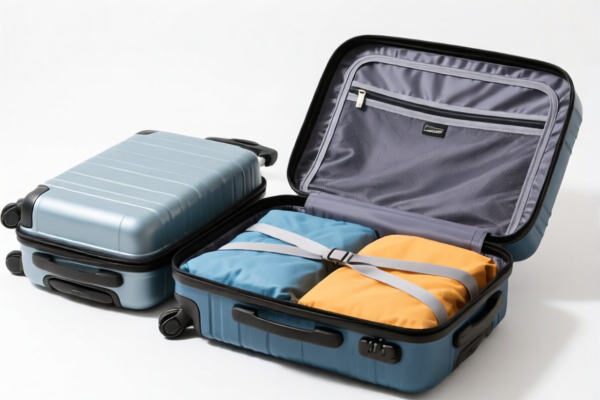
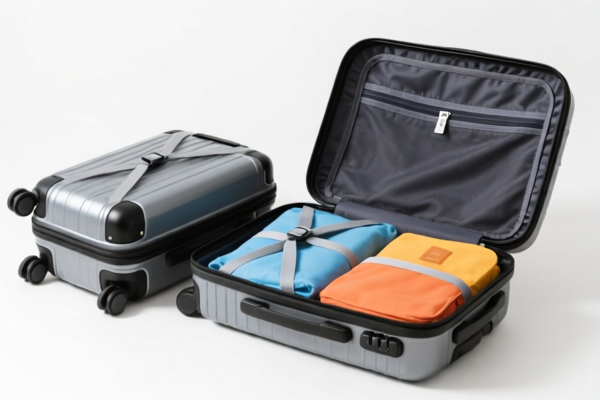
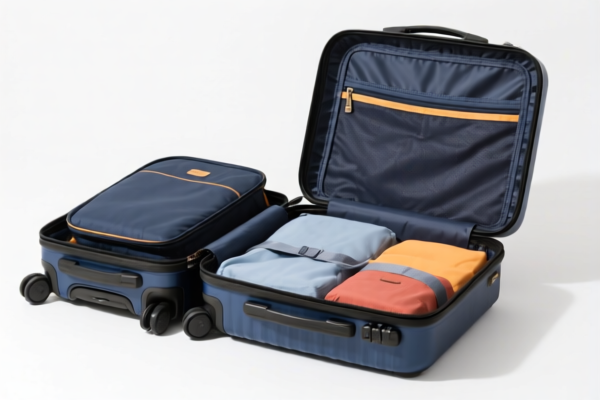
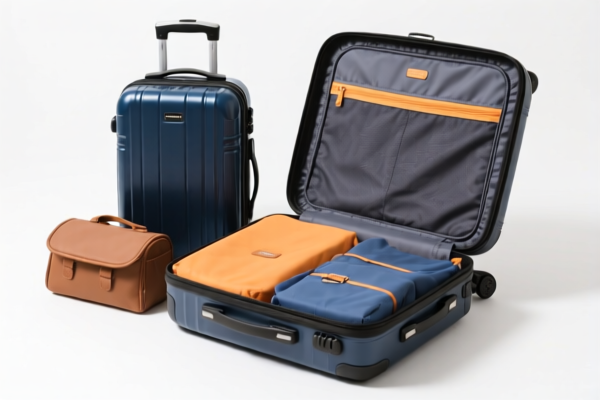
AI Analysis
🎒 Travel Storage Set Combination
🌐 HS Code Reference & Customs Clearance Guide | 2026 Latest Tariff Analysis | Strategic Clearance Strategy
📌 I. Product Definition & Classification: Do You Really Understand "Travel Storage Sets"?
A Travel Storage Set Combination typically refers to a set of bags, pouches, or organizers designed for packing luggage. These items are versatile and can be classified differently based on their primary function, material composition, and structural characteristics.
In international trade, they are generally categorized into two main groups: 1. Travel Bags (Luggage Articles): If the primary purpose is carrying items for travel (e.g., toiletry bags, shoe bags, packing cubes that resemble small bags), they may fall under Chapter 42. 2. Textile/Plastic Goods: If the items are considered general-purpose organizers, packaging, or accessories without the specific structural characteristics of luggage, they may fall under Chapter 63 (Textiles) or Chapter 39 (Plastics).
⚠️ Key Distinction Point:
- If the item is designed to be carried by hand/shoulder and has the shape/structure of a bag → Chapter 42 (Travel Bags)
- If it is a simple organizer, pouch, or packing cube made of textile/plastic without bag-like handles/straps → Chapter 63 (Textiles) or Chapter 39 (Plastics)
📦 II. HS Code Classification Details (2026 Latest Tariff Authority Comparison)
Based on the provided data, here are the five possible HS Codes for "Travel Storage Set Combination," along with their logic and tax implications:
| HS Code | Product Description | Applicable Scenario | Material Inference | Total Tax Rate |
|---|---|---|---|---|
4202.92.31.20 |
Travel Storage Bag (Textile/Plastic) | Classified as travel/similar luggage article | Textile material or Plastic film | 52.6% |
3923.90.00.80 |
Travel Storage Container (Plastic) | Classified as packaging/containers | Plastic or Synthetic fiber | 38.0% |
6307.90.98.91 |
Travel Storage Set (Finished Consumer Good) | Classified as other made-up articles | Textile material | 24.5% |
4202.92.31.31 |
Travel Storage Bag (Textile Surface) | Matches travel bag use/form; outer surface is textile | Textile material | 52.6% |
6307.90.98.75 |
Travel Storage Set (Other Made-up Articles) | Classified as other finished consumer goods | Textile material | 24.5% |
🔍 Critical Reminder:
- High Tax Category (52.6%): HS Codes4202.92.31.20and4202.92.31.31classify the item as a travel bag. This incurs the highest tax burden due to the "bag" classification.
- Low Tax Category (24.5%): HS Codes6307.90.98.91and6307.90.98.75classify the item as a general textile accessory/organizer. This is the most cost-effective classification if the item lacks bag-like features (handles, straps).
- Middle Tax Category (38.0%): HS Code3923.90.00.80applies if the item is made primarily of plastic and classified as a container/packaging item.
💰 III. 2026 Latest Tariff Rate Details (Including Surcharges & Policy Add-ons)
✅ Applicable Country: United States (US)
✅ Country of Origin: China (CN)
✅ Effective Date: From November 10, 2025 (and subsequent imports)
🎯 1. 4202.92.31.20 & 4202.92.31.31 —— Travel Bags (Textile/Plastic)
| Item | Content |
|---|---|
| Base Tariff | 17.6% (ad valorem) |
| Section 301 Surcharge | +25.0% |
| Section 122 Tariff | +10.0% |
| Total Tax Rate | 52.6% |
| Tax Calculation | CIF Value × 52.6% |
| De Minimis Exemption | ❌ Not Eligible (deny_de_minimis) |
| Legal Basis Path | USITC:4202.92.31.20 → FOOTNOTE:301 → IEEPA:Section 122 |
📌 Explanation:
- The 17.6% base tariff applies to travel goods of textile materials.
- The 25% is the standard Section 301 tariff on Chinese goods.
- The 10% is the additional Section 122 tariff (often related to national security or specific trade remedies).
- Total 52.6% is extremely high. This classification is risky for cost-sensitive supply chains.
🎯 2. 3923.90.00.80 —— Plastic Packaging/Containers
| Item | Content |
|---|---|
| Base Tariff | 3.0% |
| Section 301 Surcharge | +25.0% |
| Section 122 Tariff | +10.0% |
| Total Tax Rate | 38.0% |
| Tax Calculation | CIF Value × 38.0% |
| De Minimis Exemption | ❌ Not Eligible |
| Legal Basis Path | USITC:3923.90.00.80 → FOOTNOTE:301 → IEEPA:Section 122 |
📌 Note:
- If the travel set is made of plastic (e.g., PVC, TPU, PE), this code may apply.
- The base tariff is much lower (3.0%), but the surcharges still push it to 38.0%.
- Suitable for items classified as "containers" or "packaging" rather than "bags."
🎯 3. 6307.90.98.91 & 6307.90.98.75 —— Textile Organizers/Accessories (Lowest Tax)
| Item | Content |
|---|---|
| Base Tariff | 7.0% |
| Section 301 Surcharge | +7.5% |
| Section 122 Tariff | +10.0% |
| Total Tax Rate | 24.5% |
| Tax Calculation | CIF Value × 24.5% |
| De Minimis Exemption | ❌ Not Eligible |
| Legal Basis Path | USITC:6307.90.98.91 → FOOTNOTE:301 → IEEPA:Section 122 |
📌 Advantage:
- This is the most cost-effective classification if the product is a textile organizer (e.g., packing cubes, shoe bags without handles).
- The Section 301 surcharge is reduced to 7.5% (likely due to a specific sub-category exemption or different footnote application for certain textile goods).
- Total 24.5% is significantly lower than the "Travel Bag" classification (52.6%).
🛠️ IV. Customs Clearance Practical Advice (Real-World Pitfall Guide)
✅ 1. Preparation Checklist (All Documents Required)
| Document | Mandatory | Explanation |
|---|---|---|
| ✅ Product Specification Sheet | ✔️ | Must clearly state: Material (Textile/Plastic), Dimensions, Quantity per Set |
| ✅ Product Photos | ✔️ | Must show: Does it have handles/straps? (Key for Chapter 42 vs 63 distinction) |
| ✅ Material Composition | ✔️ | e.g., 100% Polyester, 100% Nylon, or PVC |
| ✅ Commercial Invoice | ✔️ | Clearly describe as "Travel Organizers" or "Packing Cubes" if aiming for Chapter 63 |
| ✅ Packing List | ✔️ | Show how items are grouped in the set |
| ✅ Origin Certificate (CO) | ✔️ | If eligible for exemptions or to verify CN origin |
✅ 2. Declaration Strategy (Key Rules)
🔥 “No Handles = Not a Bag; Textile Organizer = Lower Tax!”
| Scenario | Correct HS Code | Wrong Practice | Consequence |
|---|---|---|---|
| Packing Cubes/Shoe Bags (No Handles) | 6307.90.98.91 or 6307.90.98.75 |
Declare as "Travel Bag" | Tax jumps from 24.5% to 52.6% |
| Toiletry Bag with Zipper & Handle | 4202.92.31.20 |
Declare as "Textile Organizer" | Risk of misclassification penalty |
| Plastic Ziplock Travel Bags | 3923.90.00.80 |
Declare as "Textile Bag" | Tax 38.0% vs potential higher tax if misdeclared |
| Mixed Material Set | Analyze Primary Component | Arbitrary choice | Customs may reclassify & penalize |
✅ 3. Special Considerations
| Situation | Handling Advice |
|---|---|
| Set with Mixed Materials | If the set contains both textile and plastic items, declare separately if possible. If packed together, declare as a "Set" based on the essential character (usually the dominant component). |
| "Travel Bag" vs. "Organizer" | Crucial: If the item has no handles, straps, or buckles for carrying, argue it is an "Organizer" (Chapter 63). If it has handles or a shoulder strap, it is likely a "Travel Bag" (Chapter 42). |
| Section 122 Impact | All five codes incur a 10% Section 122 tariff. This cannot be avoided unless the product qualifies for a specific exemption (rare for consumer goods from China). |
🌍 V. Global Market Comparison (2026 Latest)
| Country/Region | Recommended HS Code | Tariff Rate | Certification | Remarks |
|---|---|---|---|---|
| 🇺🇸 USA | 6307.90.98.91 (Textile Organizer) |
24.5% | No special certs | Lowest tax if no handles |
| 🇺🇸 USA | 4202.92.31.20 (Travel Bag) |
52.6% | No special certs | Highest tax |
| 🇨🇳 China | 6307.90.98.91 |
7.0% + Duties | CCC (if applicable) | Lower base tariff |
| 🇪🇺 EU | 6307.90.98 |
Varies (0-12%) | CE (if applicable) | No Section 301/122 |
| 🇬🇧 UK | 6307.90.98 |
Varies | UKCA | Post-Brexit rules apply |
📌 Conclusion:
- USA is the most critical market due to Section 301 and Section 122 surcharges.
- Strategic Tip: If your product is a packing cube or shoe bag (no handles), strongly advocate for HS Code6307.90.98.91to save 28.1% in taxes compared to the travel bag classification.
📌 VI. Common Mistakes & Pitfalls (Lessons Learned)
❌ Mistake 1: Declaring packing cubes as "Travel Bags"
👉 Consequence: Paying 52.6% instead of 24.5% → 28.1% unnecessary cost!
👉 Fix: Emphasize "Organizer," "Cube," or "Pouch" in description. Highlight lack of handles.
❌ Mistake 2: Declaring plastic toiletry bags as "Textile Bags"
👉 Consequence: Misclassification penalty + potential higher tax if textile rates are higher.
👉 Fix: Verify material. If 100% plastic, use 3923.90.00.80 (38.0%).
❌ Mistake 3: Ignoring Section 122 Tariff
👉 Consequence: Underestimating landed cost. All five codes include 10% Section 122.
👉 Fix: Factor in the 10% surcharge in all profit margin calculations.
❌ Mistake 4: Inconsistent Material Description
👉 Consequence: Customs holds shipment for inspection.
👉 Fix: Ensure invoice, packing list, and product specs match exactly.
🎯 VII. Conclusion: Smart Classification Saves Money!
🎯 Remember the Golden Rule:
🔹 "No Handles? Think 'Organizer' (24.5%). Has Handles? Think 'Bag' (52.6%)."
🔹 "Plastic? Think 'Container' (38.0%)."
🔹 "Always budget for Section 122 (10%)."
📌 Pro Tip:
If your travel storage set is made of textile and has no carrying handles, submit a Pre-Ruling Request to US Customs to confirm classification under 6307.90.98.91 or 6307.90.98.75. This provides legal certainty and avoids post-entry audits.
📣 Immediate Action:
📞 Consult a Customs Broker + Provide Product Photos + Highlight "No Handles" in Declaration
🚀 Optimize your HS Code, Reduce your Tariff, Maximize your Profit!
✨ Professional Clearance Starts with Accurate Classification!
💼 Every Percent of Tariff Saved is Pure Profit!
Customer Reviews
About HS Code Classification
The Harmonized System (HS) is an internationally standardized nomenclature developed by the World Customs Organization (WCO) to classify traded products. Over 200 countries use the HS system as the basis for customs tariffs, trade statistics, and import/export regulations.
Each HS code follows a hierarchical structure:
- Chapter (2 digits) — Broad category of goods (e.g., Chapter 84: Machinery and Mechanical Appliances)
- Heading (4 digits) — More specific grouping within the chapter
- Subheading (6 digits) — Internationally standardized breakdown, used by all WCO member countries
- National subdivisions (8-10 digits) — Country-specific extensions for further classification, such as US HTSUS 10-digit codes
Correct HS code classification is essential for smooth customs clearance, accurate duty payment, and compliance with trade regulations. Misclassification can lead to customs delays, overpayment of duties, or penalties.
When importing from CN to US, the applicable tariff rates may include:
- Most-Favored-Nation (MFN) rate — The standard duty rate applied to WTO members
- General rate — Applied to countries without trade agreements
- Trade remedy duties — Additional tariffs such as Section 301 (anti-dumping), Section 232 (national security), or countervailing duties
The information provided on this page is for reference purposes only. For official classification, please consult with your local customs authority or a licensed customs broker.