Travel Suitcase
CN → US| HS Code | Tariff Rate | Origin | Destination | Doc |
|---|---|---|---|---|
| 3923109000 | 38.0% | CN | US | Official Doc |
| 3923900080 | 38.0% | CN | US | Official Doc |
| 4202122150 | 55.0% | CN | US | Official Doc |
| 4202122120 | 55.0% | CN | US | Official Doc |
Product Images
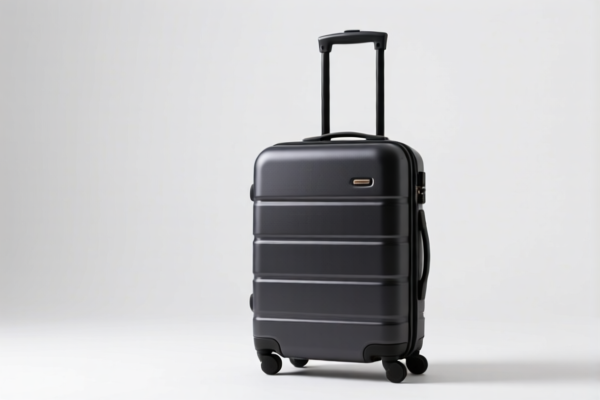
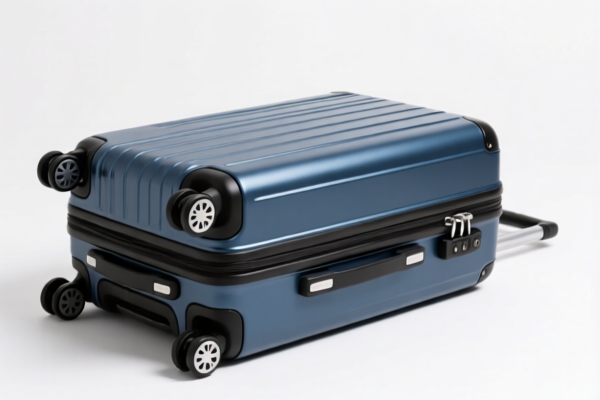
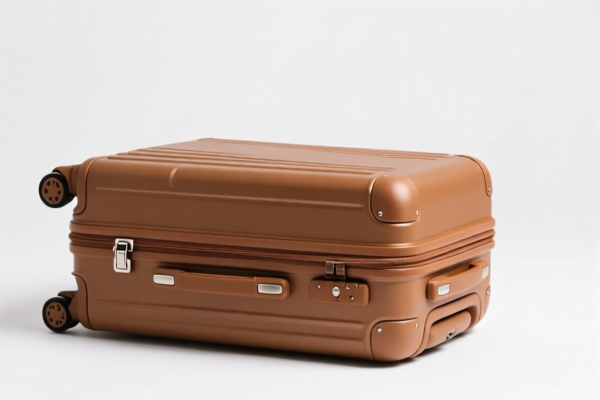
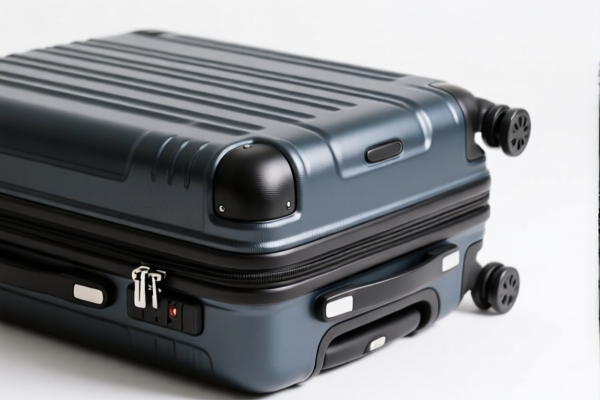
AI Analysis
🧳 Travel Suitcases (Luggage for Personal Use)
🌐 HS Code Reference & Clearance Guide | 2026 Latest Tariff Analysis | Strategic Entry Plan
📌 I. Product Definition & Classification: Do You Really Know a "Suitcase"?
A travel suitcase is a portable container used for carrying personal belongings during journeys. In international trade, its classification depends heavily on material composition and structural definition. It generally falls into two main categories:
Plastic/Textile-Based Containers (Chapter 39/42 Context):
If viewed primarily as a "box, case, crate" made of plastic or covered with plastic, it may fall under packaging goods.
Proper Luggage (Chapter 42):
If it meets the specific definition of "Trunks, Suitcases, Vanity Cases, etc." designed for personal use, it belongs to Chapter 42.
⚠️ Key Distinction Point:
- If classified as Plastic Packaging/Containers → HS Code starts with 3923
- If classified as Proper Luggage/Travel Goods → HS Code starts with 4202
📦 II. HS Code Classification Details (Authoritative 2026 Tariff Alignment)
| HS Code | Product Description | Applicability Summary | Conflict Check |
|---|---|---|---|
3923.10.90.00 |
Plastic Boxes, Cases, Crates & Similar Articles | Suitable if viewed as plastic packaging items; no conflict with plastic packaging attributes. | ✅ No Conflict |
3923.90.00.80 |
Other Packaging Materials for Goods Transport | Suitable if viewed as goods transport/packaging supplies made of plastic/like plastic; falls under "Other". | ✅ No Conflict |
4202.12.21.50 |
Trunks, Suitcases, Vanity Cases (Plastic/Textile Surface) | Fits the "Trunks/Suitcases" shape description; material (plastic/leather/textile) matches classification requirements. | ✅ No Conflict |
4202.12.21.20 |
Trunks, Suitcases (Plastic/Leather Surface) | Fits "Trunks/Suitcases" category; material meets plastic/leather container requirements; no obvious conflict. | ✅ No Conflict |
🔍 Critical Reminder:
- Classification into 3923 treats the suitcase as a packaging/container item.
- Classification into 4202 treats it as personal luggage/leather goods.
- The choice significantly impacts the Total Tax Rate (38% vs. 55%).
💰 III. 2026 Latest Tariff Rate Details (Including Surtaxes & Policy Add-ons)
✅ Applicable Country: United States (US)
✅ Origin: China (CN)
✅ Effective Date: Current rates apply including subsequent imports
🎯 1. 3923.10.90.00 & 3923.90.00.80 —— Plastic Packaging/Container Classification
| Item | Content |
|---|---|
| Base Tariff Rate | 3.0% (Ad Valorem) |
| Surtax (Section 301) | +25.0% (Additional Tariff) |
| 122 Clause Tariff | +10.0% (Section 122 Duty) |
| Total Tax Rate | 38.0% |
| Tax Calculation | CIF Value × 38% |
| De Minimis Exemption | ❌ Not Eligible (High tariff burden) |
| Legal Basis Path | Base Rate + Section 301 Footnote + Section 122 Provision |
📌 Explanation:
- "Base Tariff 3%" is the standard Most Favored Nation (MFN) rate for plastic packaging.
- "Surtax 25%" is the additional tariff under US Trade Law Section 301.
- "122 Clause Tariff 10%" is an additional duty under Section 122.
- Combined Total 38%.
🎯 2. 4202.12.21.50 & 4202.12.21.20 —— Proper Luggage Classification
| Item | Content |
|---|---|
| Base Tariff Rate | 20.0% (Ad Valorem) |
| Surtax (Section 301) | +25.0% (Additional Tariff) |
| 122 Clause Tariff | +10.0% (Section 122 Duty) |
| Total Tax Rate | 55.0% |
| Tax Calculation | CIF Value × 55% |
| De Minimis Exemption | ❌ Not Eligible (High tariff burden) |
| Legal Basis Path | Base Rate + Section 301 Footnote + Section 122 Provision |
📌 Explanation:
- "Base Tariff 20%" is the standard MFN rate for luggage/travel goods.
- "Surtax 25%" is the additional tariff under US Trade Law Section 301.
- "122 Clause Tariff 10%" is an additional duty under Section 122.
- Combined Total 55%.🔴 Cost Alert:
Classifying as Luggage (4202) results in a 17% higher total tax rate compared to classifying as Plastic Packaging (3923). However, customs authorities may reject the 3923 classification if the item is clearly designed as personal luggage, leading to penalties.
🛠️ IV. Clearance Practical Advice (Battle-Tested Pitfall Avoidance)
✅ 1. Documentation Checklist (All Required)
| Document | Mandatory? | Description |
|---|---|---|
| ✅ Product Specification Sheet | ✔️ | Must detail materials (outer shell, lining, handles), dimensions, weight. |
| ✅ Product Photos | ✔️ | Clear images showing zippers, wheels, handles, and brand labels. |
| ✅ Commercial Invoice | ✔️ | Clearly state: "Travel Suitcase" or "Plastic Case". Avoid vague terms like "Container". |
| ✅ Packing List | ✔️ | Detail contents; avoid listing accessories separately if they are integral. |
| ✅ Material Composition Statement | ✔️ | Specify % of plastic vs. textile/leather to support 4202 or 3923 argument. |
✅ 2. Declaration Strategy (Key Mantra)
🔥 “Shape Defines Luggage, Material Defines Box. Name Precisely, Avoid Dispute.”
| Scenario | Correct Declaration | Risk if Incorrect |
|---|---|---|
| Hard Shell Plastic Suitcase | Try 3923.10.90.00 (if arguable as container) OR 4202.12.21.50 | Misclassification → 17% tax difference or rejection |
| Soft Shell Fabric Suitcase | 4202.12.21.50 (Textile/Plastic surface) | High risk if claimed as plastic packaging |
| Leather Travel Case | 4202.12.21.20 (Leather/Plastic surface) | Must prove leather content |
| Generic Plastic Crate | 3923.10.90.00 | Low risk if clearly industrial/storage use |
💡 Strategy Tip:
- If the suitcase is rigid, has wheels/handles, and is marketed for personal travel, Customs may strongly prefer 4202.
- If the item is a simple plastic box without specialized luggage features, 3923 is safer and cheaper.
- Do not arbitrarily choose 3923 for a standard suitcase to save tax; this is a common audit trigger.
✅ 3. Special Handling Cases
| Scenario | Handling Advice |
|---|---|
| OEM/Private Label | Provide design specs proving it is a "suitcase" (has zippers, wheels, etc.) to support 4202. |
| Plastic + Leather Mix | If leather surface > critical threshold, lean towards 4202.12.21.20. |
| Disassembled/Knock-Down | Still classified as a suitcase if assembled function is identical. |
| Accessories Included | If sold as a set, declare as one unit (the suitcase). Do not split tax liability. |
🌍 V. Global Market Clearance Comparison (2026 Latest)
| Country/Region | Recommended HS Code | Tariff (China Origin) | Notes |
|---|---|---|---|
| 🇺🇸 USA | 3923.10.90.00 or 4202.12.21.50 |
38% or 55% | Heavy surtaxes (301 + 122) apply to both. |
| 🇨🇳 China | 4202.12.21.50 |
~10-14% | Lower base rates; no 301/122 surtaxes for export. |
| 🇪🇺 EU | 4202.12.21.50 |
~0-4.5% | Generally lower duties; no Section 301/122 equivalents. |
| 🇯🇵 Japan | 4202.12.21.50 |
~10-12% | Standard MFN rates apply. |
📌 Conclusion:
- The USA imposes the highest barrier due to Section 301 (25%) and Section 122 (10%) surtaxes.
- Choosing the wrong HS Code can lead to 17% extra cost (55% vs 38%) or customs seizures.
- Recommendation: For US imports, carefully evaluate if the product can be legitimately classified as 3923. If it is clearly a "suitcase," prepare for the 55% rate under 4202.
📌 VI. Common Mistakes & Pitfalls (Lessons Learned)
❌ Mistake 1: Claiming a standard suitcase as "Plastic Container" to get 38% tax instead of 55%.
👉 Consequence: Customs audit → Back taxes + Penalties + Delay.
❌ Mistake 2: Ignoring the "122 Clause Tariff 10%".
👉 Consequence: Underpayment → Account freeze or additional payment request.
❌ Mistake 3: Listing only "Plastic Case" without specifying "Travel Suitcase".
👉 Consequence: Ambiguity → Customs may assess based on worst-case scenario (4202).
❌ Mistake 4: Splitting a suitcase kit (case + wheels + handle) into different HS Codes.
👉 Consequence: Complex clearance, higher administrative cost, potential rejection.
✅ Correct Practice:
"Hard-shell Travel Suitcase, 24-inch, Polycarbonate Material, with Wheels and Telescopic Handle, Brand XYZ"
If arguing for 3923: "Plastic Storage Case, 24-inch, Polycarbonate, No Specialized Luggage Features"
🎯 VII. Conclusion: Professional Declaration, Cost Control!
🎯 Remember the Mantra:
🔹 “Luggage Shape = 4202 (55%)”
🔹 “Generic Box = 3923 (38%)”
🔹 “301 + 122 = +35% Surcharge”
🔹 “Misclassification = Penalty + Delay”
📌 Pro Tip:
If you are exporting to the US, consult a customs broker to determine if your specific design allows for a 3923 classification. If not, budget for the 55% total rate under 4202. Consider sourcing from countries not subject to Section 301/122 if volume is high.
📣 Immediate Action:
📞 Contact your freight forwarder + Provide product photos + Request HS Code Pre-ruling
🚀 Clear Customs Smoothly, Control Costs, and Scale Your Business!
✨ Professional Clearance Starts with Accurate Classification!
💼 Every Percent of Tax Matters!
Customer Reviews
About HS Code Classification
The Harmonized System (HS) is an internationally standardized nomenclature developed by the World Customs Organization (WCO) to classify traded products. Over 200 countries use the HS system as the basis for customs tariffs, trade statistics, and import/export regulations.
Each HS code follows a hierarchical structure:
- Chapter (2 digits) — Broad category of goods (e.g., Chapter 84: Machinery and Mechanical Appliances)
- Heading (4 digits) — More specific grouping within the chapter
- Subheading (6 digits) — Internationally standardized breakdown, used by all WCO member countries
- National subdivisions (8-10 digits) — Country-specific extensions for further classification, such as US HTSUS 10-digit codes
Correct HS code classification is essential for smooth customs clearance, accurate duty payment, and compliance with trade regulations. Misclassification can lead to customs delays, overpayment of duties, or penalties.
When importing from CN to US, the applicable tariff rates may include:
- Most-Favored-Nation (MFN) rate — The standard duty rate applied to WTO members
- General rate — Applied to countries without trade agreements
- Trade remedy duties — Additional tariffs such as Section 301 (anti-dumping), Section 232 (national security), or countervailing duties
The information provided on this page is for reference purposes only. For official classification, please consult with your local customs authority or a licensed customs broker.