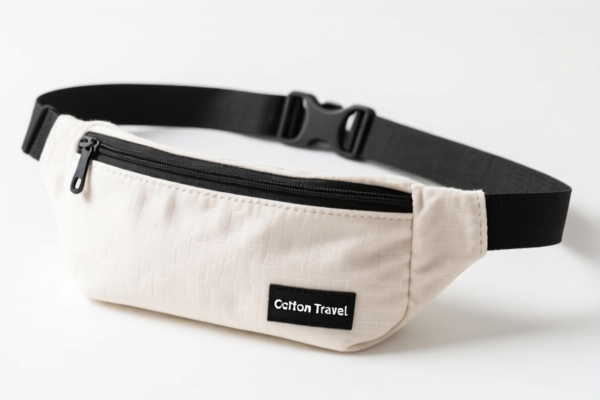
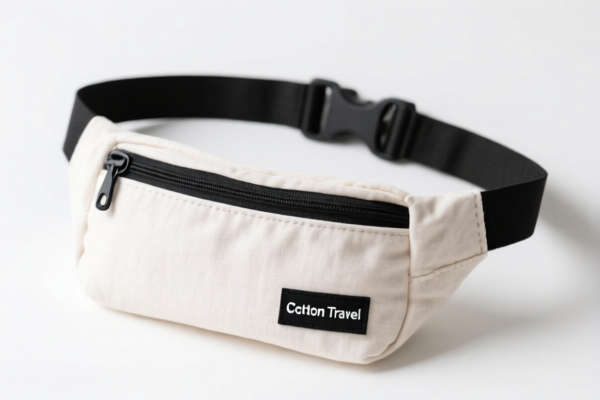
Travel Waist Bag
CN → US| HS Code | Tariff Rate | Origin | Destination | Doc |
|---|---|---|---|---|
| 4202923120 | 52.6% | CN | US | Official Doc |
| 4202923900 | 52.6% | CN | US | Official Doc |
| 4202329300 | 52.6% | CN | US | Official Doc |
| 4202321000 | 0.0% | CN | US | Official Doc |
| 3923900080 | 38.0% | CN | US | Official Doc |
Product Images


AI Analysis
🎒 Travel Waist Bag (Waist Packs / Fanny Packs)
🌐 HS Code Reference & Customs Clearance Guide | 2024/2025 Tax Analysis | Strategic Entry Solutions
📌 Product Definition & Classification Strategy
A Travel Waist Bag is a versatile, hands-free carry-on accessory designed to be worn around the waist or chest. In international trade, it falls under the broader category of "Travel, Sports, and Similar Bags."
Classification hinges on two critical factors: 1. Material: Is the outer surface made of Textiles (cloth, canvas, nylon) or Plastics? 2. Usage/Form: Does it serve as a dedicated pocket/container for small items, or does it function as a general travel container?
⚠️ Critical Distinction: - Textile Outer Surface → Typically Chapter 42 (4202) (Travel Bags). - Plastic Outer Surface → Can be Chapter 42 (Travel Bags) OR Chapter 39 (Packaging/Containers) depending on specific manufacturing specs and "similar bag" classification logic. - Small Pocket-style → May fall under 4202.32 (Articles of a kind commonly carried in pocket/handbag).
📦 HS Code Classification Matrix (2024/2025 Duty Analysis)
Below is the precise breakdown of applicable HS Codes for Travel Waist Bags, matching the product summary logic provided in your data.
| HS Code | Product Description & Logic | Material/Shape Match | Total Duty (China -> US) |
|---|---|---|---|
| 4202.92.31.20 | Travel Bags (Wrist/Small bags) | Textile/Plastic. Matches "Travel/Sports" use. "Waist bag" is a similar container. | 52.6% |
| 4202.92.39.00 | Other Travel Bags | Textile outer surface. Fits "Other Travel/Sports" logic. | 52.6% |
| 4202.32.93.00 | Articles Carried in Pocket/Handbag | Textile. Fits "small container" logic for waist pockets. | 52.6% |
| 4202.32.10.00 | Plastic/Sheeting Bags | Plastic/Laminated. "Pocket/carry-on" logic. | $0.121/kg + 39.6% |
| 3923.90.00.80 | Plastic Packaging/Containers | Plastic/Synthetic. Fits "Packaging/Container" logic if not strictly a "bag". | 38.0% |
🔍 Key Insight: - Codes ending in .20, .39, .93 (Textile-based) carry a heavy 52.6% duty due to the 301 Tariff + Section 321. - Code .10 (Plastic) uses a Hybrid Rate (Weight + %), which can be cheaper or more expensive depending on the bag's density. - Code 3923 (Plastic Packaging) is an alternative if the item is deemed more "container" than "fashion accessory," lowering duty to 38.0%.
💰 Detailed Tax Rate Breakdown & Legal Pathways
✅ Applicable Market: United States (US) ✅ Origin: China (CN) ✅ Active Period: Current (Post-Section 301 + 122条款)
🎯 Scenario A: Textile Waist Bags (Codes 4202.92.31.20 / .39.00 / .93.00)
Most common for Nylon, Canvas, and Polyester bags.
| Tax Component | Rate | Legal Basis / Description |
|---|---|---|
| MFN Base Duty | 17.6% | Standard Most Favored Nation rate for textile bags. |
| Section 301 (Add-on) | 25.0% | "Trade Deficit Act" penalty on Chinese textiles. |
| Section 122 (New) | 10.0% | Specific "122 Clause" tariff (likely new punitive tariff). |
| TOTAL | 52.6% | Ad Valorem (Percentage of Value) |
📌 Explanation: - This is the "High Risk" Zone. Almost all textile waist bags from China face this 52.6% combined rate. - Formula:
Duty = (CIF Value) × 52.6%. - Impact: If your bag costs $10, you pay $5.26 in tax alone.
🎯 Scenario B: Plastic/Sheeting Waist Bags (Code 4202.32.10.00)
Specific to bags made of plastic sheets or laminated materials not classified as "textiles".
| Tax Component | Rate | Legal Basis / Description |
|---|---|---|
| Specific Duty | 12.1¢ / kg | Weight-based duty. |
| Ad Valorem Base | 4.6% | Low base rate for plastic bags. |
| Section 301 (Add-on) | 25.0% | Applied to the value portion. |
| Section 122 (New) | 10.0% | Applied to the value portion. |
| TOTAL | 12.1¢/kg + 39.6% | Hybrid Rate (Weight + Percentage) |
📌 Explanation: - Formula:
Duty = (Weight in kg × $0.121) + (CIF Value × 39.6%). - Strategy: Lighter bags are cheaper to import under this code. If the bag is heavy and bulky, the 12.1¢/kg might push costs up, but usually, it's better than 52.6% for plastic goods.
🎯 Scenario C: Plastic Packaging Logic (Code 3923.90.00.80)
Used if the item is classified as a "container" rather than a "bag".
| Tax Component | Rate | Legal Basis / Description |
|---|---|---|
| MFN Base Duty | 3.0% | Very low base rate for plastic containers. |
| Section 301 (Add-on) | 25.0% | Standard 301 penalty. |
| Section 122 (New) | 10.0% | New penalty. |
| TOTAL | 38.0% | Ad Valorem |
📌 Explanation: - Strategy: If your waist bag is made entirely of molded plastic or rigid plastic sheets and lacks "fashion" features, you might argue for 3923. - Savings: Reduces duty from 52.6% to 38.0% (14.6% savings).
🛠️ Customs Clearance Action Plan & Tips
✅ 1. Documentation Checklist (Must-Haves)
| Document | Requirement | Why It Matters |
|---|---|---|
| ✅ Detailed Material Description | Specify % of Textile vs. Plastic | Crucial: Determines if you pay 52.6% (Textile) or 38.0% (Plastic). |
| ✅ Product Photos (Front/Back/Inside) | Show zippers, straps, lining | Proves "Travel/Sports" usage (4202) vs. "Packaging" (3923). |
| ✅ Commercial Invoice | Must state "Travel Waist Bag" | Avoids generic terms like "Packaging" that trigger 3923 (if unintended). |
| ✅ Weight Specification | Exact weight in kg | Required for the 4202.32.10.00 calculation ($0.121/kg). |
| ✅ Country of Origin Certificate | Form A or CO | Confirms Chinese origin (subject to 301 + 122). |
✅ 2. Strategic Classification Advice
🔥 Golden Rule: "Material Dictates Duty"
| If Your Product Is... | Recommended HS Code | Strategy |
|---|---|---|
| Nylon/Polyester (Textile) | 4202.92.31.20 or 4202.92.39.00 |
Accept the 52.6%. Cannot avoid it unless material changes. |
| 100% Plastic / Vinyl | 3923.90.00.80 |
Argue for 38.0%. Claim it is a "Plastic Container," not a fashion bag. |
| Laminated/Plastic-Coated | 4202.32.10.00 |
Use Hybrid Rate. If the bag is light, this may be cheaper than 52.6%. |
✅ 3. Common Pitfalls (Avoid These!)
❌ Mistake 1: Misdeclaring "Textile" as "Plastic" - Risk: If you claim a nylon bag is plastic to get the 38% rate, Customs will seize it. - Consequence: Penalties + Back Taxes + 10% Penalty.
❌ Mistake 2: Ignoring the "122 Clause" - Risk: Failing to account for the 10% Section 122 tax. - Consequence: Under-pricing your product, leading to unexpected cash flow gaps at port.
❌ Mistake 3: Wrong Unit for Plastic Bags
- Risk: Calculating 4202.32.10.00 duty only as % without checking the weight (12.1¢/kg).
- Consequence: Overpaying or Underpaying (Customs will audit).
✅ 4. Optimization Strategy
- Material Pivot: If importing high volumes, consider sourcing 100% Plastic Waist Bags (e.g., PVC or TPU) and declare under 3923.90.00.80 to reduce the rate from 52.6% to 38.0%.
- Hybrid Check: For plastic-laminated bags, calculate the 4202.32.10.00 rate:
- Example: $10 bag, 0.2kg.
- Duty = $(10 × 39.6\%) + (0.2kg × $0.121) = \$3.96 + \$0.02 = \$3.98$.
- Compare this to 52.6% ($5.26). Savings: 1.28 USD per bag.
- Pre-Arrival Ruling: For large shipments, file for a Binding Ruling with CBP to confirm if your specific "Laminated" bag counts as "Textile" or "Plastic."
🌍 Global Market Comparison (Quick View)
| Market | HS Code | Typical Duty (China Origin) | Note |
|---|---|---|---|
| 🇺🇸 USA | 4202.92.31.20 |
52.6% | High Section 301 + 122 penalties. |
| 🇨🇳 China | 4202.92.31.20 |
~10% | Domestic trade or lower rates if exported back? (Check specific trade rules). |
| 🇪🇺 EU | 4202.92 |
~12% | No Section 301, but potential anti-dumping duties. |
| 🇨🇦 Canada | 4202.92 |
~12-15% | Generally lower than US, no Section 122. |
📌 Conclusion: The US market is currently the most expensive for textile waist bags due to the triple-layer tariff (Base + 301 + 122). Strategy: Optimize material choice or shift supply chain to non-Chinese origin to bypass the 301/122 penalties.
🎯 Final Summary: Your Next Steps
- Identify Material: Is it Textile (Nylon/Canvas) or Plastic (PVC/TPU)?
- Calculate Duty:
- Textile → Expect 52.6%.
- Plastic → Check 3923 (38%) OR 4202.32.10 (Weight + %).
- Prepare Docs: Ensure your invoice and packing list explicitly state material composition.
- Contact Broker: Ask for a "Pre-Arrival Ruling" on the 4202.92 vs 3923 classification for your specific design.
🚀 Pro Tip: "Don't let 52.6% eat your margin. Switch to plastic containers or hybrid structures to save 14%+!"
✨ Customs Compliance = Profit Protection
💼 Get the HS Code right, and you keep the profit. Get it wrong, and you pay the price.
Customer Reviews
About HS Code Classification
The Harmonized System (HS) is an internationally standardized nomenclature developed by the World Customs Organization (WCO) to classify traded products. Over 200 countries use the HS system as the basis for customs tariffs, trade statistics, and import/export regulations.
Each HS code follows a hierarchical structure:
- Chapter (2 digits) — Broad category of goods (e.g., Chapter 84: Machinery and Mechanical Appliances)
- Heading (4 digits) — More specific grouping within the chapter
- Subheading (6 digits) — Internationally standardized breakdown, used by all WCO member countries
- National subdivisions (8-10 digits) — Country-specific extensions for further classification, such as US HTSUS 10-digit codes
Correct HS code classification is essential for smooth customs clearance, accurate duty payment, and compliance with trade regulations. Misclassification can lead to customs delays, overpayment of duties, or penalties.
When importing from CN to US, the applicable tariff rates may include:
- Most-Favored-Nation (MFN) rate — The standard duty rate applied to WTO members
- General rate — Applied to countries without trade agreements
- Trade remedy duties — Additional tariffs such as Section 301 (anti-dumping), Section 232 (national security), or countervailing duties
The information provided on this page is for reference purposes only. For official classification, please consult with your local customs authority or a licensed customs broker.