Travel Wallet
CN → US| HS Code | Tariff Rate | Origin | Destination | Doc |
|---|---|---|---|---|
| 4202329300 | 52.6% | CN | US | Official Doc |
| 4202321000 | 0.0% | CN | US | Official Doc |
| 4202923120 | 52.6% | CN | US | Official Doc |
| 4202923900 | 52.6% | CN | US | Official Doc |
| 3923900080 | 38.0% | CN | US | Official Doc |
Product Images

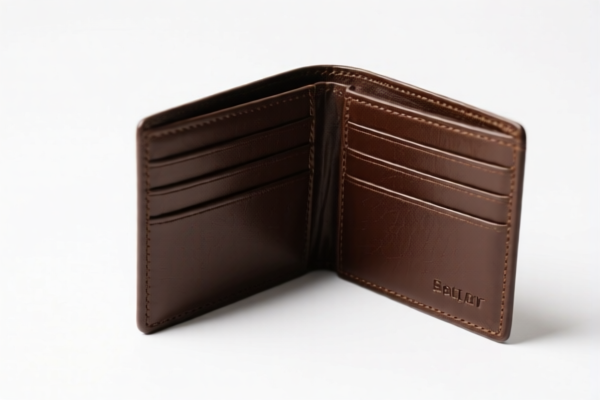


AI Analysis
🎒 Travel Wallets (The Ultimate Guide to HS Codes, Tariffs & US Customs Clearance)
🌐 HS Code Classification & Duty Breakdown | 2026 US Customs Strategy | Avoiding the 52.6% Pitfall
📌 I. Product Definition: What is a "Travel Wallet"?
A Travel Wallet is not a single, uniform product. In the eyes of US Customs and Border Protection (CBP), the classification depends entirely on what it holds, how it is worn/carried, and what material it is made of.
It generally falls under Chapter 42 (Articles of Leather; Saddlery and Harness; Travel Goods, Handbags and Similar Containers).
There are two distinct pathways for classification: 1. The "Pouch" Route (4202.32): Designed to be carried in a pocket or handbag (e.g., a flat card holder, passport holder, or small coin purse). 2. The "Bag" Route (4202.92): Designed to be carried on the body (e.g., a waist bag, money belt, or cross-body pouch) or used as a general travel pouch.
⚠️ Critical Distinction:
- If it fits inside your pocket or handbag → HS 4202.32.xx
- If it is a waist bag or travel pouch worn on the body → HS 4202.92.xx
- If it is a plastic storage organizer (not a fashion accessory) → HS 3923.90.00 (Packaging)
📦 II. HS Code Classification Matrix (2026 US Tariff Schedule)
Based on the specific characteristics of Travel Wallets, here is the precise mapping to the provided HS Codes and their corresponding tax profiles.
| HS Code | Product Description & Material | Typical Use Case | Key Differentiator |
|---|---|---|---|
| 4202.32.10.00 | Travel Wallets Material: Plastic, laminated materials, or textile. Summary: For carrying items, often slim. |
Slim passport holders, card wallets, coin purses carried in pockets. | Low Base Duty (12.1¢/kg + 4.6%) but High Total due to Section 301. |
| 4202.32.93.00 | Travel Wallets Material: Outer surface is Textile. Summary: Carried in pocket or handbag. |
Textile-based wallets, fabric pouches carried in handbags. | Higher Base Duty (17.6%) leading to a flat 52.6% total. |
| 4202.92.31.20 | Travel Waist Bags Material: Textile or Plastic. Summary: Specifically for travel, worn as a waist bag. |
Money belts, waist pouches, anti-theft belly bags. | Classed as "Bags," subject to 52.6% total. |
| 4202.92.39.00 | Travel Waist Bags Material: Outer surface is Textile. Summary: General travel bags worn on the body. |
Other textile waist bags not specifically "plastic" or "textile" defined in 31. | Classed as "Bags," subject to 52.6% total. |
| 3923.90.00.80 | Travel Storage Packs Material: Plastic or Synthetic Fiber. Summary: Packaging/Containers for organization. |
Plastic toiletry bags, compression cubes, rigid organizers (non-fashion). | Classified as Plastic Containers, subject to 38.0% total. |
💰 III. 2026 Tariff Rate Deep Dive (US Market - China Origin)
✅ Target Market: United States (US)
✅ Origin: China (CN)
✅ Applicable Regimes: Base Duty + Section 301 (25%) + Section 122 (10%)
🎯 1. The "Slim" Wallet Strategy (4202.32.10.00)
Best for: Leather-like or plastic cardholders.
| Component | Rate | Legal Basis |
|---|---|---|
| Base Duty | 12.1¢/kg (Weight-based) + 4.6% (Ad Valorem) | Chapter 42 General Rate |
| Section 301 (Add-on) | +25.0% | "Enhanced Duties" on Chinese Goods |
| Section 122 (Add-on) | +10.0% | Section 122 of the Trade Expansion Act |
| 🔴 Total Effective Duty | Variable | (12.1¢/kg + 4.6%) + 25% + 10% |
📌 Expert Note: This is the only code in the list with a weight-based base duty. If your wallets are very heavy, the 12.1¢/kg adds up, but the ad valorem (4.6%) is the lowest in the list. However, the 25% + 10% surcharges apply, making the final cost high for high-value items.
🎯 2. The "Textile" Wallet & Waist Bag Trap (4202.32.93.00, 4202.92.31.20, 4202.92.39.00)
Best for: Fabric wallets and any bag worn on the waist.
| Component | Rate | Legal Basis |
|---|---|---|
| Base Duty | 17.6% | Chapter 42 Higher Rate for Textile/Other |
| Section 301 (Add-on) | +25.0% | "Enhanced Duties" |
| Section 122 (Add-on) | +10.0% | Section 122 Surcharge |
| 🔴 Total Effective Duty | 52.6% | Flat 52.6% of CIF Value |
📌 Expert Note: DANGER ZONE. If your product is classified as a textile wallet (
4202.32.93.00) or any waist bag (4202.92...), the duty is a massive 52.6%. There is no weight component here, just a pure ad valorem tax.
🎯 3. The "Plastic Storage" Loophole (3923.90.00.80)
Best for: Rigid plastic organizers, toiletry bags, non-fashion pouches.
| Component | Rate | Legal Basis |
|---|---|---|
| Base Duty | 3.0% | Chapter 39 (Plastics) Lower Rate |
| Section 301 (Add-on) | +25.0% | "Enhanced Duties" |
| Section 122 (Add-on) | +10.0% | Section 122 Surcharge |
| 🔴 Total Effective Duty | 38.0% | 3.0% + 25% + 10% |
📌 Expert Note: This is the lowest tax rate (38.0%) among the options. However, it only applies if the item is truly a "container" (packaging/organizer) made of plastic, not a fashion accessory. If Customs deems it a "wallet" (accessory), it will re-classify to the 52.6% tier.
🛠️ IV. Customs Clearance Action Plan (Avoiding Audits & Penalties)
✅ 1. Material & Function Verification (The "Decider")
To ensure you get the lowest tax rate, you must be precise in your commercial invoice and product descriptions.
| Scenario | Recommended HS Code | Actionable Tip |
|---|---|---|
| Slip-on card holder (Plastic/Laminated) | 4202.32.10.00 |
Ensure description mentions "Plastic/Laminated" to avoid textile classification. |
| Fabric Wallet (Carried in pocket) | 4202.32.93.00 |
Accept 52.6%. No workaround available for textile wallets. |
| Waist Bag / Money Belt | 4202.92.31.20 or 39 |
Accept 52.6%. Do not try to declare as "Storage" if it has a strap for waist-wearing. |
| Plastic Toiletry Bag / Organizer | 3923.90.00.80 |
GOAL: Declare as "Travel Storage Container" (not Wallet). Remove fashion branding if possible. |
✅ 2. Documentation Checklist for US Customs
To prevent a "Best Evidence" audit that forces a re-classification to the higher 52.6% rate:
- Detailed Commercial Invoice: Must explicitly state:
- "Material: Plastic" vs "Material: Textile" (Do not just write "Mixed").
- "Function: Storage Container" (for 3923) vs "Function: Wallet" (for 4202).
- Product Photographs:
- Show the interior (card slots vs. empty space).
- Show the exterior (texture to prove plastic vs. fabric).
- Show the size (to prove it fits in a pocket, not worn on the body).
- Packing List: Clearly distinguish between "Wallets" and "Organizers" if shipping mixed SKUs. Never mix HS Codes on one line item.
✅ 3. Strategic Sourcing & Costing
- If Cost is Critical: Shift production to Plastic Storage Organizers (
3923.90.00.80) rather than traditional wallets. A 52.6% duty vs. 38.0% duty is a significant margin difference. - Avoid Textile: If the product is textile (
4202.32.93.00or4202.92.39.00), you are stuck with 52.6%. There is no Section 301 exemption for standard travel wallets. - Weight Sensitivity: For
4202.32.10.00, if the wallets are heavy (e.g., thick leather or multi-layered), the 12.1¢/kg charge could exceed the 4.6% ad valorem on low-value items. Calculate based on Weight + Value.
🌍 V. Global Market Comparison (2026)
| Market | Recommended HS Code | Est. Total Duty (China) | Strategy |
|---|---|---|---|
| 🇺🇸 USA | 3923.90.00.80 (Plastic Storage) |
38.0% | Best Option: Declare as storage, not wallet. |
| 🇺🇸 USA | 4202.32.10.00 (Slim Wallet) |
~39-45% | Moderate: Only for plastic/laminated slim wallets. |
| 🇺🇸 USA | 4202.32.93.00 (Textile) |
52.6% | Avoid: Highest tax. |
| 🇪🇺 EU | 4202.32.00 |
~4-10% | EU has lower Section 301 impact. |
| 🇬🇧 UK | 4202.32.00 |
~6% | Post-Brexit tariffs are different. |
📌 Conclusion: The US market is uniquely harsh on Chinese textiles and leather goods (52.6%). Plastic storage solutions are your safest bet for the US market to reduce tax burden to 38.0%.
🎯 VI. Final Verdict & Pro Tips
🔥 The Golden Rule: "Don't Call It a Wallet, Call It a Container." * If you can prove the item is a plastic organizer (not fashion), you pay 38.0%. * If you call it a wallet or it is made of textile, you pay 52.6%.
Common Mistakes to Avoid: 1. Mislabeling Materials: Writing "Textile" when it's mostly plastic will force a 52.6% classification. 2. Over-designing: If a "storage bag" has fancy zippers, branding, and is clearly a fashion item, Customs will reclassify it to HS 4202 (52.6%). Keep it utilitarian. 3. Ignoring Section 122: The 10% surcharge is often forgotten. Ensure your landed cost calculator includes it.
✅ Clearance Success Formula:
Product: Plastic Travel Organizer (Non-Fashion)
HS:3923.90.00.80
Duty: 38.0% (Base 3% + 25% + 10%)
Result: Maximum Profit, Minimum Tax.
✨ Ready to Ship?
Double-check your product composition. If it's plastic, declare it as a Container. If it's textile, brace yourself for the 52.6% tariff. Precision is your biggest ally in US Customs! 🚀
Customer Reviews
About HS Code Classification
The Harmonized System (HS) is an internationally standardized nomenclature developed by the World Customs Organization (WCO) to classify traded products. Over 200 countries use the HS system as the basis for customs tariffs, trade statistics, and import/export regulations.
Each HS code follows a hierarchical structure:
- Chapter (2 digits) — Broad category of goods (e.g., Chapter 84: Machinery and Mechanical Appliances)
- Heading (4 digits) — More specific grouping within the chapter
- Subheading (6 digits) — Internationally standardized breakdown, used by all WCO member countries
- National subdivisions (8-10 digits) — Country-specific extensions for further classification, such as US HTSUS 10-digit codes
Correct HS code classification is essential for smooth customs clearance, accurate duty payment, and compliance with trade regulations. Misclassification can lead to customs delays, overpayment of duties, or penalties.
When importing from CN to US, the applicable tariff rates may include:
- Most-Favored-Nation (MFN) rate — The standard duty rate applied to WTO members
- General rate — Applied to countries without trade agreements
- Trade remedy duties — Additional tariffs such as Section 301 (anti-dumping), Section 232 (national security), or countervailing duties
The information provided on this page is for reference purposes only. For official classification, please consult with your local customs authority or a licensed customs broker.