Tree Disease Control Agent
CN → US| HS Code | Tariff Rate | Origin | Destination | Doc |
|---|---|---|---|---|
| 3808920500 | 35.0% | CN | US | Official Doc |
| 3808921500 | 41.5% | CN | US | Official Doc |
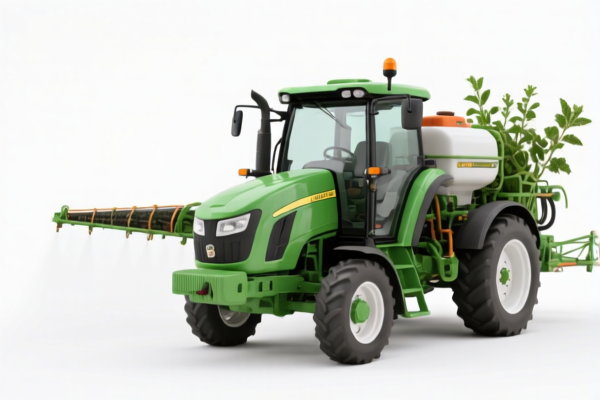
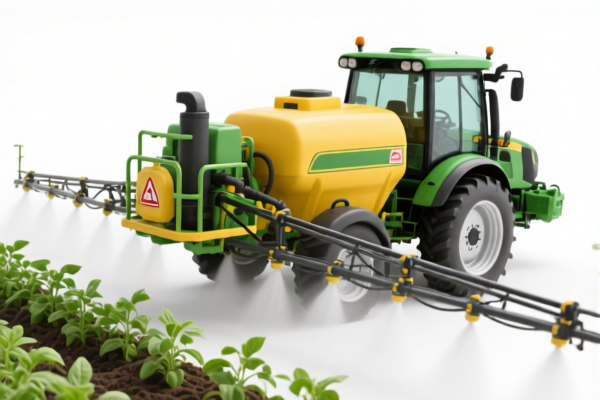
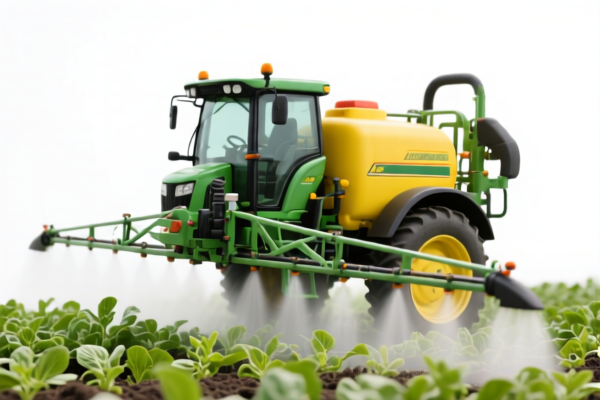
Product Images

AI Analysis
🌿🛡️ Tree Disease Control Agent (Fungicides & Plant Protection Products)
🌐 HS Code Reference & Customs Clearance Guide | 2026 Latest Tariff Analysis | Professional-Level Strategy
📌 I. Product Definition & Classification: Do You Really Understand "Tree Disease Control Agents"?
A Tree Disease Control Agent is primarily categorized under Fungicides (chemical or biological agents used to prevent or destroy fungi and fungal spores that affect trees). In international trade, these products fall under Chapter 38: Miscellaneous Chemical Products.
Key Distinction in Classification: The classification depends heavily on the active ingredient and the packaging form: 1. Aromatic/Modified Aromatic Fungicides: If the product contains specific aromatic compounds (e.g., Dinocap), it falls under a specific subheading with potential trade restrictions. 2. Other Fungicides: If the active ingredient is not aromatic/modified aromatic, it falls under the general "Other Fungicides" subheading. 3. Packaging Requirement: Must be in forms or packings for retail sale OR as preparations/articles (e.g., sulfur-treated bands, wicks, candles, flypapers). Bulk industrial chemicals without retail packaging may fall under different headings (e.g., 3808.90.10).
⚠️ Critical Classification Point:
- If the fungicide is Aromatic/Modified Aromatic (e.g., containing Dinocap) → HS Code: 3808.92.05.00
- If the fungicide is Not Aromatic/Not Modified Aromatic → HS Code: 3808.92.15.00
📦 II. HS Code Classification Details (2026 Latest Tariff Authority Comparison)
| HS Code | Product Description | Applicable Scenario | Active Ingredient Type |
|---|---|---|---|
3808.92.05.00 |
Fungicides: Containing any aromatic or modified aromatic fungicide: Mixtures of dinocap and application adjuvants | Agricultural/Orchard use; Contains Dinocap | ✅ Aromatic/Modified Aromatic (Dinocap) |
3808.92.15.00 |
Fungicides: Containing any aromatic or modified aromatic fungicide: Other | General fungicides; Not Dinocap mixtures | ✅ Aromatic/Modified Aromatic (Non-Dinocap) |
🔍 Important Note:
- Both codes fall under Chapter 38, Heading 3808 (Insecticides, rodenticides, fungicides...).
- The distinction between3808.92.05.00and3808.92.15.00lies in the specific composition (Dinocap vs. Other Aromatic Fungicides).
- Retail Packaging is Mandatory: Bulk chemicals for industrial use must be declared under different headings (e.g., 3808.90.10). Ensure the product is labeled for retail sale or is a prepared article.
💰 III. 2026 Latest Tariff Rate Details (Including Additional Taxes & Policy Add-ons)
✅ Applicable Country: USA (US)
✅ Origin: China (CN)
✅ Effective Date: 2025–2026 (Current Trade Policies)
🎯 1. 3808.92.05.00 – Fungicides (Aromatic/Modified Aromatic, e.g., Dinocap Mixtures)
| Item | Content |
|---|---|
| Base Tariff | 0.0% (ad valorem) |
| Section 301 Additional Tariff | +25.0% |
| Total Tariff Rate | 25.0% |
| Tax Calculation | CIF Value × 25% |
| De Minimis Exemption | ❌ Not Applicable (Section 301 goods are excluded from de minimis) |
| Legal Basis | HTSUS 3808.92.05.00 → USITC Footnote 301 List |
📌 Explanation:
- Base Tariff: 0% as per standard HTSUS for this subheading.
- Additional Tax: +25% under Section 301 of the Trade Act of 1974, targeting specific Chinese-origin chemical products.
- Total: 25%. This is a significant cost factor for exporters.
🎯 2. 3808.92.15.00 – Fungicides (Aromatic/Modified Aromatic, Other)
| Item | Content |
|---|---|
| Base Tariff | 0.0% (ad valorem) |
| Section 301 Additional Tariff | 0.0% |
| Total Tariff Rate | 0.0% |
| Tax Calculation | No tariff (if other conditions met) |
| De Minimis Exemption | ✅ May Apply (if value <$800 and not on exclusion list) |
| Legal Basis | HTSUS 3808.92.15.00 |
📌 Explanation:
- Base Tariff: 0% as per standard HTSUS.
- Additional Tax: 0% under Section 301 for this specific subheading.
- Total: 0%. This offers a significant competitive advantage compared to3808.92.05.00.
- Note: If the product is shipped via De Minimis (B2C e-commerce, <$800), it may enter duty-free even without a formal entry, provided it is not prohibited.
🛠️ IV. Customs Clearance Practical Advice (Real-World Pitfall Avoidance)
✅ 1. Preparation Checklist (Missing Documents = Delay)
| Document | Required | Description |
|---|---|---|
| ✅ Product Specification Sheet | ✔️ | Must list active ingredients, percentage concentration, and SIN (Safety Information Number) if applicable. |
| ✅ Safety Data Sheet (SDS) | ✔️ | Mandatory for chemical products. Must comply with GHS (Globally Harmonized System). |
| ✅ Label Copy | ✔️ | Must show retail packaging, usage instructions, and EPA Registration Number (for US import). |
| ✅ Commercial Invoice | ✔️ | Clearly state: "Fungicide for Tree Disease Control, Retail Packaged, Contains [Active Ingredient]". |
| ✅ EPA Registration Certificate | ✔️ | CRITICAL: Fungicides imported into the US must be registered with the Environmental Protection Agency (EPA). |
| ✅ Certificate of Origin | ✔️ | To prove origin (China vs. other) for tariff calculation. |
⚠️ EPA Requirement:
- US EPA Registration is mandatory for all pesticides (including fungicides) imported into the United States.
- If the product is not EPA-registered, it will be rejected at customs.
- Ensure the EPA Registration Number is printed on the label and declared in the customs entry.
✅ 2. Declaration Tips (Key Mnemonic)
🔥 “Active Ingredient Determines Code, EPA Number is King, Retail Packaging Avoids Bulk Trap!”
| Scenario | Correct Declaration | Wrong Practice |
|---|---|---|
| Fungicide containing Dinocap | 3808.92.05.00 + 25% Tariff |
Misdeclared as 3808.92.15.00 → Penalty + Back Taxes |
| Fungicide containing other aromatic fungicides | 3808.92.15.00 + 0% Tariff |
Over-declared as 3808.92.05.00 → Unnecessary Tax Cost |
| Bulk fungicide (not retail packed) | Not 3808.92.xxxx | Misdeclared under 3808.92 → Rejection/Return |
| Non-pesticide tree nutrient | Different Chapter (e.g., 31) | Misdeclared under 3808 → Misclassification Penalty |
✅ 3. Special Handling Cases
| Case | Handling Advice |
|---|---|
| De Minimis Shipment (<$800) | ✅ Eligible for entry without formal customs entry, but EPA registration still required. Ensure SDS is attached. |
| EPA-Registered Product | ✅ Standard clearance. Provide EPA Reg. Number. |
| Unregistered Product | ❌ Cannot be imported. Must be returned or destroyed. |
| Multi-Component Fungicide | ✅ Declare all active ingredients. If any contains Dinocap, use 3808.92.05.00. |
| Plant Growth Regulators | ❌ Not Fungicides. Check Chapter 38 heading 3808 or 3809. |
🌍 V. Global Market Comparison (2026 Latest)
| Country/Region | Recommended HS Code | Tariff (China Origin) | Certification Required | Notes |
|---|---|---|---|---|
| 🇺🇸 USA | 3808.92.05.00 or 3808.92.15.00 |
0%–25% | EPA Registration (Mandatory) | Section 301 applies to 3808.92.05.00 |
| 🇨🇳 China | 3808.92.05.00 / 3808.92.15.00 |
0%–5% | Pesticide Registration Certificate | Domestic regulation applies |
| 🇪🇺 EU | 3808.94.00 (General Fungicides) |
0% (if under quota) | Biocidal Products Regulation (BPR) | Strict authorization needed |
| 🇦🇺 Australia | 3808.94.00 |
5% | APVMA Approval | Highly regulated chemical imports |
| 🇯🇵 Japan | 3808.94.00 |
0%–6% | Ministry of Agriculture Registration | Phytosanitary certificate may be required |
📌 Conclusion:
- USA: Tariff depends on active ingredient. Dinocap-containing products face 25% tariff.
- EU/Australia/Japan: Require local registration (BPR, APVMA, MAA) before import.
- Critical: EPA Registration is non-negotiable for US imports.
📌 VI. Common Errors & Pitfall Guide (Lessons Learned)
❌ Error 1: Misdeclaring Dinocap fungicide as 3808.92.15.00
👉 Consequence: Avoids 25% tariff → Audit + Penalty + Back Taxes
❌ Error 2: Importing unregistered fungicide into the US
👉 Consequence: Seizure by CBP, return to sender, or destruction. EPA violation fines.
❌ Error 3: Declaring bulk chemicals as retail-packaged fungicides
👉 Consequence: Misclassification. Bulk goods fall under different HTSUs (e.g., 3808.90.10) with different tariff rates.
❌ Error 4: Missing SDS (Safety Data Sheet)
👉 Consequence: Held at customs until SDS is provided. Delays shipment by days/weeks.
✅ Correct Practice:
“Fungicide for Tree Disease Control, Retail Packaged, EPA Reg. No. XXXX-XXXX, Contains Dinocap, CIF Value: $10,000, HS Code: 3808.92.05.00”
🎯 VII. Conclusion: Professional Declaration, Save Time, Reduce Cost!
🎯 Remember the Mnemonic:
🔹 “Active Ingredient Sets Code, EPA Number is Key, Dinocap Means 25% Tax!”
🔹 “Retail Packaging Avoids Bulk Trap, SDS Prevents Delay!”
📌 Pro Tip:
If your fungicide does not contain Dinocap or other specific aromatic fungicides listed under
3808.92.05.00, it may qualify for 0% tariff under3808.92.15.00. Verify the exact active ingredient list with the manufacturer.📞 Action Step:
1. Confirm EPA Registration.
2. Identify Active Ingredients.
3. Declare HS Code accurately.
4. Provide SDS & Label.
✨ Professional Customs Clearance Starts with Accurate Classification!
💼 Every Percent of Tax Saved is Pure Profit!
Customer Reviews
About HS Code Classification
The Harmonized System (HS) is an internationally standardized nomenclature developed by the World Customs Organization (WCO) to classify traded products. Over 200 countries use the HS system as the basis for customs tariffs, trade statistics, and import/export regulations.
Each HS code follows a hierarchical structure:
- Chapter (2 digits) — Broad category of goods (e.g., Chapter 84: Machinery and Mechanical Appliances)
- Heading (4 digits) — More specific grouping within the chapter
- Subheading (6 digits) — Internationally standardized breakdown, used by all WCO member countries
- National subdivisions (8-10 digits) — Country-specific extensions for further classification, such as US HTSUS 10-digit codes
Correct HS code classification is essential for smooth customs clearance, accurate duty payment, and compliance with trade regulations. Misclassification can lead to customs delays, overpayment of duties, or penalties.
When importing from CN to US, the applicable tariff rates may include:
- Most-Favored-Nation (MFN) rate — The standard duty rate applied to WTO members
- General rate — Applied to countries without trade agreements
- Trade remedy duties — Additional tariffs such as Section 301 (anti-dumping), Section 232 (national security), or countervailing duties
The information provided on this page is for reference purposes only. For official classification, please consult with your local customs authority or a licensed customs broker.