Triangle Flag
CN → US| HS Code | Tariff Rate | Origin | Destination | Doc |
|---|---|---|---|---|
| 6307909835 | 24.5% | CN | US | Official Doc |
| 6307909825 | 24.5% | CN | US | Official Doc |
| 3926909989 | 22.8% | CN | US | Official Doc |
Product Images
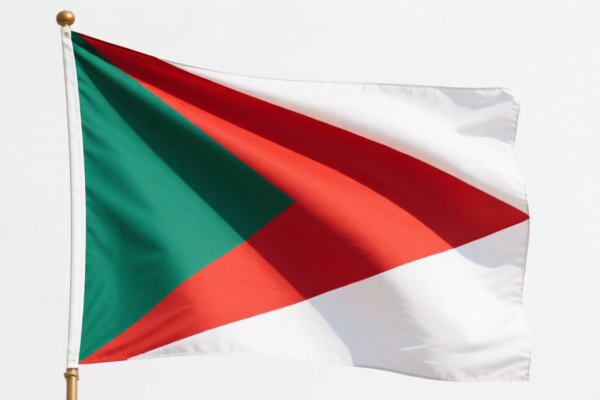
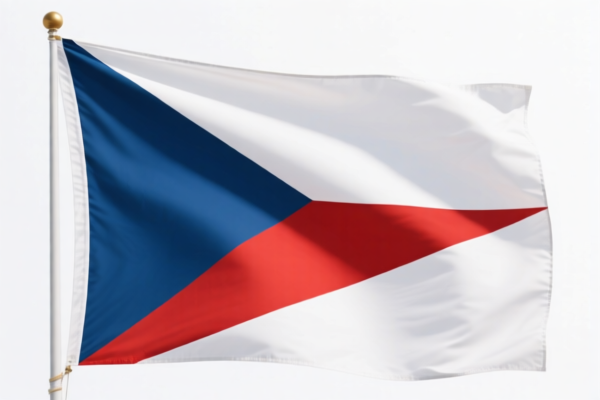
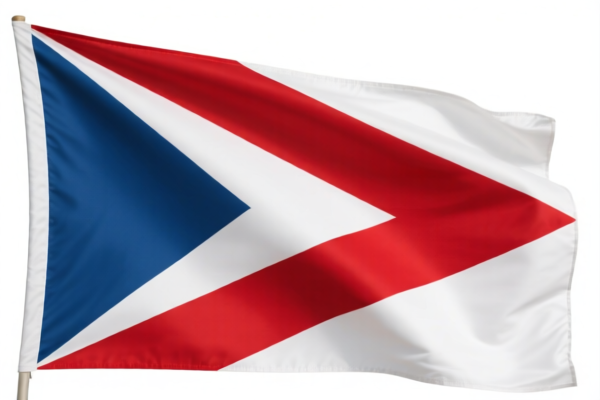
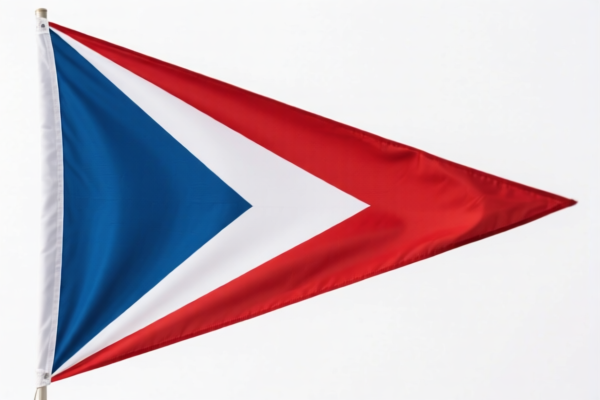
AI Analysis
🚩 Triangle Flags (Bunting & Pennants) | Global Trade Classification & US Customs Strategy
🌐 HS Code Reference & Clearance Guide | 2024/2025 Tariff Landscape | Professional Clearance Strategy
📌 I. Product Definition & Classification: What is a "Triangle Flag"?
Triangle flags, commonly known as bunting, pennants, or festoon flags, are decorative textile or plastic items used for celebrations, events, and public display. In international trade, their classification hinges heavily on material composition and manufacturing status.
They generally fall into two main categories: 1. Textile Flags: Made from nylon, polyester, or paper-based materials (classified under Chapter 63). 2. Plastic Flags: Made from PVC, polyethylene, or other polymer sheets (classified under Chapter 39).
⚠️ Critical Distinction Point:
- If the flag is made of fabric/textile and is a finished article → It belongs to Chapter 63 (Other Made-up Textile Articles).
- If the flag is made of plastic and is a finished article → It belongs to Chapter 39 (Articles of Plastics).
- Do not classify under Chapter 6303 (Curtains) or Chapter 42 (Leather goods) unless specific structural conditions apply (which is rare for standard triangle flags).
📦 II. HS Code Classification Matrix (Based on Provided Data)
| HS Code | Product Description | Material | Logic/Justification |
|---|---|---|---|
6307.90.98.35 |
Other made-up articles (Flags) | Textile/Fabric | Textile Logic: Fits the "Flags" sub-category within "Other made-up textile articles." No material conflict. |
6307.90.98.25 |
Other made-up articles (Flags) | Textile/Fabric | Textile Logic: Another specific sub-category for flags under Chapter 63. Fits the logical inference for finished flag articles. |
3926.90.99.89 |
Other plastic articles | Plastic (PVC/PE) | Plastic Logic: If the flag is made of plastic (e.g., PVC bunting), it falls under "Other plastic articles" as a residual category. |
🔍 Key Insight:
-6307.90.98.35&6307.90.98.25are for Fabric/Textile triangle flags.
-3926.90.99.89is for Plastic triangle flags.
- The choice depends entirely on the material declared on the invoice and verified by customs.
💰 III. 2024/2025 US Tariff Rate Breakdown (China Origin)
✅ Applicable Country: United States (US)
✅ Origin: China (CN)
✅ Status: Active Trade Policies (Section 301, 122, etc.)
🎯 1. HS Code 6307.90.98.35 & 6307.90.98.25 (Textile Flags)
| Item | Details |
|---|---|
| Basic Tariff | 7.0% |
| Section 301 (Retaliatory) | 7.5% |
| Section 122 Tariff | 10.0% |
| Total Effective Tax Rate | 24.5% |
| De Minimis Exemption? | ❌ No (Section 122 and certain 301 items may restrict de minimis benefits depending on current enforcement; assume deny_de_minimis for high-risk categories). |
| Legal Basis Path | USITC:6307.90.98.35 → 301:Footnote 9903.88.01 → 122:Statutory Authority |
📌 Explanation:
- The 7.0% is the standard Most Favored Nation (MFN) rate for made-up textile articles.
- The 7.5% is part of the ongoing Section 301 tariffs on Chinese goods.
- The 10% is the "Section 122 Tariff" (often applied to low-value shipments or specific enforcement actions on Chinese imports).
- Total: 24.5%. This is a high-cost entry for low-margin goods like party decorations.
🎯 2. HS Code 3926.90.99.89 (Plastic Flags)
| Item | Details |
|---|---|
| Basic Tariff | 5.3% |
| Section 301 (Retaliatory) | 7.5% |
| Section 122 Tariff | 10.0% |
| Total Effective Tax Rate | 22.8% |
| De Minimis Exemption? | ❌ No (Similar to textile, check current CBP enforcement on plastic goods from China). |
| Legal Basis Path | USITC:3926.90.99.89 → 301:Footnote 9903.88.01 → 122:Statutory Authority |
📌 Explanation:
- The 5.3% is the standard MFN rate for other plastic articles.
- The 7.5% and 10% add-ons are identical to the textile category due to the origin being China.
- Total: 22.8%. Slightly cheaper than textile, but still significant.
🛠️ IV. Clearance Practical Advice (Risk Mitigation)
✅ 1. Documentation Checklist (Mandatory)
| Document | Required? | Purpose |
|---|---|---|
| ✅ Commercial Invoice | Yes | Must clearly state "Triangle Flags" or "Bunting" and specify material (e.g., "Polyester Bunting" vs. "PVC Plastic Flags"). |
| ✅ Product Photos | Yes | Show the item in context to prove it is a flag, not a curtain, banner, or toy. |
| ✅ Material Declaration | Yes | Crucial: Explicitly state "100% Polyester" or "100% PVC" to avoid misclassification disputes. |
| ✅ Packing List | Yes | List quantity (e.g., "100 sets") and weight. |
| ✅ Certificate of Origin | Optional | If claiming non-China origin (e.g., Vietnam), this may help avoid Section 301/122 tariffs. |
✅ 2. Classification Strategy (The "Right Way")
🔥 Golden Rule: "Material Determines Category, Not Just Shape!"
| Scenario | Correct HS Code | Risk if Wrong |
|---|---|---|
| Polyester/Nylon Bunting | 6307.90.98.35 or 6307.90.98.25 |
Misclassifying as plastic could lead to penalty and re-verification. |
| PVC/Vinyl Bunting | 3926.90.99.89 |
Misclassifying as textile may trigger higher scrutiny if texture differs. |
| Paper Flags | Still 6307.90.98.xx or 4901? |
Paper flags are often tricky. If attached to string, they may still fall under 6307 as "made-up articles." Consult customs broker. |
| LED/Plastic Party Decor | Check 9505 (Festive Articles) |
If the item is a plastic light or costume part, it might not be a "flag." Ensure correct description. |
✅ 3. Special Considerations
| Situation | Advice |
|---|---|
| Small Shipments (De Minimis) | ⚠️ Warning: While Section 321 (De Minimis) often allows tax-free entry under $800, Section 122 and Section 301 tariffs may still apply or be enforced strictly on Chinese-origin goods. Assume tax liability for B2B shipments. |
| OEM Custom Flags | Provide the customer's design file and material spec sheet. Proves the item is a "made-up article" and not a raw material. |
| Mixed Materials | If a flag has plastic parts (e.g., plastic clips) + fabric, the essential character test applies. Usually, the fabric dominates → HS 6307. |
| Seasonal Import | Plan ahead. Tariff changes can be sudden. Lock in HS codes via Advance Ruling if importing large volumes. |
🌍 V. Global Market Comparison (2024/2025)
| Country/Region | Recommended HS Code | Est. Duty (China Origin) | Key Notes |
|---|---|---|---|
| 🇺🇸 USA | 6307.90.98.35 / 3926.90.99.89 |
22.8% - 24.5% | High due to 301 + 122 tariffs. |
| 🇨🇳 China | 6307.90.98.35 |
~5-7% | Import duty. Export tax may apply. |
| 🇪🇺 EU | 6307.90.98 |
~0-4% | No Section 301 equivalent. CE marking not required for flags. |
| 🇬🇧 UK | 6307.90.98 |
~0-4% | Post-Brexit rules apply. |
| 🇨🇦 Canada | 6307.90.98 |
~0-5% | CUSMA may apply if originating in NA. |
| 🇦🇺 Australia | 6307.90.98 |
~5% | GST 10% applies on top. |
📌 Conclusion:
- USA is the most challenging market for Chinese-made triangle flags due to the 22.8%-24.5% effective tariff rate.
- EU and Asia-Pacific markets are significantly more cost-effective, with duties often below 5%.
📌 VI. Common Pitfalls & How to Avoid Them
❌ Mistake 1: Calling it "Decorations" or "Party Supplies"
👉 Result: Customs may assign a vague HS code with higher duty or require detailed classification.
✅ Fix: Use precise terms: "Polyester Triangle Flags" or "Plastic Bunting."
❌ Mistake 2: Ignoring Material Composition
👉 Result: Misclassification between Textile (6307) and Plastic (3926) leads to penalties.
✅ Fix: Always declare material: "100% Polyester" or "100% PVC."
❌ Mistake 3: Assuming De Minimis ($800) is Tax-Free
👉 Result: CBP is increasingly scrutinizing Chinese goods under Section 122 and 301, even in small shipments.
✅ Fix: For B2B or high-volume, pay the duty. For B2C, verify current CBP enforcement on Section 122.
🎯 VII. Final Recommendation: Optimize Your Clearance
🎯 Action Plan:
1. Confirm Material: Is it fabric or plastic? Choose 6307 or 3926 accordingly.
2. Calculate Landed Cost: Include 24.5% (Textile) or 22.8% (Plastic) in your pricing for the US market.
3. Source Strategically: If possible, source flags from Vietnam, India, or Mexico to avoid Section 301/122 tariffs (verify origin rules).
4. Apply for Advance Ruling: For large volume imports, submit an RFP to CBP for a binding HS code determination.
📣 Pro Tip:
"Triangle Flags are low-cost, high-volume. A 2% difference in duty can wipe out profits. Don't leave it to chance!"
✨ Professional Clearance Starts with Accurate Classification!
💼 Your Margins Depend on Your HS Code Strategy!
Customer Reviews
About HS Code Classification
The Harmonized System (HS) is an internationally standardized nomenclature developed by the World Customs Organization (WCO) to classify traded products. Over 200 countries use the HS system as the basis for customs tariffs, trade statistics, and import/export regulations.
Each HS code follows a hierarchical structure:
- Chapter (2 digits) — Broad category of goods (e.g., Chapter 84: Machinery and Mechanical Appliances)
- Heading (4 digits) — More specific grouping within the chapter
- Subheading (6 digits) — Internationally standardized breakdown, used by all WCO member countries
- National subdivisions (8-10 digits) — Country-specific extensions for further classification, such as US HTSUS 10-digit codes
Correct HS code classification is essential for smooth customs clearance, accurate duty payment, and compliance with trade regulations. Misclassification can lead to customs delays, overpayment of duties, or penalties.
When importing from CN to US, the applicable tariff rates may include:
- Most-Favored-Nation (MFN) rate — The standard duty rate applied to WTO members
- General rate — Applied to countries without trade agreements
- Trade remedy duties — Additional tariffs such as Section 301 (anti-dumping), Section 232 (national security), or countervailing duties
The information provided on this page is for reference purposes only. For official classification, please consult with your local customs authority or a licensed customs broker.