Triangular Pulley
CN → US| HS Code | Tariff Rate | Origin | Destination | Doc |
|---|---|---|---|---|
| 8483509040 | 37.8% | CN | US | Official Doc |
| 8483509080 | 37.8% | CN | US | Official Doc |
| 7326908688 | 87.9% | CN | US | Official Doc |
| 7326190080 | 87.9% | CN | US | Official Doc |
Product Images
AI Analysis
🎡 Triangular Pulley (V-Pulleys & Grooved Pulleys)
🌐 HS Code Reference & Customs Clearance Guide | 2026 Latest Tariff Analysis | Professional Clearance Strategy
📌 I. Product Definition: What is a "Triangular Pulley"?
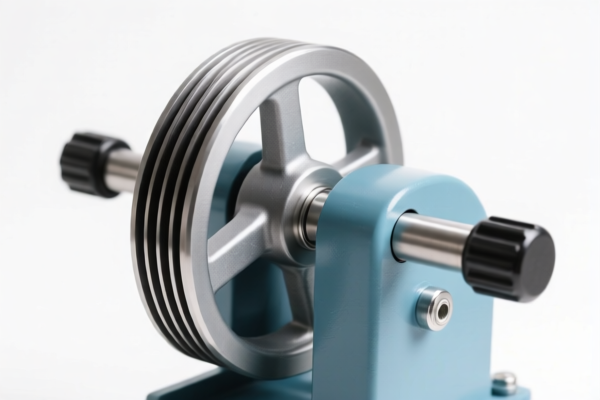
In industrial trade, "Triangular Pulley" typically refers to V-Pulleys (Grooved Pulleys) used in power transmission systems. These components transmit motion and power from a motor to other machinery using V-belts.
Key Classification Logic: 1. Material Composition: Is it made of Iron/Steel? Or is it a precision mechanical assembly? 2. Specific Function: Is it strictly a "Pulley" part of a transmission system? 3. Processing Level: Is it merely a generic metal article or a finished mechanical part?
⚠️ Critical Distinction:
- Generic Iron/Steel Parts: Simple grooved wheels, often stamped or forged, lacking complex bearings or gearing → May fall under Chapter 73 (Articles of Iron/Steel).
- Precision Transmission Parts: Specific grooved pulleys designed for belt drives, often with precise tolerances → May fall under Chapter 84 (Machinery).
- Other Parts: If it doesn't fit specific mechanical descriptions → May fall under 8483.50.90.80.
📦 II. HS Code Classification Details (2026 Latest Tariff Reference)
Based on the provided data, here are the four possible classifications for "Triangular Pulleys" depending on their manufacturing process and specific design:
| HS Code | Product Description | Application Scenario | Key Characteristics |
|---|---|---|---|
7326.90.86.88 |
Other articles of iron or steel: Other | Generic metal pulleys, cast iron V-pulleys, simple grooved wheels | ✅ Material: Iron/Steel ✅ Process: Cast/Stamped ❌ Specificity: Generic "Other" |
7326.19.00.80 |
Other articles of iron or steel: Forged or stamped, but not further worked | Stamped steel pulleys, simple formed metal wheels | ✅ Material: Iron/Steel ✅ Process: Forged/Stamped ✅ Work Level: Not further worked |
8483.50.90.40 |
Transmission shafts... Flywheels and pulleys...: Grooved pulleys | Specific V-pulleys (Triangular pulleys) for belt drive systems | ✅ Function: Transmission ✅ Type: Grooved Pulley ⚠️ Note: Specific mechanical part |
8483.50.90.80 |
Transmission shafts... Flywheels and pulleys...: Other | Other flywheels/pulleys not classified as grooved pulleys under 8483.50.90.40 | ✅ Function: Transmission ❌ Type: Non-grooved or other mechanical parts |
🔍 Key Insight:
- The term "Triangular Pulley" strongly implies a Grooved Pulley (for V-belts). Therefore,8483.50.90.40is the most precise classification if the item is a finished mechanical transmission component.
- If the item is a raw or semi-finished iron/steel part without specific mechanical finishing for transmission, it may be classified under Chapter 73 (7326.90.86.88or7326.19.00.80).
-8483.50.90.80is a fallback for "Other" transmission parts that are not grooved pulleys.
💰 III. 2026 Latest Tariff Rate Breakdown (Including Surtaxes & Policies)
✅ Applicable Country: United States (US)
✅ Origin: China (CN)
✅ Effective Date: Current rates apply as per provided data
🎯 1. Chapter 73 Classifications (Generic Iron/Steel Articles)
A. 7326.90.86.88 – Other articles of iron or steel
B. 7326.19.00.80 – Forged or stamped articles
| Item | Detail |
|---|---|
| Base Tariff | 2.9% |
| Section 301 Surcharge | 25.0% |
| Steel/Aluminum/Copper Surcharge | 50.0% |
| Total Tax Rate | 77.9% |
| Tax Calculation | CIF Value × 77.9% |
| De Minimis Exemption | ❌ Not Eligible (High tax rate prohibits de minimis clearance) |
| Legal Basis | Base Tariff + USITC 301 + Section 232/Steel Surcharge |
📌 Explanation:
- These items are classified as Iron/Steel Articles.
- They are subject to the Base Tariff (2.9%) + Section 301 Tariff (25.0%) + Steel/Aluminum/Copper Surcharge (50.0%).
- Total Effective Rate: 77.9%. This is an extremely high tariff, making import highly cost-ineffective.
- ⚠️ Warning: If your triangular pulley is considered a "steel article" rather than a "machinery part," this 77.9% rate applies.
🎯 2. Chapter 84 Classifications (Mechanical Transmission Parts)
A. 8483.50.90.40 – Grooved Pulleys
| Item | Detail |
|---|---|
| Base Tariff | 2.8% |
| Section 301 Surcharge | 25.0% |
| Total Tax Rate | 27.8% |
| Tax Calculation | CIF Value × 27.8% |
| De Minimis Exemption | ❌ Not Eligible |
| Legal Basis | Base Tariff + USITC 301 |
📌 Explanation:
- This is the most likely classification for "Triangular Pulleys" (V-belt pulleys) if they are finished mechanical parts.
- Total Effective Rate: 27.8%.
- Significantly Lower than Chapter 73 rates (77.9%).
- Key Requirement: Must be clearly identified as a "Grooved Pulley" for transmission, not a generic iron part.
B. 8483.50.90.80 – Other Flywheels and Pulleys
| Item | Detail |
|---|---|
| Base Tariff | 0.0% |
| Section 301 Surcharge | 0.0% |
| Total Tax Rate | 0.0% |
| Tax Calculation | No tariff |
| De Minimis Exemption | ❓ Potentially Eligible (Check de minimis threshold for 0% items) |
| Legal Basis | Free Trade or Exempt Category |
📌 Explanation:
- This code applies to other flywheels/pulleys not classified as "Grooved Pulleys" under 8483.50.90.40.
- Total Effective Rate: 0.0%.
- Critical Note: If your product is a Triangular (V) Pulley, customs may reject this classification in favor of8483.50.90.40(27.8%) because "Triangular Pulley" inherently implies a groove.
- Risk: Misclassification here could lead to audits, back taxes, and penalties.
🛠️ IV. Customs Clearance Practical Advice (Pitfall Avoidance Guide)
✅ 1. Documentation Checklist (Essential)
| Document | Must Provide | Purpose |
|---|---|---|
| ✅ Product Specification Sheet | ✔️ | Detailed dimensions, groove profile (e.g., SPA, SPB, SPD), material (Cast Iron, Steel, Aluminum) |
| ✅ Technical Drawings | ✔️ | Show groove shape to prove it is a Grooved Pulley (V-shape) |
| ✅ Product Photos | ✔️ | Clear images of the pulley, showing the grooves (triangular/V-shape) |
| ✅ Commercial Invoice | ✔️ | Accurate description: "Cast Iron Grooved Pulley for V-Belt Transmission" |
| ✅ Bill of Lading / Packing List | ✔️ | Weight and quantity details |
| ✅ Origin Certificate | ✔️ | If applicable, to claim preferential rates (though US-China tariffs are high) |
✅ 2. Classification Strategy (Key Tactics)
🔥 "Identify as Grooved Pulley, Avoid 'Steel Article' Trap!"
| Scenario | Correct Classification | Tariff | Why? |
|---|---|---|---|
| Finished V-Pulley (with grooves) | 8483.50.90.40 |
27.8% | Fits "Grooved Pulley" definition in Ch. 84. Lower tax than Ch. 73. |
| Raw/Stamped Steel Wheel (no specific groove for belts) | 7326.19.00.80 or 7326.90.86.88 |
77.9% | Classified as generic iron/steel article. High tax. |
| Non-Grooved Flywheel | 8483.50.90.80 |
0.0% | Only if it is not a grooved pulley. High audit risk if misdeclared. |
⚠️ Critical Warning:
- Do NOT declare "Triangular Pulley" as a generic "Steel Part" (7326...) if it is used for belt transmission. Customs may reclassify it to8483.50.90.40anyway, but it’s safer to declare correctly from the start.
- Do NOT declare a V-Pulley as8483.50.90.80(0%) if it has grooves. Customs will likely reclassify it to8483.50.90.40(27.8%) and charge back taxes.
✅ 3. Special Considerations
| Situation | Recommendation |
|---|---|
| Material: Aluminum vs. Cast Iron | Both 8483.50.90.40 (27.8%) and 7326... (77.9%) apply based on function. Function (Grooved Pulley) > Material. |
| OEM Custom Pulleys | Provide OEM drawings to prove it is a specialized transmission part, not a generic metal item. |
| Small Quantity Samples | If under de minimis value ($800), 0% rate might apply regardless of code, but high-risk items may still be scrutinized. |
| Pre-Ruling Request | Highly recommended. Apply for an Advance Ruling from CBP to confirm 8483.50.90.40 classification for your specific pulley design. |
🌍 V. Global Market Comparison (2026)
| Country/Region | Recommended HS Code | Tariff (China Origin) | Key Requirement |
|---|---|---|---|
| 🇺🇸 USA | 8483.50.90.40 |
27.8% | Declare as "Grooved Pulley" |
| 🇺🇸 USA (Incorrect) | 7326.90.86.88 |
77.9% | Avoid! High tax for "Steel Articles" |
| 🇨🇳 China | 8483.50.90.40 |
~10% | Import duty |
| 🇪🇺 EU | 8483.50.90 |
~1.7% | Standard machinery parts |
| 🇦🇺 Australia | 8483.50.90 |
~5% | General duty |
📌 Conclusion:
- USA has two possible rates: 27.8% (Correct for Grooved Pulleys) vs. 77.9% (Incorrect for Generic Steel).
- Accuracy is key. Misclassification as "Steel Article" results in 50% extra tax.
📌 VI. Common Errors & Pitfalls (Lessons Learned)
❌ Error 1: Declaring "Triangular Pulley" as "Steel Parts" (7326...)
👉 Consequence: 77.9% Tariff instead of 27.8%. Overpaying $50.1% on every dollar!
❌ Error 2: Declaring "Grooved Pulley" as "Other Pulleys" (8483.50.90.80) to get 0%
👉 Consequence: Customs Audit. Back taxes of 27.8% + Penalties + Interest. High risk!
❌ Error 3: Providing vague descriptions like "Metal Wheel"
👉 Consequence: Customs will guess. Likely to classify as 7326 (77.9%) due to lack of specific "Transmission" evidence.
✅ Correct Practice:
"Cast Iron Grooved Pulley, V-Belt Type, For Power Transmission, Model XYZ, Groove Profile: SPA"
🎯 VII. Conclusion: Precise Classification Saves Money!
🎯 Remember:
🔹 "Grooved Pulley = 8483.50.90.40 = 27.8%"
🔹 "Generic Steel Part = 7326... = 77.9%"
🔹 "Misclassification = 50% Penalty + Back Taxes!"
📌 Pro Tip:
If your product is a Triangular (V) Pulley, always declare it as "Grooved Pulley" under
8483.50.90.40. This saves you 50.1% in tariffs compared to classifying it as a generic steel article.
🚀 Apply for an Advance Ruling to lock in this classification and avoid customs disputes.
📣 Immediate Action:
📞 Contact your freight forwarder with technical drawings showing the V-groove.
📄 Ensure your commercial invoice clearly states "Grooved Pulley for V-Belt Transmission".
💼 Save 50% on tariffs by declaring correctly!
✨ Professional Clearance Starts with Accurate Classification!
💼 Your Profit Margin Depends on the HS Code!
Customer Reviews
About HS Code Classification
The Harmonized System (HS) is an internationally standardized nomenclature developed by the World Customs Organization (WCO) to classify traded products. Over 200 countries use the HS system as the basis for customs tariffs, trade statistics, and import/export regulations.
Each HS code follows a hierarchical structure:
- Chapter (2 digits) — Broad category of goods (e.g., Chapter 84: Machinery and Mechanical Appliances)
- Heading (4 digits) — More specific grouping within the chapter
- Subheading (6 digits) — Internationally standardized breakdown, used by all WCO member countries
- National subdivisions (8-10 digits) — Country-specific extensions for further classification, such as US HTSUS 10-digit codes
Correct HS code classification is essential for smooth customs clearance, accurate duty payment, and compliance with trade regulations. Misclassification can lead to customs delays, overpayment of duties, or penalties.
When importing from CN to US, the applicable tariff rates may include:
- Most-Favored-Nation (MFN) rate — The standard duty rate applied to WTO members
- General rate — Applied to countries without trade agreements
- Trade remedy duties — Additional tariffs such as Section 301 (anti-dumping), Section 232 (national security), or countervailing duties
The information provided on this page is for reference purposes only. For official classification, please consult with your local customs authority or a licensed customs broker.