Trick or treat bag
CN → US| HS Code | Tariff Rate | Origin | Destination | Doc |
|---|---|---|---|---|
| 4202929315 | 52.6% | CN | US | Official Doc |
| 3926909989 | 22.8% | CN | US | Official Doc |
| 6307909891 | 24.5% | CN | US | Official Doc |
| 3926903300 | 16.5% | CN | US | Official Doc |
Product Images
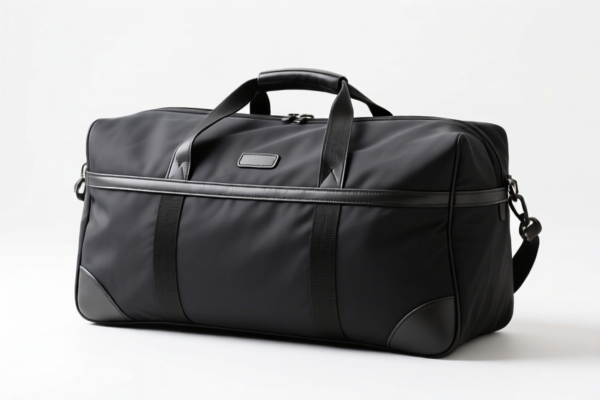
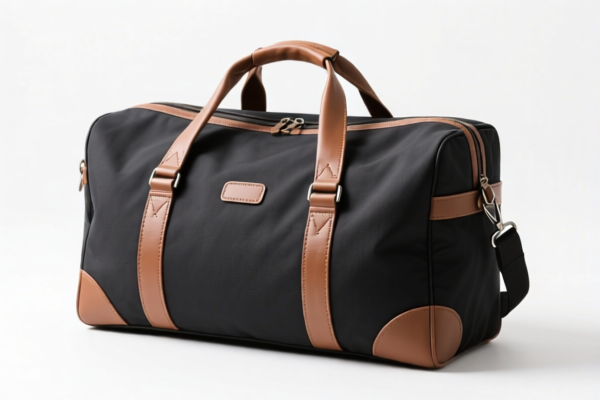
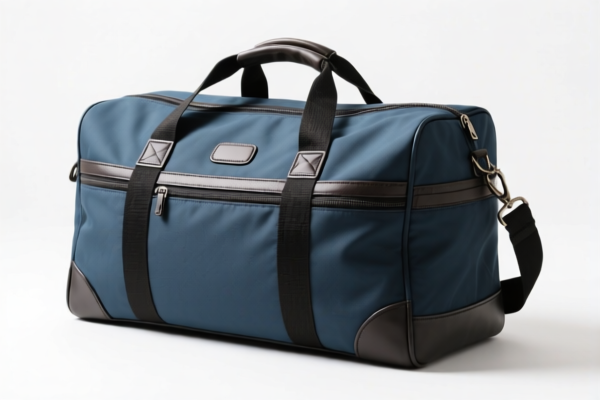
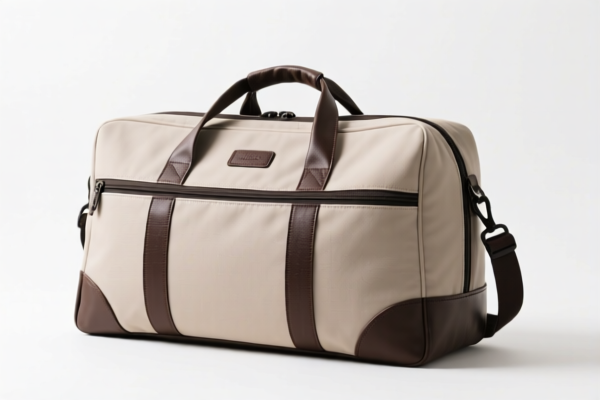
AI Analysis
🎃 Trick or Treat Bag (Halloween Costumes & Accessories)
🌐 HS Code Reference & Customs Clearance Guide | 2026 Latest Tariff Analysis | Professional Clearance Strategy
📌 I. Product Definition & Classification: What is a "Trick or Treat Bag"?
A "Trick or Treat Bag" is a small container specifically designed for collecting candy and other treats during Halloween festivities. In international trade, its classification depends heavily on material, form factor, and specific use case. It is not a single uniform product; rather, it spans multiple HS Code chapters depending on whether it is a textile sack, a plastic pail, a paper bag, or a specialized pouch.
⚠️ Key Classification Distinctions:
- If made of textile/fabric (non-leather) and used as a container for jewelry or small items → Chapter 42 (Articles of Apparel);
- If made of plastic or resembling a bag/container → Chapter 39 (Plastics) or Chapter 63 (Other Made-up Articles);
- Critical Note: Do not automatically assume it falls under "Costumes" (Chapter 61/62) if it is purely a container. The primary function dictates the code.
📦 II. HS Code Classification Details (2026 Latest Tariff Authority)
Based on the provided data, here are the four most likely HS Codes for a "Trick or Treat Bag," along with their specific tax implications and rationales.
| HS Code | Product Description | Material/Shape Inference | Key Feature |
|---|---|---|---|
4202.92.93.15 |
Articles of apparel and clothing accessories, of textile materials or of plastic sheeting, not elsewhere specified or included; other; other; with outer surface of textile materials or of plastic sheeting; other; other. | Textile/Non-Leather Container | Classified as a "Jewelry Box-like Container" due to shape and textile nature. |
3926.90.99.89 |
Other articles of plastics and articles of other materials of heading 3901 to 3914. | Plastic/Non-Metallic Film | Fits "Other Plastic Articles" category; thin plastic bags or pails. |
6307.90.98.91 |
Other made-up articles (including dress patterns). | Plastic or Paper Finished Article | Classified as a "Finished Product" not elsewhere specified; often applies to paper-based or composite material bags. |
3926.90.33.00 |
Other articles of plastics: Bags and pouches: With outer surface of plastic sheeting. | Plastic Bags | Specifically for plastic bags/pouches used for carrying items. |
🔍 Important Reminder:
- The material is the primary driver for classification. A fabric bag goes to4202or6307, while a plastic bag goes to3926.
- The form (bag vs. box) matters. If it’s structured like a small box (even if fabric), customs may lean toward4202.92.93.15(jewelry box analogy).
💰 III. 2026 Latest Tariff Rate Breakdown (Including Surtaxes & Policy Add-ons)
✅ Applicable Country: United States (US)
✅ Country of Origin: China (CN)
✅ Effective Date: November 10, 2025 onwards (including subsequent imports)
🎯 1. 4202.92.93.15 —— Textile/Non-Leather Container (Jewelry Box Style)
| Item | Details |
|---|---|
| Base Tariff | 17.6% |
| Section 301 Surtax | 25.0% |
| 122 Clause Tariff | 10.0% |
| Total Tax Rate | 52.6% |
| Tax Calculation | CIF Value × 52.6% |
| De Minimis Exemption | ❌ Not Eligible (High tariff threshold prevents de minimis) |
| Legal Basis Path | Base Tariff → Section 301 → 122 Clause |
📌 Explanation:
- This code is chosen because the bag is inferred to be textile or non-leather and shaped like a container (similar to a jewelry box).
- The 52.6% total rate is extremely high, combining the base 17.6%, Section 301’s 25%, and 122 Clause’s 10%.
- Risk: High probability of customs scrutiny due to the high combined rate.
🎯 2. 3926.90.99.89 —— Other Plastic Articles
| Item | Details |
|---|---|
| Base Tariff | 5.3% |
| Section 301 Surtax | 7.5% |
| 122 Clause Tariff | 10.0% |
| Total Tax Rate | 22.8% |
| Tax Calculation | CIF Value × 22.8% |
| De Minimis Exemption | ❌ Not Eligible |
| Legal Basis Path | Base Tariff → Section 301 → 122 Clause |
📌 Note:
- This code applies if the bag is made of plastic or non-metallic film and fits the general "Other Plastic Articles" category.
- 22.8% is moderate compared to textile containers but still significant.
- Common for thin plastic trick-or-treat bags or pail-style plastic containers.
🎯 3. 6307.90.98.91 —— Other Made-Up Articles
| Item | Details |
|---|---|
| Base Tariff | 7.0% |
| Section 301 Surtax | 7.5% |
| 122 Clause Tariff | 10.0% |
| Total Tax Rate | 24.5% |
| Tax Calculation | CIF Value × 24.5% |
| De Minimis Exemption | ❌ Not Eligible |
| Legal Basis Path | Base Tariff → Section 301 → 122 Clause |
📌 Explanation:
- This code is for finished products made from plastic or paper that don’t fit more specific plastic or textile categories.
- 24.5% is slightly higher than the plastic bag code (3926.90.33.00) but lower than the textile container code.
- Often used for paper-based trick-or-treat bags or composite material bags.
🎯 4. 3926.90.33.00 —— Plastic Bags and Pouches
| Item | Details |
|---|---|
| Base Tariff | 6.5% |
| Section 301 Surtax | 0.0% |
| 122 Clause Tariff | 10.0% |
| Total Tax Rate | 16.5% |
| Tax Calculation | CIF Value × 16.5% |
| De Minimis Exemption | ❌ Not Eligible |
| Legal Basis Path | Base Tariff → 122 Clause |
📌 Key Advantage:
- Lowest Tax Rate (16.5%) among all options.
- Why? The Section 301 surtax is 0% for this specific subheading.
- Applies specifically to plastic bags/pouches with an outer surface of plastic sheeting.
- Recommendation: If your product is a simple plastic bag, this is the optimal code to minimize costs.
🛠️ IV. Customs Clearance Practical Advice (Avoiding Pitfalls)
✅ 1. Preparation Checklist (All Required)
| Document | Required | Description |
|---|---|---|
| ✅ Product Specification Sheet | ✔️ | Must detail material (textile, plastic, paper), dimensions, and capacity. |
| ✅ Product Photos | ✔️ | Clear images of the bag, including any handles, zippers, or closures. |
| ✅ Commercial Invoice | ✔️ | Must clearly state "Trick or Treat Bag" and specify material. |
| ✅ Packing List | ✔️ | Show quantity per box and total cartons. |
| ✅ Material Declaration | ✔️ | Explicitly state if it’s plastic, textile, or paper. |
✅ 2. Declaration Tips (Key Mnemonics)
🔥 "Material Determines Code, Bag Shape Matters, Tax Savings are Real!"
| Scenario | Correct Declaration | Wrong Approach |
|---|---|---|
| Simple Plastic Bag | 3926.90.33.00 |
Misdeclaring as "Plastic Articles" → 22.8% |
| Fabric/Jewelry-Box Style Bag | 4202.92.93.15 |
Misdeclaring as "Plastic" → Penalty |
| Paper Bag | 6307.90.98.91 |
Misdeclaring as "Plastic" → 10% surtax error |
| Plastic Pail (Hard Container) | 3926.90.99.89 |
Misdeclaring as "Bag" → Classification dispute |
✅ 3. Special Case Handling
| Scenario | Handling Advice |
|---|---|
| OEM Custom Bags | Provide design drawings to prove material and shape. |
| Bundled with Costumes | If sold as part of a costume set, declare as part of the costume if possible, but usually, the bag is a separate accessory. |
| Mixed Materials | If plastic handle + fabric body, customs may classify based on essential character. Usually, fabric dominates → 4202 or 6307. |
🌍 V. Global Market Comparison (2026 Latest)
| Country/Region | Recommended HS Code | Tariff | Notes |
|---|---|---|---|
| 🇺🇸 USA | 3926.90.33.00 |
16.5% | Best option if plastic. High scrutiny on textiles (4202 → 52.6%). |
| 🇨🇳 China | 6307.90.98.91 |
~7-10% | Lower base tariffs. Check for anti-dumping if applicable. |
| 🇪🇺 EU | 4202.92 or 3926 |
0-4% | No Section 301 or 122 Clause. Much lower costs. |
| 🇬🇧 UK | 4202.92 or 3926 |
0-4% | Post-Brexit rules apply. Generally lower than US. |
| 🇨🇦 Canada | 4202.92 or 3926 |
0-5% | CUSMA benefits may apply if sourced from Mexico/US. |
📌 Conclusion:
- USA is the most expensive market for trick-or-treat bags due to Section 301 and 122 Clause tariffs.
- Plastic bags (3926.90.33.00) offer the lowest US tariff (16.5%).
- Textile/Jewelry-style bags (4202.92.93.15) are the most expensive (52.6%).
- Strategy: If possible, design and source plastic bags to save 36% in taxes compared to textile containers.
📌 VI. Common Errors & Pitfalls (Lessons Learned)
❌ Error 1: Declaring a fabric bag as a plastic bag
👉 Consequence: Customs inspection reveals material mismatch → Seizure, fines, or return.
❌ Error 2: Using "Costume Accessory" as the product name without specifying material
👉 Consequence: Ambiguity leads to conservative classification (highest tax) → Overpayment.
❌ Error 3: Ignoring the 122 Clause
👉 Consequence: Forgetting the 10% surtax → Unexpected bill at clearance.
❌ Error 4: Declaring a structured box as a bag
👉 Consequence: Misclassification → 6307 vs 4202 dispute → Delays.
✅ Correct Approach:
"Plastic Trick or Treat Bag, 10 inches, with handle, for Halloween candy collection, Model XYZ"
OR
"Textile Trick or Treat Bag, shaped like a small pouch/container, for Halloween"
🎯 VII. Conclusion: Smart Classification, Cost Savings!
🎯 Remember the Mnemonic:
🔹 "Plastic Bags Win (16.5%), Textile Boxes Lose (52.6%), Paper is Middle (24.5%)."
🔹 "Material First, Shape Second, Tax Third!"
📌 Pro Tip:
If your trick-or-treat bag is originally from Vietnam, Mexico, or Thailand, you may qualify for IEEPA Exemptions or lower tariffs under free trade agreements.
Recommend pre-clearance ruling for new designs to avoid surprises.
📣 Immediate Action:
📞 Contact a professional customs broker + Provide product photos + Apply for HS Code pre-ruling
🚀 Ensure your Halloween goods clear customs smoothly, maximize profits, and delight customers!
✨ Professional clearance starts with accurate classification!
💼 Every percentage point of tax saved is pure profit!
Customer Reviews
About HS Code Classification
The Harmonized System (HS) is an internationally standardized nomenclature developed by the World Customs Organization (WCO) to classify traded products. Over 200 countries use the HS system as the basis for customs tariffs, trade statistics, and import/export regulations.
Each HS code follows a hierarchical structure:
- Chapter (2 digits) — Broad category of goods (e.g., Chapter 84: Machinery and Mechanical Appliances)
- Heading (4 digits) — More specific grouping within the chapter
- Subheading (6 digits) — Internationally standardized breakdown, used by all WCO member countries
- National subdivisions (8-10 digits) — Country-specific extensions for further classification, such as US HTSUS 10-digit codes
Correct HS code classification is essential for smooth customs clearance, accurate duty payment, and compliance with trade regulations. Misclassification can lead to customs delays, overpayment of duties, or penalties.
When importing from CN to US, the applicable tariff rates may include:
- Most-Favored-Nation (MFN) rate — The standard duty rate applied to WTO members
- General rate — Applied to countries without trade agreements
- Trade remedy duties — Additional tariffs such as Section 301 (anti-dumping), Section 232 (national security), or countervailing duties
The information provided on this page is for reference purposes only. For official classification, please consult with your local customs authority or a licensed customs broker.