Trolley Case
CN → US| HS Code | Tariff Rate | Origin | Destination | Doc |
|---|---|---|---|---|
| 4202929700 | 52.6% | CN | US | Official Doc |
| 6307909891 | 24.5% | CN | US | Official Doc |
| 6307909887 | 24.5% | CN | US | Official Doc |
| 4202929336 | 52.6% | CN | US | Official Doc |
| 8517790000 | 67.5% | CN | US | Official Doc |
Product Images
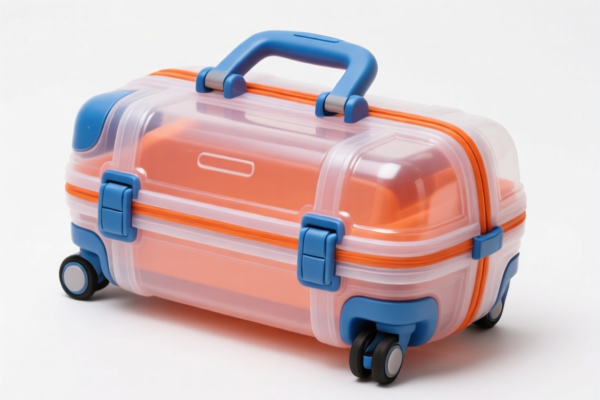
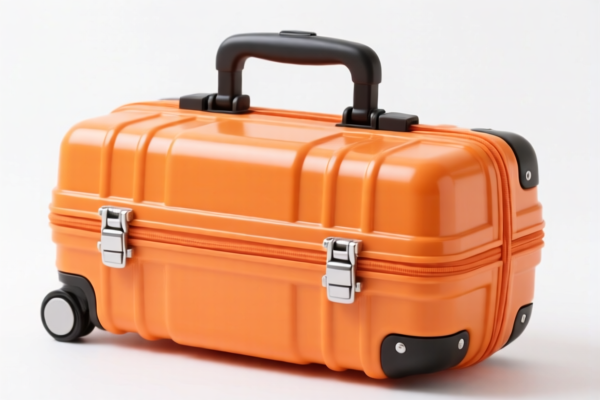
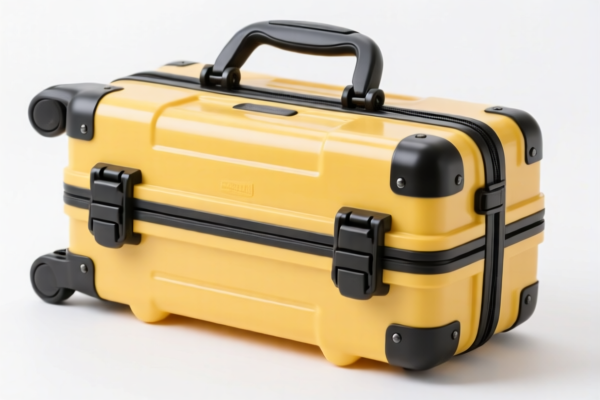
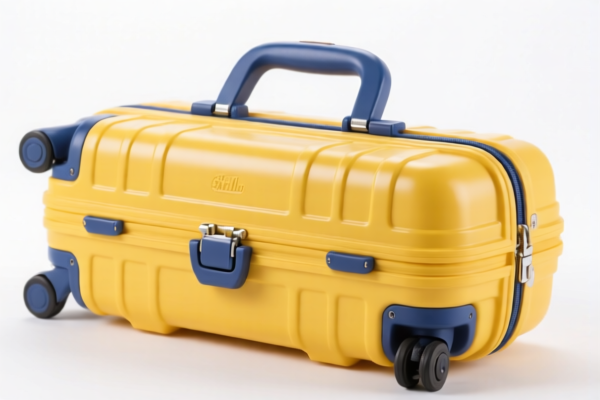
AI Analysis
🧳 Trolley Case / Luggage Covers: The Ultimate HS Code & Customs Clearance Guide
🌐 HS Code Reference & Customs Strategy | 2026 Latest Tariff Analysis | Professional Clearance Guide
📌 I. Product Definition & Classification: Is It a Bag or an Accessory?
A Trolley Case (often referring to luggage covers, protective shells, or travel bags) is a versatile product. However, in international trade, its material, structure, and primary function dictate its HS Code classification. Misclassification can lead to massive tariff differences (from 24.5% to 67.5%+).
In the provided data, these items are categorized into two main groups:
1. Travel Bags/Containers (Chapter 42): Items that function as bags, cases, or containers, often made of textile or plastic/silicone, designed for carrying or protecting items.
2. Made-up Articles (Chapter 63): Items classified as "other made-up articles," often simpler covers or protective sheets made of fabric or synthetic fibers, not primarily designed as "containers" for carrying goods.
⚠️ Key Distinction:
- If the item is a structured bag/case (even if for protection) with handles, straps, or a form that holds other items, it likely falls under Chapter 42 (Total Tax ~52.6%).
- If the item is a simple cover, sheet, or pad (e.g., a slip-on fabric sleeve for a suitcase) without bag-like features, it likely falls under Chapter 63 (Total Tax ~24.5%).
- Note: There is one outlier (8517.79.00.00) for "Plastic Protective Shells" for communication equipment, which is NOT luggage. This is a critical error trap for generic "plastic case" descriptions.
📦 II. HS Code Classification Details (2026 Latest Tariff Authority)
Based on the provided <DATA>, here are the specific HS Codes for "Trolley Case" or "Luggage Protective Covers":
| HS Code | Product Summary | Material/Form | Total Tax Rate |
|---|---|---|---|
| 4202.92.97.00 | Travel Luggage Protector | Textile Material or Plastic/Silicone | 52.6% |
| 6307.90.98.91 | Luggage Cover (Finished Article) | Plastic or Fabric | 24.5% |
| 6307.90.98.87 | Luggage Cover (Finished Article) | Synthetic Fibers (Protective Pad/Cover) | 24.5% |
| 4202.92.93.36 | Travel Case Accessory | Plastic Sheet or Textile Material | 52.6% |
| 8517.79.00.00 | ERROR TRAP: Plastic Shell for Communication Equipment | Plastic (for Comm. Devices) | 67.5% |
🔍 Critical Warning:
- Do NOT use8517.79.00.00for luggage. This code is for telecommunications equipment parts. Using it for a suitcase cover is a serious misclassification.
- The highest tax rates (52.6%) apply to Chapter 42 items, which are viewed as "Travel Goods" or "Containers."
- The lower tax rates (24.5%) apply to Chapter 63 items, viewed as "Other Made-up Textile/Plastic Articles" (simple covers).
💰 III. 2026 Latest Tariff Rate Breakdown (USA Import from China)
✅ Applicable Country: United States (US)
✅ Origin: China (CN)
✅ Effective Date: Post-2025 Policies (Including Section 301 & IEEPA)
🎯 1. Chapter 42 Items: 4202.92.97.00 & 4202.92.93.36
(High Tax: 52.6%)
| Item | Details |
|---|---|
| Base Tariff | 17.6% |
| Section 301 Tariff | 25.0% |
| Section 122 Tariff | 10.0% |
| Total Tariff | 52.6% |
| Calculation | CIF Value × 52.6% |
| De Minimis Exemption? | ❌ NO (Denied for Section 301/122 goods) |
📌 Explanation:
- These goods are classified as "Travel Goods." The US imposes a 17.6% base tariff.
- Section 301 adds 25% due to trade tensions with China.
- Section 122 adds another 10%.
- Result: A 52.6% effective tariff. This is a significant cost driver.
🎯 2. Chapter 63 Items: 6307.90.98.91 & 6307.90.98.87
(Medium Tax: 24.5%)
| Item | Details |
|---|---|
| Base Tariff | 7.0% |
| Section 301 Tariff | 7.5% |
| Section 122 Tariff | 10.0% |
| Total Tariff | 24.5% |
| Calculation | CIF Value × 24.5% |
| De Minimis Exemption? | ❌ NO |
📌 Explanation:
- These goods are classified as "Other Made-up Articles" (e.g., simple fabric covers).
- The base tariff is lower (7.0%).
- Section 301 adds only 7.5% (instead of 25%).
- Section 122 adds 10%.
- Result: A 24.5% effective tariff. This is ~28% cheaper than Chapter 42 classification.
🎯 3. ERROR TRAP: 8517.79.00.00 (Communication Equipment Parts)
(Highest Tax: 67.5%)
| Item | Details |
|---|---|
| Base Tariff | 0.0% |
| Section 301 Tariff | 7.5% |
| Section 122 Tariff | 10.0% |
| Steel/Aluminum/Copper Surtax | 50% (If applicable material) |
| Total Tariff | 67.5% (Base + 301 + 122) |
| Calculation | CIF Value × 67.5% |
📌 Warning:
- This code is for communication equipment. If you misclassify luggage as this, you face the highest tax rate and potential legal penalties for false declaration.
- Do not use this for luggage covers.
🛠️ IV. Customs Clearance Practical Advice (Avoid Pitfalls)
✅ 1. Documentation Checklist (Mandatory)
| Document | Required? | Notes |
|---|---|---|
| ✅ Product Specifications | ✔️ | Must specify material (Textile vs. Plastic) and structure (Bag vs. Cover). |
| ✅ Product Photos | ✔️ | Clear images showing if it has handles/straps (Chapter 42) or is just a sleeve (Chapter 63). |
| ✅ Commercial Invoice | ✔️ | Accurate description: "Luggage Protective Cover" or "Travel Bag." |
| ✅ Packing List | ✔️ | Must match invoice and invoice value. |
| ✅ HS Code Pre-Ruling | ✔️ | Highly Recommended to confirm Chapter 42 vs. 63. |
✅ 2. Classification Strategy (Key Takeaway)
| Scenario | Recommended HS Code | Tax Rate | Strategy |
|---|---|---|---|
| Structured Travel Bag (with handles, zippers, capacity to carry items) | 4202.92.97.00 |
52.6% | Accept higher tax if it is structurally a bag. |
| Simple Slip-On Cover (no handles, just protects suitcase surface) | 6307.90.98.91 / 87 |
24.5% | Optimize for lower tax by emphasizing "Cover/Protective Pad" nature. |
| Plastic Shell for Electronics | 8517.79.00.00 |
67.5% | Avoid unless it is truly for telecom equipment. |
🔥 Pro Tip:
If your product is a luggage cover (slip-on), argue for Chapter 63 by highlighting that it is a "Made-up Article" for protection, not a "Bag" for carrying. This can save ~28% in tariffs.
✅ 3. Common Mistakes & Penalties
❌ Mistake 1: Labeling a simple fabric cover as a "Travel Bag."
👉 Consequence: Tax jumps from 24.5% to 52.6%.
❌ Mistake 2: Misclassifying luggage as "Communication Equipment Parts."
👉 Consequence: Tax jumps to 67.5% + potential customs fraud charges.
❌ Mistake 3: Ignoring Section 122 and 301 tariffs.
👉 Consequence: Underpayment, audits, and penalties.
🌍 V. Global Market Comparison (2026)
| Region | Recommended HS Code | Estimated Tax | Notes |
|---|---|---|---|
| 🇺🇸 USA | 6307.90.98.91 |
24.5% | Best rate for covers. 4202 is 52.6%. |
| 🇨🇳 China | 6307.90.98.91 |
Low (5-10%) | No Section 301/122. |
| 🇪🇺 EU | 4202.92 or 6307.90 |
Varies (0-12%) | No Section 301. Check local rules. |
| 🇬🇧 UK | 4202.92 or 6307.90 |
Varies (0-12%) | Post-Brexit rules apply. |
📌 Conclusion:
- USA is the most expensive market due to Section 301 and 122 tariffs.
- Chapter 63 classification is crucial for cost optimization.
- Always provide clear product definitions to avoid misclassification.
📌 VI. Final Recommendations
✅ Action Plan:
1. Analyze Product Structure: Does it have handles/straps? If yes → Chapter 42 (52.6%). If no → Chapter 63 (24.5%).
2. Prepare Documentation: Clearly describe the item as "Luggage Protective Cover" if it is a simple cover.
3. Apply for Pre-Ruling: If unsure, request an HS Code pre-ruling from US Customs (CBP).
4. Avoid Misclassification: Never use 8517.79.00.00 for luggage.
🎯 Remember:
"Simple Cover = 24.5% | Structured Bag = 52.6% | Telecom Shell = 67.5% (Avoid!)"
📣 Immediate Action:
📞 Consult a licensed customs broker.
📄 Submit accurate product descriptions and photos.
🚀 Optimize your HS Code to save up to 28% in tariffs.
✨ Professional Clearance, Start with Precise Classification!
💼 Every Dollar Saved is a Dollar Earned!
Customer Reviews
About HS Code Classification
The Harmonized System (HS) is an internationally standardized nomenclature developed by the World Customs Organization (WCO) to classify traded products. Over 200 countries use the HS system as the basis for customs tariffs, trade statistics, and import/export regulations.
Each HS code follows a hierarchical structure:
- Chapter (2 digits) — Broad category of goods (e.g., Chapter 84: Machinery and Mechanical Appliances)
- Heading (4 digits) — More specific grouping within the chapter
- Subheading (6 digits) — Internationally standardized breakdown, used by all WCO member countries
- National subdivisions (8-10 digits) — Country-specific extensions for further classification, such as US HTSUS 10-digit codes
Correct HS code classification is essential for smooth customs clearance, accurate duty payment, and compliance with trade regulations. Misclassification can lead to customs delays, overpayment of duties, or penalties.
When importing from CN to US, the applicable tariff rates may include:
- Most-Favored-Nation (MFN) rate — The standard duty rate applied to WTO members
- General rate — Applied to countries without trade agreements
- Trade remedy duties — Additional tariffs such as Section 301 (anti-dumping), Section 232 (national security), or countervailing duties
The information provided on this page is for reference purposes only. For official classification, please consult with your local customs authority or a licensed customs broker.