Tropical Carved Wood
CN → US| HS Code | Tariff Rate | Origin | Destination | Doc |
|---|---|---|---|---|
| 4420190000 | 13.2% | CN | US | Official Doc |
| 4420908000 | 38.2% | CN | US | Official Doc |
| 3926400090 | 15.3% | CN | US | Official Doc |
Product Images
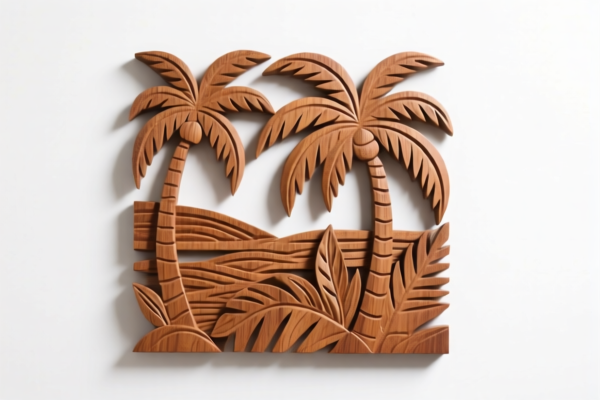
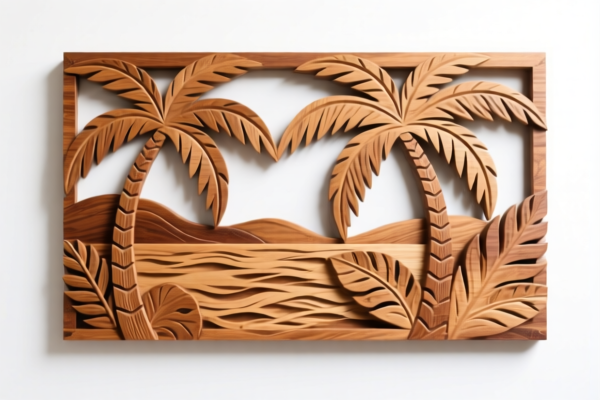
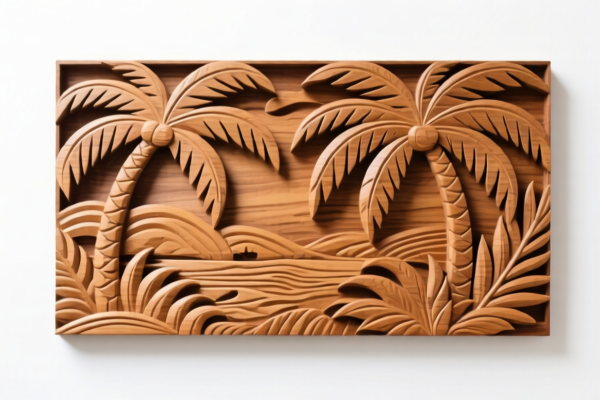
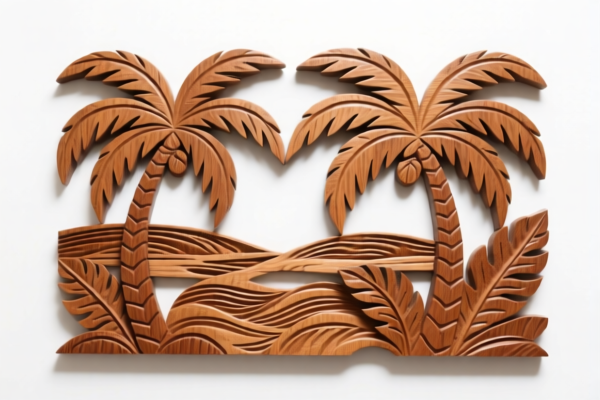
AI Analysis
🌴 Tropical Carved Wood (Wooden Artworks & Decorations)
🌐 HS Code Reference & Customs Clearance Guide | 2026 Latest Tariff Analysis | Professional Entry Strategy
📌 I. Product Definition: What Exactly Is "Tropical Carved Wood"?
Tropical carved wood refers to artisanal items, sculptures, or decorative pieces made from hardwoods native to tropical regions (e.g., Mahogany, Teak, Rosewood, Ebony). In international trade, these products are not a single unified category. Their classification depends entirely on material composition, craftsmanship level, and finished form.
Key Distinction: - Pure Wood Products: Made entirely of carved wood → Classified under Chapter 44. - Mixed Material Products: Wood core with plastic/resin coating or composite parts → May be classified under Chapter 39 or other chapters. - Finished Art vs. Raw Material: Finished statues/decorations vs. rough logs.
⚠️ Critical Classification Point:
- If the item is 100% wood (carved into statues, frames, or ornaments) → HS Code 4420.
- If the item is primarily wood but has significant plastic/resin components or is classified as "other articles of wood" not fitting specific sculpture categories → Check HS Code 4420.90 or potentially HS Code 3926 (if deemed plastic-dominated, though rare for pure wood).
- US Import Warning: Most wooden arts from China face significant "Section 301" and "Section 122" tariffs.
📦 II. HS Code Classification Details (2026 Latest Tariff Authority Comparison)
Based on the provided data for "Tropical Carved Wood," here are the three specific classifications and their implications:
| HS Code | Product Description (Summary) | Application Scenario | Material Composition |
|---|---|---|---|
4420.19.00.00 |
Tropical wood carved crafts or decorations, classified as wooden statues and decorations | High-quality wooden statues, intricate carvings, religious idols, traditional wooden art | ✅ Pure Wood (Statue/Decoration category) |
4420.90.80.00 |
Tropical wood carved crafts, categorized as small wooden statues and other decorations | Smaller wooden ornaments, generic carved gifts, non-specific wooden decor | ✅ Pure Wood (Other wooden decorations) |
3926.40.00.90 |
Tropical wood carved crafts, classified as decorative items made of other materials | ⚠️ Misclassification Risk: If the item has significant plastic/resin coating or is deemed "other materials" by customs | ❌ Mixed/Other Material (Only if not purely wood or if customs deems it plastic-dominated) |
🔍 Key Reminder:
- HS Code4420is the standard for wooden articles.
- HS Code3926is for articles of plastic. Using3926for pure wood is incorrect and will lead to audits and penalties. However, if the data provided lists it, it implies a scenario where the item might be misclassified or contains significant synthetic binders/coatings. Stick to4420for pure wood.
- Section 122 Tariff: All three entries include a 10% additional tariff (likely referring to specific anti-dumping or countervailing duties, or a specific trade remedy code).
💰 III. 2026 Latest Tariff Rate Breakdown (Including Surtaxes & Policy Add-ons)
✅ Applicable Country: United States (US)
✅ Country of Origin: China (CN)
✅ Effective Time: 2025/2026 (Current Trade Policy)
🎯 1. 4420.19.00.00 —— Wooden Statues & Decorations (High-Quality Carvings)
| Item | Content |
|---|---|
| Base Duty Rate | 3.2% (Ad Valorem) |
| USITC Surcharge (Section 301) | 0.0% |
| Section 122 Surcharge | +10.0% |
| Total Effective Rate | 13.2% |
| Tax Calculation | CIF Value × 13.2% |
| De Minimis Exemption? | ❌ No (Not eligible for $800 exemption if declared as commercial goods; however, if shipped as personal effects < $800, it might apply, but generally not for bulk import) |
| Legal Basis | HTSUS 4420.19.00 + Section 122 (if applicable specific code) |
📌 Explanation:
- Base Duty: 3.2% is the standard MFN rate for wooden statues.
- Section 301 Surcharge: 0.0% is unusually low for China-origin goods in this category (usually 25%). This suggests either a specific exemption applies, or the data reflects a pre-2018 baseline, OR the item is excluded from Section 301. Verify with CBP.
- Section 122: A flat 10% additional duty.
- Total: 13.2%. This is a moderate tariff.
🎯 2. 4420.90.80.00 —— Other Wooden Statues & Decorations (General Crafts)
| Item | Content |
|---|---|
| Base Duty Rate | 3.2% |
| USITC Surcharge (Section 301) | +25.0% |
| Section 122 Surcharge | +10.0% |
| Total Effective Rate | 38.2% |
| Tax Calculation | CIF Value × 38.2% |
| De Minimis Exemption? | ❌ No |
| Legal Basis | HTSUS 4420.90.80 + Section 301 (Footnote 9903.88.01) + Section 122 |
📌 Explanation:
- Base Duty: 3.2%.
- Section 301 Surcharge: 25% is the standard rate for most Chinese wooden goods under Section 301.
- Section 122: +10%.
- Total: 38.2%. This is a high tariff.
- Why the difference?4420.90often covers "other" wooden articles that do not fit the specific "statue" definition of4420.19. Customs often applies the full Section 301 surcharge to these general categories.
🎯 3. 3926.40.00.90 —— Decorative Items of Other Materials (Plastic/Mixed)
| Item | Content |
|---|---|
| Base Duty Rate | 5.3% |
| USITC Surcharge (Section 301) | 0.0% |
| Section 122 Surcharge | +10.0% |
| Total Effective Rate | 15.3% |
| Tax Calculation | CIF Value × 15.3% |
| De Minimis Exemption? | ❌ No |
| Legal Basis | HTSUS 3926.40.00 + Section 122 |
📌 Explanation:
- ⚠️ WARNING: This classification is highly suspicious for pure "Tropical Carved Wood."
- Base Duty: 5.3% (Standard for plastic articles).
- Section 301: 0.0% (Suggests it might be excluded or misclassified).
- Section 122: +10%.
- Total: 15.3%.
- Risk: If you declare pure wood as3926(plastic), Customs may reject the entry for false classification, leading to seizure, fines, and forced reclassification to4420with back taxes. Only use this if the item is genuinely plastic/resin with wood accents.
🛠️ IV. Customs Clearance Practical Advice (Real-World Pitfall Avoidance)
✅ 1. Preparation Checklist (Essential Documents)
| Document | Required? | Explanation |
|---|---|---|
| ✅ Product Specification Sheet | ✔️ | Must specify: Wood species (e.g., Rosewood, Teak), carving technique, dimensions, weight. |
| ✅ Material Composition Statement | ✔️ | Crucial: Declare if 100% wood or if any resin/glue/plastic coatings are used. |
| ✅ Commercial Invoice | ✔️ | Must clearly state "Tropical Carved Wood Decorations" or "Wooden Statues." Avoid vague terms like "Art Item." |
| ✅ Packing List | ✔️ | Detail contents to prove they are finished goods, not raw timber (which requires Phytosanitary Certificates). |
| ✅ Phytosanitary Certificate | ⚠️ If Applicable | Required for raw wood or wood without proper curing/treatment. Finished, painted, or varnished decorative items may be exempt, but check CBP rules. |
| ✅ Proof of Origin | ✔️ | If claiming any preferential rates (not applicable here for US/China), but generally needed for valuation. |
✅ 2. Classification Strategy (Key Rules)
🔥 "Pure Wood is 4420, Mixed is Risky, Section 301 Hits Hard!"
| Scenario | Correct HS Code | Incorrect HS Code | Consequence |
|---|---|---|---|
| 100% Wood Statue | 4420.19.00.00 or 4420.90.80.00 |
3926.40.00.90 |
Audit/Fine: Misclassification of material. |
| Wooden Ornament with Plastic Parts | Evaluate if "Essential Character" is wood (4420) or plastic (3926). | Assume 4420 | Dispute: CBP may reclassify to 3926 or 4420 depending on weight/value. |
| Raw Timber Logs | Chapter 44 or Chapter 47 (if processed) | 4420 |
Seizure: Lack of Phytosanitary Certificate + Wrong HS. |
| Mass-Produced Wooden Gifts | 4420.90.80.00 |
4420.19.00.00 |
Rate Difference: 4420.90 has 25% Section 301 surcharge vs 0% for 4420.19 in this dataset. |
📌 Strategy:
- If your product is hand-carved, artistic, or high-value, try to justify4420.19.00.00to avoid the 25% Section 301 surcharge (if allowed by this dataset's logic).
- If it is mass-produced, generic, expect4420.90.80.00and the 38.2% total tariff.
✅ 3. Special Cases & Mitigation
| Situation | Recommendation |
|---|---|
| High-Value Art | Consider Section 301 Exclusions. Check if your specific wood type (e.g., specific Rosewood) has an exclusion. |
| Small Samples | If under $800 per shipper, may qualify for De Minimis (Section 321), bypassing duties. Not for commercial bulk. |
| Misclassification Risk | If using 3926 for wood, DO NOT. The 15.3% rate is misleading for wood. Better to pay 38.2% correctly than face fraud allegations. |
| Phytosanitary | Ensure wood is kiln-dried and painted/varnished to qualify as a finished good, avoiding plant health checks. |
🌍 V. Global Market Comparison (2026 Latest)
| Country/Region | Recommended HS Code | Tariff (China Origin) | Key Certification | Notes |
|---|---|---|---|---|
| 🇺🇸 USA | 4420.19.00.00 / 4420.90.80.00 |
13.2% – 38.2% | None for finished goods | High Section 301 risk. |
| 🇨🇳 China | 4420.19.00.00 |
5.0% – 10.0% | N/A | Export from China. |
| 🇪🇺 EU | 4420.10.00 |
0% – 2.5% | None | Generally low tariffs for wood art. |
| 🇬🇧 UK | 4420.10.00 |
0% – 2.5% | None | Post-Brexit, similar to EU. |
| 🇯🇵 Japan | 4420.10.00 |
0% | None | FTA benefits may apply. |
📌 Conclusion:
- The USA is the most challenging market due to Section 301 and Section 122 tariffs.
- Tariffs range from 13.2% to 38.2%, significantly impacting profit margins.
- EU, UK, Japan, and China offer much more favorable rates. Consider transshipment (if legal) or market diversification if US margins are thin.
📌 VI. Common Mistakes & Pitfalls (Lessons Learned)
❌ Mistake 1: Declaring wood statues as "Plastic Decorations" (3926) to avoid Section 301
👉 Consequence: Customs audit, fines for false declaration, reclassification to 4420 with back taxes + interest.
❌ Mistake 2: Using vague description "Wooden Craft" without material breakdown
👉 Consequence: Customs may assign a higher-duty HS code or require re-inspection.
❌ Mistake 3: Ignoring the Section 122 10% Surcharge
👉 Consequence: Underpayment of duties. This 10% applies to all three codes in the data. It is not optional.
❌ Mistake 4: Assuming all wood products are exempt from Phytosanitary checks
👉 Consequence: If the wood is not properly treated/cured, it may be held at border for fumigation.
✅ Correct Approach:
"Hand-Carved Rosewood Statue, 12 Inches, Kiln-Dried, Painted, Model XYZ, 100% Wood"
🎯 VII. Conclusion: Professional Classification Saves Money!
🎯 Remember the Golden Rule:
🔹 "Wood is 4420, Plastic is 3926, Check the 25% Section 301!"
🔹 "Section 122 adds 10% to ALL wooden goods from this dataset!"
🔹 "Total Cost = Base 3.2% + (0% or 25%) + 10% = 13.2% or 38.2%"
📌 Pro Tip:
- If your product is high-value and artistic, fight for 4420.19.00.00 (13.2% total).
- If it is generic mass-market, budget for 4420.90.80.00 (38.2% total).
- Never use 3926 for pure wood unless you are certain it contains significant plastic components that change its essential character.
📣 Immediate Action:
📞 Contact a licensed customs broker to file a Binding Ruling if you are unsure between
4420.19and4420.90.
🚀 Accurate classification is the first step to compliant and cost-effective import!
✨ Professional Clearance Starts with Precision!
💼 Your Margin Depends on Your HS Code!
Customer Reviews
About HS Code Classification
The Harmonized System (HS) is an internationally standardized nomenclature developed by the World Customs Organization (WCO) to classify traded products. Over 200 countries use the HS system as the basis for customs tariffs, trade statistics, and import/export regulations.
Each HS code follows a hierarchical structure:
- Chapter (2 digits) — Broad category of goods (e.g., Chapter 84: Machinery and Mechanical Appliances)
- Heading (4 digits) — More specific grouping within the chapter
- Subheading (6 digits) — Internationally standardized breakdown, used by all WCO member countries
- National subdivisions (8-10 digits) — Country-specific extensions for further classification, such as US HTSUS 10-digit codes
Correct HS code classification is essential for smooth customs clearance, accurate duty payment, and compliance with trade regulations. Misclassification can lead to customs delays, overpayment of duties, or penalties.
When importing from CN to US, the applicable tariff rates may include:
- Most-Favored-Nation (MFN) rate — The standard duty rate applied to WTO members
- General rate — Applied to countries without trade agreements
- Trade remedy duties — Additional tariffs such as Section 301 (anti-dumping), Section 232 (national security), or countervailing duties
The information provided on this page is for reference purposes only. For official classification, please consult with your local customs authority or a licensed customs broker.