Tropical Teak Timber
CN → US| HS Code | Tariff Rate | Origin | Destination | Doc |
|---|---|---|---|---|
| 4407230100 | 35.0% | CN | US | Official Doc |
| 4407230000 | 0.0% | CN | US | Official Doc |
Product Images
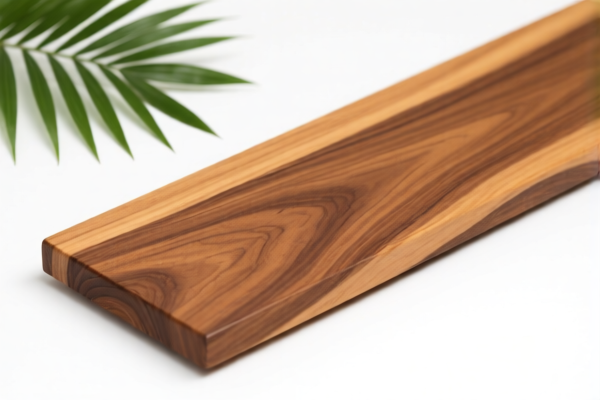
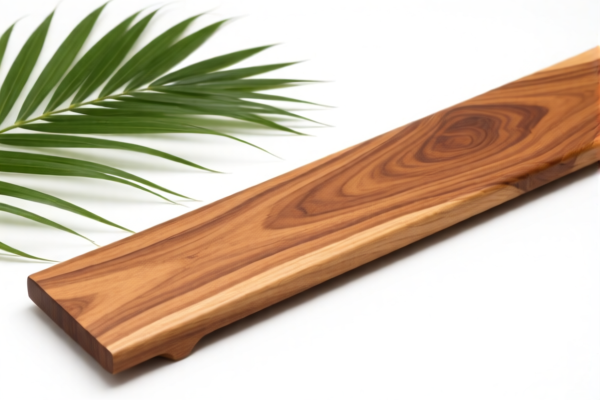
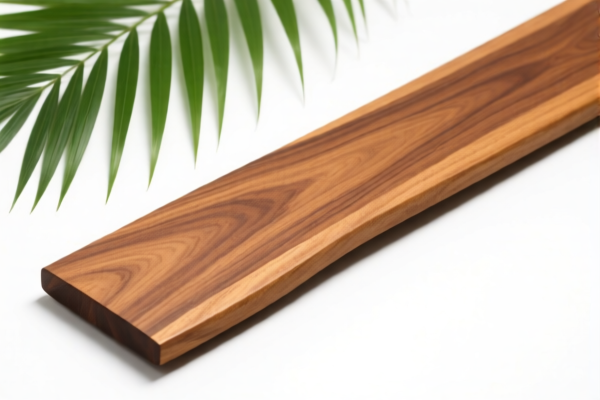
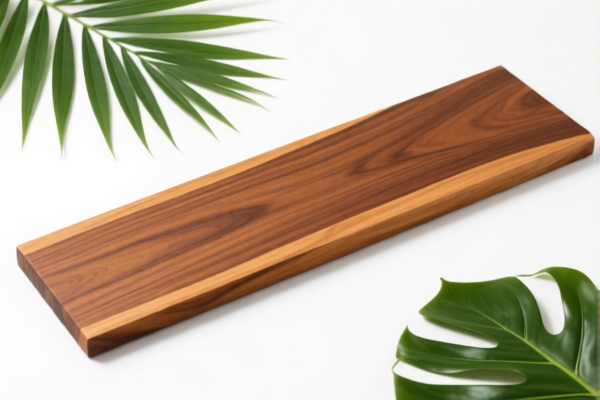
AI Analysis
🌲 Tropical Teak Timber (Raw Lumber)
🌐 HS Code Reference & Customs Clearance Guide | 2026 Latest Tariff Analysis | Professional Strategy for Teak Logs/Sawnwood
📌 I. Product Definition & Classification: What Exactly is "Tropical Teak Timber"?
Teak (Tectona grandis) is a high-value tropical hardwood renowned for its durability, natural oil content, and resistance to decay. In international trade, it is strictly categorized under Chapter 44 (Wood and articles of wood). However, classification depends entirely on the processing level and species:
1. Sawn or Chipped Wood (>6mm thickness):
This includes planks, boards, and beams that have been cut lengthwise, sliced, or peeled. Even if planed, sanded, or end-jointed, if the thickness exceeds 6mm, it falls under HS Heading 4407.
* Sub-category A: Teak: Specifically Tectona grandis.
* Sub-category B: Other Tropical Wood: Includes Mahogany, Ipe, Cumaru, etc.
⚠️ Key Distinction Point:
- If the wood is Teak → Goes to 4407.23.01.00
- If the wood is Tropical but NOT Teak (e.g., Mahogany) → Goes to 4407.23.00.00
- If the wood is under 6mm thick (veneer sheets) → Not covered in this data; excluded from 4407.23.
📦 II. HS Code Classification Details (2026 Authority Reference)
Based on the provided data source, here are the two potential HS Codes depending on the wood species:
| HS Code | Product Description | Applicable Material | Processing State |
|---|---|---|---|
4407.23.01.00 |
Wood sawn/chipped lengthwise, thickness >6mm: Of tropical wood: Teak | Teak (Tectona grandis) | Sawn, planed, sanded, or end-jointed (>6mm) |
4407.23.00.00 |
Wood sawn/chipped lengthwise, thickness >6mm: Of tropical wood: Other | Non-Teak Tropical Woods (e.g., Mahogany, Oak, Pine*) | Sawn, planed, sanded, or end-jointed (>6mm) |
🔍 Critical Note:
- "Other" in HS 4407.23.00.00 refers to tropical woods other than Teak.
- Pine and Oak are not tropical woods, so they would fall under different subheadings (e.g., 4407.10 or 4407.21). This guide focuses strictly on Tropical Wood.
- Data Constraint: The provided data indicates a retrieval error for tax rates on "Other" tropical woods. Do not assume a rate for4407.23.00.00from this source.
💰 III. 2026 Tariff Rate Breakdown (Detailed Tax Clauses)
✅ Applicable Country: United States (US)
✅ Origin: China (CN) (Implied by the 25% additional duty structure typical of US-China trade data)
✅ Effective Time: Current applicable tariffs as per provided data
🎯 1. 4407.23.01.00 —— Teak Timber (Tropical Wood)
| Item | Content |
|---|---|
| Base Tariff Rate | 0.0% (Ad Valorem) |
| Additional Tariff (Section 301) | +25.0% |
| Total Tax Rate | 25.0% |
| Tax Calculation | CIF Value × 25.0% |
| Tax Detail | "Base Tariff: 0.0%, Additional Tariff: 25.0%" |
📌 Explanation:
- Base Rate 0%: The US has a free trade agreement or specific duty-free status for raw hardwood lumber from many origins, hence the 0% base.
- 25% Additional Duty: This is the crucial cost driver. It stems from Section 301 of the Trade Act of 1974, imposed on Chinese-origin goods to address unfair trade practices.
- Total Cost Impact: For every $10,000 of Teak timber imported, you pay $2,500 in duties.
- No De Minimis Exemption: This is a formal entry; small package exemptions (Section 321) do not apply to commercial timber shipments.
🎯 2. 4407.23.00.00 —— Other Tropical Timber (Non-Teak)
| Item | Content |
|---|---|
| Base Tariff Rate | Error/Unavailable |
| Additional Tariff | Error/Unavailable |
| Total Tax Rate | Error |
| Tax Detail | "Failed to retrieve tax information" |
📌 Warning:
- The data source explicitly states "Failed to retrieve tax information".
- Do not guess. While "Other" tropical woods often face similar 25% duties under Section 301, you must verify with CBP (Customs and Border Protection) or a licensed customs broker before clearing.
- Misclassifying "Other Tropical Wood" as Teak to avoid scrutiny is fraud.
🛠️ IV. Customs Clearance Practical Advice (Real-World Pitfall Avoidance)
✅ 1. Required Documentation Checklist (Non-Negotiable)
| Document | Mandatory? | Purpose |
|---|---|---|
| ✅ Commercial Invoice | ✔️ | Must explicitly state "Teak" or "Tropical Wood – Other". Do not use generic terms like "Hardwood." |
| ✅ Packing List | ✔️ | Detail board feet or cubic meters. Ensure weight/volume matches invoice. |
| ✅ Phytosanitary Certificate | ✔️ | Critical for Wood. Issued by the exporting country’s plant protection agency. Proves freedom from pests (e.g., Teak Borer, Nipah Beetle). |
| ✅ Lacey Act Declaration | ✔️ | USA Specific. Required for all wood products. Must declare botanical name (Tectona grandis) and value. Failure = Seizure + Fines. |
| ✅ Bill of Lading/Air Waybill | ✔️ | Proof of shipment. |
| ✅ Fumigation Certificate | ✔️ | Often required alongside Phytosanitary Certificate if wood is not heat-treated. |
✅ 2. Classification Strategy (Key Tips)
🔥 "Be Precise, Be Legal, Be Protected!"
| Scenario | Correct Action | Wrong Action |
|---|---|---|
| Product is Teak | Use 4407.23.01.00 |
Use 4407.23.00.00 to "hide" species? → Fraud Risk |
| Product is Mahogany | Use 4407.23.00.00 |
Use 4407.23.01.00? → Misclassification Penalty |
| Thickness is 5mm | NOT in Chapter 44.07. Likely Veneer (4408). | Force into 4407.23? → Rejected by CBP |
| Origin is Vietnam | Verify if US has duty-free status for Vietnamese Teak. | Assume 25% applies to all Teak? → May Overpay |
✅ 3. Special Case Handling
| Situation | Handling Advice |
|---|---|
| Mixed Containers (Teak + Non-Teak) | Separate Entries! Declare Teak under 4407.23.01.00 and Non-Teak under 4407.23.00.00. Mixing them causes clearance delays. |
| End-Jointed Timber | Still classified as 4407.23.01.00 if Teak. Jointing does not change the heading. |
| Planed/Sanded Finish | Still 4407.23. If it were "Furniture" or "Doors," it would be different chapters (94 or 44.18). Keep it as Lumber. |
| Origin Ambiguity | If Teak from Myanmar or Indonesia, rules of origin may differ. Check US Customs rulings. |
🌍 V. Global Market Comparison (2026 Context)
| Country/Region | Recommended HS Code | Est. Tariff (China Origin) | Key Certification | Remarks |
|---|---|---|---|---|
| 🇺🇸 USA | 4407.23.01.00 |
25.0% (Teak) Unknown (Other) |
Lacey Act + Phytosanitary | High duty on Chinese Teak. Lacey Act is strictly enforced. |
| 🇨🇳 China | 4407.23.01.00 |
~5-10% (Import Tariff) | Fumigation | China is a major importer of Teak. |
| 🇪🇺 EU | 4407.23.01.00 |
0-3% | EUTR (EU Timber Regulation) | Strict Deforestation Regulation (EUDR) pending. Proof of legality required. |
| 🇬🇧 UK | 4407.23.01.00 |
0-3% | UK Forestry Standard | Post-Brexit rules mirror EU EUTR closely. |
📌 Conclusion:
- USA is the most tariff-heavy market for Chinese Teak due to Section 301.
- EU/UK focus on legal sourcing (EUDR) rather than just tariffs. Ensure your Teak is legally harvested to avoid bans.
📌 VI. Common Errors & Pitfalls (Lessons Learned)
❌ Error 1: Writing "Wooden Planks" on the Invoice
👉 Consequence: CBP may reject the Lacey Act Declaration or assign a generic code with higher duties.
👉 Fix: Always specify "Teak Lumber, Tectona grandis".
❌ Error 2: Ignoring the Lacey Act Declaration
👉 Consequence: Shipment detained at US port. Fines up to $500,000 per violation.
👉 Fix: Submit Lacey Act form with accurate botanical name and value.
❌ Error 3: Classifying "Teak" under "Other Tropical Wood" to avoid 25%
👉 Consequence: If CBP inspects and confirms it is Teak, you face penalties, back taxes, and potential fraud charges.
👉 Fix: Be honest. Use the correct code 4407.23.01.00.
❌ Error 4: Assuming "Other Tropical Wood" has the same 25% rate
👉 Consequence: Financial miscalculation.
👉 Fix: Contact CBP for 4407.23.00.00 rate confirmation. Do not rely on this data snippet for "Other" woods.
🎯 VII. Conclusion: Professional Clearance, Cost Control, and Compliance
🎯 Key Takeaway:
🔹 For Teak: HS
4407.23.01.00, Total Duty 25.0%.
🔹 For Other Tropical Wood: HS4407.23.00.00, Duty Unknown/Error. Verify independently.
🔹 Lacey Act is Mandatory for US imports.
🔹 Phytosanitary Certificate is Mandatory for all wood.
📌 Pro Tip:
If your Teak originates from Southeast Asia (e.g., Indonesia, Vietnam), check if it qualifies for preferential tariffs under US trade agreements or if it is exempt from Section 301 duties due to different origin rules. Always consult a customs broker for Pre-Rulings.
📣 Immediate Action:
📞 Verify Origin: Is it Chinese Teak? If yes, budget for 25%.
📄 Prepare Documents: Lacey Act + Phytosanitary + Invoice.
🚀 Ensure Compliance: Avoid misclassification fines.
✨ Accurate Classification Saves Money!
💼 25% Tax is steep. Plan your pricing accordingly!
Customer Reviews
About HS Code Classification
The Harmonized System (HS) is an internationally standardized nomenclature developed by the World Customs Organization (WCO) to classify traded products. Over 200 countries use the HS system as the basis for customs tariffs, trade statistics, and import/export regulations.
Each HS code follows a hierarchical structure:
- Chapter (2 digits) — Broad category of goods (e.g., Chapter 84: Machinery and Mechanical Appliances)
- Heading (4 digits) — More specific grouping within the chapter
- Subheading (6 digits) — Internationally standardized breakdown, used by all WCO member countries
- National subdivisions (8-10 digits) — Country-specific extensions for further classification, such as US HTSUS 10-digit codes
Correct HS code classification is essential for smooth customs clearance, accurate duty payment, and compliance with trade regulations. Misclassification can lead to customs delays, overpayment of duties, or penalties.
When importing from CN to US, the applicable tariff rates may include:
- Most-Favored-Nation (MFN) rate — The standard duty rate applied to WTO members
- General rate — Applied to countries without trade agreements
- Trade remedy duties — Additional tariffs such as Section 301 (anti-dumping), Section 232 (national security), or countervailing duties
The information provided on this page is for reference purposes only. For official classification, please consult with your local customs authority or a licensed customs broker.