Tropical Wood Building Frame
CN → US| HS Code | Tariff Rate | Origin | Destination | Doc |
|---|---|---|---|---|
| 4407290296 | 35.0% | CN | US | Official Doc |
| 9403308090 | 35.0% | CN | US | Official Doc |
| 9403509080 | 35.0% | CN | US | Official Doc |
Product Images
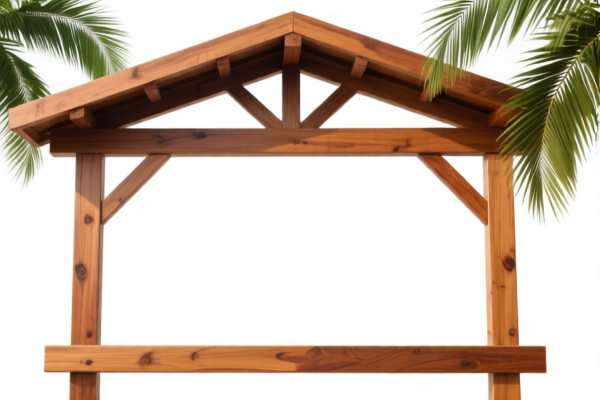
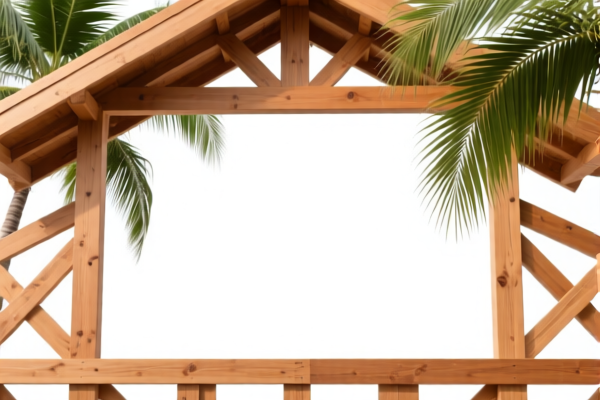
AI Analysis
🏗️ Tropical Wood Building Frame (Structure & Framework)
🌐 HS Code Reference & Customs Clearance Guide | 2026 Latest Tariff Analysis | Professional Transit Strategy
📌 I. Product Definition & Classification: Do You Truly Understand "Tropical Wood Frames"?
Tropical wood building frames are structural components used in construction, characterized by the specific type of timber (tropical hardwoods) and their加工形态 (processing form). In international trade, the classification depends heavily on whether the wood is merely processed (sawn) or assembled into a final furniture piece.
1. Raw/Sawn Structural Timber (Building Material):
Raw materials processed into beams, posts, or planks with a thickness exceeding 6mm, intended for construction framing.
→ Classified under Chapter 44 (Wood and articles of wood).
2. Furniture Frame Components (Furniture Parts):
Structural frames made of tropical wood that form the skeleton of furniture (e.g., office desks, tables).
→ Classified under Chapter 94 (Furniture).
⚠️ Key Distinction Point:
- If it is raw/sawn timber for general construction → 4407.29.02.96
- If it is a frame for office furniture (e.g., desk frame) → 9403.30.80.90
- If it is a frame for other types of furniture (non-office) → 9403.50.90.80
📦 II. HS Code Classification Details (2026 Latest Tariff Authoritative Comparison)
| HS Code | Product Description | Applicable Scenario | Material Form |
|---|---|---|---|
4407.29.02.96 |
Tropical Wood Building Frame: Material is tropical wood, processed form is thickness >6mm. Classified as "Other tropical woods." | Construction beams, structural posts, raw timber framing for buildings. | ✅ Sawnc/Planed Wood (>6mm) |
9403.30.80.90 |
Tropical Wood Furniture Frame: Furniture form, fits the material inference range of "Other office wooden furniture." | Frames for office desks, conference tables, filing cabinets. | ✅ Assembled Furniture Component |
9403.50.90.80 |
Tropical Wood Furniture Frame: Material is wood, frame is part of furniture, classified as "Other furniture and parts thereof." | Frames for non-office furniture (e.g., bedroom, living room, generic household furniture). | ✅ Assembled Furniture Component |
🔍 Key Reminder:
- Chapter 44 applies to raw/semi-finished wood products (building materials).
- Chapter 94 applies to finished furniture or identifiable furniture parts.
- Do not misclassify a finished office desk frame as "building material" to avoid customs rejection.
💰 III. 2026 Latest Tariff Rate Breakdown (Including Surcharge & Policy Add-ons)
✅ Applicable Country: United States (US)
✅ Origin: China (CN)
✅ Effective Time: 2025/2026 (Includes subsequent imports)
🎯 1. 4407.29.02.96 —— Tropical Wood Building Frame (Raw/Sawn Wood >6mm)
| Item | Content |
|---|---|
| Base Tariff | 0.0% (ad valorem) |
| Section 301 Surcharge | +25.0% |
| Section 122 Tariff | +10.0% |
| Total Tariff Rate | 35.0% |
| Tax Calculation | CIF Value × 35% |
| De Minimis Exemption | ❌ Not Applicable (Subject to high tariffs) |
| Legal Basis Path | Section 301: 9903.88.01 → Section 122: 9903.01.24 → USITC: 4407.29.02.96 |
📌 Explanation:
- "Section 301 25%": Imposed on many Chinese wood products under Trade Act Section 301.
- "Section 122 10%": Additional tariff under Section 122 of the Trade Act of 1974 (for specific imports harming domestic industries).
- Total 35%: This is a high-cost entry for tropical wood building materials. Must be calculated precisely in cost models.
🎯 2. 9403.30.80.90 —— Tropical Wood Furniture Frame (Office Use)
| Item | Content |
|---|---|
| Base Tariff | 0.0% |
| Section 301 Surcharge | +25.0% |
| Section 122 Tariff | +10.0% |
| Total Tariff Rate | 35.0% |
| Tax Calculation | CIF Value × 35% |
| De Minimis Exemption | ❌ Not Applicable |
| Legal Basis Path | Section 301: 9903.88.01 → Section 122: 9903.01.24 → USITC: 9403.30.80.90 |
📌 Note:
- Office furniture frames face the same 35% burden as building materials.
- Even if it's just a "frame," if it's for office furniture, it falls here.
- No benefit from base duty being 0% because surcharges dominate.
🎯 3. 9403.50.90.80 —— Tropical Wood Furniture Frame (Other/Furniture Parts)
| Item | Content |
|---|---|
| Base Tariff | 0.0% |
| Section 301 Surcharge | +25.0% |
| Section 122 Tariff | +10.0% |
| Total Tariff Rate | 35.0% |
| Tax Calculation | CIF Value × 35% |
| De Minimis Exemption | ❌ Not Applicable |
| Legal Basis Path | Section 301: 9903.88.01 → Section 122: 9903.01.24 → USITC: 9403.50.90.80 |
📌 Note:
- Applies to frames for non-office furniture (e.g., bedroom, living room).
- Still subject to 35% total tariff.
- Consistency in tariff structure across these three HS codes simplifies cost prediction but increases overall cost.
🛠️ IV. Customs Clearance Operational Advice (Practical Pitfall Avoidance Guide)
✅ 1. Required Document Checklist (Essential)
| Document | Required? | Description |
|---|---|---|
| ✅ Product Specification Sheet | ✔️ | Must detail wood species (e.g., Merbau, Teak), dimensions, thickness (>6mm or part assembly), and treatment (fumigation). |
| ✅ Material Certificate | ✔️ | Proof of "Tropical Wood" origin. Critical for HS 4407 classification. |
| ✅ Fumigation/Heat Treatment Certificate | ✔️ | Mandatory for wood products entering the US (ISPM 15 standard). |
| ✅ Product Photos | ✔️ | Clear images showing the product form: Is it a raw beam (4407) or a furniture frame (9403)? |
| ✅ Commercial Invoice | ✔️ | Must accurately describe the item. Avoid vague terms like "Wood Parts." Use "Tropical Wood Building Frame" or "Office Furniture Frame." |
| ✅ Packing List | ✔️ | List net/gross weight, dimensions, and packaging type (palletized? crated?). |
✅ 2. Declaration Skills (Key Mantra)
🔥 "Form Determines Code, Origin Matters, Tax is 35%, Be Precise!"
| Situation | Correct Declaration | Wrong Practice |
|---|---|---|
| Raw tropical wood beams (>6mm) for construction | 4407.29.02.96 |
Misdeclare as "Furniture Parts" → Risk of reclassification & penalty |
| Office desk frame (tropical wood) | 9403.30.80.90 |
Misdeclare as "Building Material" → May be flagged for misclassification |
| Bedroom furniture frame | 9403.50.90.80 |
Use generic "Wood Frame" → Ambiguous, leads to delays |
| Furniture frame + legs + slats (shipped unassembled) | Ship as one set under 9403.xx.xx |
Split into "wood planks" + "fittings" → Higher combined tax risk |
📌 Crucial Point:
- Do not split a complete furniture frame into "wood parts" and "hardware" to try to lower tariffs. CBP may consolidate them and apply the highest tariff or deny de minimis.
- Thickness Matters: If the wood is ≤6mm, it might fall under a different subheading in Chapter 44. Ensure your specification states ">6mm" for4407.29.02.96.
✅ 3. Special Case Handling
| Situation | Handling Advice |
|---|---|
| Engineered Wood (Plywood/Composite) | Not tropical wood solid timber. May fall under 4412 or 4415. Check if it qualifies as "tropical wood" under HS 4407. |
| Furniture Frame Imported with Furniture | If the frame is part of a larger furniture unit, declare the whole furniture piece. Do not separately declare the frame unless shipped as a distinct commercial unit. |
| Fumigation Issues | If the wood lacks proper ISPM 15 labeling, expect detention and re-export at your cost. |
| Section 122 Defense | While difficult, ensure your import records prove the product does not harm US timber industries excessively, though this is rarely successful for tariff avoidance. |
🌍 V. Global Main Market Clearance Comparison (2026 Latest)
| Country/Region | Recommended HS Code | Tariff Rate | Certification Requirement | Remarks |
|---|---|---|---|---|
| 🇺🇸 USA | 4407.29.02.96 / 9403.30.80.90 / 9403.50.90.80 |
35% (25% + 10%) | ISPM 15 (Fumigation) | High barrier due to trade policies. |
| 🇨🇳 China | 4407.29.02.96 / 9403.30.80.90 |
5%-10% (Varies) | Fumigation Certificate | Lower cost, but export restrictions may apply. |
| 🇪🇺 EU | 4407.29.00 / 9403.30 / 9403.50 |
0%-5% (If legal timber) | EU Timber Regulation (EUTR) | Strict legality proof required. No Section 301/122. |
| 🇬🇧 UK | 4407.29.00 / 9403.30 / 9403.50 |
0%-5% | UK Timber Regulation | Post-Brexit, similar to EU but separate documentation. |
| 🇯🇵 Japan | 4407.29.00 / 9403.30 / 9403.50 |
0%-5% | Phytosanitary Certificate | Generally low tariffs, strict phytosanitary checks. |
📌 Conclusion:
- USA is the most expensive market for tropical wood frames due to 35% total tariff.
- EU/UK/Japan focus on legality and sustainability (EUTR/FSC certification) rather than punitive tariffs.
- For US exports, cost efficiency is key. Consider shifting supply chains to non-China origins if possible to avoid Section 301/122.
📌 VI. Common Errors & Pitfall Avoidance (Blood & Tears Lessons)
❌ Error 1: Declaring "Furniture Frame" as "Building Material" (4407)
👉 Consequence: CBP may reclassify it as furniture (9403) or deny entry for misdeclaration.
❌ Error 2: Missing Fumigation Certificate
👉 Consequence: 100% Detention. Wood products must be treated. No exception for "processed frames."
❌ Error 3: Ignoring Section 122 Surcharge
👉 Consequence: Underestimating landing costs by 10%. Budget for 35% total tax, not just 25%.
❌ Error 4: Vague Description "Wood Parts"
👉 Consequence: Customs may assign a higher default tariff or request additional info, delaying clearance by weeks.
✅ Correct Declaration Example:
"Tropical Wood Building Frame, Sawn, Thickness >6mm, Heat Treated, ISPM 15 Certified, Model BW-100"
OR
"Office Furniture Frame, Made of Tropical Hardwood, Unfinished, for Desk Assembly, Model OF-200"
🎯 VII. Conclusion: Precise Classification Saves Money!
🎯 Remember the Mantra:
🔹 "Building Wood = 4407, Office Frame = 9403.30, Other Frame = 9403.50. All hit 35%!"
🔹 "ISPM 15 is King, Section 122 is King, No Exemption for China!"
📌 Pro Tip:
- If your tropical wood furniture frames are assembled and include other materials (metal legs, glass), the classification may change.
- Pre-ruling Application: Consider applying for a CBP Binding Ruling before shipment to lock in the HS code and avoid disputes.
- Sustainability Certifications: While not affecting US tariffs directly, FSC/PEFC certification can be a selling point in EU/UK markets.
📣 Call to Action:
📞 Contact Professional Customs Broker + Provide Product Photos & Specs + Verify Fumigation
🚀 Ensure Smooth Clearance, Avoid 35% Surprise Costs, Maximize Profit Margins!
✨ Professional Clearance Starts with Precise Classification!
💼 Every Dollar of Tariff is a Dollar of Profit Lost if Misclassified!
Customer Reviews
About HS Code Classification
The Harmonized System (HS) is an internationally standardized nomenclature developed by the World Customs Organization (WCO) to classify traded products. Over 200 countries use the HS system as the basis for customs tariffs, trade statistics, and import/export regulations.
Each HS code follows a hierarchical structure:
- Chapter (2 digits) — Broad category of goods (e.g., Chapter 84: Machinery and Mechanical Appliances)
- Heading (4 digits) — More specific grouping within the chapter
- Subheading (6 digits) — Internationally standardized breakdown, used by all WCO member countries
- National subdivisions (8-10 digits) — Country-specific extensions for further classification, such as US HTSUS 10-digit codes
Correct HS code classification is essential for smooth customs clearance, accurate duty payment, and compliance with trade regulations. Misclassification can lead to customs delays, overpayment of duties, or penalties.
When importing from CN to US, the applicable tariff rates may include:
- Most-Favored-Nation (MFN) rate — The standard duty rate applied to WTO members
- General rate — Applied to countries without trade agreements
- Trade remedy duties — Additional tariffs such as Section 301 (anti-dumping), Section 232 (national security), or countervailing duties
The information provided on this page is for reference purposes only. For official classification, please consult with your local customs authority or a licensed customs broker.