Tropical Wood Carved Baseboard
CN → US| HS Code | Tariff Rate | Origin | Destination | Doc |
|---|---|---|---|---|
| 4407290211 | 35.0% | CN | US | Official Doc |
| 9403910080 | 35.0% | CN | US | Official Doc |
| 4407290285 | 35.0% | CN | US | Official Doc |
Product Images
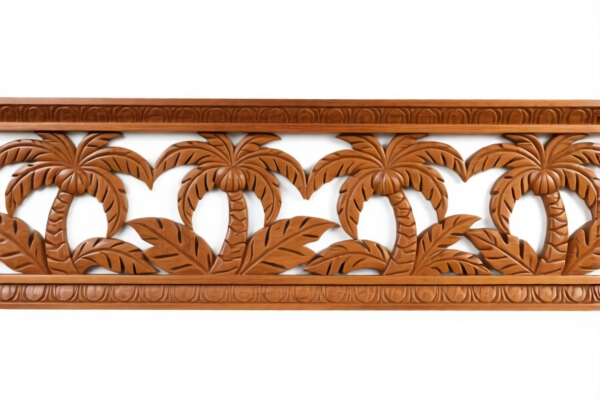
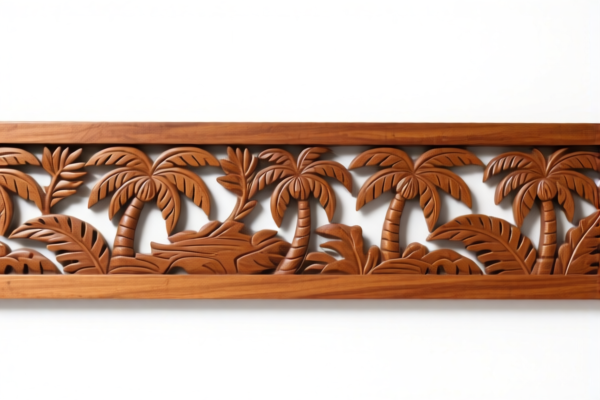
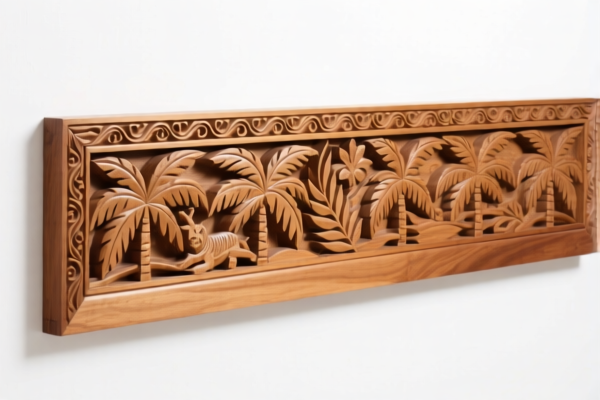
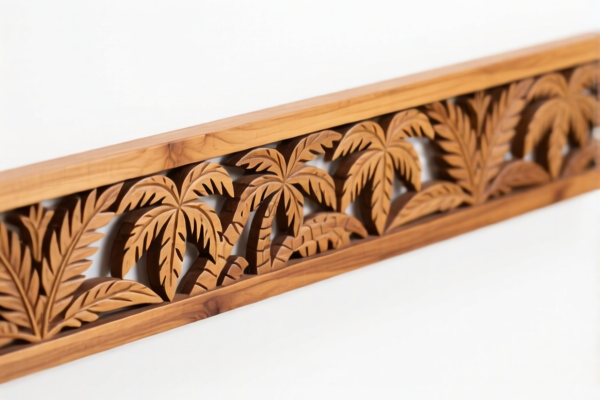
AI Analysis
🪵 Tropical Wood Carved Baseboard: HS Code Classification & US Customs Clearance Guide (2026)
🌐 HS Code Reference & Clearance Guide | 2026 Latest Tariff Analysis | Professional Clearance Strategy
📌 I. Product Definition & Classification: Do You Really Understand "Baseboards"?
Baseboards (skirting boards) are essential architectural finishing elements used to cover the joint between the wall and the floor. In international trade, the classification of Tropical Wood Carved Baseboards depends heavily on their processing level, material nature, and functional role.
The core question for customs is: Are these classified as processed wood products or as parts of furniture?
- Process Wood (4407/4421 Series): If the wood is processed but remains primarily a material commodity.
- Furniture Parts (9403 Series): If the item is considered an integral component/accessory of a furniture piece.
⚠️ Key Distinction:
- If viewed as a wooden architectural trim or processed timber product → Chapter 44 applies.
- If viewed strictly as a component/accessory of furniture (e.g., sold specifically as part of a kitchen cabinet or wardrobe system) → Chapter 94 applies.
- Note: Despite the functional difference, under current US trade measures for Chinese-origin tropical wood items, the total effective tax rate is identical (35%) for the three primary HS codes provided in the data. This is due to uniform Section 301 (25%) and Section 122 (10%) additional tariffs.
📦 II. HS Code Classification Details (2026 Latest Tariff Authority Comparison)
| HS Code | Product Description | Application Scenario | Classification Logic |
|---|---|---|---|
| 4407.29.02.85 | Baseboards made of tropical wood, classified as processed wood products | Architectural trim, flooring accessories, general wood processing | ✅ Processed Wood |
| 4407.29.02.11 | Carved baseboards of tropical wood, fitting the processed form under tropical wood categories | Decorative carved wood, high-end architectural detailing | ✅ Processed/Carved Wood |
| 9403.91.00.80 | Wooden baseboards as furniture decorative components, classified as parts of other furniture | Furniture kits, cabinet accessories, interior fit-outs | ✅ Furniture Part |
🔍 Critical Reminder:
- All three codes listed above are subject to the same total tax rate of 35% for Chinese-origin goods.
- The choice between Chapter 44 (Wood) and Chapter 94 (Furniture) often depends on commercial intent and customs broker interpretation, but cost-wise, there is no difference in the final duty paid under current US sanctions.
- Do not assume that "Furniture Parts" (9403) will incur lower tariffs; the 301 and 122 tariffs override standard preferential rates.
💰 III. 2026 Latest Tariff Rate Breakdown (Including Additional Taxes & Policy Surcharges)
✅ Applicable Country: United States (US)
✅ Country of Origin: China (CN)
✅ Effective Time: Current active trade measures (Section 301 & Section 122)
🎯 1. General Analysis for All Listed HS Codes (4407.29.02.85, 4407.29.02.11, 9403.91.00.80)
| Item | Content |
|---|---|
| Base MFN Rate | 0.0% (Ad Valorem) |
| Section 301 Additional Duty | +25.0% (From USITC Footnote 9903.88.01 / Trade Act of 1974) |
| Section 122 Additional Duty | +10.0% (Specificly targeting tropical wood imports from China under certain executive orders/trade actions) |
| Total Effective Tax Rate | 35.0% |
| Tax Calculation | CIF Value × 35% |
| De Minimis Eligibility | ❌ Not Eligible (Deny De Minimis for Section 301/122 goods) |
| Legal Basis Path | USITC:4407.29.02.85 / 9403.91.00.80 → Section 301: 25% → Section 122: 10% |
📌 Explanation:
- "Base Rate 0%": The standard Most Favored Nation (MFN) duty for these wood/furniture items is often 0%, BUT this is irrelevant due to additional tariffs.
- "Section 301 (25%)": This is the landmark tariff imposed on thousands of Chinese goods, including processed wood and furniture parts.
- "Section 122 (10%)": This is a specific additional levy often applied to certain wood products or under specific trade enforcement actions (Note: Always verify current Section 122 applicability with a customs broker, as these can fluctuate based on executive orders).
- Total 35%: This is a high-cost barrier. Importers must factor this into their landed cost calculations.
🛠️ IV. Practical Clearance Advice (Real-World Pitfall Guide)
✅ 1. Required Documentation Checklist (Non-negotiable)
| Document | Must Provide | Purpose |
|---|---|---|
| ✅ Product Specification Sheet | ✔️ | Details wood species (e.g., Meranti, Teak, Mahogany), dimensions, carving details. |
| ✅ Commercial Invoice | ✔️ | Must clearly state "Baseboard," "Tropical Wood," and "Made in China." |
| ✅ Packing List | ✔️ | To verify volume and weight for duty calculation. |
| ✅ Wood Species Declaration | ✔️ | Critical for Chapter 44. Must specify if it's CITES-listed or restricted. |
| ✅ Proof of Origin (CO) | ✔️ | To confirm Chinese origin (which triggers the 35% tax). |
| ✅ Fumigation Certificate | ✔️ | Required for all raw/processed wood imports to US (ISPM 15 standard). |
✅ 2. Declaration Strategy (Key Mnemonic)
🔥 "Material First, Furniture Second; Tax Rate is Same, Don't Risk It!"
| Situation | Correct Declaration Approach | Common Error |
|---|---|---|
| General Trade | Declare as Processed Wood (4407.29.02.85) or Furniture Part (9403.91.00.80). | Mislabeling as "Non-tropical wood" to avoid tariffs. |
| Carved Items | Clearly describe "Carved" to justify 4407.29.02.11 if preferred, but rate is same. | Omitting "Carved" detail, leading to potential misclassification disputes. |
| Combined Shipment | If wood baseboards are packed with furniture, declare separately to ensure correct HTSUS. | Bundling all under one "Furniture" code without distinction. |
📌 Note: Since the tax rate is identical (35%) for all three codes, the focus should be on accurate description to avoid penalties for misclassification, rather than trying to find a "cheaper" code.
✅ 3. Special Considerations
| Scenario | Handling Advice |
|---|---|
| CITES Listed Species | If the tropical wood is protected (e.g., certain Mahoganies), a CITES Permit is mandatory. Without it, goods will be seized. |
| Fumigation | Wood must be fumigated or heat-treated. Missing IPPC Mark on packaging will cause rejection. |
| Section 122 Verification | Confirm with your customs broker if the specific tropical wood type falls under the current Section 122 list, as this adds the 10% on top of the 25%. |
🌍 V. Global Market Comparison (2026 Latest)
| Country/Region | Recommended HS Code | Tariff (China Origin) | Certification Requirements | Notes |
|---|---|---|---|---|
| 🇺🇸 USA | 4407.29.02.85 / 9403.91.00.80 |
35% (0% MFN + 25% Sec 301 + 10% Sec 122) | Fumigation (ISPM 15), CITES (if applicable) | High Tariff Risk. |
| 🇨🇳 China | 4407.29.02.85 |
Varies (Export/Import) | N/A | N/A |
| 🇪🇺 EU | 4407.29.02 |
0-6.5% (Standard) | FSC/PEFC Certification recommended | No Section 301/122. |
| 🇬🇧 UK | 4407.29.02 |
0-6.5% (Standard) | FSC/PEFC Certification recommended | Post-Brexit rules apply. |
| 🇦🇺 Australia | 4407.29.02 |
5% | Biosecurity Permit required | Strict quarantine. |
📌 Conclusion:
- The US is the most expensive market for Chinese tropical wood baseboards due to the 35% cumulative tariff.
- EU and UK have significantly lower tariffs but may require sustainability certifications (FSC/PEFC).
- Australia has low tariffs but strict biosecurity controls.
📌 VI. Common Errors & Pitfall Guide (Lessons Learned)
❌ Error 1: Claiming "Furniture Part" to avoid "Wood Processing" scrutiny
👉 Consequence: If deemed wood trim, it may still be taxed at 35%, but you risk misclassification penalties. Rate is the same, so don't game the system.
❌ Error 2: Ignoring Section 122 (10%)
👉 Consequence: Assuming only 25% Sec 301 applies. Result: Underpayment of 10% + Penalties.
❌ Error 3: Missing CITES Documentation for Tropical Wood
👉 Consequence: Seizure of goods and potential legal action for illegal trade in protected species.
❌ Error 4: No Fumigation Certificate
👉 Consequence: Rejection at US Port. Goods must be destroyed or re-exported.
✅ Correct Approach:
"Tropical Wood Baseboards, Carved, Species: [Specific Name], Made in China, Fumigated (ISPM 15), HS Code: 4407.29.02.85, Total Duty: 35% (25% Sec 301 + 10% Sec 122)."
🎯 VII. Conclusion: Professional Declaration, Cost Control, Compliance
🎯 Remember the Mantra:
🔹 "35% is the Floor: 25% Sec 301 + 10% Sec 122."
🔹 "Wood Species Matter: CITES Check First."
🔹 "Fumigation is Mandatory: IPPC Mark on Box."
📌 Pro Tip:
If your tropical wood baseboards are sourced from Vietnam, Thailand, or Malaysia (not China), you may avoid the 35% US tariff. However, ensure no Chinese value-added content exceeds the de minimis threshold to avoid "China Origin" determination via substantial transformation rules.
📣 Immediate Action:
📞 Contact a Licensed US Customs Broker
📄 Provide Product Photos & Wood Species List
🛡️ Apply for CITES Permit (if needed) & Fumigation Certificate🚀 Ensure Smooth Clearance, Avoid Seizure, and Protect Your Profit Margins!
✨ Professional Clearance Starts with Accurate Classification!
💼 Every Dollar of Duty Matters – Get It Right!
Customer Reviews
About HS Code Classification
The Harmonized System (HS) is an internationally standardized nomenclature developed by the World Customs Organization (WCO) to classify traded products. Over 200 countries use the HS system as the basis for customs tariffs, trade statistics, and import/export regulations.
Each HS code follows a hierarchical structure:
- Chapter (2 digits) — Broad category of goods (e.g., Chapter 84: Machinery and Mechanical Appliances)
- Heading (4 digits) — More specific grouping within the chapter
- Subheading (6 digits) — Internationally standardized breakdown, used by all WCO member countries
- National subdivisions (8-10 digits) — Country-specific extensions for further classification, such as US HTSUS 10-digit codes
Correct HS code classification is essential for smooth customs clearance, accurate duty payment, and compliance with trade regulations. Misclassification can lead to customs delays, overpayment of duties, or penalties.
When importing from CN to US, the applicable tariff rates may include:
- Most-Favored-Nation (MFN) rate — The standard duty rate applied to WTO members
- General rate — Applied to countries without trade agreements
- Trade remedy duties — Additional tariffs such as Section 301 (anti-dumping), Section 232 (national security), or countervailing duties
The information provided on this page is for reference purposes only. For official classification, please consult with your local customs authority or a licensed customs broker.