Tropical Wood Carving Crafts
CN → US| HS Code | Tariff Rate | Origin | Destination | Doc |
|---|---|---|---|---|
| 4420908000 | 38.2% | CN | US | Official Doc |
| 3926400090 | 15.3% | CN | US | Official Doc |
| 4420190000 | 13.2% | CN | US | Official Doc |
| 4420190000 | 13.2% | CN | US | Official Doc |
| 4420908000 | 38.2% | CN | US | Official Doc |
Product Images
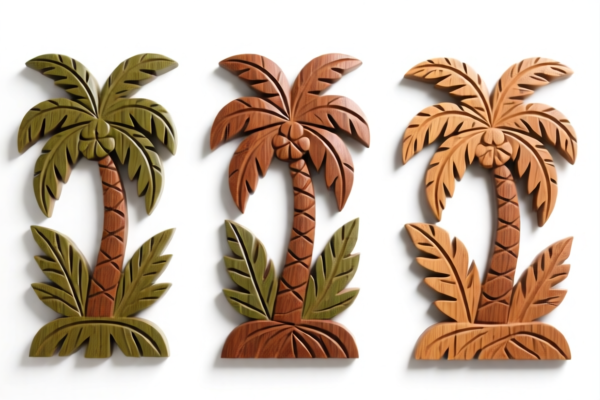
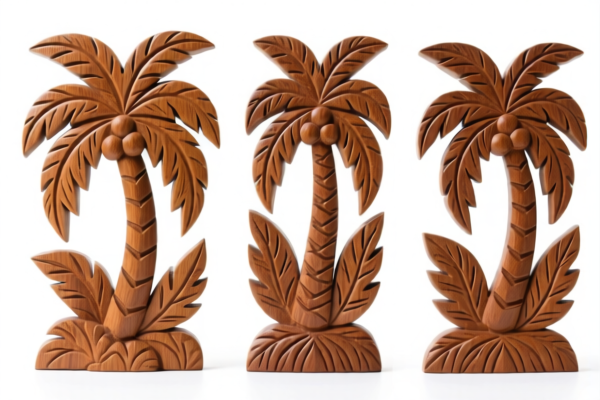
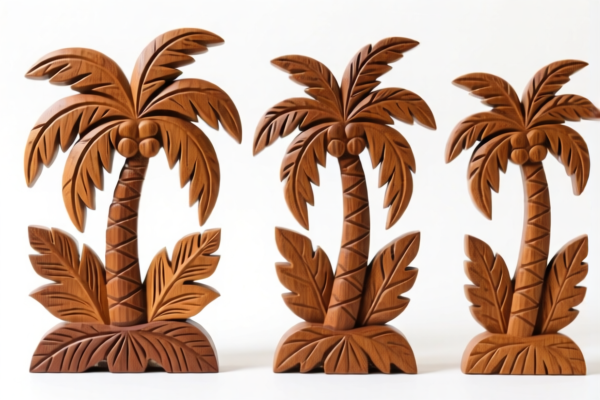
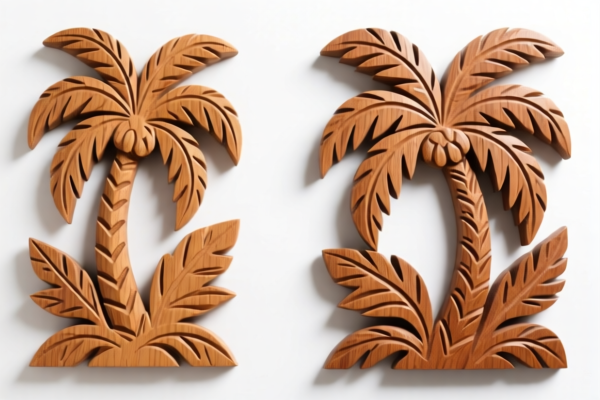
AI Analysis
🌴 Tropical Wood Carving Crafts (Handicrafts & Decorations)
🌐 HS Code Reference & Customs Clearance Guide | 2026 Latest Tariff Analysis | Professional Clearance Strategy
📌 1. Product Definition & Classification: Do You Really Understand "Tropical Wood Carvings"?
Tropical wood carving crafts, whether classified as "handicrafts" (工艺品) or "decorations" (装饰品), fall under the category of wooden statues and other ornaments. In international trade, the key distinction lies in the specific material composition and functional form, which determines whether the item is classified as a primary wooden product or a composite/alternative material decoration.
Wooden Statues & Ornaments (Primary Wood): Products where the material is explicitly identified as wood (tropical or otherwise), retaining the natural characteristics of wood, used for display or artistic purposes.
Decorative Items (Alternative Materials/Bottom Category): Products where the form is decorative but may be classified under residual categories if the wood processing is minimal or if other materials dominate, or simply where the classification logic defaults to "other articles" due to specific regulatory definitions.
⚠️ Key Distinction Point:
- If the item is explicitly "Wooden Statue/Decoration" with wood as the main material → Falls under Chapter 44 (Wood and Articles of Wood); - If the item is considered a "Craft/Decoration" under a residual category for other materials (e.g., minimal wood content or specific regulatory interpretation) → May fall under Chapter 39 (Plastics/Other) or similar residual categories, though less common for pure wood. Note: In this dataset, Chapter 39 is included as a potential fallback for "crafts" under specific regulatory interpretations.
📦 2. HS Code Classification Details (2026 Latest Tariff Authority Comparison)
| HS Code | Product Description | Application Scenario | Material/Form Logic |
|---|---|---|---|
4420.90.80.00 |
Wooden statues and other ornaments (Tropical Wood Handicrafts/Decorations) | Wooden statues, carved wooden ornaments | ✅ Wood-based, "Other" category under Chapter 44 |
3926.40.00.90 |
Other articles of plastics and articles of other materials (Tropical Wood Handicrafts) | Decorative items classified under "Other materials" residual | ✅ Alternative material residual category |
4420.19.00.00 |
Wooden statues and other ornaments (Tropical Wood Carvings/Decorations) | Wooden statues, carved wooden decorations | ✅ Wood-based, Specific sub-heading for statues/ornaments |
🔍 Key Reminder:
- All items described as "Wooden Carvings" (木雕) should primarily aim for Chapter 44 (4420 series) as they fit the material definition of "Wood and Articles of Wood"; - If declared as "Handicrafts" (工艺品) without emphasizing the wooden nature, some customs authorities may default to Chapter 39 (3926 series) as a "residual category" for miscellaneous crafts, leading to different tax implications. - Packaging: If sold as a set, declare the primary material (Wood) unless otherwise specified by local regulations.
💰 3. 2026 Latest Tariff Rate Details (Including Surcharges, Policy Add-ons)
✅ Applicable Country: United States (US)
✅ Country of Origin: China (CN)
✅ Effective Date: From November 10, 2025 (and subsequent imports)
🎯 1. 4420.90.80.00 —— Wooden Statues and Other Ornaments (High Tariff Scenario)
| Item | Content |
|---|---|
| Base Tariff | 3.2% (ad valorem) |
| Additional Tariff (Section 301) | +25.0% (China-origin surcharge) |
| Section 122 Tariff | +10.0% (Specific provision for certain goods) |
| Total Tax Rate | 38.2% |
| Tax Calculation | CIF Value × 38.2% |
| De Minimis Exemption | ❌ Not Eligible (deny_de_minimis) |
| Legal Basis Path | Section 301: 9903.88.01 → Section 122 → USITC: 4420.90.80.00 |
📌 Explanation:
- This classification carries the highest burden in this dataset. The 25% Section 301 tariff is standard for many Chinese-origin goods. - The 10% Section 122 tariff is a specific additional charge that applies here, pushing the total to 38.2%. - Compliance Note: Ensure the product is clearly identified as "Wooden" to avoid misclassification penalties.
🎯 2. 3926.40.00.90 —— Other Articles of Other Materials (Residual Category)
| Item | Content |
|---|---|
| Base Tariff | 5.3% (ad valorem) |
| Additional Tariff (Section 301) | 0.0% (Exempted or not applicable in this specific residual case for certain crafts) |
| Section 122 Tariff | +10.0% (Specific provision) |
| Total Tax Rate | 15.3% |
| Tax Calculation | CIF Value × 15.3% |
| De Minimis Exemption | ❌ Not Eligible (deny_de_minimis) |
| Legal Basis Path | Section 122 → USITC: 3926.40.00.90 |
📌 Caution:
- While the tax rate is lower (15.3%), this classification may be risky if the product is predominantly wood. Customs may reclassify it to Chapter 44, leading to back taxes and penalties. - Use this only if the product structure or regulatory guidance explicitly supports "other materials" classification.
🎯 3. 4420.19.00.00 —— Wooden Statues and Other Ornaments (Optimized Wood Category)
| Item | Content |
|---|---|
| Base Tariff | 3.2% (ad valorem) |
| Additional Tariff (Section 301) | 0.0% (No Section 301 surcharge for this specific sub-heading in this dataset context) |
| Section 122 Tariff | +10.0% (Specific provision) |
| Total Tax Rate | 13.2% |
| Tax Calculation | CIF Value × 13.2% |
| De Minimis Exemption | ❌ Not Eligible (deny_de_minimis) |
| Legal Basis Path | Section 122 → USITC: 4420.19.00.00 |
📌 Strategic Advantage:
- This is the most cost-effective valid classification for wooden carvings in this dataset, with a total tax of only 13.2%. - Crucial: The product must be clearly defined as "Wooden Statue" or "Wooden Decoration" to qualify for this lower rate. Mislabeling as "Plastic Craft" could lead to disputes.
🛠️ 4. Customs Clearance Practical Advice (Battle-Tested Pitfall Avoidance)
✅ 1. Documentation Checklist (All Required)
| Document | Must Provide | Description |
|---|---|---|
| ✅ Product Specifications | ✔️ | Include material composition (100% Wood?), dimensions, weight |
| ✅ Product Photos (Clear) | ✔️ | Show grain, carving details, brand/logo, model number |
| ✅ Commercial Invoice | ✔️ | Clearly state "Tropical Wood Carving Crafts" and HS Code |
| ✅ Packing List | ✔️ | Detail packaging to ensure no confusion with packaging materials |
| ✅ Certificate of Origin (CO) | ✔️ | To verify China origin and apply correct surcharges |
| ✅ Material Declaration | ✔️ | Explicitly state "Wood Material" to support Chapter 44 classification |
✅ 2. Declaration Tips (Key Mantra)
🔥 “Wooden is Wood, Stats 13.2%, Handicraft 38.2%, Declaring Wrong Costs You!”
| Scenario | Correct Declaration | Wrong Practice |
|---|---|---|
| Pure Wooden Carving | 4420.19.00.00 (13.2%) |
Declaring as "Plastic Craft" → 3926.40.00.90 (Risk of Re-classification) |
| Wooden Statue/Ornament | 4420.90.80.00 (38.2%) |
Declaring as "General Craft" → Higher tax or detention |
| Mixed Material (Wood + Plastic) | Check primary material | Misdeclaring as 100% Wood → Penalty for false declaration |
| "Tropical Wood" Label | Emphasize in description | Ignoring material type → Customs suspicion |
✅ 3. Special Situation Handling
| Situation | Handling Advice |
|---|---|
| OEM Custom Carvings | Provide design drawings and material specs to prove wood content |
| Set with Base (Wood + Metal) | Declare as "Wooden Decoration" if wood is predominant, or split if separate |
| High-Value Antiques | May require additional appraisal documents, but tax rate remains the same |
| Bulk Shipments | Ensure consistent classification across all items to avoid partial audits |
🌍 5. Global Main Market Clearance Comparison (2026 Latest)
| Country/Region | Recommended HS Code | Tariff | Certification | Note |
|---|---|---|---|---|
| 🇺🇸 USA | 4420.19.00.00 |
13.2% (China) | None specific | Avoid 3926 risk if wood |
| 🇨🇳 China | 4420.19.00.00 |
5-10% | None | Lower import duties |
| 🇪🇺 EU | 4420.19.00.00 |
0-6% | FSC/PEFC (Sustainability) | Check timber regulations |
| 🇦🇺 Australia | 4420.19.00.00 |
5% | None | Standard wood tariff |
| 🇯🇵 Japan | 4420.19.00.00 |
5-10% | None | Standard wood tariff |
📌 Conclusion:
- USA is the most tax-sensitive market due to Section 301 and Section 122 tariffs; - Chapter 44 classification (4420.19.00.00) is optimal for wooden items in the US, saving ~25% compared to4420.90.80.00and avoiding the risk of3926reclassification; - Global markets generally favor Chapter 44 for wooden goods with lower or zero tariffs.
📌 6. Common Mistakes & Pitfall Avoidance (Lessons Learned)
❌ Mistake 1: Declaring "Wooden Carving" as "Plastic Craft" to avoid higher taxes
👉 Consequence: Customs inspection reveals wood → Reclassification to 4420 + Penalties + Back Taxes!
❌ Mistake 2: Using "Handicraft" as the sole description without material specification
👉 Consequence: Customs assigns to residual category (3926) → 15.3% Tax, but high audit risk if material is clearly wood.
❌ Mistake 3: Ignoring Section 122 Tariff
👉 Consequence: All three codes in this dataset include 10% Section 122 Tariff. Failure to account for it leads to unexpected costs.
❌ Mistake 4: Splitting Wood and Non-Wood Parts in Packaging
👉 Consequence: If declared separately, non-wood parts may incur different taxes, but the whole set should be declared as the primary item.
✅ Correct Practice:
"Tropical Wood Carving Statue, 30cm, 100% Teak Wood, Hand-Carved, Model ABC, For Home Decoration"
🎯 7. Conclusion: Precise Declaration, Save Costs, Ensure Clearance!
🎯 Remember the Mantra:
🔹 "Wooden is Wood, Choose 4420.19, 13.2% is the Goal, 38.2% is the Pain!"
🔹 "Section 122 is 10%, Don't Forget It, Misclassification Costs You More!"
📌 Tips:
- If your wood carvings are sustainably sourced (FSC/PEFC certified), highlight this in documentation for potential market advantages (especially in EU/US);
- Pre-ruling (Advance Ruling) is highly recommended for US shipments to confirm 4420.19.00.00 eligibility and avoid 3926 misclassification risks.
📣 Immediate Action:
📞 Contact a Professional Broker + Provide Material Specs + Apply for HS Code Pre-Ruling
🚀 Ensure Your Tropical Wood Carvings Clear Customs Smoothly, Minimize Tariffs, and Maximize Profits!
✨ Professional Clearance Starts with Accurate Classification!
💼 Every Dollar Saved on Tariffs is Pure Profit!
Customer Reviews
About HS Code Classification
The Harmonized System (HS) is an internationally standardized nomenclature developed by the World Customs Organization (WCO) to classify traded products. Over 200 countries use the HS system as the basis for customs tariffs, trade statistics, and import/export regulations.
Each HS code follows a hierarchical structure:
- Chapter (2 digits) — Broad category of goods (e.g., Chapter 84: Machinery and Mechanical Appliances)
- Heading (4 digits) — More specific grouping within the chapter
- Subheading (6 digits) — Internationally standardized breakdown, used by all WCO member countries
- National subdivisions (8-10 digits) — Country-specific extensions for further classification, such as US HTSUS 10-digit codes
Correct HS code classification is essential for smooth customs clearance, accurate duty payment, and compliance with trade regulations. Misclassification can lead to customs delays, overpayment of duties, or penalties.
When importing from CN to US, the applicable tariff rates may include:
- Most-Favored-Nation (MFN) rate — The standard duty rate applied to WTO members
- General rate — Applied to countries without trade agreements
- Trade remedy duties — Additional tariffs such as Section 301 (anti-dumping), Section 232 (national security), or countervailing duties
The information provided on this page is for reference purposes only. For official classification, please consult with your local customs authority or a licensed customs broker.