Tropical Wood Indoor Decoration Boards
CN → US| HS Code | Tariff Rate | Origin | Destination | Doc |
|---|---|---|---|---|
| 4407290211 | 35.0% | CN | US | Official Doc |
| 4407290285 | 35.0% | CN | US | Official Doc |
| 9403910080 | 35.0% | CN | US | Official Doc |
| 9403608093 | 35.0% | CN | US | Official Doc |
| 4407290211 | 35.0% | CN | US | Official Doc |
Product Images
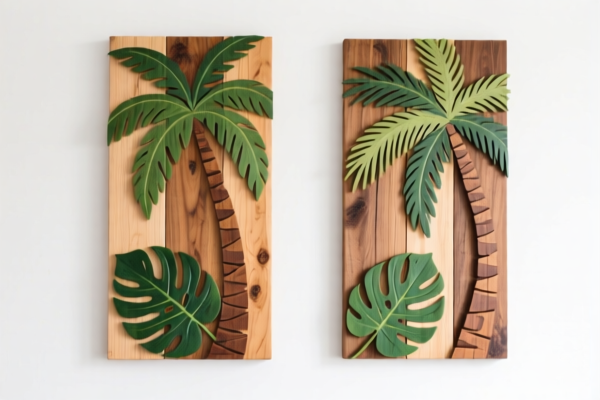
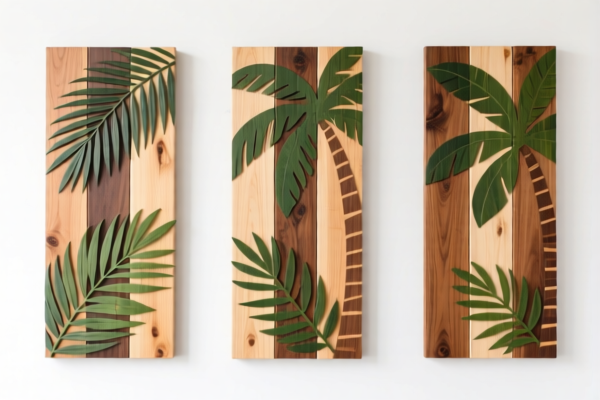
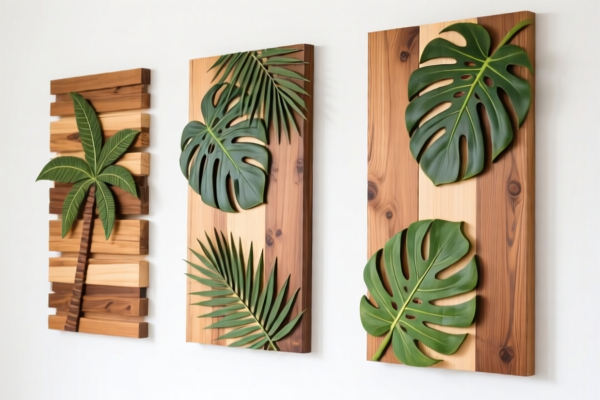
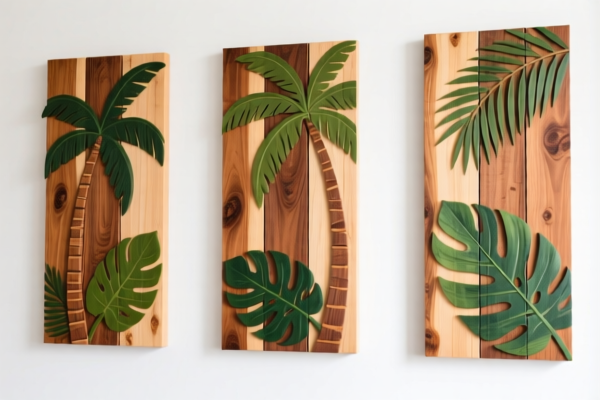
AI Analysis
🌿 Tropical Wood Indoor Decoration Boards (Wall Panels)
🌐 HS Code Reference & Customs Clearance Guide | 2026 Latest Tariff Analysis | Professional Transit Strategy
📌 I. Product Definition & Classification: What Are "Tropical Wood Indoor Decoration Boards"?
Tropical wood indoor decoration boards, commonly known as Tropical Wood Wall Panels, are finished or semi-finished wooden products derived from tropical timber species. They are primarily used for interior wall cladding, decoration, and finishing in residential, commercial, and hospitality projects.
In international trade, these boards are classified based on two key factors: 1. Material Origin: Whether they are classified under general "Wood and Products of Wood" (Chapter 44) or as "Furniture Parts" (Chapter 94). 2. Form & Processing: Whether they are processed as simple planks/boards or integrated as specific furniture components.
⚠️ Key Distinction:
- If the product is primarily identified by its wood material and basic processing (planed, sanded, but not assembled into furniture) → It falls under Chapter 44 (Wood).
- If the product is explicitly identified as a component of furniture (e.g., pre-fabricated wall paneling systems attached to furniture frames) → It may fall under Chapter 94 (Furniture).
- Note: The provided data suggests a strong overlap, with multiple HS codes potentially applicable depending on specific product design and intent.
📦 II. HS Code Classification Details (Based on Provided Data)
| HS Code | Product Description | Summary from Data | Tax Rate |
|---|---|---|---|
4407.29.02.11 |
Tropical Wood, Plank Form, Indoor Use | Tropical wood material, plank form, fits tropical indoor wood or tropical wood wall paneling classification. | 35.0% |
4407.29.02.85 |
Tropical Wood, Plank Form, Wall Paneling | Tropical wood material, plank form, fits tropical wood wall paneling classification, no obvious conflict. | 35.0% |
9403.91.00.80 |
Wood Material, Wall Paneling, Furniture Accessory/Part | Wood material, wall paneling form, belongs to furniture accessories/parts category, fits other category logic. | 35.0% |
9403.60.80.93 |
Wood Material, Wall Paneling, Wooden Furniture/Component | Wood material, wall paneling form, belongs to other categories of wooden furniture/components, no obvious conflict. | 35.0% |
4407.29.02.11 |
Tropical Wood, Plank Form, Indoor Decoration | Tropical wood material, plank form, fits tropical indoor wood classification, allows reasonable inference. | 35.0% |
🔍 Key Takeaway:
- All listed HS codes share the same total tax rate of 35.0%.
- The difference lies in the legal classification: Chapter 44 (Wood Products) vs. Chapter 94 (Furniture Parts).
- Chapter 44 Codes (4407.29.02.11,4407.29.02.85) focus on the material and basic form (planks/boards).
- Chapter 94 Codes (9403.91.00.80,9403.60.80.93) focus on the functional purpose (furniture accessories/components).
💰 III. 2026 Latest Tariff Rate Breakdown (Including Surtaxes & Policy Surcharges)
✅ Applicable Country: United States (US)
✅ Origin: China (CN)
✅ Effective Time: 2025/2026 (Based on provided tax details)
🎯 1. 4407.29.02.11 & 4407.29.02.85 – Tropical Wood Boards/Wall Panels
| Item | Content |
|---|---|
| Base Tariff | 0.0% (ad valorem) |
| Section 301 Surcharge | 25.0% |
| Section 122 Surcharge | 10.0% |
| Total Tax Rate | 35.0% |
| Tax Calculation | CIF Value × 35.0% |
| De Minimis Exemption | ❌ Not Applicable (High tariff threshold) |
| Legal Basis Path | Section 301: 25% → Section 122: 10% → HS: 4407.29.02.xx |
📌 Explanation:
- The 25% Section 301 tariff is applied to most Chinese-origin wood products under this classification.
- The 10% Section 122 tariff (often related to national security or specific trade remedies) is additionally applied.
- Total: 35%. This is a high tariff for wood products, significantly impacting cost structures.
🎯 2. 9403.91.00.80 & 9403.60.80.93 – Wooden Furniture Parts/Wall Panels
| Item | Content |
|---|---|
| Base Tariff | 0.0% (ad valorem) |
| Section 301 Surcharge | 25.0% |
| Section 122 Surcharge | 10.0% |
| Total Tax Rate | 35.0% |
| Tax Calculation | CIF Value × 35.0% |
| De Minimis Exemption | ❌ Not Applicable |
| Legal Basis Path | Section 301: 25% → Section 122: 10% → HS: 9403.xx.xx.xx |
📌 Explanation:
- Even when classified as furniture parts, these items are still subject to the same 35% total tariff.
- Classification under Chapter 94 does not offer a tariff advantage in this specific case.
🛠️ IV. Customs Clearance Practical Advice (Real-World Pitfall Avoidance Guide)
✅ 1. Required Documentation Checklist (None of These Can Be Omitted)
| Document | Must Provide | Description |
|---|---|---|
| ✅ Product Specification Sheet | ✔️ | Dimensions, wood species (e.g., Teak, Mahogany, Ipe), finish type, moisture content. |
| ✅ Product Photos | ✔️ | Clear images of the board edges, surface finish, and any pre-drilled holes or grooves. |
| ✅ Commercial Invoice | ✔️ | Must clearly state "Tropical Wood Wall Panels" and HS Code. Avoid vague terms like "Wooden Decor". |
| ✅ Packing List | ✔️ | Detail weight, volume, and number of units. |
| ✅ Bill of Lading/Air Waybill | ✔️ | Standard shipping documents. |
| ✅ Certificate of Origin | ✔️ | Crucial for determining eligibility for any potential exemptions (though unlikely here). |
| ✅ Phytosanitary Certificate | ✔️ | Required for wood products to ensure no pests/diseases. |
✅ 2. Declaration Tips (Key Mnemonic)
🔥 "Specify Species, Define Form, Justify Use!"
| Situation | Correct Declaration | Incorrect Practice |
|---|---|---|
| Plain Planks/Boards | 4407.29.02.11 (Tropical Wood, Indoor Use) |
Declaring as "Furniture Part" without assembly proof → Risk of Rejection |
| Pre-fab Wall Panels | 4407.29.02.85 or 9403.91.00.80 |
Vague description "Wooden Wall" → Customs Hold |
| Furniture Components | 9403.60.80.93 |
Declaring as "Raw Timber" → Incorrect HS, High Penalty |
| Any Wood Product | Always include Phytosanitary Certificate | Forgetting IPPC stamp or Phytosanitary cert → Quarantine/Return |
✅ 3. Special Circumstances Handling
| Situation | Handling Advice |
|---|---|
| Mixed Wood Species | If the panel contains both tropical and non-tropical wood, classify based on the primary material by weight/volume. |
| Finished vs. Semi-Finished | If the wood is only sanded (not painted/laminated), 4407 is more appropriate. If it’s a complete decorative panel with molding, 9403 might be argued. |
| Small Shipments (De Minimis) | Not Eligible. The 35% tariff applies regardless of value. Small shipments do not bypass customs duties. |
| Third-Country Transshipment | If shipped from Vietnam/Malaysia but made in China, Country of Origin remains China. Do not attempt to misdeclare origin. |
🌍 V. Global Market Comparison (2026 Latest)
| Country/Region | Recommended HS Code | Tariff (China Origin) | Certification Requirements | Notes |
|---|---|---|---|---|
| 🇺🇸 USA | 4407.29.02.11 / 9403.91.00.80 |
35% (25% + 10%) | Phytosanitary Cert | High tariff barrier. |
| 🇨🇳 China | 4407.29.02.11 |
5-10% (Import Duty) | FSC (if eco-labeled) | Domestic market lower tax. |
| 🇪🇺 EU | 4407.29.00 |
5-10% | FSC/PEFC, EUTR Compliance | Strict timber legality regulations. |
| 🇦🇺 Australia | 4407.29.00 |
5% | IPPC Mark | Biosecurity checks are strict. |
| 🇯🇵 Japan | 4407.29.00 |
2-5% | IPPC Mark | High quality standards. |
📌 Conclusion:
- The USA market is the most challenging due to the combined 35% tariff.
- Other markets (EU, Australia, Japan) have significantly lower tariffs but require strict phytosanitary and sustainability certifications (FSC/EUTR).
📌 VI. Common Mistakes & Pitfall Guide (Blood-Letting Lessons)
❌ Mistake 1: Classifying "Tropical Wood Wall Panels" as general "Wood Planks" (4407.11.00)
👉 Consequence: Misclassification → Penalties + Back Taxes. Tropical woods have specific sub-codes (4407.29).
❌ Mistake 2: Omitting the Phytosanitary Certificate
👉 Consequence: Goods quarantined at port → Storage Fees + Delays + Possible Destruction.
❌ Mistake 3: Using vague descriptions like "Wooden Decor" on the Invoice
👉 Consequence: Customs cannot determine HS Code → Manual Inspection + Delay.
❌ Mistake 4: Assuming "Furniture Parts" (9403) have lower tariffs
👉 Consequence: In this case, tariffs are identical (35%). No advantage gained by misclassification.
✅ Correct Approach:
"Tropical Wood Wall Panels, Species: [e.g., Teak], Surface: Sanded, Dimensions: [LxWxT], HS: 4407.29.02.11, With Phytosanitary Certificate"
🎯 VII. Conclusion: Professional Declaration, Save Time, Reduce Costs!
🎯 Remember the Key Points:
🔹 "Tropical Wood = 35% Total Tariff in US"
🔹 "HS Code 4407 vs 9403 = Same Tax, Different Logic"
🔹 "Phytosanitary Certificate is Non-Negotiable"
🔹 "No De Minimis Exemption for High-Tariff Wood Products"
📌 Pro Tip:
If your tropical wood panels are sourced from Southeast Asia (e.g., Vietnam, Malaysia) and substantially transformed there, you may be eligible for preferential tariffs under various trade agreements (e.g., RCEP, ASEAN-US FTA discussions).
Action: Verify Country of Origin with your supplier. If not China-origin, provide valid Certificate of Origin to potentially reduce tariffs.
📣 Immediate Action:
📞 Contact a Licensed Customs Broker + Provide Product Photos + Apply for HS Code Ruling (if unsure between 4407 and 9403).
🚀 Ensure Your Supply Chain is Transparent to Avoid Origin Disputes.
✨ Professional Clearance Starts with Accurate Classification!
💼 Every 1% Tax Saving Counts in High-Volume Timber Trade!
Customer Reviews
About HS Code Classification
The Harmonized System (HS) is an internationally standardized nomenclature developed by the World Customs Organization (WCO) to classify traded products. Over 200 countries use the HS system as the basis for customs tariffs, trade statistics, and import/export regulations.
Each HS code follows a hierarchical structure:
- Chapter (2 digits) — Broad category of goods (e.g., Chapter 84: Machinery and Mechanical Appliances)
- Heading (4 digits) — More specific grouping within the chapter
- Subheading (6 digits) — Internationally standardized breakdown, used by all WCO member countries
- National subdivisions (8-10 digits) — Country-specific extensions for further classification, such as US HTSUS 10-digit codes
Correct HS code classification is essential for smooth customs clearance, accurate duty payment, and compliance with trade regulations. Misclassification can lead to customs delays, overpayment of duties, or penalties.
When importing from CN to US, the applicable tariff rates may include:
- Most-Favored-Nation (MFN) rate — The standard duty rate applied to WTO members
- General rate — Applied to countries without trade agreements
- Trade remedy duties — Additional tariffs such as Section 301 (anti-dumping), Section 232 (national security), or countervailing duties
The information provided on this page is for reference purposes only. For official classification, please consult with your local customs authority or a licensed customs broker.