Tropical Wood for Particleboard
CN → US| HS Code | Tariff Rate | Origin | Destination | Doc |
|---|---|---|---|---|
| 4410110010 | 35.0% | CN | US | Official Doc |
| 4410110060 | 35.0% | CN | US | Official Doc |
| 4411940040 | 35.0% | CN | US | Official Doc |
| 4411936000 | 35.0% | CN | US | Official Doc |
| 4412910600 | 35.0% | CN | US | Official Doc |
| 4412920700 | 35.0% | CN | US | Official Doc |
Product Images
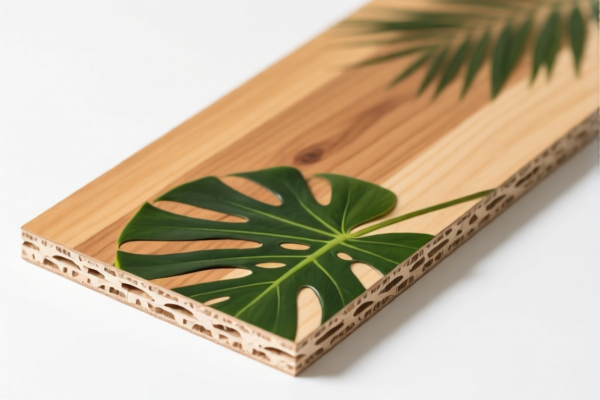
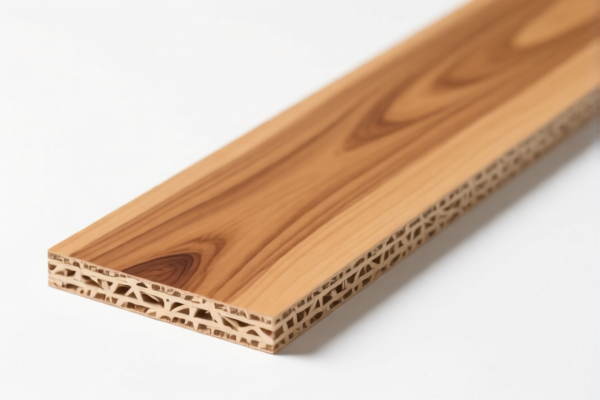
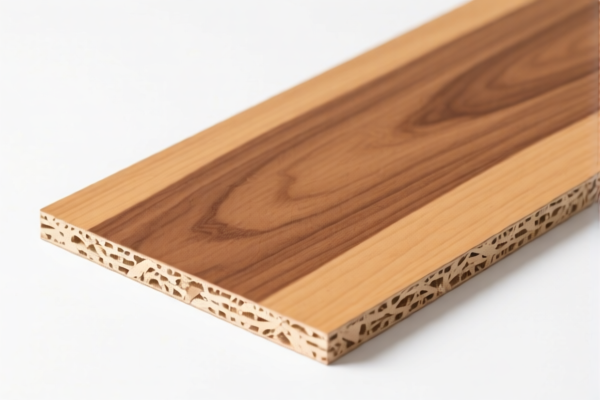
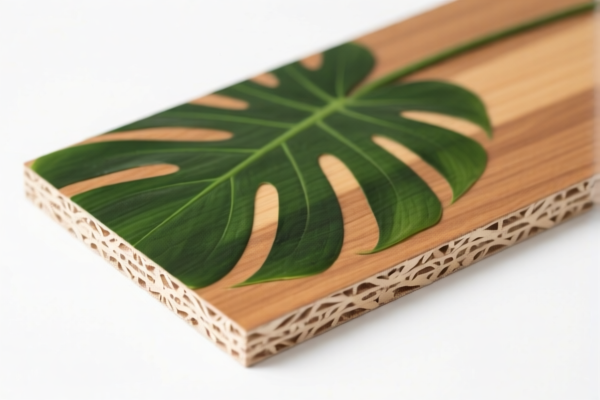
AI Analysis
🌲 Tropical Wood for Particleboard (Particle Board / Oriented Strand Board)
🌐 HS Code Reference & Customs Clearance Guide | 2026 Latest Tariff Analysis | Professional Entry Strategies
📌 I. Product Definition & Classification: What Exactly is "Tropical Wood for Particleboard"?
Tropical wood used for particleboard refers to raw wood materials (chips, strands, or fibers) derived from tropical hardwoods, processed specifically for the manufacture of engineered wood panels such as Particleboard, Oriented Strand Board (OSB), or Wood-Fiber Boards.
In international trade, the classification depends heavily on the physical form and processing level of the wood chips/strands:
- Particleboard (Chipboard): Made from wood chips bonded with resin under heat and pressure.
- Oriented Strand Board (OSB): Made from larger, oriented wood strands.
- Wood-Fiber Board: Made from refined wood fibers.
⚠️ Key Distinction Point:
- If the material is explicitly defined as "Particleboard" (finished board) or "Chips for Particleboard" → It generally falls under Heading 4410 (Wood Panels) or 4411 (Fiberboards).
- If it is a multilayer panel containing at least one layer of particleboard → It may fall under Heading 4412 (Plywood/Veneered Panels).
- Material: Must be wood-based (tropical hardwoods are common).
- Form: Boards, chips, or strands.
📦 II. HS Code Classification Details (2026 Latest Tariff Authority Mapping)
Based on the provided data, here are the matched HS Codes for "Tropical Wood for Particleboard," along with the rationale provided in the source data:
| HS Code | Summary of Matching Logic (From Source Data) | Product Description / Category |
|---|---|---|
| 4410.11.00.10 | Match Success. The product name "Particleboard" matches the target code definition for particleboard/oriented strand board in terms of material (wood) and form (board). | Particleboard / OSB (Specific Subheading) |
| 4410.11.00.60 | Direct Match. Product name matches material (wood-based particleboard) and form, conforming to the board classification under this code. | Wood-based Particleboard (General Subheading) |
| 4411.94.00.40 | Match Success. Particleboard is a type of wood-fiber board. Its material (wood fiber) and form (board) fit the classification for wood-fiber boards and their density interval attributes, with no material conflict. | Wood-Fiber Board (Hardboard/MDF/etc.) |
| 4411.93.60.00 | Match Success. Particleboard is a type of wood-fiber board, conforming to the material definition of wood-fiber boards under this code. | Wood-Fiber Board (Other) |
| 4412.91.06.00 | Match Success. Particleboard (Particle board) belongs to particle boards, conforming to the material requirement of "containing at least one layer of particleboard" in this code. | Multilayer Wood Panels (With Particleboard Layer) |
| 4412.92.07.00 | Match Success. The product name explicitly contains "Particleboard," conforming to the restriction condition "containing at least one layer of particleboard" in the classification explanation. | Multilayer Wood Panels (With Particleboard Layer) |
🔍 Important Note:
- 4410.xx codes typically apply to basic particleboard/OSB.
- 4411.xx codes apply if the product is classified more broadly as a wood-fiber board (depending on density and manufacturing process).
- 4412.xx codes apply if the product is a composite panel (e.g., plywood or laminated board) that includes a particleboard layer.
- Do not mix these categories: A pure particleboard sheet should not be declared as a multilayer panel (4412) unless it is structurally a composite.
💰 III. 2026 Latest Tariff Rate Breakdown (Including Surtaxes & Policy Add-ons)
✅ Applicable Country: United States (US)
✅ Origin: China (CN)
✅ Effective Date: From November 10, 2025 (Including subsequent imports)
All the HS codes listed above carry the same tariff structure according to the provided data:
🎯 1. General Tariff Structure for All Matched Codes (4410, 4411, 4412)
| Item | Content |
|---|---|
| Base Duty Rate | 0.0% (ad valorem) |
| Section 301 Surtax (USITC) | +25.0% |
| IEEPA Section 122 Surtax | +10.0% |
| Total Effective Tariff Rate | 35.0% |
| Tax Calculation | CIF Value × 35% |
| De Minimis Exemption | ❌ Not Available (deny_de_minimis) |
| Legal Basis Path | IEEPA:122 → USITC:Section301 → Relevant HS Code |
📌 Detailed Explanation of Tax Clauses:
- "Base Duty 0.0%": The standard Most Favored Nation (MFN) duty for wood panels is generally zero, meaning no standard import tax applies initially.
- "Section 301 Surtax 25%": This is the additional tariff imposed under Section 301 of the Trade Act of 1974 against Chinese goods. It applies to a wide range of wood products, including particleboard and fiberboards.
- "Section 122 Tariff 10%": This refers to a specific surcharge under the International Emergency Economic Powers Act (IEEPA), often cited as "Section 122 tariffs" in certain trade data systems, targeting products from China.
- Total 35%: The cumulative burden is 35%. This is a high-cost entry and must be factored into your pricing strategy.
- No De Minimis: Small shipments (under $800) do not qualify for duty exemption. All shipments are subject to this 35% rate.
🛠️ IV. Customs Clearance Practical Advice (Avoiding Pitfalls)
✅ 1. Required Documentation Checklist (Non-Negotiable)
| Document | Required? | Description |
|---|---|---|
| ✅ Product Specification Sheet | ✔️ | Must clearly state: Material (Tropical Wood), Type (Particleboard/OSB/Fiberboard), Density, Thickness, and Dimensions. |
| ✅ Technical Data Sheet (TDS) | ✔️ | Include resin type, formaldehyde emission levels (e.g., CARB Phase 2, TSCA Title VI), and manufacturing process. |
| ✅ Commercial Invoice | ✔️ | Must precisely describe the product as "Particleboard" or "Wood-Based Panel," not just "Wood Chips" or "Tropical Wood." Misdescription leads to audits. |
| ✅ Packing List | ✔️ | Detail packaging type, gross/net weight, and number of pallets. |
| ✅ Certificate of Origin (CO) | ✔️ | To prove origin (China). Note: No preferential tariff applies due to surtaxes. |
| ✅ Formaldehyde Emission Certification | ✔️ | Crucial for US import. Must comply with TSCA Title VI or CARB Phase 2 standards. Provide third-party test reports. |
| ✅ Bill of Lading (B/L) | ✔️ | Ensure the description on the B/L matches the Commercial Invoice exactly. |
✅ 2. Declaration Tips (Key Mnemonics)
🔥 “Material True, Form Specific, Title VI Clear, Tariff 35%!”
| Scenario | Correct Declaration | Wrong Practice |
|---|---|---|
| Pure Particleboard | HS 4410.11.00.10 or 4410.11.00.60 Desc: "Particleboard, Wood-Based" |
Declaring as "Wood Chips" (4401) → Risk of Rejection & Penalty |
| Multilayer Panel with Particleboard | HS 4412.91.06.00 or 4412.92.07.00 Desc: "Plywood Panel, with Particleboard Core" |
Declaring as solid wood plywood → Misclassification |
| Fiberboard/MDF | HS 4411.94.00.40 or 4411.93.60.00 Desc: "Wood-Fiber Board, Density XX kg/m³" |
Declaring as Particleboard if density/process differs → Audit Risk |
| Any Wood Product | Ensure TSCA Title VI Compliance Docs are attached | Ignoring formaldehyde rules → Port Rejection |
✅ 3. Special Situation Handling
| Situation | Handling Advice |
|---|---|
| Mixed Containers | If container has both particleboard (4410) and other goods, ensure each item is declared under its correct HS Code to avoid blanket scrutiny. |
| Tropical Wood Origin | Even if the wood is "Tropical" (e.g., from Africa/SE Asia), if processed in China and exported from China, it is considered Chinese Origin for tariff purposes. |
| Formaldehyde Levels | If formaldehyde levels exceed US limits, the goods will be rejected. Ensure your supplier has valid TSCA Title VI certification. |
| OSB vs. Particleboard | OSB (larger strands) and Particleboard (small chips) have different physical properties. Use the correct HS code (4410 for both, but subheadings may vary). Do not confuse with "Veneer" (4408). |
🌍 V. Global Market Comparison for Wood Panels (2026)
| Country/Region | Recommended HS Code | Base Tariff | US Surtax (China) | Certification Requirement | Notes |
|---|---|---|---|---|---|
| 🇺🇸 USA | 4410.11.00.xx etc. |
0% | +35% (25% + 10%) | TSCA Title VI, CARB | High Cost. Verify all codes. |
| 🇨🇳 China | 4410.11.00.xx |
5-10% | N/A | FSC (if exported to West) | Domestic trade uses different standards. |
| 🇪🇺 EU | 4410 / 4411 |
0% | N/A | CE Mark, Formaldehyde E1/E0 | No Section 301 tariffs. |
| 🇨🇦 Canada | 4410 / 4411 |
0% | N/A | Canadian Wood Panel Standards | NAFTA/USMCA may apply if processed in NA. |
| 🇲🇽 Mexico | 4410 / 4411 |
0-5% | N/A | NOM Certifications | USMCA benefits if rules of origin met. |
📌 Conclusion:
- The USA is the only market with the 35% surtax on these products from China.
- EU and other markets are significantly cheaper for customs duties.
- If targeting the US, consider supply chain diversification (e.g., manufacturing in Vietnam or Mexico) to potentially avoid Section 301 tariffs, though IEEPA 122 may still apply depending on final rules.
📌 VI. Common Errors & Pitfalls Guide (Lessons Learned)
❌ Error 1: Declaring "Particleboard" as "Wood Chips" (HS 4401)
👉 Consequence: HS 4401 may have different tax rules and scrutiny. If the product is a panel (bonded), it must be 4410. Misdeclaration leads to penalties and back-taxes.
❌ Error 2: Ignoring Formaldehyde Certification (TSCA Title VI)
👉 Consequence: Goods will be held at the port or rejected. No amount of tax payment can override environmental compliance failures.
❌ Error 3: Confusing "Particleboard" (4410) with "Plywood" (4412)
👉 Consequence: If it’s a simple particleboard sheet, using 4412 codes is incorrect. If it’s a multi-layer panel, using 4410 is incorrect. Structural integrity dictates the code.
✅ Correct Declaration Example:
"Particle Board, 2400mm x 1200mm, 18mm thickness, Melamine Faced, Formaldehyde Emission Grade CARB Phase 2 Compliant, Made in China."
🎯 VII. Conclusion: Professional Declaration, Save Time & Money!
🎯 Remember the Key Points:
🔹 "35% Total Tax for China Origin" → Budget accordingly.
🔹 "TSCA Title VI is Mandatory" → No exception.
🔹 "Be Specific in Description" → "Particleboard" vs. "Fiberboard" vs. "Panel with Particleboard Layer" matters for the exact subheading.
📌 Pro Tip:
If your product is shipped via Canada or Mexico and undergoes substantial transformation, you may be able to claim USMCA preferences for the US market, potentially eliminating the 35% surtax. Consult a trade lawyer for origin rules.
📣 Immediate Action:
📞 Engage a licensed customs broker in the US.
📄 Prepare TSCA Title VI certificates before shipment.
🚀 Ensure your HS Code is pre-verified to avoid port delays.
✨ Professional Clearance Starts with Accurate Classification!
💼 Every 1% of duty saved is pure profit!
Customer Reviews
About HS Code Classification
The Harmonized System (HS) is an internationally standardized nomenclature developed by the World Customs Organization (WCO) to classify traded products. Over 200 countries use the HS system as the basis for customs tariffs, trade statistics, and import/export regulations.
Each HS code follows a hierarchical structure:
- Chapter (2 digits) — Broad category of goods (e.g., Chapter 84: Machinery and Mechanical Appliances)
- Heading (4 digits) — More specific grouping within the chapter
- Subheading (6 digits) — Internationally standardized breakdown, used by all WCO member countries
- National subdivisions (8-10 digits) — Country-specific extensions for further classification, such as US HTSUS 10-digit codes
Correct HS code classification is essential for smooth customs clearance, accurate duty payment, and compliance with trade regulations. Misclassification can lead to customs delays, overpayment of duties, or penalties.
When importing from CN to US, the applicable tariff rates may include:
- Most-Favored-Nation (MFN) rate — The standard duty rate applied to WTO members
- General rate — Applied to countries without trade agreements
- Trade remedy duties — Additional tariffs such as Section 301 (anti-dumping), Section 232 (national security), or countervailing duties
The information provided on this page is for reference purposes only. For official classification, please consult with your local customs authority or a licensed customs broker.