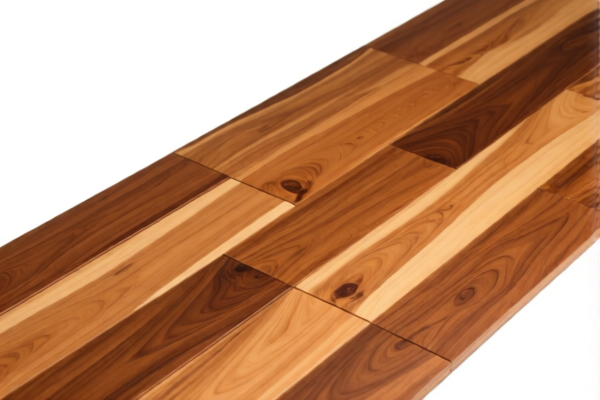
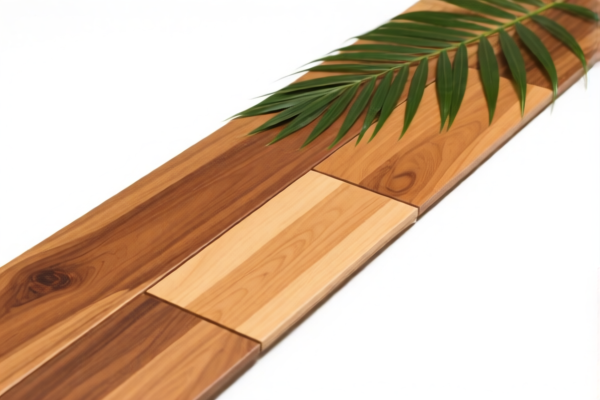
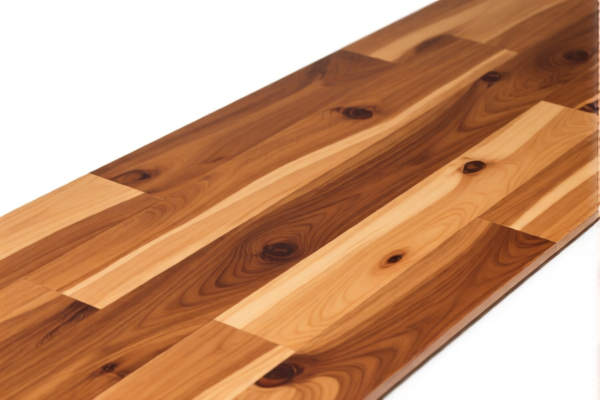
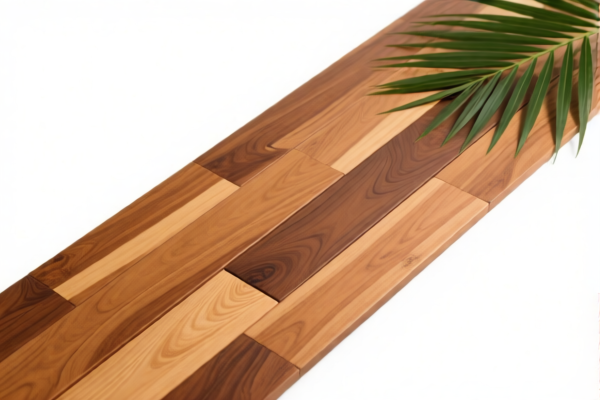
Tropical Wooden Floor Boards
CN → US| HS Code | Tariff Rate | Origin | Destination | Doc |
|---|---|---|---|---|
| 4407210000 | 35.0% | CN | US | Official Doc |
| 4407290285 | 35.0% | CN | US | Official Doc |
Product Images
AI Analysis
🌿 Tropical Wooden Floor Boards (Sawn Wood)
🌐 HS Code Reference & Customs Clearance Guide | 2026 Latest Tariff Analysis | Professional Clearance Strategy
📌 I. Product Definition & Classification: Are You Clear on "Tropical Sawn Wood"?
Tropical wooden floor boards are not just "wood." In international trade, they are classified under Chapter 44: Wood and articles of wood; wood charcoal. Specifically, they fall under Heading 4407: Wood sawn or chipped lengthwise, sliced or peeled, whether or not planed, sanded or end-jointed, of a thickness exceeding 6 mm.
The critical distinction lies in the wood species. Customs authorities strictly differentiate between Mahogany (Swietenia spp.) and Other Tropical Woods (such as Hymenaea spp., commonly known as Jatoba or Brazilian Cherry). This distinction drastically affects your duty burden.
⚠️ Key Distinction Point:
- If the wood is Mahogany (Swietenia spp.) → HS Code 4407.21.00.00
- If the wood is Other Tropical Wood (e.g., Jatoba/Brazilian Cherry, Hymenaea spp.) → HS Code 4407.29.02.85
- Note: If the wood is NOT tropical (e.g., Oak, Maple, Pine), it belongs to different subheadings (4407.30–4407.95) which are NOT covered in the provided<DATA>scope.
📦 II. HS Code Classification Details (Based on Provided <DATA>)
| HS Code | Product Description | Species Specifics | Applicable Scenario |
|---|---|---|---|
4407.21.00.00 |
Wood sawn/sliced/planned/sanded, >6mm: Of tropical wood: Mahogany | Swietenia spp. | Authentic Mahogany flooring. High risk of smuggling/fraud checks; requires botanical verification. |
4407.29.02.85 |
Wood sawn/sliced/planned/sanded, >6mm: Of tropical wood: Other | Hymenaea spp. (Jatoba/Brazilian Cherry) | Jatoba, Brazilian Cherry, and other non-Mahogany tropical hardwoods. |
🔍 Critical Reminder:
- Thickness: Must exceed 6 mm. If cut thinner (veneer), it falls under HS 4408. - Processing: "Sawn, sliced, peeled, planed, sanded" are all included. If it is just raw logs, it’s HS 4403. If it is finished furniture, it’s Chapter 94. - Species Proof: Customs may require a botanical specimen or expert certificate to confirm the genus (Swietenia vs. Hymenaea). Misclassification leads to severe penalties.
💰 III. 2026 Latest Tariff Rate Breakdown (Detailed Tax Clauses)
✅ Applicable Country: United States (US)
✅ Origin: China (CN) (Implied by tax structure in<DATA>)
✅ Effective Date: Current US Trade Policy (Section 301 Tariffs)
🎯 1. 4407.21.00.00 —— Mahogany Wood (Sawn/Planed)
| Item | Content |
|---|---|
| Base Tariff (MFN) | 0.0% (Free) |
| Section 301 Additional Tariff | +25.0% |
| Total Effective Tax Rate | 25.0% |
| Tax Calculation | CIF Value × 25% |
| De Minimis Exemption | ❌ Not Applicable (Section 301 tariffs generally do not apply to de minimis, but even if they did, the rate is fixed) |
| Legal Basis | HTSUS 4407.21.00.00 + USITC Footnote 301 |
📌 Explanation:
- Although the base MFN rate for Mahogany is 0%, the 25% Section 301 tariff applies due to its origin (China).
- Risk: Mahogany is a CITES-listed genus (Swietenia). Ensure you have CITES Permits if imported from certain countries, in addition to standard customs duties. Failure to declare CITES status can lead to seizure.
🎯 2. 4407.29.02.85 —— Other Tropical Wood (e.g., Jatoba/Brazilian Cherry)
| Item | Content |
|---|---|
| Base Tariff (MFN) | 0.0% (Free) |
| Section 301 Additional Tariff | 0.0% |
| Total Effective Tax Rate | 0.0% |
| Tax Calculation | CIF Value × 0% = $0 Duty |
| De Minimis Exemption | N/A (Already 0%) |
| Legal Basis | HTSUS 4407.29.02.85 + USITC Footnote 301 (Exempt) |
📌 Explanation:
- "Other Tropical Wood" (such as Jatoba/Brazilian Cherry) is NOT subject to the 25% Section 301 tariff in the provided data.
- This is a major cost advantage compared to Mahogany.
- Clarification: The description specifically mentions Hymenaea spp. (Jatoba/Brazilian Cherry). If your wood is indeed Jatoba, you pay NO DUTY under this specific classification.
🛠️ IV. Customs Clearance Practical Advice (Battle-Proven Pitfall Guide)
✅ 1. Essential Documentation Checklist
| Document | Mandatory? | Description |
|---|---|---|
| ✅ Botanical Name Certificate | ✔️ CRITICAL | Must specify Genus (Swietenia or Hymenaea) and Species. Common names ("Brazilian Cherry") are not enough. |
| ✅ Commercial Invoice | ✔️ | Must clearly state: "Tropical Hardwood Flooring, Sawn/Planed, >6mm, Genus: [Scientific Name]". |
| ✅ Packing List | ✔️ | Detail dimensions, volume (CBM), and gross/net weight. |
| ✅ CITES Permit | ✔️ Conditional | Required if the wood is from a CITES-restricted region and is Swietenia (Mahogany). Check with local CITES authority. |
| ✅ Fumigation Certificate | ✔️ | Required for wood packaging or raw wood to prevent pest entry. |
✅ 2. Declaration Tips (Key Mantras)
🔥 "Species Name is King! 'Mahogany' vs. 'Jatoba' Means 25% Difference!"
| Scenario | Correct Declaration | Incorrect Practice | Consequence |
|---|---|---|---|
| Product is Jatoba | HS 4407.29.02.85 |
Declare as "Mahogany" to look premium | ❌ Overpay 25% duty unnecessarily |
| Product is Mahogany | HS 4407.21.00.00 |
Declare as "Other Tropical Wood" | ⚠️ Fraud! Customs will audit. Penalties + Back Taxes + Potential Seizure. |
| Thickness < 6mm | HS 4408 (Veneer) | Declare as 4407 | ❌ Wrong Classification. 4408 has different tax rules. |
| Mixed Species Load | Separate Declarations | Lump all as "Tropical Wood" | ❌ Audit risk. Must separate by HS Code. |
✅ 3. Special Circumstances Handling
| Situation | Handling Advice |
|---|---|
| "Brazilian Cherry" is Mahogany? | No! Hymenaea (Jatoba) is not Swietenia (Mahogany). They are different genera. Use HS 4407.29.02.85. |
| CITES Concerns | Swietenia species are CITES Appendix II. If imported from certain countries, you need an Export Permit from the country of origin. Without it, customs will block entry regardless of tax. |
| Sanded vs. Raw | Both are 4407. Sanded wood is easier to classify as "flooring ready." Raw sawn wood might require more proof of intended use. |
| End-Jointed Flooring | Still classified under 4407 if it's just planks. If assembled into a full kit with underlayment/adhesive, it might change to Chapter 39 or 44, but usually, wooden planks stay in 4407. |
🌍 V. Global Market Comparison (2026 Insight)
| Country/Region | Recommended HS Code | Duty (China Origin) | Key Requirement | Notes |
|---|---|---|---|---|
| 🇺🇸 USA | 4407.29.02.85 (Jatoba) |
0% | CITES (if applicable) | Best Choice: 0% Duty. Avoid Mahogany (4407.21.00.00) due to 25% tariff. |
| 🇺🇸 USA | 4407.21.00.00 (Mahogany) |
25% | CITES + Section 301 | High Cost. Only use if market demands it. |
| 🇪🇺 EU | Varies (Check Annex) | Varies | EUTR (EU Timber Regulation) | No Section 301. Focus on legality documentation. |
| 🇨🇳 China | 4407.21.00.00 / 4407.29 |
0% - 5% | Fumigation | Lower taxes, but strict phytosanitary checks. |
📌 Conclusion:
- If you can switch species, use Jatoba/Brazilian Cherry (4407.29.02.85) to save 25% in duties when importing to the USA.
- Do not mislabel Jatoba as Mahogany to avoid scrutiny, and do not label Mahogany as "Other Wood" to avoid fraud.
- CITES compliance is non-negotiable for Swietenia spp.
📌 VI. Common Mistakes & Pitfalls (Blood Tears Lessons)
❌ Mistake 1: Calling Hymenaea (Jatoba) "Mahogany" because it looks similar.
👉 Result: You might get away with 0% duty, but if customs tests it and finds it’s Swietenia (Mahogany) but declared as "Other," you face fraud penalties. If it’s Hymenaea but declared as Mahogany, you overpay 25%.
❌ Mistake 2: Ignoring CITES for Swietenia (Mahogany).
👉 Result: Even with 0% base tax, shipment is seized if CITES permit is missing.
❌ Mistake 3: Confusing "Sawn Wood" with "Finished Flooring."
👉 Result: If your product is already nailed together or has interlocking tongues/grooves designed for immediate installation, it might be classified as 4409 (Wood continuously shaped along any edge). 4409 may have different tariffs. Check the profile of the board!
✅ Correct Practice:
"Sawn Tropical Hardwood Flooring Planks, Thickness 12mm, Genus: Hymenaea spp., Species: Hymenaea courbaril (Jatoba), Sanded, No Finish, Palletized."
🎯 VII. Conclusion: Professional Declaration, Save Money, Stay Legal
🎯 Remember the Mantra:
🔹 "Jatoba is 0%, Mahogany is 25%. Species Name Saves Dollars!"
🔹 "CITES is Key for Mahogany. No Permit, No Entry!"
📌 Pro Tip:
If you are importing Jatoba (4407.29.02.85), you enjoy 0% duty. This is a strategic advantage. Ensure your supplier provides accurate botanical names on all documents. For Mahogany, consider if the 25% tariff can be absorbed by the market, or switch to a cheaper tropical wood like Jatoba to maintain margins.
📣 Immediate Action:
📞 Contact your customs broker with the Scientific Name of the wood.
📄 Request a CITES Permit if using Mahogany.
🚀 Use HS 4407.29.02.85 for Jatoba to pay ZERO duties!
✨ Professional Clearance Starts with Accurate Classification!
💼 Every 25% Saved is Pure Profit!
Customer Reviews
About HS Code Classification
The Harmonized System (HS) is an internationally standardized nomenclature developed by the World Customs Organization (WCO) to classify traded products. Over 200 countries use the HS system as the basis for customs tariffs, trade statistics, and import/export regulations.
Each HS code follows a hierarchical structure:
- Chapter (2 digits) — Broad category of goods (e.g., Chapter 84: Machinery and Mechanical Appliances)
- Heading (4 digits) — More specific grouping within the chapter
- Subheading (6 digits) — Internationally standardized breakdown, used by all WCO member countries
- National subdivisions (8-10 digits) — Country-specific extensions for further classification, such as US HTSUS 10-digit codes
Correct HS code classification is essential for smooth customs clearance, accurate duty payment, and compliance with trade regulations. Misclassification can lead to customs delays, overpayment of duties, or penalties.
When importing from CN to US, the applicable tariff rates may include:
- Most-Favored-Nation (MFN) rate — The standard duty rate applied to WTO members
- General rate — Applied to countries without trade agreements
- Trade remedy duties — Additional tariffs such as Section 301 (anti-dumping), Section 232 (national security), or countervailing duties
The information provided on this page is for reference purposes only. For official classification, please consult with your local customs authority or a licensed customs broker.