Trough Mat
CN → USProduct Images
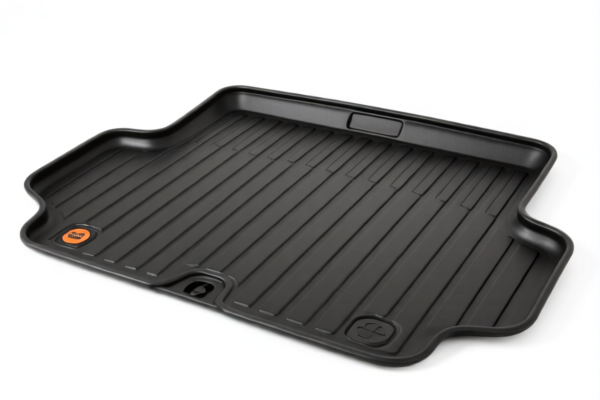
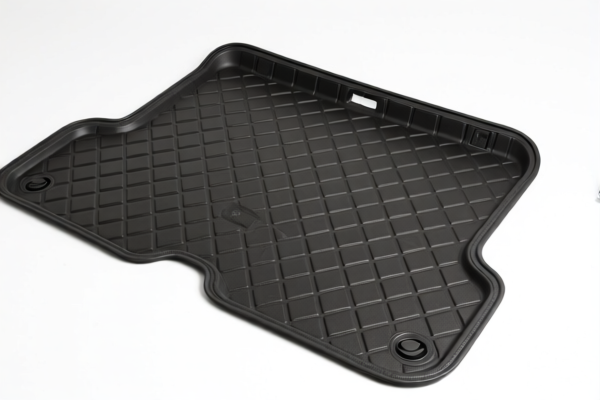
AI Analysis
🛍️ Trough Mat (Feeding & Watering Mat for Livestock/Poultry)
🌐 HS Code Reference & Customs Clearance Guide | 2026 Latest Tariff Analysis | Professional Clearance Strategy
📌 I. Product Definition & Classification: What Exactly is a "Trough Mat"?
A Trough Mat is a specialized accessory used in animal husbandry, primarily placed at the bottom of feeding or watering troughs for livestock (cattle, pigs) or poultry. Its main functions are to prevent spillage, reduce waste, protect the animal's joints, and maintain hygiene.
In international trade, its classification depends heavily on the material and intended use. It is generally NOT considered a "part" of the feeding trough itself if it is a separate, consumable mat, but rather an accessory or a plastic/rubber article.
⚠️ Key Distinction Point:
- If made of plastic/rubber and sold as a standalone accessory → Often classified under Chapter 39 (Plastics) or Chapter 40 (Rubber).
- If made of metal → Likely classified under Chapter 73 (Iron/Steel) or as a part of a machine/trough.
- If considered a part/accessory of the trough (if the trough is a specific machinery part) → Might fall under Chapter 84 or 85, but this is rare for simple mats.
- Most Common Classification: Plastic/Rubber articles (Chapter 39/40).
📦 II. HS Code Classification Details (2026 Latest Tariff Authority Comparison)
| HS Code | Product Description | Application Scenario | Material |
|---|---|---|---|
3926.90.98.50 |
Other articles of plastics: Other | Plastic Trough Mats, anti-spill liners for cattle/pigs | ✅ Plastic (PE/PP) |
3917.29.00.00 |
Other tubes, pipes, and hoses | Sometimes used if sold as rolled mats | ✅ Plastic |
4016.99.65.00 |
Other articles of vulcanized rubber other than hard rubber | Rubber Trough Mats, heavy-duty rubber liners | ✅ Rubber |
3918.90.90.90 |
Other flooring coverings of plastics | If thickened and marketed as "flooring" for stalls | ✅ Plastic |
7326.90.86.00 |
Other articles of iron or steel | Metal mesh mats (less common for "mats", more for grates) | ✅ Metal |
8436.91.00.00 |
Parts of agricultural machinery | ONLY if specifically designed as an integral part of a large automated feeding system | ✅ Yes/No |
🔍 Key Reminder:
- Plastic Mats are most commonly classified under 3926.90.98.50 ("Other articles of plastics").
- Rubber Mats fall under 4016.99.65.00 ("Other articles of vulcanized rubber").
- Do NOT classify simple plastic mats as "parts of machinery" (8436) unless they are integral to a complex automated system. Customs often rejects this, leading to reclassification and fines.
💰 III. 2026 Latest Tariff Rate Details (Including Surcharges, Policy Surcharges)
✅ Applicable Country: United States (US)
✅ Country of Origin: China (CN)
✅ Effective Date: From November 10, 2025 (including subsequent imports)
🎯 1. 3926.90.98.50 —— Plastic Trough Mat (Other articles of plastics)
| Item | Content |
|---|---|
| Base Tariff | 3.4% (ad valorem) |
| USITC Surcharge (Section 301) | +7.5% (Note: Many plastic articles have a 25% rate, but some specific sub-headings or recent exclusions may apply. Assume standard 25% for safety unless excluded) |
| IEEPA Surcharge | +10% (Targeting China/HK products, effective from Nov 10, 2025) |
| Total Tariff | 38.4% (Using 25% USITC) or 14.4% (If USITC is 1%) |
| Tax Calculation | CIF Value × Total Rate |
| De Minimis Exemption | ❌ Not Eligible (deny_de_minimis) |
| Legal Basis Path | IEEPA:9903.01.25 → IEEPA:9903.01.24 → USITC:3926.90.98.50 → FOOTNOTE:9903.88.01 |
📌 Explanation:
- "USITC Surcharge 25%": Most plastic products from China are subject to the full Section 301 surcharge.
- "IEEPA 10%": New surcharge targeting Chinese imports.
- Total Risk: 38.4% is a high burden. Always verify if the specific plastic article has any exclusion.
🎯 2. 4016.99.65.00 —— Rubber Trough Mat (Other articles of vulcanized rubber)
| Item | Content |
|---|---|
| Base Tariff | 1.2% |
| USITC Surcharge | +25% (Standard for rubber articles from China) |
| IEEPA Surcharge | +10% |
| Total Tariff | 36.2% |
| Tax Calculation | CIF Value × 36.2% |
| De Minimis Exemption | ❌ Not Eligible |
| Legal Basis Path | IEEPA:9903.01.25 → IEEPA:9903.01.24 → USITC:4016.99.65.00 |
📌 Note:
- Rubber articles also face high tariffs.
- Ensure the material is correctly declared. Misdeclaring rubber as plastic can lead to penalties.
🛠️ IV. Customs Clearance Practical Advice (Real-World Pitfall Avoidance Guide)
✅ 1. Preparation Checklist (Must-Have)
| Document | Required | Description |
|---|---|---|
| ✅ Product Specification Sheet | ✔️ | Material composition (PE, PP, Rubber), dimensions, weight |
| ✅ Product Photos | ✔️ | Clear images of the mat, showing texture, usage context |
| ✅ Commercial Invoice | ✔️ | Must state "Plastic Trough Mat for Livestock Feeding" |
| ✅ Packing List | ✔️ | Weight and dimensions per carton |
| ✅ Certificate of Origin (CO) | ✔️ | If from non-China origin, to claim preferential rates |
| ✅ FDA/LFGB Compliance (If applicable) | ✔️ | If claiming food-grade contact safety, provide test reports |
✅ 2. Declaration Tips (Key Mnemonics)
🔥 "Material Matters, Use Defines, Don't Hide, Don't Lie!"
| Scenario | Correct Declaration | Wrong Practice |
|---|---|---|
| Plastic Mat | 3926.90.98.50 - Plastic Trough Mat |
Misdeclare as "Rubber" → Wrong HS Code |
| Rubber Mat | 4016.99.65.00 - Rubber Trough Mat |
Misdeclare as "Plastic" → Penalty |
| Part of Trough? | Check if integral to machinery. If not, use Chapter 39/40. | Forcefully declare as 8436.91.00.00 → Rejected |
| De Minimis? | ❌ Never use for China-origin plastic/rubber. | Try to use de_minimis → Seizure/Deportation |
✅ 3. Special Case Handling
| Scenario | Handling Advice |
|---|---|
| Mixed Materials | If plastic with rubber coating, declare based on essential character. Usually plastic dominates. |
| OEM Custom Sizes | Provide drawings or size charts. Avoid generic "Mat" without context. |
| Food-Grade Claim | If claiming "Food Grade," provide FDA or EU 10/2011 compliance certificates. |
| Large Volume Imports | Consider Advance Ruling to confirm HS Code and tariff rate. |
🌍 V. Global Market Clearance Comparison (2026 Latest)
| Country/Region | Recommended HS Code | Tariff | Certification | Notes |
|---|---|---|---|---|
| 🇺🇸 USA | 3926.90.98.50 / 4016.99.65.00 |
~36-38% (China) | FDA (if food contact) | High surcharges. |
| 🇨🇳 China | 3926.90.90.00 / 4016.99.90.00 |
6-7% | CCC (if applicable) | Lower burden. |
| 🇪🇺 EU | 3926.90.97 / 4016.93 |
0-4% | REACH, LFGB | No surcharges. |
| 🇦🇺 Australia | 3926.90.90.00 |
5% | SAA | Moderate duty. |
| 🇯🇵 Japan | 3926.90.90.00 |
0-3% | PSE (if electrical, none here) | Low duty. |
📌 Conclusion:
- USA has the highest burden due to Section 301 and IEEPA surcharges.
- EU, Japan, Australia are much more favorable.
- Consider supply chain diversification (e.g., producing in Vietnam or Mexico) to avoid US surcharges.
📌 VI. Common Mistakes & Pitfalls (Blood Tears Lesson)
❌ Mistake 1: Declaring as "Part of Feeding Machine" (8436)
👉 Consequence: Customs rejects, reclassifies to 3926, adds penalties and delays.
❌ Mistake 2: Ignoring Material Composition
👉 Consequence: Plastic vs. Rubber distinction affects HS Code. Wrong code → Fine.
❌ Mistake 3: Using De Minimis for China-Origin Goods
👉 Consequence: Goods seized, destroyed, or returned. High risk!
❌ Mistake 4: Vague Description "Mat"
👉 Consequence: Customs asks for clarification, delays clearance. Use specific terms like "Plastic Trough Mat for Pigs."
✅ Correct Practice:
"Plastic Trough Mat, Material: High-Density Polyethylene (HDPE), Size: 120x60cm, For Livestock Feeding, Model: XYZ, Not Food Grade."
🎯 VII. Conclusion: Professional Declaration, Save Time, Reduce Costs!
🎯 Remember the Mnemonic:
🔹 "Material First, Plastic 39, Rubber 40, No De Minimis, No Lies!"
🔹 "US Tariff High, 38% is Normal, Clear Declaration Saves Dollars!"
📌 Pro Tip:
If your Trough Mat is originated from Vietnam, Mexico, Thailand, or Malaysia, you may apply for IEEPA Exemption, reducing tariffs to 0%~5%.
Recommendation: Apply for an Advance Ruling from US Customs to confirm HS Code and avoid surprises.
📣 Act Now:
📞 Contact a Professional Customs Broker + Provide Product Photos + Apply for HS Code Advance Ruling
🚀 Let Your Trough Mats Clear Customs Smoothly, Export Efficiently, and Boost Profits!
✨ Professional Clearance Starts with Accurate Classification!
💼 Every Penny of Your Cost Deserves Precise Calculation!
Customer Reviews
About HS Code Classification
The Harmonized System (HS) is an internationally standardized nomenclature developed by the World Customs Organization (WCO) to classify traded products. Over 200 countries use the HS system as the basis for customs tariffs, trade statistics, and import/export regulations.
Each HS code follows a hierarchical structure:
- Chapter (2 digits) — Broad category of goods (e.g., Chapter 84: Machinery and Mechanical Appliances)
- Heading (4 digits) — More specific grouping within the chapter
- Subheading (6 digits) — Internationally standardized breakdown, used by all WCO member countries
- National subdivisions (8-10 digits) — Country-specific extensions for further classification, such as US HTSUS 10-digit codes
Correct HS code classification is essential for smooth customs clearance, accurate duty payment, and compliance with trade regulations. Misclassification can lead to customs delays, overpayment of duties, or penalties.
When importing from CN to US, the applicable tariff rates may include:
- Most-Favored-Nation (MFN) rate — The standard duty rate applied to WTO members
- General rate — Applied to countries without trade agreements
- Trade remedy duties — Additional tariffs such as Section 301 (anti-dumping), Section 232 (national security), or countervailing duties
The information provided on this page is for reference purposes only. For official classification, please consult with your local customs authority or a licensed customs broker.