Trousers
CN → US| HS Code | Tariff Rate | Origin | Destination | Doc |
|---|---|---|---|---|
| 6104632011 | 45.7% | CN | US | Official Doc |
| 6203424518 | 34.1% | CN | US | Official Doc |
| 6104622011 | 32.4% | CN | US | Official Doc |
| 6204639011 | 46.1% | CN | US | Official Doc |
| 6104632011 | 45.7% | CN | US | Official Doc |
Product Images


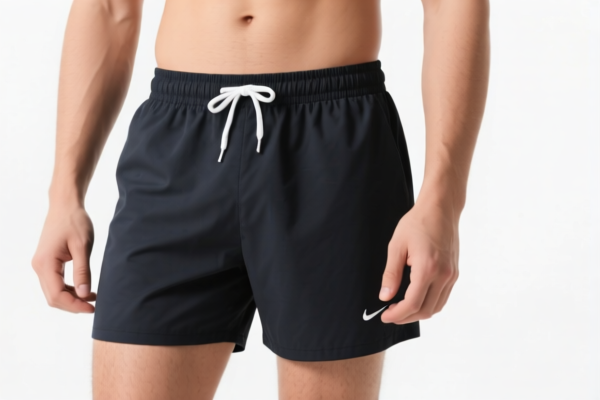
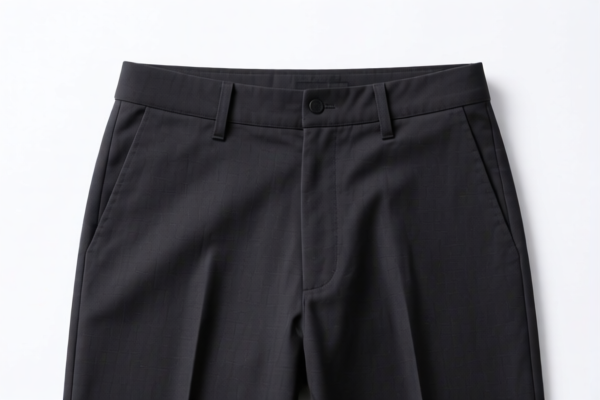
AI Analysis
👖 Trousers: Global HS Code Classification & 2026 Customs Clearance Guide
🌐 HS Code Reference & Clearance Strategy | 2026 Latest Tariff Analysis | Professional Import/Export Protocol
📌 One, Product Definition: What Are "Trousers"?
Trousers are a category of clothing covering the body from the waist to the ankles. In international trade, they are classified based on two critical dimensions: 1. Material: The fiber composition (e.g., Cotton, Synthetic, Blends) determines the specific sub-category. 2. Knit vs. Woven: * Knitted/Looped: Typically made on circular or flat knitting machines (soft, stretchy). Classified under Chapter 61. * Woven: Made by interlacing threads on a loom (structured, crisp). Classified under Chapter 62.
⚠️ Critical Distinction:
- If the material is Knitted/Looped → Look at 6104 (Women's) or 6203 (Men's).
- If the material is Woven → Look at 6204 (Women's) or 6203 (Men's).
- Missing Details: If material is unspecified, customs applies "reasonable inference" based on common trade knowledge, often defaulting to the "Other" category or the most likely fiber (e.g., Cotton).
📦 Two, Detailed HS Code Classification (Based on Provided Data)
The following analysis strictly interprets the provided tariff data for trousers, highlighting the logic for each code and the corresponding tax structure for China-origin goods imported into the US.
| HS Code | Product Description & Logic | Gender/Style | Material Inference |
|---|---|---|---|
| 6104.63.20.11 | Logic: Knitted trousers (Chapter 61). Matches "Shape" of trousers. Material inferred as synthetic/man-made (common for knit "other" categories). | Women's (Implied by 6104) | Synthetic/Man-made Fibers |
| 6203.42.45.18 | Logic: Woven trousers (Chapter 62). Matches "Shape" (Long pants/Trousers). Material inferred as Cotton (based on 42 sub-segment logic). | Men's (Implied by 6203) | Cotton or Cotton-blend |
| 6104.62.20.11 | Logic: Knitted trousers (Chapter 61). Matches "Shape". Material inferred as Cotton (based on 62 sub-segment logic). | Women's (Implied by 6104) | Cotton |
| 6204.63.90.11 | Logic: Woven trousers (Chapter 62). Matches "Shape". Due to "Missing Description" (Gender/Material), defaults to "Other" under no-conflict principles. | Women's (Implied by 6204) | Unspecified/Other (Mixed) |
🔍 Key Takeaway:
- 61xx Codes: Always Knitted. Lower base tax, but same heavy tariffs apply.
- 62xx Codes: Always Woven. Higher base tax, but same heavy tariffs apply.
- "Missing Info" Strategy: If the product name lacks material details, customs will use "reasonable inference" (e.g., assuming Cotton if no other fiber is mentioned) to avoid "no-match" errors, but this carries risk if the actual material differs.
💰 Three, 2026 Tariff Rate Breakdown (China Origin to US)
✅ Origin: China (CN)
✅ Destination: United States (US)
✅ Effective Date: Current 2026 Tariff Schedule
✅ Applicable Sections: 301 Tariffs (USITC) + 122 Tariffs + IEEPA Add-ons
🎯 1. 6104.63.20.11 (Knitted, Synthetic/Man-made)
| Tax Component | Rate | Legal Basis & Explanation |
|---|---|---|
| Base Tariff | 28.2% | Standard USMF (Most Favored Nation) rate for women's knitted trousers. |
| Section 301 Tariff | 7.5% | Additional tariff imposed on Chinese goods under the "Trade Action Plan". |
| Section 122 Tariff | 10% | Specific additional duty on Chinese textile/apparel imports (often part of broader trade restrictions). |
| TOTAL RATE | 45.7% | High Cost Alert! |
📌 Explanation:
- 28.2% is the "Normal" duty.
- 7.5% is a specific "Add-on" (likely Section 301 or similar trade remedy).
- 10% is the "Section 122" surcharge, heavily impacting Chinese textiles.
- Total 45.7% makes this a very high-cost import.
🎯 2. 6203.42.45.18 (Woven, Men's Cotton)
| Tax Component | Rate | Legal Basis & Explanation |
|---|---|---|
| Base Tariff | 16.6% | Standard USMF rate for men's woven trousers. |
| Section 301 Tariff | 7.5% | Additional tariff on Chinese goods. |
| Section 122 Tariff | 10% | Specific additional duty on Chinese textiles. |
| TOTAL RATE | 34.1% | Moderate-High Cost. |
📌 Explanation:
- 16.6% base rate is significantly lower than the knitted counterpart.
- However, the 17.5% add-ons (7.5% + 10%) push the total to 34.1%.
- Cotton often falls into a slightly different tariff band, but the trade sanctions still apply heavily.
🎯 3. 6104.62.20.11 (Knitted, Women's Cotton)
| Tax Component | Rate | Legal Basis & Explanation |
|---|---|---|
| Base Tariff | 14.9% | Standard USMF rate for women's knitted cotton trousers. |
| Section 301 Tariff | 7.5% | Additional tariff on Chinese goods. |
| Section 122 Tariff | 10% | Specific additional duty on Chinese textiles. |
| TOTAL RATE | 32.4% | Lowest Cost in this Set. |
📌 Explanation:
- This is the most cost-effective option in the provided list due to the lowest base rate (14.9%).
- Cotton (knitted) enjoys a slight tariff advantage over synthetic knits in the US system, but the 10% Section 122 is unavoidable.
🎯 4. 6204.63.90.11 (Woven, Women's, "Other")
| Tax Component | Rate | Legal Basis & Explanation |
|---|---|---|
| Base Tariff | 28.6% | Standard USMF rate for "Other" woven trousers. |
| Section 301 Tariff | 7.5% | Additional tariff on Chinese goods. |
| Section 122 Tariff | 10% | Specific additional duty on Chinese textiles. |
| TOTAL RATE | 46.1% | Highest Cost Alert! |
📌 Explanation:
- "Other" (90.11) often implies a catch-all category which frequently carries the highest base rates.
- 28.6% base + 17.5% add-ons = 46.1%.
- Risk of being classified as "Other" is high if the material/gender is not clearly declared.
🛠️ Four, Practical Customs Clearance Recommendations
✅ 1. Preparation Checklist (Must-Haves)
To avoid delays and "reasonable inference" errors, you must provide: * 📄 Technical Specification Sheet: Explicitly state Fiber Composition (e.g., "95% Cotton, 5% Spandex") and Construction (Woven vs. Knitted). * 📸 High-Res Photos: Show the fabric texture (to prove woven vs. knitted) and labels (to prove gender/size). * 🔬 Third-Party Test Report: Proof of fiber content (essential to challenge "reasonable inference" if the label is vague). * 📝 Commercial Invoice: Must use the exact term "Trousers" or "Pants" and specify gender (Men's/Women's) and material. * 🌍 Origin Certificate: Prove country of origin (China) to correctly apply the Section 122 and 301 tariffs.
✅ 2. Declaring Strategy (The "Golden Rule")
🔥 Rule: "Be Specific to Avoid 'Other'!" - DO NOT declare simply as "Pants" or "Clothing". - DO declare: "Women's Cotton Knitted Trousers, 6104.62.20.11" or "Men's Cotton Woven Trousers, 6203.42.45.18".
| Scenario | Correct Declaration | Risk of Vague Declaration |
|---|---|---|
| Knitted, Cotton | 6104.62.20.11 (32.4%) |
If misclassified as "Other" (6204...) → 46.1% |
| Woven, Synthetic | 6203.42.45.18 (34.1%) |
If misclassified as "Other" → 46.1% |
| Unknown Material | Provide Test Report | Customs will infer "Other" → 46.1% |
| Missing Gender | Specify "Men's" or "Women's" | Customs will default to "Other" → 46.1% |
✅ 3. Special Handling for "Missing Info"
The provided data shows that if the description is missing gender or material, customs uses "No Conflict Principle" (兜底类目). * Strategy: If you cannot determine the exact material, assume the lowest base rate (Cotton) but prepare for the Section 122 tax. * Warning: If you declare "Other" (90.11) to hide details, you pay the highest tax (46.1%). It is cheaper to declare the most likely category and pay the 32.4% or 34.1%.
🌍 Five, Global Market Comparison (2026)
| Market | Recommended HS Code | Total Tax (China Origin) | Key Requirement |
|---|---|---|---|
| 🇺🇸 USA | 6104.62.20.11 / 6203.42.45.18 |
32.4% - 46.1% | Section 122 (10%) + 301 (7.5%) |
| 🇨🇳 China | Same HS Codes | ~10% - 15% | No Section 301/122 |
| 🇪🇺 EU | Same HS Codes | ~12% - 16% | CE/REACH Compliance |
| 🇬🇧 UK | Same HS Codes | ~12% | Post-Brexit Tariffs Apply |
📌 Conclusion:
The USA is the most expensive market for Chinese trousers due to the Section 122 (10%) and Section 301 (7.5%) add-ons. - Savings Potential: Shifting production to Vietnam, Cambodia, or Mexico can eliminate the 10% + 7.5% add-ons, reducing the tax to just the base rate (~14-28%).
📌 Six, Common Pitfalls & Solutions
❌ Pitfall 1: Vague Description * Action: "Trousers" only. * Consequence: Customs infers "Other" → Tax jumps to 46.1%. * Solution: Always declare "Cotton" or "Synthetic" and "Knitted/Woven".
❌ Pitfall 2: Ignoring Section 122 * Action: Calculating tax only on Base Rate. * Consequence: Surprise bill + Delay at customs. * Solution: Always add 17.5% (7.5% + 10%) to the base rate for Chinese goods.
❌ Pitfall 3: Wrong Gender/Shape * Action: Declaring Men's as Women's (or vice versa). * Consequence: Misclassification, potential fines. * Solution: Check the fit and design; Women's trousers often have different cuts (e.g., higher waist, pockets).
✅ Pro Tip:
"Declare the 'Cotton' advantage. Use the 'Knitted' code if possible (lower base rate). Avoid 'Other' (90.11) at all costs!"
🎯 Seven, Final Verdict: Action Plan
- Verify Material: Get a lab report for fiber content.
- Select Code:
- If Knitted + Cotton: Aim for 6104.62.20.11 (32.4%).
- If Woven + Cotton: Aim for 6203.42.45.18 (34.1%).
- Calculate Cost: CIF Value × (Base Rate + 17.5%).
- Prepare Documents: Specs, Photos, Invoice, and Origin Certificate.
🚀 Efficiency Tip: If the product is not strictly "Cotton" or "Knitted", consult a customs broker before shipping to avoid the 46.1% "Other" tax trap.
✨ Professional Customs Brokerage Start Here!
💼 Every cent saved is a profit earned. Precision is your best asset!
Customer Reviews
About HS Code Classification
The Harmonized System (HS) is an internationally standardized nomenclature developed by the World Customs Organization (WCO) to classify traded products. Over 200 countries use the HS system as the basis for customs tariffs, trade statistics, and import/export regulations.
Each HS code follows a hierarchical structure:
- Chapter (2 digits) — Broad category of goods (e.g., Chapter 84: Machinery and Mechanical Appliances)
- Heading (4 digits) — More specific grouping within the chapter
- Subheading (6 digits) — Internationally standardized breakdown, used by all WCO member countries
- National subdivisions (8-10 digits) — Country-specific extensions for further classification, such as US HTSUS 10-digit codes
Correct HS code classification is essential for smooth customs clearance, accurate duty payment, and compliance with trade regulations. Misclassification can lead to customs delays, overpayment of duties, or penalties.
When importing from CN to US, the applicable tariff rates may include:
- Most-Favored-Nation (MFN) rate — The standard duty rate applied to WTO members
- General rate — Applied to countries without trade agreements
- Trade remedy duties — Additional tariffs such as Section 301 (anti-dumping), Section 232 (national security), or countervailing duties
The information provided on this page is for reference purposes only. For official classification, please consult with your local customs authority or a licensed customs broker.