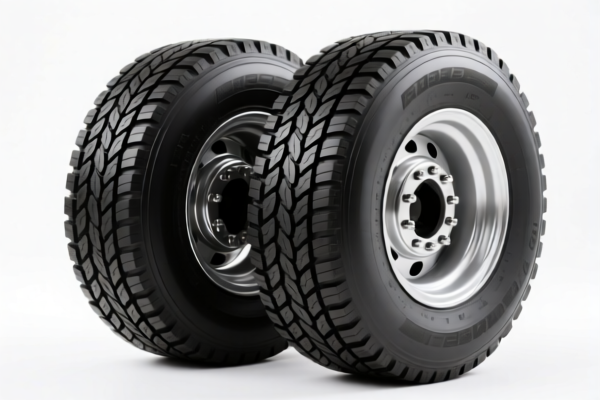
Truck Radial Tire
CN → US| HS Code | Tariff Rate | Origin | Destination | Doc |
|---|---|---|---|---|
| 4011201015 | 39.0% | CN | US | Official Doc |
| 4011201005 | 39.0% | CN | US | Official Doc |
| 8716905059 | 38.1% | CN | US | Official Doc |
| 8716905056 | 38.1% | CN | US | Official Doc |
Product Images



AI Analysis
🚛 Truck Radial Tires: The Ultimate HS Code & Tariff Guide (2026 Edition)
🌐 Global Import Strategy | Precision Classification | Cost-Saving Compliance
🧐 I. Product Definition: What Exactly is a "Truck Radial Tire"?
In the world of heavy logistics, Truck Radial Tires are the workhorses that keep supply chains moving. Unlike bias-ply tires, radial tires feature cords running radially across the tire (perpendicular to the direction of travel), offering superior fuel efficiency, tread life, and heat resistance.
Crucial Trade Distinction: In international trade (especially for US/EU imports), "Truck Radial Tires" are NOT a single category. They are strictly split based on the type of vehicle they serve:
- On-the-Highway Radial Tires: Designed for long-haul trucks and buses. High Tariff Alert! ⚠️
- Light Truck Radial Tires: Designed for pickups, vans, and light-duty commercial vehicles. Low/Zero Tariff! ✅
⚠️ The Trap: Importing "Highway Truck Tires" into the US as "Light Truck Tires" is a classic misclassification that leads to 29% additional duties, fines, and cargo seizure.
📦 II. HS Code Classification Matrix (2026 Data)
Based on the latest authoritative data, here is the precise mapping for New Pneumatic Rubber Tires:
| HS Code | Full Description | Vehicle Type | Usage Scenario |
|---|---|---|---|
4011.20.10.15 |
New pneumatic tires, rubber: Bus/Truck: Radial: On-the-highway: Other | Heavy Trucks & Buses | Long-haul highway transport, heavy-duty logistics. |
4011.20.10.05 |
New pneumatic tires, rubber: Bus/Truck: Radial: On-the-highway: Light truck | Light Trucks / Vans | Pickups, delivery vans, medium-duty commercial vehicles. |
8716.90.50.59 |
Trailers: Parts: Wheels: Wheels with other tires (Non-off-road) | Trailer Wheels | Replacement wheels for semi-trailers/road trailers. |
8716.90.50.56 |
Trailers: Parts: Wheels: Wheels with tires for off-the-highway use | Off-Road Trailers | Construction, mining, or agricultural trailers. |
🔍 Key Differentiator:
- If it's for a heavy-duty highway truck (18-wheeler), it's4011.20.10.15.
- If it's for a pickup or light commercial van, it's4011.20.10.05.
💰 III. 2026 Tariff Rate Deep Dive (US Market Analysis)
🚨 Scenario A: Heavy-Duty Highway Tires (4011.20.10.15)
The "High Risk" Category
| Tax Component | Rate | Details |
|---|---|---|
| Base Tariff | 4.0% | Standard Most-Favored-Nation (MFN) rate. |
| Section 301 / "Add-on" Tariff | 25.0% | CRITICAL: Imposed on Chinese origin goods (and others depending on trade status) to counteract "unfair trade practices." |
| TOTAL EFFECTIVE RATE | 🔴 29.0% | Payable on CIF Value. |
📝 Calculation Example:
If you import $100,000 worth of highway truck tires:
Tax = $100,000 × 29% = $29,000
This is a massive cost increase that can wipe out profit margins.
✅ Scenario B: Light Truck Tires (4011.20.10.05)
The "Low Risk" Category
| Tax Component | Rate | Details |
|---|---|---|
| Base Tariff | 0.0% | Duty-free entry. |
| Add-on Tariff | 0.0% | Exempt from Section 301 surcharges. |
| TOTAL EFFECTIVE RATE | 🟢 0.0% | No additional duties. |
💡 Strategic Note:
If your product is technically a "Light Truck" tire, ensure the tire size (e.g., LT235/85R16) and load rating explicitly match the "Light Truck" definition. Do not force heavy-duty tires into this category if they don't qualify.
🚜 Scenario C: Trailer Wheels (8716.90.50.56 & 50.59)
The "Parts" Category
| HS Code | Description | Tax Detail | Total Tax |
|---|---|---|---|
8716.90.50.59 |
Wheels with other tires (Road) | Base: 3.1% + Add-on: 25.0% | 28.1% |
8716.90.50.56 |
Wheels with tires (Off-Highway) | Base: 3.1% + Add-on: 25.0% | 28.1% |
⚠️ Warning: Trailer wheels are often overlooked but carry the same ~28% tariff burden as the heavy tires themselves if they are for highway use.
🛠️ IV. Customs Clearance & Compliance Strategy
✅ 1. The "De Minimis" Trap (⛔ NO EXCEPTIONS)
Unlike small parcels, Tires are NEVER eligible for De Minimis (Section 321) exemptions if the duty rate is high. * Do NOT try to hide under $800 thresholds. * Action: Always declare full value and pay the 29% duty on heavy-duty tires.
✅ 2. Documentation Checklist for "Tires"
To avoid delays at US Customs (CBP): * 📄 Product Specification Sheet: Must clearly state Tire Type (Radial), Vehicle Application (Heavy Truck vs. Light Truck), Load Index, and Speed Rating. * 📸 High-Res Photos: Must show the Tire Sidewall with the DOT number, size, and "Light Truck" or "Commercial" markings. * 📄 Country of Origin Certificate: Essential for determining if the 25% "Add-on" tax applies (usually China).
✅ 3. Classification Verification (The "Light vs. Heavy" Test)
- Step 1: Check the Load Range. "Light Truck" tires usually have a "LT" prefix in the size (e.g., LT265/70R17).
- Step 2: Check the Tread Pattern. Highway tires have specific siping for long-distance wear.
- Step 3: If the tire is for a Pickup Truck (e.g., Ford F-150), it is
4011.20.10.05(0%). - Step 4: If the tire is for a Semi-Truck (e.g., Kenworth, Freightliner), it is
4011.20.10.15(29%).
🌍 V. Global Market Comparison (2026 Context)
| Region | HS Code | Heavy Truck Tire Tax | Light Truck Tire Tax | Comment |
|---|---|---|---|---|
| 🇺🇸 USA | 4011.20.10.15 |
29.0% | 0.0% | Highest risk for heavy tires. |
| 🇪🇺 EU | 4011.20.10.15 |
~6-9% | ~0% | Lower tariffs, but anti-dumping duties may apply. |
| 🇨🇳 China | 4011.20.10.15 |
~10-14% | ~0% | Domestic production focus. |
| 🇨🇦 Canada | 4011.20.10.15 |
~24.0% | ~0% | Similar to US Section 301 impact. |
🚨 VI. Common Pitfalls & "Bloodline" Lessons
❌ Pitfall 1: The "One Size Fits All" Error
Claiming all truck tires are "Light Truck" to get 0% tax.
👉 Consequence: 29% back-tax + 100% penalty + Seizure of cargo.
✅ Fix: Verify the exact vehicle class on the invoice and invoice description.
❌ Pitfall 2: Missing the "Radial" Keyword
Declaring as "Bias Ply" when they are "Radial".
👉 Consequence: Misclassification leads to incorrect duty calculation and potential fraud charges.
✅ Fix: Ensure "Radial" is explicitly stated in the commercial invoice and packing list.
❌ Pitfall 3: Confusing Trailer Wheels with Tires
Shipping trailer wheels (HS 8716) as Tires (HS 4011) or vice versa.
👉 Consequence: 28.1% tax vs. 0% tax confusion; Customs may hold for inspection.
✅ Fix: Clearly separate "Tires" (4011) and "Wheels/Parts" (8716) on the packing list.
🎯 VII. Expert Conclusion & Action Plan
💡 The Golden Rule:
"Light Truck = Free. Heavy Truck = 29%."
- Audit Your SKU List: Immediately verify if any of your "Truck Tires" are actually for heavy-duty highway use.
- Adjust Pricing: If shipping to the US, add 29% to your FOB price for heavy tires to cover customs costs.
- Pre-File: For large shipments, consider filing a Binding Ruling with CBP if there is any ambiguity between "Light" and "Heavy."
🚀 Ready to Ship?
Ensure your Commercial Invoice reads:
"New Radial Pneumatic Tires, Size [XX], Application: Light Truck (or Heavy Truck), HS Code: 4011.20.10.05 (or 15)"
Don't let a wrong HS code cost you 29% of your revenue! 💸
Customer Reviews
About HS Code Classification
The Harmonized System (HS) is an internationally standardized nomenclature developed by the World Customs Organization (WCO) to classify traded products. Over 200 countries use the HS system as the basis for customs tariffs, trade statistics, and import/export regulations.
Each HS code follows a hierarchical structure:
- Chapter (2 digits) — Broad category of goods (e.g., Chapter 84: Machinery and Mechanical Appliances)
- Heading (4 digits) — More specific grouping within the chapter
- Subheading (6 digits) — Internationally standardized breakdown, used by all WCO member countries
- National subdivisions (8-10 digits) — Country-specific extensions for further classification, such as US HTSUS 10-digit codes
Correct HS code classification is essential for smooth customs clearance, accurate duty payment, and compliance with trade regulations. Misclassification can lead to customs delays, overpayment of duties, or penalties.
When importing from CN to US, the applicable tariff rates may include:
- Most-Favored-Nation (MFN) rate — The standard duty rate applied to WTO members
- General rate — Applied to countries without trade agreements
- Trade remedy duties — Additional tariffs such as Section 301 (anti-dumping), Section 232 (national security), or countervailing duties
The information provided on this page is for reference purposes only. For official classification, please consult with your local customs authority or a licensed customs broker.