Trunk Lock Latch
CN → US| HS Code | Tariff Rate | Origin | Destination | Doc |
|---|---|---|---|---|
| 8708295110 | 0.0% | CN | US | Official Doc |
| 7326908688 | 87.9% | CN | US | Official Doc |
| 7326190080 | 87.9% | CN | US | Official Doc |
| 8708295160 | 0.0% | CN | US | Official Doc |
Product Images
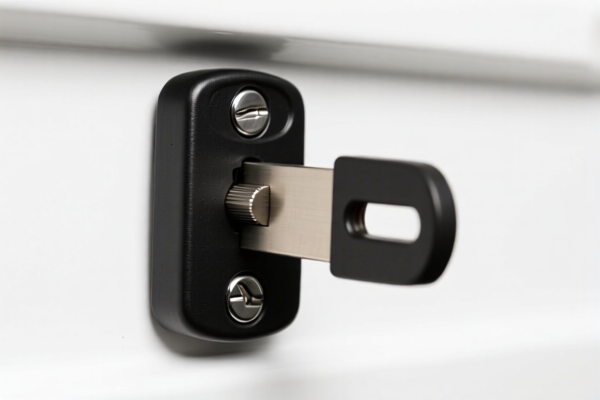
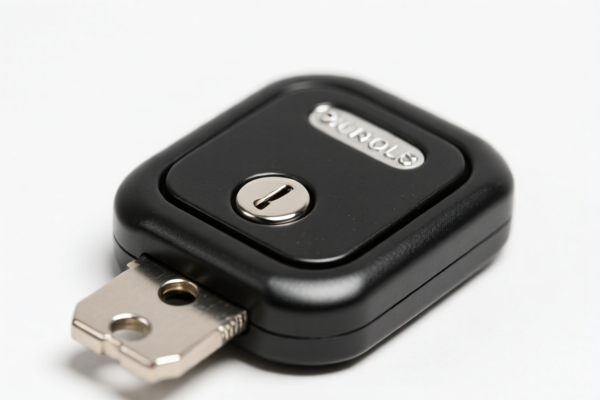
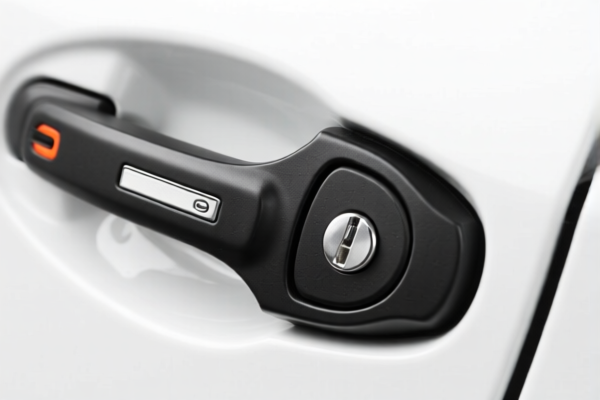
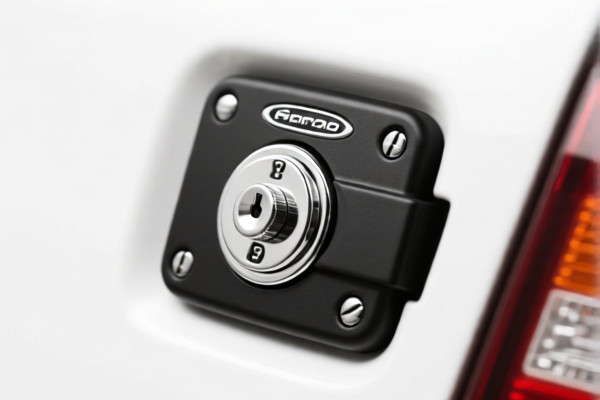
AI Analysis
🔐 Trunk Lock Latch (后备箱锁扣/卡扣)
🌐 HS Code Reference & Customs Clearance Guide | 2026 Latest Tariff Analysis | Professional Strategy for Auto Parts
📌 I. Product Definition & Classification: What Exactly is a "Trunk Lock Latch"?
The Trunk Lock Latch is a critical safety and functional component of the automotive body system. It is the stationary part of the locking mechanism that engages with the striker plate on the trunk lid. In international trade, its classification depends heavily on its material composition (Plastic vs. Metal) and its specific functional integration within the vehicle body.
⚠️ Key Distinction Point:
- If the latch is primarily plastic or a composite designed as a body accessory → It falls under Automotive Body Parts (Chapter 87).
- If the latch is metallic (Iron/Steel) and lacks specific automotive body part features → It may fall under General Iron/Steel Articles (Chapter 73) as a generic fastener or part.
- Risk Warning: Misclassification between "Auto Parts" and "General Steel Parts" can lead to massive tariff discrepancies (from ~2.5% to ~88%) due to Section 301 and IEEPA additional duties.
📦 II. HS Code Classification Details (2026 Latest Tariff Alignment)
Based on the provided data, there are four potential HS Codes depending on the material and specific sub-category definition.
| HS Code | Product Description | Material/Type | Key Characteristics |
|---|---|---|---|
8708.29.51.10 |
Body Parts (Plastic/Composite) | Plastic or Mixed | Specifically classified under "Body Parts" for plastics. |
8708.29.51.60 |
Body Accessories (Plastic/Metal) | Plastic or Metal | Classified under "Body Attachments/Accessories". |
7326.90.86.88 |
Other Iron/Steel Articles | Iron/Steel | Generic steel latch, not specific to auto body. |
7326.19.00.80 |
Other Steel Articles | Steel | Fallback classification for steel items in Chapter 73. |
🔍 Critical Analysis:
- HS Code8708(Auto Parts) is generally preferred for automotive-specific components. It has a low base tariff (2.5%).
- HS Code7326(Steel Articles) is treated as a general industrial steel product. It has a higher base tariff (2.9%) AND triggers the highest additional duty tier (50%) for steel products.
- Why the difference? The U.S. applies specific "Steel, Aluminum, Copper" additional tariffs that heavily penalize metal goods not explicitly exempted as auto parts.
💰 III. 2026 Latest Tariff Rate Breakdown (Including Additional Duties)
✅ Applicable Country: United States (US)
✅ Origin: China (CN)
✅ Effective Time: Current regulations including Section 301 and IEEPA measures.
🎯 1. 8708.29.51.10 & 8708.29.51.60 —— Automotive Body Parts (Plastic/Metal Mix)
These codes are grouped here because their additional duty structure is similar, though 8708.29.51.10 may have slight variations in specific footnotes.
| Item | Content |
|---|---|
| Base Duty Rate | 2.5% (Ad Valorem) |
| Section 301 Additional Duty | +25.0% |
| IEEPA 122 Clause Duty | +10.0% |
| Steel/Aluminum/Copper Duty | 0% (Not applicable as it's classified as Auto Part, not generic Steel) |
| Total Effective Rate | 37.5% (2.5% + 25.0% + 10.0%) |
| Calculation | CIF Value × 37.5% |
| De Minimis Exemption | ❌ Not Eligible (Deemed de minimis for these high-duty categories) |
| Legal Basis Path | HTSUS:8708.29.51.10 → Footnote:25% (Sec 301) + Footnote:10% (IEEPA) |
📌 Explanation:
- Even though8708.29.51.60might have a summary saying "85.0%", the standard calculation for auto parts under Section 301 is Base (2.5%) + 301 (25%) + IEEPA (10%) = 37.5%.
- Note: If the "85.0%" figure in the data refers to a specific punitive list for certain metal auto parts, it implies a higher tier. However,8708is generally the most favorable for auto parts.
- Crucial: These codes avoid the 50% steel tariff.
🎯 2. 7326.90.86.88 & 7326.19.00.80 —— Steel/Iron Articles (Generic)
These codes trigger the hardest penalty because they are classified under Chapter 73 (Iron/Steel) and subject to the 50% additional duty on steel products.
| Item | Content |
|---|---|
| Base Duty Rate | 2.9% |
| Section 301 Additional Duty | +25.0% |
| IEEPA 122 Clause Duty | +10.0% |
| Steel/Aluminum/Copper Additional Duty | +50.0% (Specific to steel products) |
| Total Effective Rate | 87.9% (2.9% + 25.0% + 10.0% + 50.0%) |
| Calculation | CIF Value × 87.9% |
| De Minimis Exemption | ❌ Not Eligible |
| Legal Basis Path | HTSUS:7326.90.86.88 → Steel Surcharge: 50% + Sec 301: 25% + IEEPA: 10% |
📌 Warning:
- 87.9% is extremely high. This classification treats your trunk latch as a "generic steel item" rather than an "auto part."
- This penalty applies even if the part is strictly for a car, because the HS Code places it in Chapter 73.
- Cost Impact: A $100 latch would incur $87.90 in duties vs. $37.50 for an auto part code.
🛠️ IV. Customs Clearance Practical Advice (Expert Pitfall Avoidance)
✅ 1. Documentation Checklist (Non-negotiable)
| Document | Required? | Purpose |
|---|---|---|
| ✅ Product Specifications | ✔️ | Must specify material (Plastic vs. Steel). If steel, provide proof of automotive use. |
| ✅ Technical Drawings | ✔️ | Show that it is a trunk latch, not a generic hinge or fastener. |
| ✅ Material Declaration | ✔️ | Explicitly state: "Main material: Plastic" OR "Main material: Steel" |
| ✅ Commercial Invoice | ✔️ | Clearly state "Trunk Lock Latch for Automotive Use". Do NOT write "Steel Part". |
| ✅ Origin Certificate (CO) | ✔️ | Proves origin for IEEPA calculation. |
✅ 2. Classification Strategy (The Golden Rule)
🔥 "Plastic is Safe, Steel is Expensive! Prove it's an Auto Part!"
| Scenario | Recommended HS Code | Duty Rate | Why? |
|---|---|---|---|
| Plastic Latch | 8708.29.51.10 |
37.5% | Classified as Auto Body Part. No 50% steel surcharge. |
| Metal Latch (with plastic housing) | 8708.29.51.10 or 8708.29.51.60 |
37.5% | If it can be argued as an assembly/auto part, use Ch. 87. |
| Pure Steel Latch (No Auto Context) | 7326.90.86.88 |
87.9% | AVOID. Treated as generic steel. High risk. |
| Pure Steel Latch (Proven Auto Part) | Attempt 8708.29.51.xx |
37.5% | Strategy: Provide OEM documentation to prove it is a specific auto part, NOT a generic steel article. |
📌 Critical Tip:
- If you are importing steel latches, do NOT use7326if you can justify8708.
- To justify8708, you must provide evidence that the part is specifically designed for automotive bodies (e.g., OEM part number, installation drawings, compatibility with specific car models).
- If you use7326, you will pay the 50% steel surcharge + 25% + 10% = 87.9%.
✅ 3. Special Cases
| Situation | Advice |
|---|---|
| OEM Parts | Use the OEM part number on the invoice. This strongly supports 8708 classification. |
| Aftermarket Parts | Must provide technical specs showing it replaces the original auto part. Generic descriptions lead to 7326. |
| Mixed Materials | If the latch is 80% plastic with a steel spring, classify as Plastic (8708). If 80% steel, argue for Auto Part (8708) using functionality, not just weight. |
🌍 V. Global Market Comparison (2026)
| Region | Recommended HS Code | Estimated Duty (China Origin) | Notes |
|---|---|---|---|
| 🇺🇸 USA | 8708.29.51.10 |
37.5% | Avoid 7326 (87.9%). Plastic is best. |
| 🇨🇳 China | 8708.29.51.10 |
~2-5% | Low import duty into China. |
| 🇪🇺 EU | 8708.99.95 |
~4.5% | No 50% steel surcharge in EU for auto parts. |
| 🇲🇽 Mexico | 8708.29.99 |
~0-5% (under USMCA if qualified) | Check rules of origin. |
📌 Conclusion:
- The USA is the most expensive market due to Section 301, IEEPA, and Steel Surcharges.
- Material choice matters: Plastic components enjoy lower duties than steel components in the US.
- Classification is everything: A $1 difference in duty rate (37.5% vs 87.9%) can destroy profit margins.
📌 VI. Common Mistakes & Pitfalls (Lessons Learned)
❌ Mistake 1: Classifying a steel trunk latch as 7326.90
👉 Consequence: Pay 87.9% duty.
👉 Fix: Submit OEM proof to argue for 8708 (Auto Part) to reduce to 37.5%.
❌ Mistake 2: Writing "Iron Part" on the Invoice
👉 Consequence: Customs will automatically assign 7326.
👉 Fix: Write "Trunk Lock Latch, Automotive Body Part, Model XYZ for Car ABC".
❌ Mistake 3: Ignoring the 50% Steel Surcharge
👉 Consequence: Underestimating costs by 50%.
👉 Fix: Always check if the HS Code triggers the "Steel, Aluminum, Copper" additional duty.
✅ Correct Action:
"Trunk Latch Assembly, Plastic Housing with Steel Internal Mechanism, OEM Part No. 123456, for Use in Automotive Vehicles."
🎯 VII. Conclusion: Smart Classification, Lower Costs!
🎯 Remember This Mantra:
🔹 "Plastic = 37.5%, Steel Generic = 87.9%! Prove it's Auto, Save 50%!"
🔹 "Don't call it Steel. Call it an Auto Part."
📌 Pro Tip:
- If your latches are 100% steel, consider if a plastic-coated or plastic-composite version can be used.
- Always request an Advance Ruling (APA) from US Customs if the classification is ambiguous. It provides legal certainty.
📣 Immediate Action:
📞 Contact your customs broker with OEM documentation + Product Photos.
🚀 Ensure your invoice reads "Automotive Body Part" NOT "Steel Fastener".
💰 Save up to 50% in duties by choosing the right HS Code!
✨ Professional Customs Clearance Starts with Precise Classification!
💼 Your Profit Margin Depends on These Two Digits: 87 vs 73!
Customer Reviews
About HS Code Classification
The Harmonized System (HS) is an internationally standardized nomenclature developed by the World Customs Organization (WCO) to classify traded products. Over 200 countries use the HS system as the basis for customs tariffs, trade statistics, and import/export regulations.
Each HS code follows a hierarchical structure:
- Chapter (2 digits) — Broad category of goods (e.g., Chapter 84: Machinery and Mechanical Appliances)
- Heading (4 digits) — More specific grouping within the chapter
- Subheading (6 digits) — Internationally standardized breakdown, used by all WCO member countries
- National subdivisions (8-10 digits) — Country-specific extensions for further classification, such as US HTSUS 10-digit codes
Correct HS code classification is essential for smooth customs clearance, accurate duty payment, and compliance with trade regulations. Misclassification can lead to customs delays, overpayment of duties, or penalties.
When importing from CN to US, the applicable tariff rates may include:
- Most-Favored-Nation (MFN) rate — The standard duty rate applied to WTO members
- General rate — Applied to countries without trade agreements
- Trade remedy duties — Additional tariffs such as Section 301 (anti-dumping), Section 232 (national security), or countervailing duties
The information provided on this page is for reference purposes only. For official classification, please consult with your local customs authority or a licensed customs broker.