Tubing
CN → US| HS Code | Tariff Rate | Origin | Destination | Doc |
|---|---|---|---|---|
| 7304246045 | 35.0% | CN | US | Official Doc |
| 7304295045 | 10.0% | CN | US | Official Doc |
| 3917290090 | 38.1% | CN | US | Official Doc |
| 3917320050 | 38.1% | CN | US | Official Doc |
Product Images
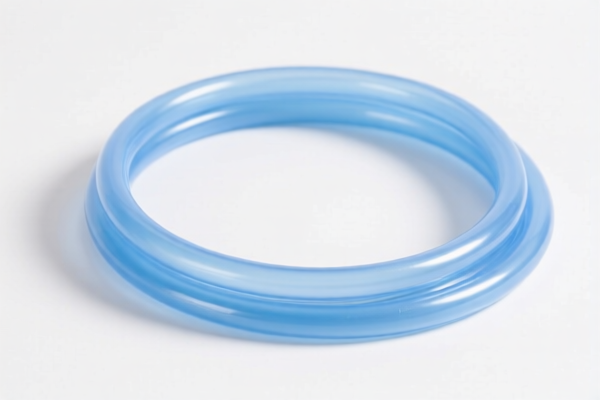
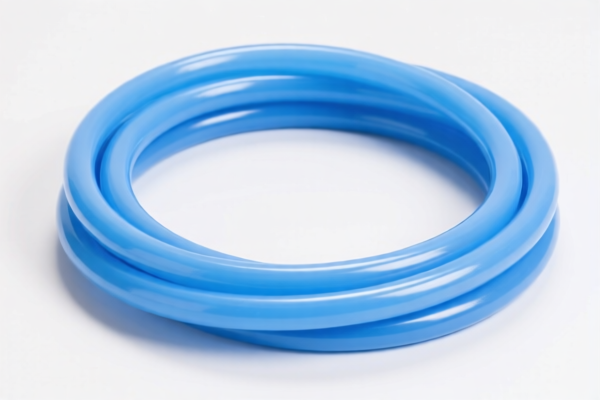
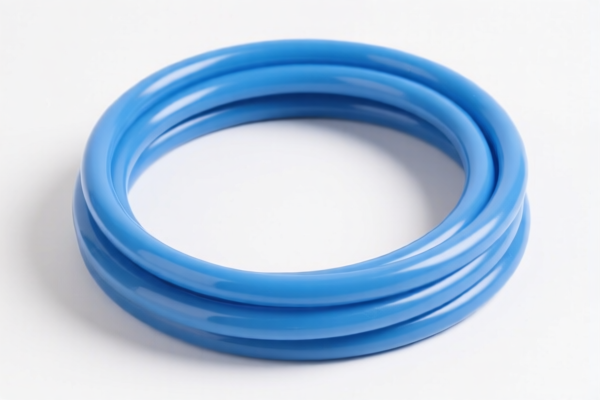
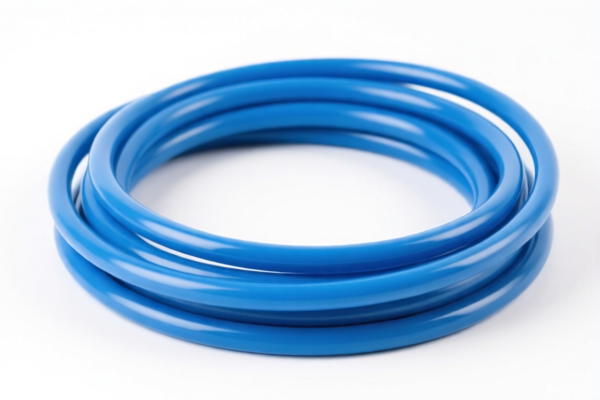
AI Analysis
🔩 Tubing (Steel & Plastics: Drilling, Rigid & Flexible)
🌐 HS Code Reference & Customs Clearance Guide | 2026 Latest Tariff Analysis | Professional Clearance Strategy
📌 1. Product Definition & Classification: What is "Tubing"?
In international trade, "Tubing" is a broad term covering hollow profiles used for conveying fluids, gases, or structural support. Based on the provided data, these goods are strictly categorized by material (Steel vs. Plastics) and specific application (Oil/Gas Drilling vs. General Use).
Key Distinctions for Classification: * Steel Tubing: Must distinguish between Stainless Steel and Non-alloy/Iron Steel, and specifically if it is Drilling Tubing (for oil/gas). * Plastic Tubing: Must distinguish between Rigid pipes and Other tubes (often flexible/non-reinforced). * Diameter Matters: For oil/gas steel tubing, the Outside Diameter (OD) is critical. The data highlights the 114.3 mm – 215.9 mm range.
⚠️ Critical Classification Rule:
- If it is Stainless Steel and used for Oil/Gas Drilling with OD between 114.3mm and 215.9mm → Go to 7304.24.60.45.
- If it is Iron/Non-alloy Steel and used for Oil/Gas Drilling with OD between 114.3mm and 215.9mm → Go to 7304.29.50.45.
- If it is Plastic, Rigid, and not specifically listed elsewhere → Go to 3917.29.00.90.
- If it is Plastic, Other (not rigid/reinforced), without fittings → Go to 3917.32.00.50.
📦 2. HS Code Classification Details (Based on Provided Data)
| HS Code | Product Description | Material/Application | Key Characteristics |
|---|---|---|---|
3917.29.00.90 |
Rigid tubes/pipes/hoses of plastics (Other) | Plastics | Rigid; "Other" plastics (not PVC/PE/etc. specifically listed elsewhere in the snippet). |
3917.32.00.50 |
Other tubes/pipes/hoses (Not reinforced, no fittings) | Plastics | Not rigid; Not reinforced with other materials; No fittings attached. |
7304.24.60.45 |
Seamless steel tubing for oil/gas drilling | Stainless Steel | Drilling kind; OD >114.3mm BUT <215.9mm. |
7304.29.50.45 |
Seamless steel tubing for oil/gas drilling | Iron / Non-alloy Steel | Drilling kind; OD >114.3mm BUT <215.9mm. |
🔍 Important Note:
- The steel codes (7304...) are highly specific to drilling operations. If the steel tube is for structural use or fluid transport in a plant (not drilling), these codes may not apply.
- The plastic codes distinguish between Rigid (3917.29) and Non-reinforced/Other (3917.32).
💰 3. 2026 Latest Tariff Rate Breakdown (Detailed Tax Clause)
✅ Applicable Market: USA (Implied by high "Additional Tariffs" structure in data)
✅ Origin: China (Inferred from "Additional Tariffs" context in typical trade data, though not explicitly stated, the "25%" suggests Section 301/China-specific duties)
✅ Effective Time: Current rates as per provided data.
🎯 1. 7304.24.60.45 – Stainless Steel Drilling Tubing (OD 114.3-215.9mm)
| Item | Content |
|---|---|
| Base Tariff | 0.0% |
| Additional Tariff | 25.0% |
| Total Tariff Rate | 25.0% |
| Tax Calculation | CIF Value × 25% |
| Exemption Eligibility | ❌ No (High tariff applies to stainless steel drilling tubs) |
| Legal Basis | Standard USHTS + Section 301 Additional Duties |
📌 Explanation:
- While the base MFN (Most Favored Nation) rate is 0%, a significant 25% additional tariff applies.
- This is a high-cost item for importers. The material (Stainless Steel) does not exempt it from the additional duty in this category.
🎯 2. 7304.29.50.45 – Iron/Non-Alloy Steel Drilling Tubing (OD 114.3-215.9mm)
| Item | Content |
|---|---|
| Base Tariff | 0.0% |
| Additional Tariff | 0.0% |
| Total Tariff Rate | 0.0% |
| Tax Calculation | $0 |
| Exemption Eligibility | ✅ Yes (Duty-Free) |
| Legal Basis | Standard USHTS |
📌 Explanation:
- Despite being "Drilling Tubing," this specific subheading for Iron/Non-alloy Steel enjoys a 0% total tariff.
- Strategic Note: Importers should verify if the steel is truly "non-alloy" (plain carbon steel). If it contains significant alloying elements, it might be misclassified, leading to penalties. If correctly classified, this is a duty-free advantage.
🎯 3. 3917.32.00.50 – Other Plastic Tubes (Not Reinforced/No Fittings)
| Item | Content |
|---|---|
| Base Tariff | 3.1% |
| Additional Tariff | 25.0% |
| Total Tariff Rate | 28.1% |
| Tax Calculation | CIF Value × 28.1% |
| Exemption Eligibility | ❌ No |
| Legal Basis | Standard USHTS + Section 301 Additional Duties |
📌 Explanation:
- This code applies to non-rigid, non-reinforced plastic tubes (e.g., standard PVC or PE tubing without metal/other reinforcement).
- The 25% additional tariff is added on top of the 3.1% base, resulting in a substantial 28.1% burden.
- Key Constraint: Must have NO FITTINGS and be NOT REINFORCED. If fittings are attached, this code is invalid.
🎯 4. 3917.29.00.90 – Rigid Plastic Pipes/Tubes (Other)
| Item | Content |
|---|---|
| Base Tariff | 0.0% |
| Additional Tariff | 0.0% |
| Total Tariff Rate | 0.0% |
| Tax Calculation | $0 |
| Exemption Eligibility | ✅ Yes (Duty-Free) |
| Legal Basis | Standard USHTS |
📌 Explanation:
- Duty-Free Opportunity! Rigid plastic pipes/tubes (of "other" plastics) face 0% total tariff.
- Condition: Must be Rigid. If the plastic tube is flexible or not rigid, it may fall under3917.32.00.50(28.1%).
- Verification: Ensure the plastic is not specifically listed in other subheadings (like PVC or Polyethylene, which might have different codes not listed here). "Other plastics" implies materials like PP, ABS, Polycarbonate, etc., that don't have their own specific rigid pipe code in this snippet.
🛠️ 4. Customs Clearance Practical Advice (Avoid Pitfalls)
✅ 1. Document Checklist (Essential)
| Document | Required? | Details |
|---|---|---|
| Product Specification Sheet | ✅ | Must specify Material (e.g., "304 Stainless Steel," "PVC," "Carbon Steel"), Wall Thickness, and OD. |
| Bill of Lading / Commercial Invoice | ✅ | Clearly state "Steel Tubing" or "Plastic Pipes." Do not just say "Tubing." |
| Material Certification (Mill Test Certificate) | ✅ | Critical for Steel: Proves if it is "Stainless" or "Non-alloy Iron/Steel." Misclassification here causes huge tax differences (0% vs 25%). |
| Application Declaration | ✅ | Explicitly state: "For Oil/Gas Drilling" (for 7304 codes) or "Rigid/Non-Rigid" (for 3917 codes). |
| Photos of Goods | ✅ | Show ends of pipes to verify diameter and wall thickness. |
✅ 2. Classification Strategy (Critical Rules)
| Scenario | Correct HS Code | Tariff | Why? |
|---|---|---|---|
| Stainless Steel Tube for Drilling OD = 150mm |
7304.24.60.45 |
25.0% | Specific code for Stainless + Drilling + OD Range. |
| Carbon Steel Tube for Drilling OD = 150mm |
7304.29.50.45 |
0.0% | Specific code for Non-alloy Iron + Drilling + OD Range. Savings: 25%! |
| Rigid Plastic Pipe (e.g., ABS, PP) |
3917.29.00.90 |
0.0% | Rigid plastics often have 0% base/additional tax in this category. |
| Flexible Plastic Hose/Tubing (No fittings, no reinforcement) |
3917.32.00.50 |
28.1% | "Other" plastic tubes attract 25% additional tax. |
| Steel Tube for Plumbing (Not Drilling) | Not in Data | N/A | Warning: The data provided ONLY covers drilling tubing for steel. If not for drilling, these codes are WRONG. You must find the correct general steel pipe code. |
🔥 "Drilling" is the Keyword for Steel:
- If the steel tube is NOT for drilling (e.g., structural, hydraulic, plumbing), do not use 7304.24 or 7304.29.
- Using these codes for non-drilling steel will result in misdeclaration penalties and likely higher retroactive duties.
✅ 3. Special Handling Tips
| Issue | Solution |
|---|---|
| OD Boundary Check | Ensure OD is strictly >114.3mm AND <215.9mm. If OD is 216mm, it falls into a different category (likely higher tariff or different code). Measure carefully. |
| Plastic Rigidity | Define "Rigid" clearly. If it bends easily, it is "Other" (3917.32), not "Rigid" (3917.29). This changes tax from 0% to 28.1%. |
| Fittings Attached | If 3917.32 plastic tubes come with elbow fittings, they may be classified as "Fittings" or "Assembly," changing the code and tax. Ship separately if possible. |
| Material Proof | For steel, provide a Mill Test Report (MTR). Customs will test for chromium content to verify "Stainless" vs. "Non-alloy." |
🌍 5. Global Market Comparison (2026 Context)
| Market | Steel Drilling Tubing (OD 114-215mm) | Plastic Rigid Pipe | Plastic Other Tube |
|---|---|---|---|
| 🇺🇸 USA | 25% (Stainless) / 0% (Iron) | 0% | 28.1% |
| 🇨🇳 China | Check Local Tariff | Check Local Tariff | Check Local Tariff |
| 🇪🇺 EU | Varies by Alloy | Usually 0-6.5% | Varies |
📌 US Specific Advantage:
- Iron/Non-alloy steel drilling tubing is duty-free (0%) in the US under this specific data snippet.
- Stainless steel drilling tubing is heavily taxed (25%).
- Rigid plastic pipes are duty-free (0%), but flexible/non-reinforced plastic tubes are taxed 28.1%.
📌 6. Common Mistakes & Pitfalls (Lessons Learned)
❌ Mistake 1: Classifying Non-Drilling Steel Pipes under 7304.24/29
👉 Consequence: Misdeclaration. Customs will reclassify to general steel pipes (higher tax) + penalty.
👉 Fix: Only use these codes if the product is explicitly "of a kind used in drilling for oil or gas."
❌ Mistake 2: Calling Rigid Plastic "Other Plastic Tubes" (3917.32)
👉 Consequence: Paying 28.1% instead of 0%.
👉 Fix: Verify rigidity. If it holds its shape without support, it is Rigid (3917.29) → 0% Tax.
❌ Mistake 3: Ignoring Diameter Limits for Steel Tubing
👉 Consequence: If OD ≥ 215.9mm, the code 7304.24.60.45 is invalid.
👉 Fix: Check next higher subheading for tubing >215.9mm (likely different tax rate).
🎯 7. Conclusion: Strategic Sourcing & Compliance
🎯 Key Takeaway:
🔹 Steel: Differentiate Stainless (25% Tax) vs. Iron/Non-alloy (0% Tax).
🔹 Plastics: Differentiate Rigid (0% Tax) vs. Non-Reinforced/Other (28.1% Tax).
🔹 Precision: "Drilling" and "Diameter" are the gatekeepers for steel classification.
📌 Action Plan:
1. Confirm Application: Is the steel tubing for drilling?
2. Confirm Material: Is the steel stainless or carbon? Is the plastic rigid or flexible?
3. Measure: Check OD is between 114.3mm and 215.9mm.
4. Document: Attach Mill Test Reports and Product Specs.
🚀 Maximize Savings:
- Use Iron/Non-alloy steel for drilling if possible (0% vs 25%).
- Ensure plastic tubing is Rigid to qualify for 0% tax.
✨ Pro Tip:
Always request an Advance Ruling from Customs if you are unsure about "Drilling" status or Plastic Rigidity. It provides legal certainty for the 0% vs. 25% tax difference.
📣 Need Help?
Contact your customs broker with Material Certificates and Product Photos to verify the correct HS Code before shipment!
Customer Reviews
About HS Code Classification
The Harmonized System (HS) is an internationally standardized nomenclature developed by the World Customs Organization (WCO) to classify traded products. Over 200 countries use the HS system as the basis for customs tariffs, trade statistics, and import/export regulations.
Each HS code follows a hierarchical structure:
- Chapter (2 digits) — Broad category of goods (e.g., Chapter 84: Machinery and Mechanical Appliances)
- Heading (4 digits) — More specific grouping within the chapter
- Subheading (6 digits) — Internationally standardized breakdown, used by all WCO member countries
- National subdivisions (8-10 digits) — Country-specific extensions for further classification, such as US HTSUS 10-digit codes
Correct HS code classification is essential for smooth customs clearance, accurate duty payment, and compliance with trade regulations. Misclassification can lead to customs delays, overpayment of duties, or penalties.
When importing from CN to US, the applicable tariff rates may include:
- Most-Favored-Nation (MFN) rate — The standard duty rate applied to WTO members
- General rate — Applied to countries without trade agreements
- Trade remedy duties — Additional tariffs such as Section 301 (anti-dumping), Section 232 (national security), or countervailing duties
The information provided on this page is for reference purposes only. For official classification, please consult with your local customs authority or a licensed customs broker.