Tubular Cable Terminals
CN → US| HS Code | Tariff Rate | Origin | Destination | Doc |
|---|---|---|---|---|
| 8538908140 | 38.5% | CN | US | Official Doc |
| 8538908180 | 38.5% | CN | US | Official Doc |
| 7415290000 | 88.0% | CN | US | Official Doc |
| 7415210000 | 88.0% | CN | US | Official Doc |
Product Images
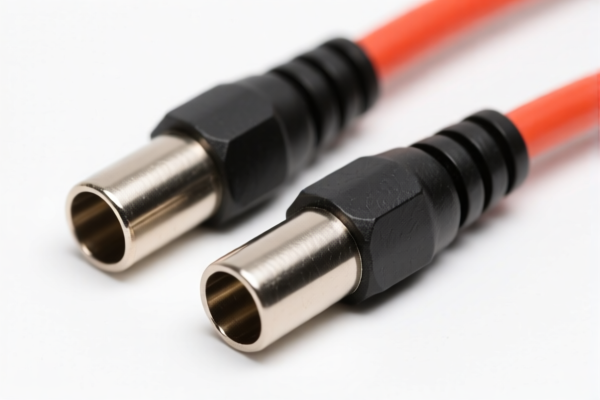
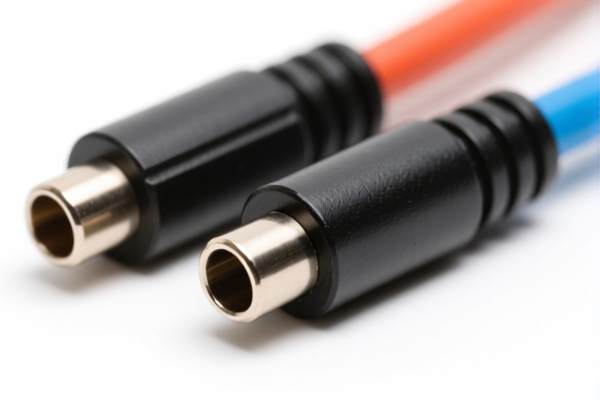
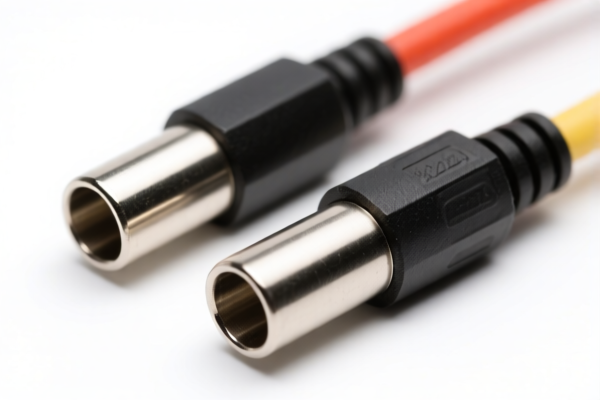
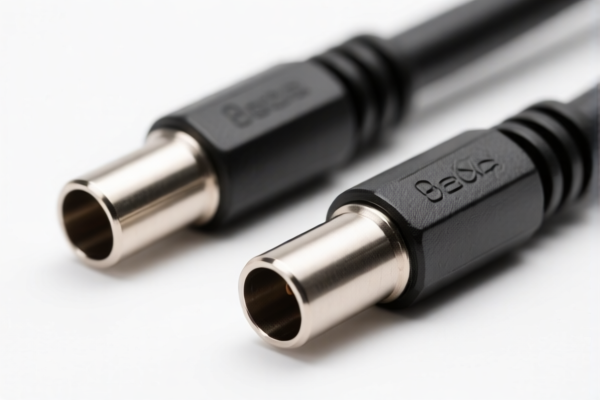
AI Analysis
⚡ Tubular Cable Terminals: The Unsung Heroes of Electrical Integrity
🌐 HS Code Reference & Clearance Guide | 2026 Latest Tariff Analysis | Professional Clearance Strategy
📌 I. Product Definition & Classification: What Exactly Are "Tubular Cable Terminals"?
Tubular Cable Terminals (also known as Tubular Splices, End Sleeves, or Crimp Ends) are small, cylindrical metal connectors used to join electrical wires or cables. They are typically crimped onto the stripped end of a wire to provide a secure, low-resistance connection to a screw terminal, lug, or busbar.
In international trade, they are often misclassified as simple "fasteners" (like nails or screws) or generic "parts." However, their function dictates their classification under Chapter 85 (Electrical Machinery and Equipment) or Chapter 74 (Copper Articles), depending on their specific material and application context.
⚠️ Critical Distinction:
- If the terminal is a standard fastener (e.g., copper washer, plain copper pin) without specific electrical apparatus integration features → Chapter 74.
- If the terminal is a component/part specifically designed for use with electrical apparatus (e.g., contact pins for circuit breakers, insulators) → Chapter 85.
📦 II. HS Code Classification Details (2026 Latest Tariff Authority Comparison)
Based on the provided data, here are the specific HS Codes and their rationales:
| HS Code | Product Description | Applicable Scenario | Material/Type | Classification Logic |
|--------|--------------------------|--------------------------|---------------------|
| 7415.21.00.00 | Washers (including spring washers), of copper | Copper washers used in electrical assemblies | Copper | Treated as a copper article (fastener-type) |
| 7415.29.00.00 | Other articles, of copper (not threaded) | Copper pins, sleeves, non-threaded connectors | Copper | Treated as general copper articles, not specific electrical parts |
| 8538.90.81.40 | Metal contacts, suitable for use with apparatus of heading 8535-8537 | Copper/metal contacts for switchgear, relays, circuit breakers | Copper/Metal | Treated as an electrical part |
| 8538.90.81.80 | Other parts, suitable for use with apparatus of heading 8535-8537 | Generic electrical components, terminals for switches | Copper/Metal | Treated as an electrical part |
🔍 Key Insight:
- If your "tubular terminal" is simply a copper sleeve used to join two wires manually and sold as a standalone hardware item → Likely 7415.29.00.00.
- If it is a contact point integrated into a switchgear assembly or a specialized terminal for circuit breakers (Headings 8535/8536/8537) → 8538.90.81.40 or 8538.90.81.80.
💰 III. 2026 Latest Tariff Rate Detailed Analysis (Including Surtaxes & Policy Add-ons)
✅ Applicable Country: United States (US)
✅ Origin: China (CN)
✅ Effective Time: 2025 November 10 onwards (for subsequent imports)
🎯 1. 7415.29.00.00 & 7415.21.00.00 —— Copper Articles (Fasteners/Washers)
| Item | Content |
|---|---|
| Base Tariff Rate | 0.0% (ad valorem) |
| Section 301 Surtax (Steel/Aluminum/Copper) | +50.0% (Specific to "Steel, Aluminum, Copper Products Surtax") |
| Total Tariff Rate | 50.0% |
| Tax Calculation | CIF Value × 50% |
| De Minimis Exemption Eligible? | ❌ No (deny_de_minimis) |
| Legal Basis Path | USITC:7415.29.00.00 → Section 301: Copper Products Surtax 50% |
📌 Explanation:
- The data explicitly states "Steel, Aluminum, Copper Products Surtax: 50%".
- Although the base tariff is 0%, the 50% surtax applies specifically to copper articles.
- This is a high-cost category for copper hardware imports.
🎯 2. 8538.90.81.40 & 8538.90.81.80 —— Electrical Parts (Contacts/Other)
| Item | Content |
|---|---|
| Base Tariff Rate | 3.5% (ad valorem) |
| Section 301 Surtax | +25.0% |
| Total Tariff Rate | 28.5% |
| Tax Calculation | CIF Value × 28.5% |
| De Minimis Exemption Eligible? | ❌ No (deny_de_minimis) |
| Legal Basis Path | USITC:8538.90.81.40 → Section 301: Electrical Parts 25% |
📌 Explanation:
- These codes fall under Chapter 85 (Electrical Machinery).
- The surtax here is 25%, which is lower than the 50% surtax for copper articles (Chapter 74).
- Strategic Advantage: If your tubular terminals can be classified as "parts suitable for use with apparatus of heading 8535/8536/8537," you save 21.5% in taxes compared to classifying them as general copper articles.
🛠️ IV. Clearance Practical Advice (实战避坑指南)
✅ 1. Preparation Checklist (Must-Have Documents)
| Document | Required | Explanation |
|---|---|---|
| ✅ Product Specification Sheet | ✔️ | Detail material (copper, tin-plated, etc.), dimensions, crimping force |
| ✅ Application Diagram | ✔️ | Show how the terminal connects to the electrical apparatus (e.g., circuit breaker) |
| ✅ Product Photos (Labeled) | ✔️ | Clear view of the tubular shape, crimp zones, and any markings |
| ✅ Commercial Invoice | ✔️ | Must specify "Tubular Cable Terminal for Electrical Apparatus" (not just "Copper Pin") |
| ✅ Origin Certificate | ✔️ | To verify origin and apply potential FTZ benefits (if applicable) |
✅ 2. Declaration Strategy (Key Tips)
🔥 "Function Over Form: Electrical Part > Copper Fastener"
| Scenario | Correct Declaration | Incorrect Practice |
|---|---|---|
| Terminal used in switchgear/circuit breaker | 8538.90.81.40 or 8538.90.81.80 (28.5%) |
Declared as "Copper Washer" → 50% |
| Standalone copper sleeve for manual wiring | 7415.29.00.00 (50%) |
Declared as "Electrical Part" → Risk of rejection/classification error |
| Tin-plated copper terminals | 8538.90.81.40 if contact |
7415.29.00.00 if general use |
📌 Note:
- Do NOT declare as "Nails, Tacks, or Drawing Pins" (Heading 7415) unless they are truly generic hardware.
- DO emphasize "Parts suitable for use with apparatus of Heading 8535/8536/8537" in the description to leverage the lower 28.5% rate.
✅ 3. Special Cases
| Case | Handling Advice |
|---|---|
| OEM for Electrical Equipment Makers | Provide client contracts showing these are parts for switchgear → Use Chapter 85 codes |
| Mixed Shipment (Hardware + Electrical Parts) | Separate declaration! Hardware goes to 7415 (50%), Parts go to 8538 (28.5%) |
| Plated Terminals (Tin/Nickel) | Still copper-based; classification depends on function, not plating |
| Small Quantity Samples | Still subject to full tariff; de minimis exemption does not apply |
🌍 V. Global Market Comparison (2026 Update)
| Country/Region | Recommended HS Code | Tariff Rate | Remarks |
|---|---|---|---|
| 🇺🇸 USA | 8538.90.81.40 |
28.5% | Lower than copper hardware (50%) |
| 🇺🇸 USA | 7415.29.00.00 |
50.0% | Highest surtax for copper |
| 🇨🇳 China | 8538.90.81.40 |
~3.5% | Low base tariff |
| 🇪🇺 EU | 8538.90.81.40 |
~0-2% | Check local directives |
| 🇯🇵 Japan | 8538.90.81.40 |
~0-3% | No surtax for this category |
📌 Conclusion:
- USA is the most challenging market due to the 25-50% surtaxes.
- Strategic Recommendation: Always strive to classify tubular terminals under Chapter 85 (8538) if they are used in electrical apparatus, as it saves 21.5% compared to Chapter 74.
📌 VI. Common Mistakes & Pitfalls (Blood & Tears Lessons)
❌ Mistake 1: Declaring all copper terminals as 7415.29.00.00
👉 Consequence: Pay 50% tariff instead of 28.5% → Profit margin erosion!
❌ Mistake 2: Declaring as "Copper Wire Ends" (not a valid HS description)
👉 Consequence: Customs rejection, delay, or forced reclassification → Demurrage fees
❌ Mistake 3: Ignoring the "Use" in declaration
👉 Consequence: If used in circuit breakers, misclassifying as hardware leads to penalties
✅ Correct Practice:
"Tubular Copper Cable Terminal, Crimp Type, for Use with Electrical Switchgear (Heading 8535), Tin-Plated"
🎯 VII. Conclusion: Precision in Classification Saves Money
🎯 Key Takeaway:
🔹 "If it’s for electricity, classify it in Chapter 85!"
🔹 "Copper Hardware = 50% Tax; Electrical Part = 28.5% Tax"
🔹 "Always provide use-case documentation to support Chapter 85 classification"
📌 Pro Tip:
If your tubular terminals are not specifically for Heading 8535/8536/8537 apparatus, you must accept the 50% tariff under Chapter 74. Consider value engineering or supply chain optimization to mitigate this high cost.
📣 Immediate Action:
📞 Consult your customs broker to confirm the specific end-use of your terminals.
📄 Prepare technical diagrams showing integration with electrical apparatus.
🚀 Classify smartly, clear smoothly, and maximize profits!
✨ Professional Clearance Starts with Accurate Classification!
💼 Every percentage point of tariff matters!
Customer Reviews
About HS Code Classification
The Harmonized System (HS) is an internationally standardized nomenclature developed by the World Customs Organization (WCO) to classify traded products. Over 200 countries use the HS system as the basis for customs tariffs, trade statistics, and import/export regulations.
Each HS code follows a hierarchical structure:
- Chapter (2 digits) — Broad category of goods (e.g., Chapter 84: Machinery and Mechanical Appliances)
- Heading (4 digits) — More specific grouping within the chapter
- Subheading (6 digits) — Internationally standardized breakdown, used by all WCO member countries
- National subdivisions (8-10 digits) — Country-specific extensions for further classification, such as US HTSUS 10-digit codes
Correct HS code classification is essential for smooth customs clearance, accurate duty payment, and compliance with trade regulations. Misclassification can lead to customs delays, overpayment of duties, or penalties.
When importing from CN to US, the applicable tariff rates may include:
- Most-Favored-Nation (MFN) rate — The standard duty rate applied to WTO members
- General rate — Applied to countries without trade agreements
- Trade remedy duties — Additional tariffs such as Section 301 (anti-dumping), Section 232 (national security), or countervailing duties
The information provided on this page is for reference purposes only. For official classification, please consult with your local customs authority or a licensed customs broker.