Tufted Backing Fabric
CN → US| HS Code | Tariff Rate | Origin | Destination | Doc |
|---|---|---|---|---|
| 5703900000 | 38.8% | CN | US | Official Doc |
| 5703210090 | 41.7% | CN | US | Official Doc |
| 3921131500 | 41.5% | CN | US | Official Doc |
| 5911203000 | 35.0% | CN | US | Official Doc |
| 5703900000 | 38.8% | CN | US | Official Doc |
Product Images
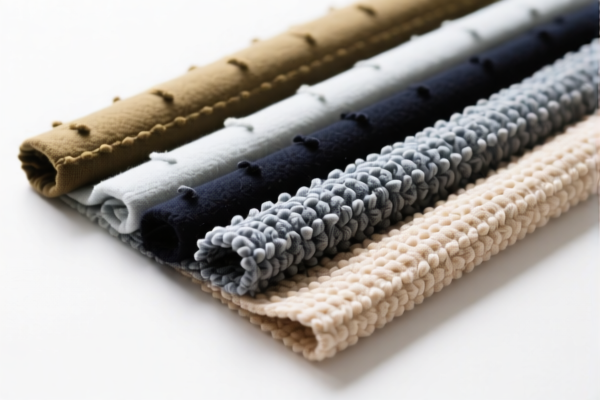
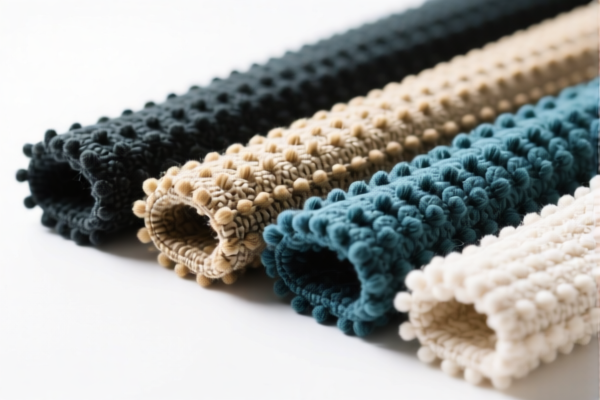
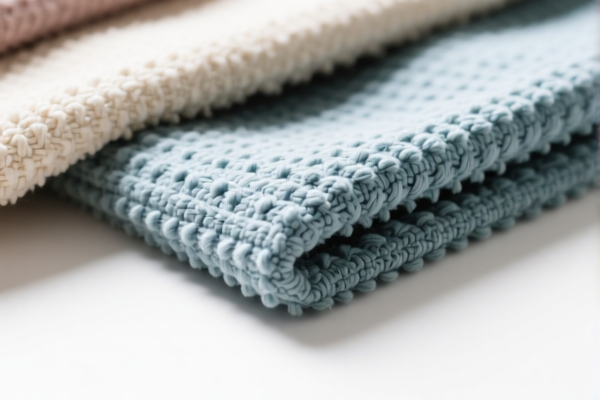
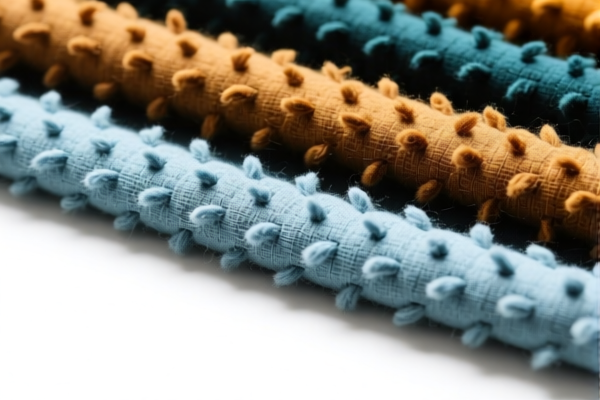
AI Analysis
🧵 Tufted Backing Fabric (簇绒底布)
🌐 HS Code Reference & Customs Clearance Guide | 2026 Latest Tariff Analysis | Professional Clearance Strategy
📌 I. Product Definition & Classification: What is "Tufted Backing Fabric"?
Tufted Backing Fabric is the fundamental structural component of tufted carpets and rugs. It serves as the substrate upon which yarns are stitched or tufted. In international trade, its classification depends heavily on its material composition, coating status, and intended use.
It is crucial to distinguish between: 1. The Finished Floor Covering: The entire carpet/rug unit. 2. The Technical Textile Component: The backing fabric itself, potentially coated for stability or waterproofing. 3. Specialized Industrial Use: If used for filtration or other technical purposes beyond flooring.
⚠️ Key Distinction Point:
- If it is the entire tufted carpet structure (yarns + backing) → Classify as Floor Covering (Chapter 57).
- If it is pure backing fabric with polyurethane (PU) coating → Classify as Plastics/Textile Composite (Chapter 39 or 59).
- If it is technical textile (non-flooring) → Classify as Technical Textiles (Chapter 59).
📦 II. HS Code Classification Details (Based on Provided Data)
| HS Code | Product Description | Summary from Data | Key Characteristic |
|---|---|---|---|
5703.90.00.00 |
Other floor coverings of textile materials | "Tufted backing fabric as a component of textile material floor coverings, classified as other textile material floor coverings." | Assembled Floor Covering Component: Treated as the final floor covering product (carpet). |
5703.21.00.90 |
Other floor coverings of wool or fine animal hair, of tufted type, of nylon or other polyamides | "Tufted backing belongs to the core component of tufted carpets; inferred to be textile fibers (nylon/polyamide), classified as such." | Material-Specific (Polyamide): Assumes the backing is made of Nylon/Polyamide fibers. |
3921.13.15.00 |
Other plates, sheets, film, foil and strip, of plastics | "Core component contains polyurethane coating; form is board/sheet/film combined with textile materials, classified as polyurethane combined with textile materials." | Plastic-Textile Composite: High PU coating content changes classification to plastics chapter. |
5911.20.30.00 |
Textile products, other, for technical uses | "Material is textile; form is textile product for technical uses, classified as other textile products." | Technical Use: Not for flooring, but for industrial/technical applications. |
5703.90.00.00 |
Other floor coverings of textile materials | "Tufted backing fabric as a component of tufted carpet, classified as other textile material floor coverings." | Duplicate Entry: Reiterates classification as finished floor covering component. |
🔍 Critical Insight:
- Primary Classification: Usually falls under Chapter 57 (Carpets/Rugs) if sold as part of the floor covering assembly. - Secondary Classification: Falls under Chapter 39 or 59 if it is a raw material (uncoated or heavily coated backing) used in manufacturing. - Tax Impact: Classification drastically affects the Total Tax Rate (ranging from 35.0% to 41.7%).
💰 III. 2026 Latest Tariff Rate Breakdown (Including Surtaxes & Policy Add-ons)
✅ Applicable Country: United States (US)
✅ Origin: China (CN)
✅ Effective Time: Current (Includes Section 301 & Section 122 tariffs)
🎯 1. 5703.90.00.00 —— Other Textile Floor Coverings (Most Common)
| Item | Content |
|---|---|
| Base Tariff | 3.8% (Ad Valorem) |
| Section 301 Surtax | +25.0% (China-specific) |
| Section 122 Tariff | +10.0% (Specific provision) |
| Total Tax Rate | 38.8% |
| Tax Calculation | CIF Value × 38.8% |
| De Minimis Exemption | ❌ Not Applicable (Section 301/122 goods generally excluded) |
| Legal Basis Path | HTSUS:5703.90.00.00 → Section 301 Footnote → Section 122 |
📌 Explanation:
- This is the standard classification for tufted carpets/floor coverings. - The 38.8% total rate is high due to the叠加 (stacking) of Base Tariff, Section 301, and Section 122 tariffs. - Warning: Do not misclassify as "textile fabric" to avoid higher penalties if it meets the definition of a floor covering.
🎯 2. 5703.21.00.90 —— Tufted Floor Coverings (Nylon/Polyamide)
| Item | Content |
|---|---|
| Base Tariff | 6.7% |
| Section 301 Surtax | +25.0% |
| Section 122 Tariff | +10.0% |
| Total Tax Rate | 41.7% |
| Tax Calculation | CIF Value × 41.7% |
| De Minimis Exemption | ❌ Not Applicable |
| Legal Basis Path | HTSUS:5703.21.00.90 → Section 301 → Section 122 |
📌 Note:
- Applies if the backing is specifically identified as Nylon/Polyamide and meets the definition of a tufted floor covering. - This is the highest tax rate among the floor covering classifications. - Only use if the material is strictly nylon/polyamide and the product is a finished floor covering component.
🎯 3. 3921.13.15.00 —— Polyurethane-Coated Textile Composite
| Item | Content |
|---|---|
| Base Tariff | 6.5% |
| Section 301 Surtax | +25.0% |
| Section 122 Tariff | +10.0% |
| Total Tax Rate | 41.5% |
| Tax Calculation | CIF Value × 41.5% |
| De Minimis Exemption | ❌ Not Applicable |
| Legal Basis Path | HTSUS:3921.13.15.00 → Section 301 → Section 122 |
📌 Caution:
- Applies only if the polyurethane (PU) coating is significant enough to change the character of the good to a plastic product. - Must provide material composition analysis and coating weight per square meter to justify this classification. - If misclassified, Customs may reclassify to Chapter 57 or 59, leading to audits.
🎯 4. 5911.20.30.00 —— Technical Textile Products
| Item | Content |
|---|---|
| Base Tariff | 0.0% |
| Section 301 Surtax | +25.0% |
| Section 122 Tariff | +10.0% |
| Total Tax Rate | 35.0% |
| Tax Calculation | CIF Value × 35.0% |
| De Minimis Exemption | ❌ Not Applicable |
| Legal Basis Path | HTSUS:5911.20.30.00 → Section 301 → Section 122 |
📌 Opportunity?:
- This has the lowest total tax rate (35.0%). - However, it requires proving the fabric is for "technical uses" (e.g., filtration, insulation, reinforcement) and NOT for flooring. - High Risk: If Customs determines the fabric is intended for carpet backing, this classification will be rejected, and back taxes/penalties will apply.
🛠️ IV. Customs Clearance Practical Advice (Avoiding Pitfalls)
✅ 1. Required Documentation Checklist
| Document | Mandatory? | Description |
|---|---|---|
| ✅ Product Specification Sheet | ✔️ | Must detail: Fiber content (e.g., Nylon %), Coating type (PU/latex), Weight (gsm), Width, Intended Use. |
| ✅ Commercial Invoice | ✔️ | Clearly state: "Tufted Carpet Backing Fabric" or "Floor Covering Material". Avoid vague terms like "Textile". |
| ✅ Packing List | ✔️ | List net/gross weight, number of rolls, dimensions. |
| ✅ Material Safety Data Sheet (MSDS) | ✔️ | If coated with PU or chemicals, required for safety assessment. |
| ✅ Test Report | ✔️ | Third-party test confirming fiber content and coating percentage (critical for Chapter 39 vs 57/59). |
| ✅ Certificate of Origin (CO) | ✔️ | To prove origin is China (subject to tariffs). |
✅ 2. Declaration Strategy (Key Tips)
🔥 "Know Your End-Use: Flooring = Ch57, Technical = Ch59, Coated = Ch39!"
| Scenario | Correct Declaration | Risk if Incorrect |
|---|---|---|
| Selling as part of a carpet roll | 5703.90.00.00 |
Misclassification → 35% vs 38.8% difference + penalties |
| Selling raw backing (Nylon) | 5703.21.00.90 (if complete tufted) |
If just backing fabric, may need 5911 or 5407 depending on structure |
| Selling PU-coated backing | 3921.13.15.00 |
If PU coating is light, Customs may argue for 5703 → Audit risk |
| Selling for industrial filtration | 5911.20.30.00 |
If used for carpet, back taxes + 35% vs 38.8% reversal + penalties |
✅ 3. Special Considerations
| Situation | Recommendation |
|---|---|
| OEM Carpet Backing | Provide end-user contract proving it is for carpet manufacturing. Classify as 5703 component if assembled, or raw material if sold separately. |
| PU-Coated Backing | Provide coating weight (gsm) and polymer percentage. If PU > 50% by weight, 3921 may be valid. |
| Nylon/Polyamide | Confirm fiber content. If >95% nylon/polyamide and tufted structure, 5703.21.00.90 applies. |
| Technical Use Claim | Only use 5911.20.30.00 if the fabric is not for flooring. Provide engineering specs for technical application. |
🌍 V. Global Market Comparison (2026 Overview)
| Country/Region | Recommended HS Code | Tariff (China Origin) | Key Requirement | Note |
|---|---|---|---|---|
| 🇺🇸 USA | 5703.90.00.00 |
38.8% (Total) | FCC/Section 301/122 | Highest duty burden. |
| 🇨🇳 China | 5703.90.00.00 |
10-15% (Import) | CCC (if applicable) | Low duty for domestic production. |
| 🇪🇺 EU | 5703.90.00.00 |
8-12% | CE (if technical) | No Section 301/122 equivalent. |
| 🇬🇧 UK | 5703.90.00.00 |
12% | UKCA | Post-Brexit tariff structure. |
📌 Conclusion:
- US Market is the most challenging due to 38.8% - 41.7% total tariffs. - Accurate Classification is critical: Misclassifying5703as5911to save 3.8% is high-risk if end-use is flooring. - Cost Optimization: Consider transshipment or third-country processing (e.g., Vietnam, Turkey) for IEEPA/Section 301 mitigation, if eligible.
📌 VI. Common Errors & Pitfalls (Lessons Learned)
❌ Error 1: Classifying PU-coated backing as 5703 without proving it's a finished floor covering.
👉 Consequence: Customs may reclassify to 3921 (41.5%) or 5911 (35%), leading to duty reassessment.
❌ Error 2: Using 5911.20.30.00 for carpet backing to save tax.
👉 Consequence: High Audit Risk. If Customs finds it's for flooring, you owe the difference + penalties.
❌ Error 3: Not specifying fiber content (e.g., Nylon vs. Polypropylene).
👉 Consequence: Incorrect Chapter 57 subheading → Wrong duty rate (e.g., 6.7% vs 3.8% base).
❌ Error 4: Ignoring Section 122 Tariff.
👉 Consequence: Underpayment by 10% → Immediate demand for payment + interest.
✅ Correct Approach:
"Tufted Carpet Backing Fabric, Nylon/Polyamide, PU-Coated, 500gsm, Intended for Floor Covering Manufacturing, Model XYZ, MSDS Attached"
🎯 VII. Conclusion: Precise Classification for Profitability
🎯 Remember:
🔹 "Floor Covering = 38.8% (Ch57), Technical = 35.0% (Ch59), Coated = 41.5% (Ch39)"
🔹 "HS Code determines your landed cost. A 3.8% difference is your profit margin or loss!"
🔹 "Don't gamble on 'Technical Use' unless it's truly technical."
📌 Pro Tip:
- For US imports, always verify if your supplier qualifies for any exclusions or if you can benefit from third-country processing to reduce Section 301/122 liabilities.
- Request Pre-Rulings (ACE/POR) from CBP for high-volume shipments to secure classification certainty.
📣 Immediate Action:
📞 Consult a licensed customs broker
📄 Prepare detailed spec sheets & material analysis
🚀 Secure accurate HS codes to protect margins and ensure smooth clearance!
✨ Professional clearance starts with precise classification!
💼 Every percentage point counts in global trade!
Customer Reviews
About HS Code Classification
The Harmonized System (HS) is an internationally standardized nomenclature developed by the World Customs Organization (WCO) to classify traded products. Over 200 countries use the HS system as the basis for customs tariffs, trade statistics, and import/export regulations.
Each HS code follows a hierarchical structure:
- Chapter (2 digits) — Broad category of goods (e.g., Chapter 84: Machinery and Mechanical Appliances)
- Heading (4 digits) — More specific grouping within the chapter
- Subheading (6 digits) — Internationally standardized breakdown, used by all WCO member countries
- National subdivisions (8-10 digits) — Country-specific extensions for further classification, such as US HTSUS 10-digit codes
Correct HS code classification is essential for smooth customs clearance, accurate duty payment, and compliance with trade regulations. Misclassification can lead to customs delays, overpayment of duties, or penalties.
When importing from CN to US, the applicable tariff rates may include:
- Most-Favored-Nation (MFN) rate — The standard duty rate applied to WTO members
- General rate — Applied to countries without trade agreements
- Trade remedy duties — Additional tariffs such as Section 301 (anti-dumping), Section 232 (national security), or countervailing duties
The information provided on this page is for reference purposes only. For official classification, please consult with your local customs authority or a licensed customs broker.