Tunnel Light
CN → USProduct Images
AI Analysis
🛣️ Tunnel Lighting Systems (Tunnel Lights)
🌐 HS Code Reference & Customs Clearance Guide | 2026 Latest Tariff Analysis | Professional-Grade Clearance Strategy
📌 I. Product Definition & Classification: What Exactly Are "Tunnel Lights"?
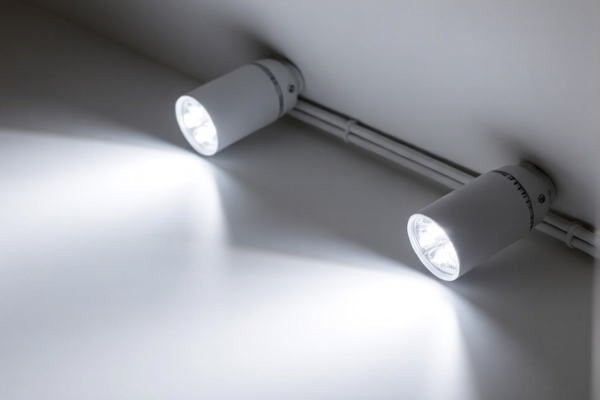
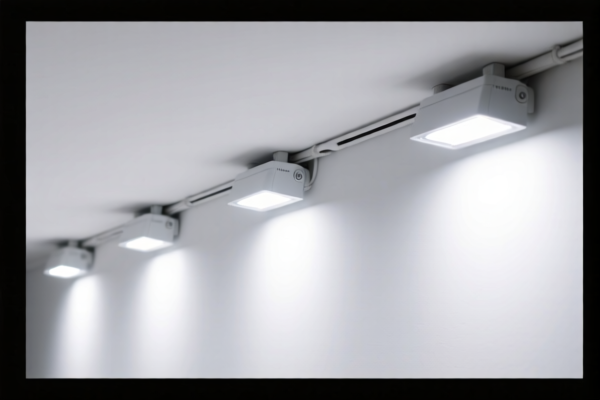
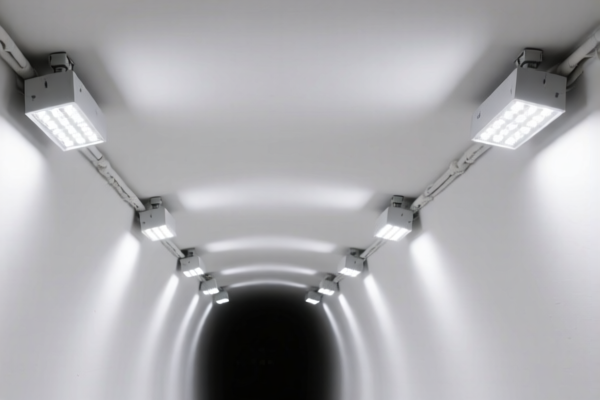
Tunnel lights are specialized lighting fixtures designed for the interior of road tunnels, railway tunnels, and subway stations. Their primary function is to ensure visibility, safety, and accident prevention under low-light, high-humidity, and high-vibration conditions.
In international trade, they are generally classified into two main categories based on their optical and electrical nature:
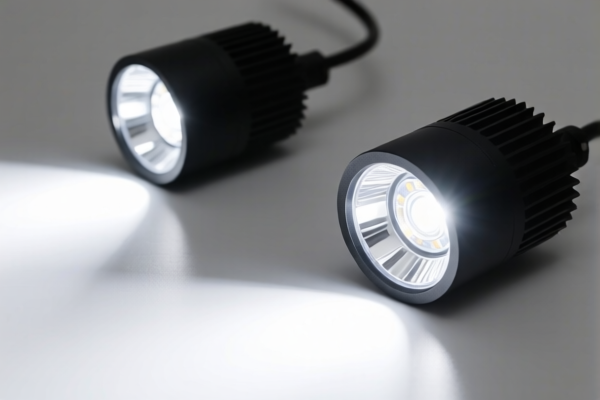
- LED Tunnel Lights (Most Common): Solid-state lighting using Light Emitting Diodes. These are energy-efficient, durable, and resistant to vibration.
- Traditional HID/Metal Halide Tunnel Lights: High-Intensity Discharge lamps. These are gradually being phased out due to high maintenance costs and lower energy efficiency, but still exist in older infrastructure projects.
⚠️ Critical Distinction:
- If the product is a complete lighting fixture (including housing, lens, driver, and LED/HID source) → It falls under Chapter 94 (Lamps and Lighting Fittings).
- If the product is merely an LED module or bulb without the housing/driver → It may fall under Chapter 85 (Electrical Machinery).
- If the product is a smart sensor integrated light with data processing capabilities → It might be argued for Chapter 85 or 90, but 99% of tunnel lights are fixed under 9405.
📦 II. HS Code Classification Details (2026 Latest Tariff Authority Comparison)
| HS Code | Product Description | Applicable Scenario | Key Components |
|--------|----------|--------------------------|
| 9405.42.00.00 | LED Luminaires | Modern tunnel LED lights (surface mounted, suspended, or wall-mounted) | LED chips, heat sink, driver, housing |
| 9405.41.00.00 | Other Electric Luminaires using incandescent/LED source | Older style or non-LED specific electric lights (less common for tunnels) | Incandescent, Halogen, or mixed source |
| 9405.49.00.00 | Other Luminaires | Non-electric (e.g., photoluminescent) or non-specified electric lights | Reflective materials, chemical light sources |
| 8541.10.00.00 | Diodes (including LEDs) other than photovoltaic devices | Bare LED packages/modules sold as components for manufacturing | Semiconductor chips, no housing/driver |
| 8539.49.00.00 | Light Emitting Diode (LED) Lamps | LED Bulbs/Bars (without fixture housing) | LED source + simple socket, no complex housing |
🔍 Key Reminder:
- Complete Tunnel Light Fixtures (which is the standard definition for "Tunnel Light" in procurement) MUST be classified under9405.42.00.00.
- Do NOT classify complete fixtures as "LED Modules" (8541) or "LED Bulbs" (8539) just to lower tariffs. This is a common red flag for customs audits and leads to misclassification penalties.
- If importing LED Strips or Modules for self-assembly, use Chapter 85 codes.
💰 III. 2026 Latest Tariff Rate Details (Including Surcharges & Policy Add-ons)
✅ Applicable Country: United States (US)
✅ Origin: China (CN)
✅ Effective Date: November 10, 2025 onwards (including subsequent imports)
🎯 1. 9405.42.00.00 —— LED Luminaires (Complete Tunnel Lights)
| Item | Content |
|---|---|
| Base Tariff Rate | 0% (ad valorem) |
| USITC Surcharge | +25% (From USITC Footnote 9903.88.01) |
| IEEPA Surcharge | +10% (Targeting China/HK products, from Nov 10, 2025) |
| Total Tariff Rate | 35% |
| Tax Calculation | CIF Value × 35% |
| De Minimis Eligibility | ❌ Not Eligible (deny_de_minimis) |
| Legal Basis Path | IEEPA:9903.01.25 → IEEPA:9903.01.24 → USITC:9405.42.00.00 → FOOTNOTE:9903.88.01 |
📌 Explanation:
- The "25% USITC Surcharge" is part of the Section 301 tariffs on Chinese goods.
- The "10% IEEPA Surcharge" is the additional tariff imposed under the International Emergency Economic Powers Act on Chinese goods.
- Total 35%, which is a very high cost. Even though the base rate is 0%, the surcharges make it expensive.
- Note: Unlike some electronics, lighting fixtures do not have a broad exemption from Section 301 duties.
🎯 2. 8541.10.00.00 —— LED Modules (Components Only)
| Item | Content |
|---|---|
| Base Tariff Rate | 0% |
| USITC Surcharge | +25% |
| IEEPA Surcharge | +10% |
| Total Tariff Rate | 35% |
| Tax Calculation | CIF Value × 35% |
| De Minimis Eligibility | ❌ Not Eligible |
| Legal Basis Path | IEEPA:9901.25 → IEEPA:9903.01.24 → USITC:8541.10.00.00 → FOOTNOTE:9903.88.01 |
📌 Note:
- If you are shipping only the LED chips or modules (no housing/driver), the tariff rate is still 35%.
- Misclassifying a complete light as an LED module to avoid duties is illegal and high-risk.
🛠️ IV. Customs Clearance Practical Advice (Real-World Pitfall Guide)
✅ 1. Documentation Checklist (All Required)
| Document | Mandatory? | Description |
|---|---|---|
| ✅ Product Specification Sheet | ✔️ | Include IP rating (e.g., IP66, IP67), wattage, voltage, lumen output, mounting type. |
| ✅ Technical Drawings | ✔️ | Show internal structure to prove it is a "fixture" (if claiming 9405) and not a bare component. |
| ✅ Product Photos | ✔️ | Clear images of the fixture, including labels, certifications, and heat sinks. |
| ✅ Certifications | ✔️ | UL, DLC, CE, RoHS. UL/DLC is critical for US market acceptance. |
| ✅ Commercial Invoice | ✔️ | Must explicitly state "LED Tunnel Lighting Fixture" and not just "LED Light". |
| ✅ Packing List | ✔️ | Detail net/gross weight, dimensions, and contents. |
| ✅ Certificate of Origin | ✔️ | If from non-China origins, may reduce/eliminate tariffs. |
✅ 2. Declaration Tips (Key Mantras)
🔥 "Fixture is 9405, Module is 8541. Be honest, or pay the price!"
| Scenario | Correct Declaration | Wrong Approach |
|---|---|---|
| Complete LED Tunnel Light | 9405.42.00.00 |
Misdeclare as 8541.10.00.00 (Module) → Risk of audit + penalties |
| LED Tube/Bulb (No Housing) | 8539.49.00.00 |
Misdeclare as Fixture → Overpayment of duties (if base rate differs) |
| Smart Tunnel Light (with sensors) | Still 9405.42.00.00 |
Misdeclare as Data Processing Equipment → Incorrect classification |
✅ 3. Special Cases Handling
| Scenario | Handling Advice |
|---|---|
| OEM Tunnel Lights | Provide design specs and "Made for [Client]" invoices to prove brand ownership, avoid anti-dumping suspicions. |
| IP67/IP68 Rated Lights | Highlight IP rating in description to justify durability claims and justify value. |
| Floodlight vs. Tunnel Light | If the light is a standard street light used in a tunnel, it may still be 9405.42.00.00. No special code change needed. |
| Import from Vietnam/Mexico | Crucial: If assembled in Vietnam or Mexico, you MAY be eligible for IEEPA Exemption. Check Rules of Origin (Substantial Transformation). |
🌍 V. Global Market Clearance Comparison (2026 Latest)
| Country/Region | Recommended HS Code | Tariff | Certification Requirements | Notes |
|---|---|---|---|---|
| 🇺🇸 USA | 9405.42.00.00 |
35% (China) | UL, DLC, FCC | High tariff burden; consider non-CN origin. |
| 🇨🇳 China | 9405.42.00.00 |
5% - 8% | CCC, RoHS | Lower tariffs, but domestic competition is fierce. |
| 🇪🇺 EU | 9405.42.00.00 |
0% | CE, ErP, UKCA (for UK) | No surcharges. Free trade in many cases. |
| 🇦🇺 Australia | 9405.42.00.00 |
5% | RCM | No surcharges. |
| 🇯🇵 Japan | 9405.42.00.00 |
0% - 5% | PSE, JIS | Depends on FTAs. |
📌 Conclusion:
- The US is the most challenging market for Chinese-made tunnel lights due to the 35% total tariff.
- EU and Japan are more favorable with low or zero tariffs.
- Strategy: For US-bound goods, strongly consider supply chain diversification (e.g., assembly in Southeast Asia or Mexico) to leverage IEEPA exemptions.
📌 VI. Common Errors & Pitfalls (Lessons Learned)
❌ Mistake 1: Declaring "LED Tunnel Light" as "LED Module" (8541.10.00.00)
👉 Consequence: Customs will inspect and reclassify, leading to back taxes + penalties. The structure is clearly a fixture.
❌ Mistake 2: Ignoring the "IEEPA 10%" surcharge in cost calculation
👉 Consequence: Profit margin is erased. The 35% tariff is often overlooked by non-specialists.
❌ Mistake 3: Failing to specify IP Rating in documentation
👉 Consequence: Customs may suspect the product is for outdoor use (which might have different duty rates or restrictions), causing delays.
❌ Mistake 4: Using "Street Light" code for Tunnel Light
👉 Consequence: While both are under 9405.42.00.00, specific descriptions help clearances. "Street Light" might trigger agricultural/vegetation protection checks (irrelevant here but causes confusion).
✅ Correct Practice:
"LED Tunnel Light Fixture, IP66, 150W, 5000K, Aluminum Housing, UL Listed, Model TL-150"
🎯 VII. Conclusion: Professional Classification, Cost Optimization
🎯 Remember the Mantras:
🔹 "Fixtures are 9405, Modules are 8541. Don't mix them up!"
🔹 "35% Tariff in the US is Real. Check Origin Carefully!"
🔹 "IEEPA Exemption is Key for Non-China Assembly."
📌 Pro Tip:
If your tunnel lights are assembled in Vietnam, Malaysia, Thailand, or Mexico, you may apply for an IEEPA Exemption, reducing the effective tariff to 0%~5%.
We strongly recommend applying for an Advance Ruling (Prior Ruling) from US Customs and Border Protection (CBP) for large shipments to ensure classification accuracy and avoid post-import audits.
📣 Immediate Action:
📞 Contact a professional customs broker + Provide Product Specs + Apply for HS Code Advance Ruling
🚀 Make your tunnel lights pass through customs smoothly, efficiently, and profitably!
✨ Professional clearance starts with precise classification!
💼 Every cent of cost deserves precise calculation!
Customer Reviews
About HS Code Classification
The Harmonized System (HS) is an internationally standardized nomenclature developed by the World Customs Organization (WCO) to classify traded products. Over 200 countries use the HS system as the basis for customs tariffs, trade statistics, and import/export regulations.
Each HS code follows a hierarchical structure:
- Chapter (2 digits) — Broad category of goods (e.g., Chapter 84: Machinery and Mechanical Appliances)
- Heading (4 digits) — More specific grouping within the chapter
- Subheading (6 digits) — Internationally standardized breakdown, used by all WCO member countries
- National subdivisions (8-10 digits) — Country-specific extensions for further classification, such as US HTSUS 10-digit codes
Correct HS code classification is essential for smooth customs clearance, accurate duty payment, and compliance with trade regulations. Misclassification can lead to customs delays, overpayment of duties, or penalties.
When importing from CN to US, the applicable tariff rates may include:
- Most-Favored-Nation (MFN) rate — The standard duty rate applied to WTO members
- General rate — Applied to countries without trade agreements
- Trade remedy duties — Additional tariffs such as Section 301 (anti-dumping), Section 232 (national security), or countervailing duties
The information provided on this page is for reference purposes only. For official classification, please consult with your local customs authority or a licensed customs broker.