Turbocharger
CN → US| HS Code | Tariff Rate | Origin | Destination | Doc |
|---|---|---|---|---|
| 8409915085 | 37.5% | CN | US | Official Doc |
| 8409915081 | 37.5% | CN | US | Official Doc |
| 8414800500 | 35.0% | CN | US | Official Doc |
| 8414593000 | 37.3% | CN | US | Official Doc |
| 8481809035 | 37.0% | CN | US | Official Doc |
Product Images
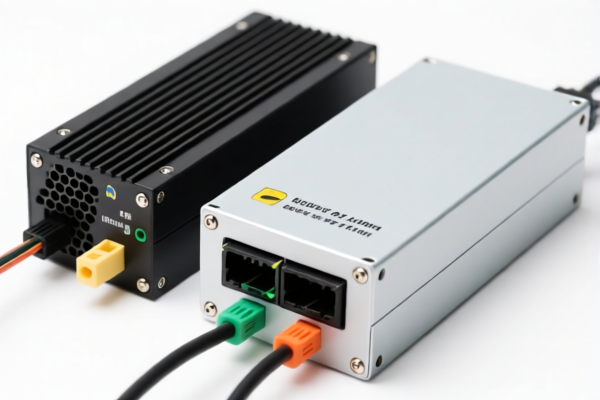
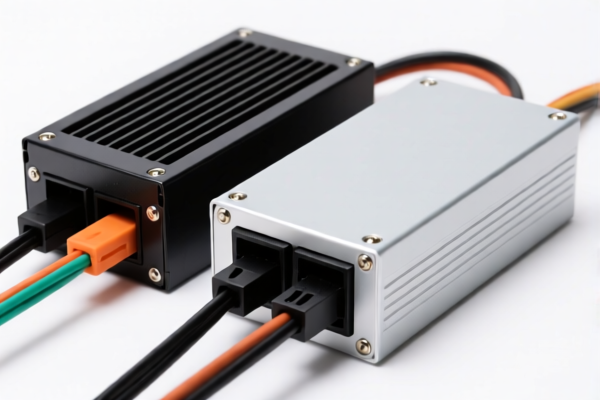
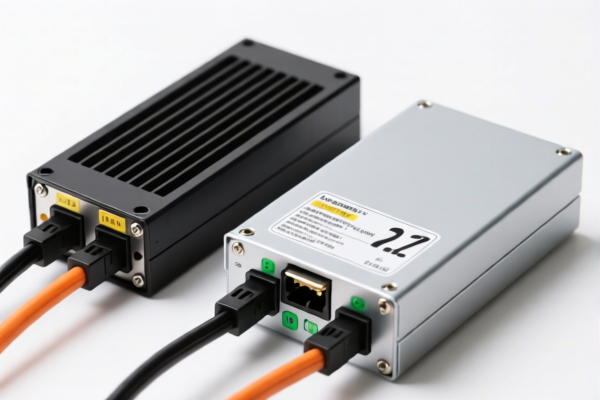
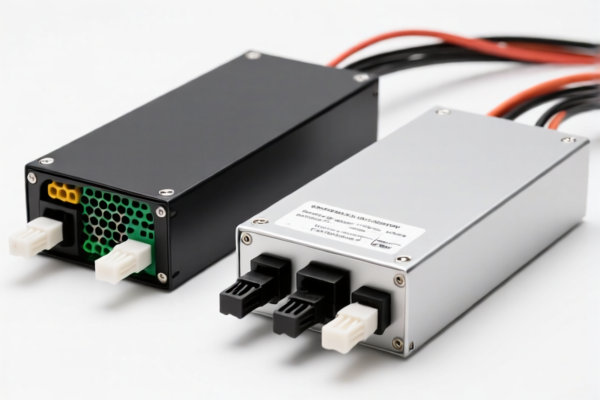
AI Analysis
🌪️ Turbocharger (涡轮增压器)
🌐 HS Code Reference & Customs Clearance Guide | 2026 Latest Tariff Analysis | Professional Compliance Strategy
📌 I. Product Definition & Classification: Do You Really Know "Turbochargers"?
Turbochargers are critical mechanical devices used to enhance engine efficiency by forcing extra air into the combustion chamber. In international trade, their classification depends heavily on functional specificity and material composition. They are generally categorized into:
- Integrated Turbocharger Units: Complete assemblies designed for specific applications (e.g., automotive, industrial).
- Engine Components/Parts: Turbochargers classified as specific parts of engines (e.g., for pistons/internal combustion engines).
- Control Systems: Associated components like actuators or controllers.
⚠️ Key Distinction:
- If the product is a complete turbocharger unit with defined application → Often falls under 8414 (Air/Gas Pumps/Compressors).
- If declared specifically as a part of an internal combustion engine → Falls under 8409 (Parts Suitable for Use Solely or Principally with Engines).
- If it is a controller/actuator rather than the turbo unit itself → May fall under 8481 (Valves/Control Appliances).
📦 II. HS Code Classification Details (2026 Latest Authorized Comparison)
| HS Code | Product Description | Applicability Scenario | Tax Rate (Total) | Tax Breakdown |
|---|---|---|---|---|
8414.59.30.00 |
Turbocharger - Complete unit, usage fully matched | General purpose turbochargers where function is the primary identifier | 37.3% | Base: 2.3% + Add'l: 25.0% + 122 Clause: 10% |
8409.91.50.85 |
Turbocharger as Engine Part - Metallic material | Turbochargers classified specifically as parts of engines, made of metal | 37.5% | Base: 2.5% + Add'l: 25.0% + 122 Clause: 10% |
8409.91.50.81 |
Turbocharger as Core Engine Part - Metallic material | Turbochargers deemed core components of engines, metallic construction | 37.5% | Base: 2.5% + Add'l: 25.0% + 122 Clause: 10% |
8414.80.05.00 |
Turbocharger - Usage fully matched (Low Base Rate) | Turbochargers classified under pumps/compressors with zero base rate | 35.0% | Base: 0.0% + Add'l: 25.0% + 122 Clause: 10% |
8481.80.90.35 |
Turbo Controller - Proportional operation signal control | Control units, actuators, or valves regulating the turbocharger system, not the turbo itself | 37.0% | Base: 2.0% + Add'l: 25.0% + 122 Clause: 10% |
🔍 Important Notes:
- 8414 vs. 8409: The distinction between8414(Pumps/Compressors) and8409(Engine Parts) is critical.8414.59.30.00and8414.80.05.00target the function of compressing air, while8409targets the relationship to the engine.
- 122 Clause: All listed codes include a "122 Clause Tariff" (10%), indicating specific trade restrictions or surcharges applicable to certain origins or materials.
- Controller vs. Turbo: ATurbo Controlleris NOT a turbocharger. It is a control device (Valve/Actuator), hence the different HS Code (8481) and slightly different base rate.
💰 III. 2026 Latest Tariff Rate Breakdown (Including Additional Taxes & Policy Surcharges)
✅ Applicable Market: United States (US)
✅ Origin: China (CN) (Implied by "122 Clause" and high surcharge structure)
✅ Effective Date: 2025-2026 Period
🎯 1. 8414.59.30.00 —— Turbocharger (Function-Based)
| Item | Detail |
|---|---|
| Base Duty Rate | 2.3% (Ad Valorem) |
| USITC Additional Duty (Section 301) | +25.0% |
| Section 122 Clause Tariff | +10.0% |
| Total Effective Rate | 37.3% |
| Calculation | CIF Value × 37.3% |
| De Minimis Eligibility | ❌ No (High duty rates typically exclude Section 321 de minimis benefits for commercial shipments) |
| Legal Basis Path | USITC:8414.59.30.00 → Footnote:301 → Footnote:122 |
📌 Explanation:
- This code treats the turbocharger as a compressor/pump.
- The 25% additional duty is the standard Section 301 tariff on many Chinese mechanical goods.
- The 10% "122 Clause" suggests an additional administrative or retaliatory tariff layer.
🎯 2. 8409.91.50.85 & 8409.91.50.81 —— Turbocharger as Engine Part (Material-Based)
| Item | Detail |
|---|---|
| Base Duty Rate | 2.5% |
| USITC Additional Duty (Section 301) | +25.0% |
| Section 122 Clause Tariff | +10.0% |
| Total Effective Rate | 37.5% |
| Calculation | CIF Value × 37.5% |
| De Minimis Eligibility | ❌ No |
| Legal Basis Path | USITC:8409.91.50.XX → Footnote:301 → Footnote:122 |
📌 Note:
- These codes are slightly more expensive (37.5%) than the base-rate8414code.
- They are used when the product is explicitly marketed or structured as an engine part rather than a standalone compressor unit.
- The "Metallic" material specification is key for these subheadings.
🎯 3. 8414.80.05.00 —— Turbocharger (Zero Base Rate Optimization)
| Item | Detail |
|---|---|
| Base Duty Rate | 0.0% |
| USITC Additional Duty (Section 301) | +25.0% |
| Section 122 Clause Tariff | +10.0% |
| Total Effective Rate | 35.0% |
| Calculation | CIF Value × 35.0% |
| De Minimis Eligibility | ❌ No |
| Legal Basis Path | USITC:8414.80.05.00 → Footnote:301 → Footnote:122 |
📌 Strategic Insight:
- This is the lowest total tax rate (35.0%) among the turbocharger-specific codes.
- It achieves this by having a 0% Base Duty, but still incurs the full 25% + 10% surcharges.
- Action: If your product qualifies for this specific subheading ("Usage Fully Matched" under Pumps/Compressors), prioritize this classification to save 2.3% compared to8414.59.30.00and 2.5% compared to8409codes.
🎯 4. 8481.80.90.35 —— Turbo Controller
| Item | Detail |
|---|---|
| Base Duty Rate | 2.0% |
| USITC Additional Duty (Section 301) | +25.0% |
| Section 122 Clause Tariff | +10.0% |
| Total Effective Rate | 37.0% |
| Calculation | CIF Value × 37.0% |
| De Minimis Eligibility | ❌ No |
| Legal Basis Path | USITC:8481.80.90.35 → Footnote:301 → Footnote:122 |
📌 Warning:
- Do NOT misclassify a Turbocharger as a "Controller" to save money.
- If customs determines the item is a turbocharger, they will reclassify it to8414or8409, potentially applying penalties for incorrect declaration.
- Only use this code for actuators, electronic control units (ECUs), or valves that regulate the turbo.
🛠️ IV. Customs Clearance Practical Advice (Real-World Pitfall Guide)
✅ 1. Required Documentation Checklist (Mandatory)
| Document | Mandatory? | Description |
|---|---|---|
| ✅ Product Specification Sheet | ✔️ | Must detail: Air flow capacity, boost pressure, material composition, application (engine type). |
| ✅ Technical Drawings | ✔️ | To prove whether it is a standalone compressor (8414) or an engine part (8409). |
| ✅ Commercial Invoice | ✔️ | Must clearly state: "Turbocharger" or "Turbocharger Assembly". Avoid vague terms like "Part". |
| ✅ Origin Certificate | ✔️ | To determine eligibility for any potential exemptions (though 122/301 rates are high). |
| ✅ HS Code Binding Ruling (Optional but Recommended) | ✔️ | Since rates vary (35.0% vs 37.5%), a pre-clearance ruling is advised. |
✅ 2. Declaration Strategy (Key Mnemonic)
🔥 “Function First, Base Rate Low, Don’t Split the Unit!”
| Scenario | Correct Declaration | Wrong Practice |
|---|---|---|
| Complete Turbocharger | 8414.80.05.00 (if eligible) → 35.0% |
Declaring as 8409 → 37.5% |
| Turbocharger as Engine Part | 8409.91.50.85 → 37.5% |
Declaring as "Valve" → 37.0% (Risk of Penalty) |
| Turbo Controller/Actuator | 8481.80.90.35 → 37.0% |
Declaring as "Turbocharger" → 37.0% (Same, but wrong code) |
| Mixed Shipment (Turbo + Controller) | Split Declaration | Combining into one line item → Misclassification |
✅ 3. Special Circumstances Handling
| Situation | Handling Advice |
|---|---|
| OEM Turbochargers | Provide manufacturer’s data sheet confirming it is a "compressor assembly" to support 8414. |
| Kit Sales (Turbo + Gaskets) | Declare the Turbo as the primary item. Gaskets are incidental. Do not split. |
| Used Turbochargers | Ensure they meet environmental/recycling standards. Note: Duties still apply. |
| Partial Assembly | If missing critical components (e.g., no turbine housing), it may be classified as "Parts" (8409), not the complete unit (8414). |
🌍 V. Global Market Comparison (2026 Latest)
| Country/Region | Recommended HS Code | Total Tariff (China Origin) | Certification Requirements | Notes |
|---|---|---|---|---|
| 🇺🇸 USA | 8414.80.05.00 |
35.0% | FCC (if electronic parts), ISO Certs | Highest barrier due to 301 + 122 clauses |
| 🇨🇳 China | 8414.59.30.00 |
~15-20% (Est.) | CCC (if applicable), ISO | No Section 301/122 |
| 🇪🇺 EU | 8414.80.90 |
0% (Under GSP/FTA if applicable) | CE, REACH | Lower rates if origin criteria met |
| 🇨🇦 Canada | 8414.80.90 |
0% (Under CUSMA) | C-Mark, ISO | Check specific subheadings |
| 🇬🇧 UK | 8414.80.90 |
0% (Under UK-GPA) | UKCA, ISO | Post-Brexit rules apply |
📌 Conclusion:
- The US market is the most expensive due to the叠加 (stacking) of Base, Section 301 (25%), and 122 Clause (10%) tariffs.
- Optimization Tip: Aim for8414.80.05.00(35.0%) rather than8409(37.5%) or8414.59.30.00(37.3%) if the product definition allows.
- Controller Items: Be careful not to under-declare a Turbocharger as a Controller, as the base rate difference (2.0% vs 0.0%) is minimal compared to the risk of penalty.
📌 VI. Common Errors & Pitfall Guide (Blood & Tears Lessons)
❌ Error 1: Classifying a complete Turbocharger as a "Valve" or "Controller" (8481)
👉 Consequence: Customs rejects the declaration, reclassifies to 8414, applies penalties + back taxes.
❌ Error 2: Assuming "Engine Part" (8409) is always cheaper
👉 Consequence: 8409 codes here have a 2.5% base rate, resulting in 37.5% total, which is HIGHER than the 0% base 8414 code (35.0%).
❌ Error 3: Ignoring the "122 Clause"
👉 Consequence: Underestimating costs by 10%. This is a non-negotiable surcharge for many Chinese-origin mechanical parts.
❌ Error 4: Declaring "Turbo Part" instead of the specific component
👉 Consequence: Delay in clearance. Customs may request detailed breakdown, holding the shipment.
✅ Correct Practice:
"Turbocharger Assembly, Model XYZ, Material: Metal, Air Flow: 100 CFM, For Engine Type ABC, HS Code: 8414.80.05.00"
🎯 VII. Conclusion: Precise Classification Saves Money!
🎯 Remember the Mnemonic:
🔹 “Function is King, Base Rate Low”
🔹 “35% is the Target, 37.5% is the Trap”
🔹 “Don’t confuse the Controller with the Turbo”🔹 “Section 301 is 25%, 122 is 10%, Total is High, Plan Accordingly!”
📌 Pro Tip:
If you are shipping to the USA, consider applying for an HTSUS Exclusion under Section 301 if your specific turbocharger model was eligible during the exclusion periods. While rare for new items, check the latest USTR lists.
Always request a Pre-Ruling (CBP Form 5106) if your product sits on the boundary between 8414 and 8409.
📣 Immediate Action:
📞 Consult a Licensed Customs Broker
📄 Provide Technical Specs & Material Data
🚀 Optimize for 35.0% Rate via8414.80.05.00
✨ Professional Clearance Starts with Accurate Classification!
💼 Every Percentage Point Saved is Pure Profit!
Customer Reviews
About HS Code Classification
The Harmonized System (HS) is an internationally standardized nomenclature developed by the World Customs Organization (WCO) to classify traded products. Over 200 countries use the HS system as the basis for customs tariffs, trade statistics, and import/export regulations.
Each HS code follows a hierarchical structure:
- Chapter (2 digits) — Broad category of goods (e.g., Chapter 84: Machinery and Mechanical Appliances)
- Heading (4 digits) — More specific grouping within the chapter
- Subheading (6 digits) — Internationally standardized breakdown, used by all WCO member countries
- National subdivisions (8-10 digits) — Country-specific extensions for further classification, such as US HTSUS 10-digit codes
Correct HS code classification is essential for smooth customs clearance, accurate duty payment, and compliance with trade regulations. Misclassification can lead to customs delays, overpayment of duties, or penalties.
When importing from CN to US, the applicable tariff rates may include:
- Most-Favored-Nation (MFN) rate — The standard duty rate applied to WTO members
- General rate — Applied to countries without trade agreements
- Trade remedy duties — Additional tariffs such as Section 301 (anti-dumping), Section 232 (national security), or countervailing duties
The information provided on this page is for reference purposes only. For official classification, please consult with your local customs authority or a licensed customs broker.