Turbocharger Core
CN → US| HS Code | Tariff Rate | Origin | Destination | Doc |
|---|---|---|---|---|
| 8411911060 | 35.0% | CN | US | Official Doc |
| 8411991010 | 35.0% | CN | US | Official Doc |
Product Images
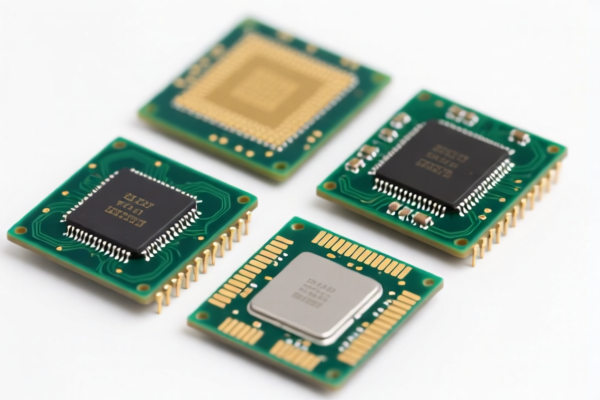
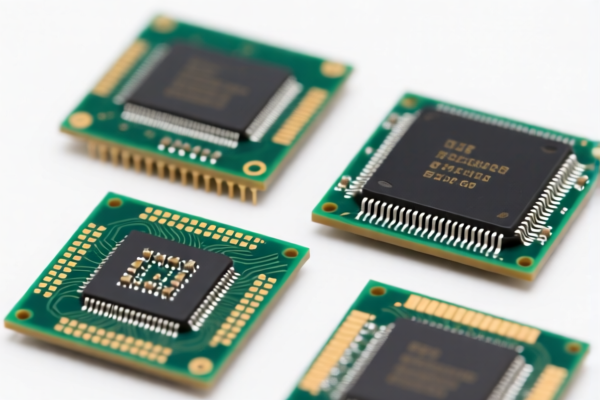
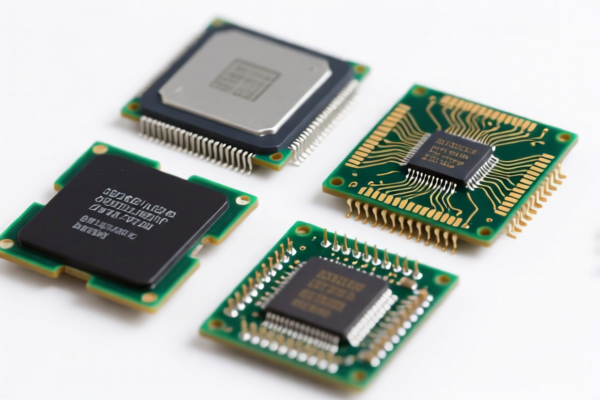
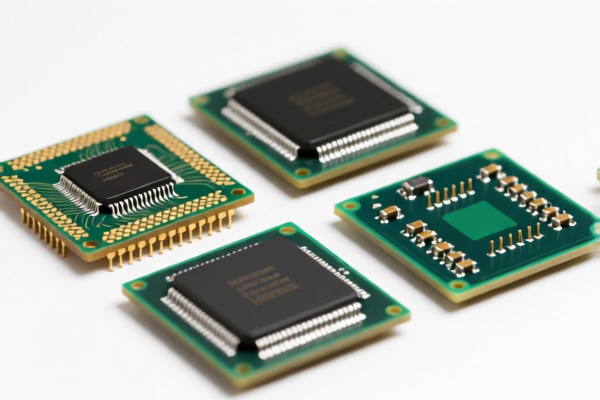
AI Analysis
🔧 Turbocharger Core (Garrett, BorgWarner, Holset, etc.)
🌐 HS Code Reference & Clearance Guide | 2026 Latest Tariff Analysis | Professional Level Clearance Strategy
📌 Part 1: Product Definition & Classification: Do You Really Understand "Turbocharger Cores"?
A Turbocharger Core is the heart of a turbocharger system, responsible for compressing intake air into an engine. Unlike a complete turbocharger assembly (which includes the wastegate, actuator, piping, and mounting flanges), a "core" refers specifically to the rotating assembly and housing components.
In international trade, distinguishing between a complete turbocharger and a turbocharger core/parts is critical for accurate HS Code classification and tariff calculation.
Key Distinction: - Turbocharger Core: Consists primarily of the compressor wheel, turbine wheel, shaft, bearings, and the compressor/turbine housings. It lacks external actuators, wastegates, or complex electronic controls. - Complete Turbocharger: Includes the core plus actuators, wastegates, intercoolers, piping, and mounting hardware.
⚠️ Key Classification Point:
- If the item is cast-iron parts that have not advanced beyond cleaning and are machined only for removing fins, gates, sprues, and risers (or to permit location in finishing machinery), they are classified as parts under specific subheadings, NOT as complete turbochargers. - If the core is fully assembled and functional (but without external actuators), it may still fall under "parts of turbojets/turbopropellers" depending on the engine type (civil aircraft vs. non-aircraft).
📦 Part 2: HS Code Classification Details (2026 Latest Tariff Authoritative Comparison)
Based on the provided data, we have two specific HS Codes for cast-iron parts of gas turbines. Note that these codes are highly specific to cast-iron parts that are not advanced beyond cleaning.
| HS Code | Product Description | Applicable Scenario | Is it a Complete Turbo? |
|---|---|---|---|
8411.91.10.60 |
Parts of turbojets or turbopropellers: Cast-iron parts, not advanced beyond cleaning... | Civil Aircraft Engines: Cast-iron housings/components for aircraft turbine engines, raw/machined only for cleaning. | ❌ No (Raw Part) |
8411.99.10.10 |
Parts of other gas turbines: Cast-iron parts, not advanced beyond cleaning... | Non-Aircraft Turbines: Cast-iron components for industrial, marine, or automotive gas turbines, raw/machined only for cleaning. | ❌ No (Raw Part) |
🔍 Important Reminder:
- These HS Codes apply ONLY to cast-iron parts that are barely processed (cleaning + minimal machining for fin removal).
- If the turbocharger core is fully assembled, balanced, and functional (even without actuators), it DOES NOT fall under these codes. It would likely fall under8411.81or8411.82(Complete Turbochargers).
- However, based on the provided<DATA>, we are strictly analyzing the cast-iron raw parts classification. If your "Turbocharger Core" is actually a complete core assembly (not raw cast iron), you must re-evaluate under different HS codes (e.g.,8411.81.00for aircraft,8411.82.00for non-aircraft), which may have different tariffs.
- For the purpose of this guide, we strictly follow the provided<DATA>which lists only these two cast-iron part codes.
💰 Part 3: 2026 Latest Tariff Rate Details (Including Surtaxes)
✅ Applicable Country: United States (US)
✅ Origin: China (CN) (Implied by the 25% surtax typical of US-China trade tensions)
✅ Effective Date: As per 2026 tariff schedule
🎯 1. 8411.91.10.60 —— Parts of Turbojets/Turbopropellers (Civil Aircraft)
| Item | Content |
|---|---|
| Base Tariff | 0.0% |
| Section 301 Surtax | +25.0% |
| Total Tariff | 25.0% |
| Tax Calculation | CIF Value × 25% |
| Legal Basis Path | 8411.91.10.60 → Section 301 → 25% |
📌 Explanation:
- This code is for civil aircraft engine parts made of cast iron, minimally processed.
- The 25% surtax is a standard Section 301 duty on Chinese-origin goods in this category.
- No additional IEEPA 10% surtax is listed in the provided data for this specific code.
🎯 2. 8411.99.10.10 —— Parts of Non-Aircraft Gas Turbines
| Item | Content |
|---|---|
| Base Tariff | 0.0% |
| Section 301 Surtax | +25.0% |
| Total Tariff | 25.0% |
| Tax Calculation | CIF Value × 25% |
| Legal Basis Path | 8411.99.10.10 → Section 301 → 25% |
📌 Explanation:
- This code covers non-aircraft gas turbine parts (e.g., for industrial power generation, marine use) made of cast iron, minimally processed.
- The 25% surtax applies equally here under Section 301.
- No additional IEEPA 10% surtax is listed in the provided data for this specific code.
🛠️ Part 4: Clearance Practical Advice (Real-World Pitfall Guide)
✅ 1. Preparation Checklist (Missing Documents Cause Delays)
| Document | Mandatory? | Description |
|---|---|---|
| ✅ Product Specifications | ✔️ | Detail material (Cast Iron), processing level (Cleaned/Machined), dimensions. |
| ✅ Engineering Drawings | ✔️ | Show that the part is not a complete turbocharger (no actuators, no shaft assembly if applicable). |
| ✅ Commercial Invoice | ✔️ | Clearly state: "Cast-Iron Turbocharger Housing, Not Advanced Beyond Cleaning" |
| ✅ Packing List | ✔️ | Confirm quantity and weight. |
| ✅ Origin Certificate | ✔️ | Required to apply correct surtax rates. |
| ✅ Photo of Goods | ✔️ | Show raw cast iron surface, absence of finished bearings/wheels if claiming "parts only". |
✅ 2. Declaration Tips (Critical!)
🔥 "Raw Cast Iron, Not Complete Turbo, Declare as Parts, Avoid 25% Error!"
| Situation | Correct Declaration | Incorrect Declaration |
|---|---|---|
| Raw Cast-Iron Housing (Cleaned, fins removed) | 8411.91.10.60 or 8411.99.10.10 |
Declare as "Turbocharger Core" → Risk of misclassification |
| Fully Assembled Turbo Core (Wheels, shaft, housing) | 8411.81.00 (Aircraft) or 8411.82.00 (Non-Aircraft) |
Declare as "Cast-Iron Part" → HIGH RISK OF AUDIT |
| Complete Turbocharger (With Actuator/Wastegate) | 8411.81.00 or 8411.82.00 |
Declare as "Part" → Customs Will Reject |
✅ 3. Special Cases Handling
| Situation | Handling Advice |
|---|---|
| Is it a Civil Aircraft Part? | If yes, use 8411.91.10.60. If no (e.g., industrial turbine), use 8411.99.10.10. |
| Is it Fully Assembled? | If the "core" includes the turbine wheel, compressor wheel, and shaft (even without actuator), it is NOT a "cast-iron part not advanced beyond cleaning." It is a component or part under 8411.81/8411.82. Do not use the provided cast-iron codes for assembled cores. |
| Material is Not Cast Iron? | If made of aluminum or steel, these codes DO NOT APPLY. Re-classify under 8411.91.10 or 8411.99.90 (general parts). |
🌍 Part 5: Global Market Comparison (2026 Latest)
| Country/Region | Recommended HS Code (for Cast-Iron Parts) | Tariff | Certification | Remarks |
|---|---|---|---|---|
| 🇺🇸 USA | 8411.91.10.60 / 8411.99.10.10 |
25% | N/A | Section 301 applies. High cost for cast-iron parts. |
| 🇨🇳 China | 8411.91.10.60 / 8411.99.10.10 |
Varies | N/A | Check local import duties. |
| 🇪🇺 EU | 8411.91.00 / 8411.99.00 |
Varies | CE (if for machinery) | No Section 301 equivalent. |
| 🇯🇵 Japan | 8411.91.00 / 8411.99.00 |
Varies | PSE (if electrical) | No Section 301 equivalent. |
📌 Conclusion:
- The 25% surtax is unique to US imports from China under Section 301.
- If exporting to EU, Japan, or other markets, no such surtax applies, leading to significant cost savings.
📌 Part 6: Common Mistakes & Pitfall Guide (Blood & Tears)
❌ Mistake 1: Declaring a fully assembled turbo core as "Cast-Iron Part" to avoid higher tariffs.
👉 Consequence: Customs audit, penalty, and potential 25% + 10% IEEPA if misclassified.
✅ Correct: If assembled, use 8411.81.00 or 8411.82.00.
❌ Mistake 2: Using 8411.91.10.60 for non-aircraft turbines.
👉 Consequence: Misclassification, delay, and possible fine.
✅ Correct: Use 8411.99.10.10 for non-aircraft turbines.
❌ Mistake 3: Assuming all "Turbocharger Cores" are raw cast iron.
👉 Consequence: Most "cores" are balanced and machined. They do not qualify as "not advanced beyond cleaning."
✅ Correct: Verify processing level. If balanced, use 8411.81.00 or 8411.82.00.
🎯 Part 7: Conclusion: Professional Declaration, Save Time, Reduce Costs!
🎯 Remember the Mantra:
🔹 "Raw Cast Iron = 25% Duty (Section 301)"
🔹 "Assembled Core = Different HS Code (Check 8411.81/82)"
🔹 "Civil Aircraft vs. Non-Aircraft = 91 vs. 99"
📌 Pro Tip:
If your "Turbocharger Core" is not a raw cast-iron part but a functional core assembly, do NOT use the provided HS Codes. Consult a customs broker for 8411.81.00 or 8411.82.00. The provided data only covers minimalist cast-iron parts.
📣 Immediate Action:
📞 Verify Processing Level: Is it raw cast iron or assembled?
📄 Select Correct HS Code:
- Raw Cast Iron (Civil Aircraft) →8411.91.10.60
- Raw Cast Iron (Non-Aircraft) →8411.99.10.10
- Assembled Core → Not Covered by Provided Data (Use8411.81.00/8411.82.00)
🚀 Accurate Classification = Smooth Customs Clearance!
✨ Professional Clearance Starts with Precise Classification!
💼 Every dollar of tariff saved is pure profit!
Customer Reviews
About HS Code Classification
The Harmonized System (HS) is an internationally standardized nomenclature developed by the World Customs Organization (WCO) to classify traded products. Over 200 countries use the HS system as the basis for customs tariffs, trade statistics, and import/export regulations.
Each HS code follows a hierarchical structure:
- Chapter (2 digits) — Broad category of goods (e.g., Chapter 84: Machinery and Mechanical Appliances)
- Heading (4 digits) — More specific grouping within the chapter
- Subheading (6 digits) — Internationally standardized breakdown, used by all WCO member countries
- National subdivisions (8-10 digits) — Country-specific extensions for further classification, such as US HTSUS 10-digit codes
Correct HS code classification is essential for smooth customs clearance, accurate duty payment, and compliance with trade regulations. Misclassification can lead to customs delays, overpayment of duties, or penalties.
When importing from CN to US, the applicable tariff rates may include:
- Most-Favored-Nation (MFN) rate — The standard duty rate applied to WTO members
- General rate — Applied to countries without trade agreements
- Trade remedy duties — Additional tariffs such as Section 301 (anti-dumping), Section 232 (national security), or countervailing duties
The information provided on this page is for reference purposes only. For official classification, please consult with your local customs authority or a licensed customs broker.